
The history of American finance is often characterized by the rise of massive, Wall Street-based institutions that prioritize shareholder returns above all else. However, a different narrative exists within the sector—one defined by mutual benefit, niche risk management, and a commitment to a specific demographic. At the center of this narrative is the United Services Automobile Association, more commonly known as USAA. When asking “when was USAA founded,” one must look back to June 20, 1922, a date that marked the beginning of a radical experiment in self-insurance and collective financial security.
Founded in San Antonio, Texas, USAA was not the product of a venture capital firm or a group of wealthy bankers. Instead, it was the brainchild of 25 United States Army officers who met at the Gunter Hotel. Their goal was simple but revolutionary: to provide reliable automobile insurance to one another at a time when military officers were often deemed “high-risk” by civilian insurance companies due to their frequent relocations and the perceived dangers of their profession. This moment in 1922 birthed an organization that would eventually transform into a multi-billion dollar financial services behemoth, serving millions of members across insurance, banking, and investment sectors.
The 1922 Origins: A Solution to Financial Exclusion
In the early 1920s, the automotive industry was booming, but the financial infrastructure to support vehicle ownership was still in its infancy. For members of the military, the hurdles were even higher. Traditional insurers viewed the transient lifestyle of military personnel as a liability. Officers moved frequently, often lived in remote locations, and were perceived to have a risk profile that didn’t fit the standard actuarial models of the time.
The Gunter Hotel Meeting
The meeting on June 20, 1922, led by Major William Henry Garrison, was a direct response to this exclusion. The 25 officers present decided to form a mutual self-insurance group. By pooling their resources, they could cover each other’s risks without the need for an external profit-driven middleman. Initially named the “United States Army Automobile Association,” the group was built on a foundation of trust and shared identity.
By 1924, the organization realized its potential reached beyond just the Army and changed its name to the United Services Automobile Association to reflect its inclusion of officers from other branches of the military. The founding principle was simple: because military officers shared a standard of conduct and a stable (albeit modest) income, they were actually a lower-risk group than the general public. This insight allowed USAA to offer lower premiums than civilian competitors while maintaining high levels of solvency.
Defining the Mutual Business Model
The financial genius of USAA’s founding lay in its mutual structure. Unlike a publicly traded company that must answer to shareholders, a mutual company is owned by its policyholders—or, in USAA’s terminology, its “members.” This structure has profound implications for how capital is managed. Profits are not siphoned off as dividends to outside investors; instead, they are reinvested into the company to improve services or returned to the members through rebates and Subscriber’s Savings Accounts (SSAs).
This “Money” centric philosophy—returning value to the user—created an intensely loyal customer base. In the early decades, this loyalty was the company’s primary marketing tool. USAA didn’t need a massive advertising budget because word-of-mouth within the officer corps was sufficient to drive growth. This low cost of acquisition further fortified the company’s financial position, allowing it to weather the Great Depression and the logistical challenges of World War II.
Scaling the Mission: From Auto Insurance to Full-Spectrum Banking
While USAA began as an auto insurer, its evolution into a diversified financial institution was a response to the growing needs of its membership. Following World War II, the American middle class expanded, and with it, the complexity of personal finance. Military families needed more than just car insurance; they needed homeowners’ insurance, life insurance, and, eventually, sophisticated banking and investment tools.
Post-WWII Expansion and Financial Growth
The decades following 1945 saw USAA aggressively expand its product lines. In the 1960s, the company introduced life insurance, recognizing that the “high-risk” stigma that had plagued military officers in the auto insurance market also applied to the life insurance market. By creating its own life insurance subsidiary, USAA could leverage its specific knowledge of military risk to provide affordable coverage for families who were often priced out of the private market.
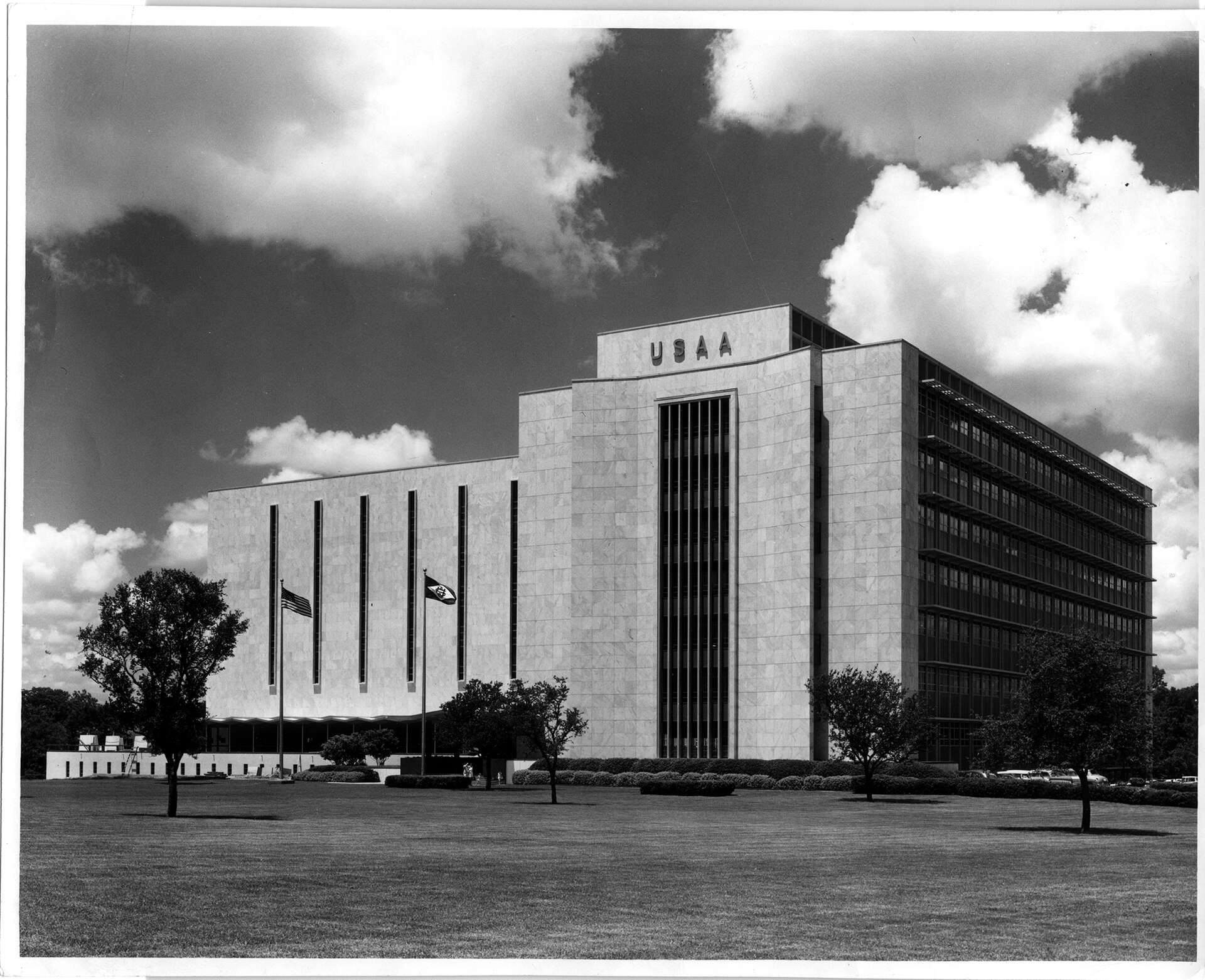
In the 1970s, under the leadership of CEO Robert F. McDermott, the company underwent a digital transformation that would set the stage for its modern banking success. McDermott recognized early on that a centralized, mail-and-phone-based service model was more efficient for a global military population than a network of physical branches. This shift saved millions in overhead costs, which were redirected into better rates and member benefits.
The 1983 Pivot to Banking
Perhaps the most significant financial milestone after the 1922 founding was the establishment of USAA Federal Savings Bank in 1983. This move turned USAA into a one-stop shop for personal finance. By offering competitive interest rates on savings, low-fee checking accounts, and mortgage services, USAA began to capture a larger share of its members’ “wallet.”
The banking arm was revolutionary because it was one of the first truly branchless banks. Long before the term “FinTech” was coined, USAA was perfecting the art of remote banking. This model allowed for a leaner cost structure compared to traditional brick-and-mortar banks, enabling the company to offer superior financial products. For the military member stationed in Germany or Japan, having a bank that understood the nuances of overseas pay and military allotments was a massive financial advantage.
The Modern Financial Ecosystem: Technology and Risk Management
Today, USAA is recognized as one of the most financially stable and technologically advanced organizations in the world. Its success is not just a result of its history, but of its ongoing ability to manage risk and innovate in the digital space.
Banking Innovation for a Mobile Population
USAA’s contribution to the world of financial tools cannot be overstated. They were pioneers in mobile check deposit technology, a feature that is now a standard across the global banking industry. For USAA, this wasn’t just a gimmick; it was a necessary tool for members deployed in areas without access to a physical bank. This focus on “utility-first” innovation has kept the company at the forefront of the personal finance sector.
From an investment perspective, USAA’s model emphasizes long-term wealth building. While they have recently partnered with other firms (like Charles Schwab and Victory Capital) to manage their investment and wealth management portfolios, the core philosophy remains: providing military families with the tools to build generational wealth despite the disruptions of military life.
Risk Mitigation and Competitive Dividends
One of the most unique aspects of USAA’s financial model is the Subscriber’s Savings Account (SSA). When the company performs well financially, a portion of the “profit” is allocated to these accounts for eligible members. This is essentially a deferred dividend that grows over time and is paid out when a member leaves the association or reaches a certain age.
This mechanism serves two financial purposes. First, it provides a capital buffer for the company, ensuring it has the reserves to pay out claims even during catastrophic years (like major hurricane seasons). Second, it creates a “forced savings” benefit for the members. It is a prime example of a business model where the financial health of the institution and the individual are perfectly aligned.
Legacy of Financial Strength: What the Industry Can Learn
When we look at the legacy of USAA since its founding in 1922, several key lessons emerge for the broader world of business and personal finance. The company’s trajectory from a small group of officers to a Fortune 500 entity is a masterclass in niche market dominance and ethical financial management.
The Importance of Niche Focus in Finance
In an era of “big bank” consolidation, USAA proves that focusing on a specific community can lead to superior financial outcomes. By understanding the unique stressors, income patterns, and risks of military life, USAA can price its products more accurately than a general-market competitor. This “data advantage” was inherent in their 1922 founding and has only been sharpened by modern analytics.
Long-term Stability vs. Short-term Profits
Because USAA is not beholden to quarterly earnings calls with Wall Street analysts, it can afford to take a 50-year view of its financial health. This has allowed the company to maintain a AAA credit rating (or near it) from major agencies for decades. For the individual member, this translates to “financial peace of mind”—the knowledge that the company will be there to pay a claim or secure a mortgage regardless of the volatility of the broader stock market.
The founding of USAA on June 20, 1922, was more than just the start of an insurance company; it was the birth of a financial philosophy centered on service, integrity, and mutual success. As the organization moves into its second century, it remains a gold standard for how financial tools and services can be leveraged to empower a community rather than just extract profit from it. For anyone interested in the intersection of history and personal finance, the story of USAA serves as a compelling case study in the power of collective capital and focused mission-driven growth.
aViewFromTheCave is a participant in the Amazon Services LLC Associates Program, an affiliate advertising program designed to provide a means for sites to earn advertising fees by advertising and linking to Amazon.com. Amazon, the Amazon logo, AmazonSupply, and the AmazonSupply logo are trademarks of Amazon.com, Inc. or its affiliates. As an Amazon Associate we earn affiliate commissions from qualifying purchases.