
The question “when was the stock market made?” is deceptively simple, for it implies a singular event rather than a complex, centuries-long evolution. While there isn’t one definitive “birth date,” the modern stock market as we know it emerged from a fascinating interplay of commercial innovation, technological advancement, and a fundamental human desire to pool resources for grand ventures. Its origins are deeply intertwined with the very development of global commerce and capitalism, evolving from rudimentary trading practices into the sophisticated financial engines that power economies worldwide today. This journey from informal agreements among merchants to highly regulated, high-speed electronic exchanges is a testament to the enduring human spirit of enterprise and risk-taking.
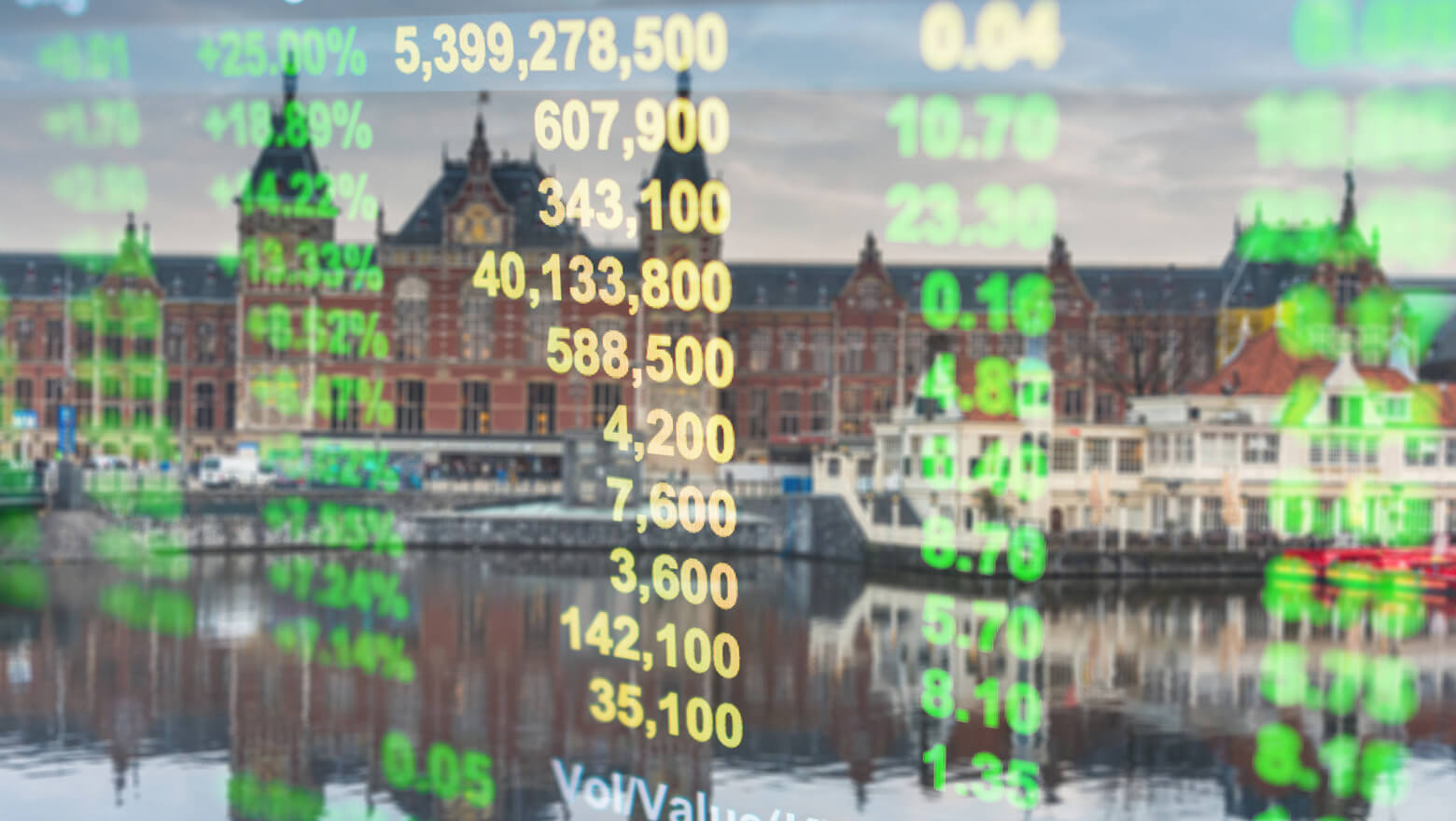
The Dawn of Financial Markets: Early Precursors to the Stock Market
Long before the concept of a “stock market” solidified, societies developed various mechanisms for trade, investment, and risk sharing. These early financial innovations laid the groundwork for what would eventually become the intricate web of global stock exchanges.
Ancient Roots of Exchange
The earliest forms of financial instruments and markets can be traced back millennia. In ancient Mesopotamia, around 1700 BCE, the Code of Hammurabi included laws governing contracts, loans, and even basic forms of commodity futures, where agreements were made to deliver goods at a future date for a predetermined price. In ancient Rome, publicans, individuals or companies contracted by the state to provide public services (like tax collection or infrastructure projects), would sell “parts” or shares in their ventures to wealthy citizens. These shares represented a claim on future profits and could sometimes be traded, demonstrating an early, albeit informal, secondary market for investment stakes. Such practices, while not a “stock market” in the modern sense, reveal a rudimentary understanding of capital aggregation and risk distribution.
Medieval Europe’s Commercial Innovations
During the High Middle Ages, Europe saw a resurgence of trade and the development of sophisticated merchant banking practices. Italian city-states like Venice and Florence became centers of commerce, giving rise to early forms of joint-stock companies for large ventures, particularly maritime trade. Merchants would pool capital to finance a single voyage, and profits would be divided proportionally. While these were typically dissolved after one venture, they were crucial steps towards continuous corporate existence. Furthermore, medieval fairs and nascent financial centers saw the trading of bills of exchange, which were early forms of credit instruments, and even municipal bonds, creating marketplaces for debt. The concept of transferable shares and ongoing enterprises, however, would still need centuries to fully develop.
The Birth of Modern Stock Exchanges: From Coffeehouses to Corporations
The true genesis of the modern stock market, characterized by transferable shares in permanent companies and organized trading venues, can be squarely placed in the 17th century, driven by the demands of colonial expansion and long-distance trade.
The Dutch Pioneer: Amsterdam and the VOC
The undisputed birthplace of the modern stock market is often attributed to Amsterdam in the early 17th century. The Dutch East India Company (Verenigde Oostindische Compagnie or VOC), founded in 1602, was the first company in history to issue publicly traded shares that offered investors a stake in its future profits rather than just a single voyage. To finance its massive and risky global trading expeditions to Asia, the VOC needed unprecedented amounts of capital. It achieved this by selling shares that represented ownership in the company itself, rather than in specific voyages. Crucially, these shares were permanent and transferable, meaning investors could buy and sell them to each other without affecting the company’s operations.
This innovation led to the establishment of an active secondary market for VOC shares in Amsterdam. Traders would gather in places like the Beurs (exchange) to buy and sell these shares, along with commodity futures and other financial instruments. The constant buying and selling of VOC shares, along with those of its rival, the Dutch West India Company, created the world’s first true stock market, complete with speculation, short selling, and other complex financial maneuvers. It demonstrated the power of collective investment to fund large-scale, long-term enterprises.
London’s Financial Hub: From Royal Exchange to Coffeehouse Trading
London quickly followed Amsterdam’s lead. While the Royal Exchange, founded in 1565, initially served as a center for commodity trading and foreign exchange, it was the burgeoning coffeehouses of the 17th and 18th centuries that became the unofficial hubs for stockbrokers. Companies like the East India Company (EIC), founded in 1600, also issued shares, though initially less liquid than the VOC’s.
By the late 17th century, dealing in government debt and company shares became increasingly common in London’s coffeehouses, particularly Jonathan’s Coffee-House and Garraway’s Coffee-House. These informal settings were where brokers would meet clients, share news, and execute trades. The chaotic and often unregulated nature of this trading led to periods of intense speculation, famously culminating in the South Sea Bubble of 1720, which involved massive over-speculation in the shares of the South Sea Company. This crisis highlighted the need for greater regulation and transparency, leading to the Bubble Act of 1720, an early attempt at market control. Over time, the informal gatherings evolved, culminating in the establishment of the London Stock Exchange in 1773, though it took a few more decades to solidify its position.
America’s Foundation: The Buttonwood Agreement

Across the Atlantic, the foundation of the American stock market was laid in New York City. In the late 18th century, trading in government bonds (issued to finance the Revolutionary War) and the shares of a few early banks and insurance companies was conducted informally. Brokers would meet at various locations, primarily under a buttonwood tree at 68 Wall Street. On May 17, 1792, twenty-four of these brokers signed the Buttonwood Agreement. This foundational document established a set of rules for trading among themselves, agreeing to trade only with each other and to charge a fixed commission rate. This agreement marked the official birth of what would eventually become the New York Stock Exchange (NYSE), providing a more organized and regulated environment for securities trading in the United States.
Evolution and Expansion: Shaping Global Finance
From its nascent stages, the stock market continued to evolve, driven by industrialization, technological leaps, and the increasing complexity of global commerce.
Industrial Revolution and Market Growth
The 19th century’s Industrial Revolution profoundly impacted stock markets. The massive capital requirements for building railroads, factories, and canals spurred the formation of numerous new joint-stock companies. Stock exchanges became critical mechanisms for channeling private savings into productive investments, fueling economic growth. As industries grew, so did the volume and variety of shares traded, making exchanges more central to national economies. Cities like Paris, Frankfurt, and Tokyo also established their own formal stock exchanges during this period, mirroring the developments in London and New York.
Technological Advancements and Democratization
The 20th century witnessed transformative technological advancements that revolutionized stock trading. The telegraph and later the telephone dramatically sped up communication, allowing for faster dissemination of prices and orders across distances. The ticker tape machine (invented in 1867) provided real-time price updates, democratizing information access to some extent. The advent of computers in the latter half of the 20th century, particularly after the “Big Bang” deregulation in London in 1986 and the rise of electronic communication networks (ECNs) and NASDAQ in the U.S., moved trading from physical floors to electronic screens. The internet and high-speed algorithms in the 21st century have further accelerated this trend, enabling global, near-instantaneous trading and opening markets to individual investors worldwide through online brokerage platforms.
Regulatory Frameworks and Market Stability
The growth and complexity of stock markets also necessitated the development of robust regulatory frameworks. Early markets were prone to manipulation, fraud, and speculative bubbles. Major market crashes, such as the Wall Street Crash of 1929, led to significant legislative responses. In the United States, the Securities Act of 1933 and the Securities Exchange Act of 1934 established the Securities and Exchange Commission (SEC), mandating disclosure requirements, prohibiting fraud, and setting rules for market conduct. Similar regulatory bodies emerged globally. These frameworks, constantly updated and refined, aim to protect investors, ensure market fairness, and maintain stability, balancing the need for innovation with the imperative of oversight.
The Stock Market Today: A Pillar of Modern Economy
Today, the stock market is far more than just a place to buy and sell company shares. It is a critical, multi-faceted institution that underpins global economic activity, reflecting the health and future prospects of industries and nations alike.
Its Multifaceted Role
The stock market serves several vital functions. It acts as a primary mechanism for capital formation, allowing companies to raise funds for expansion, research, and development by issuing new shares (primary market). It also provides liquidity for investors, enabling them to buy and sell existing shares, which encourages investment by ensuring that capital is not locked away indefinitely (secondary market). Furthermore, stock prices act as a powerful indicator of economic health and corporate performance, influencing business decisions and consumer confidence. For individuals, it offers a pathway to wealth creation and long-term financial growth through diversified investment.
Global Interconnectedness
Modern stock markets are profoundly interconnected. Events in one major financial center can ripple across the globe within minutes, highlighting the interdependent nature of the world economy. Advances in financial technology (FinTech), algorithmic trading, and globalization have fostered a seamless, albeit sometimes volatile, global financial ecosystem where capital flows freely across borders, seeking the most efficient and profitable allocations.

Understanding the Stock Market’s Enduring Legacy
In conclusion, “when the stock market was made” is not a simple historical date but a saga spanning centuries. It began with the pooling of resources for ancient ventures, formalized in the coffeehouses of Europe, and came into its own with the birth of the Dutch East India Company and the Buttonwood Agreement. From its humble origins, it has evolved into a sophisticated, technologically advanced, and globally interconnected system that is indispensable to modern capitalism. The stock market’s journey is a story of continuous innovation, adaptation, and an enduring testament to humanity’s quest for shared prosperity and economic progress, solidifying its role as an irreplaceable engine of global finance.
aViewFromTheCave is a participant in the Amazon Services LLC Associates Program, an affiliate advertising program designed to provide a means for sites to earn advertising fees by advertising and linking to Amazon.com. Amazon, the Amazon logo, AmazonSupply, and the AmazonSupply logo are trademarks of Amazon.com, Inc. or its affiliates. As an Amazon Associate we earn affiliate commissions from qualifying purchases.