
The calculator is often taken for granted in the modern digital landscape. We see it as a simple utility on our smartphones or a cheap plastic device in a student’s backpack. However, the question of when the calculator was invented does not have a single-date answer. Instead, it is a saga of human ingenuity spanning thousands of years, representing the foundational evolution of technology itself. From ancient wooden frames to the sophisticated silicon chips that power today’s AI-driven software, the calculator is the direct ancestor of the computer and the smartphone.
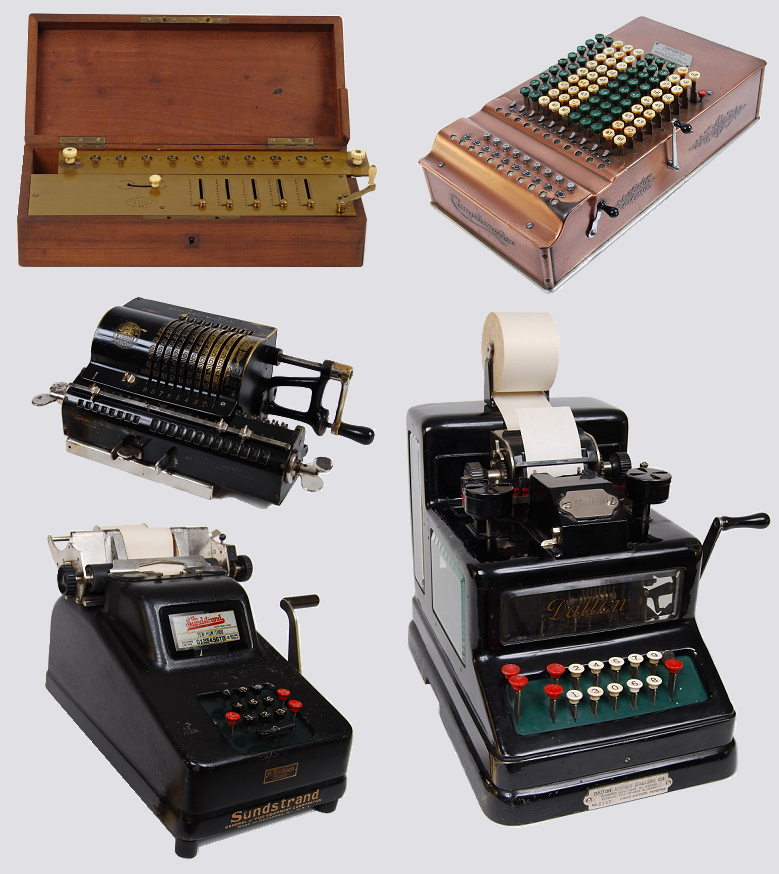
Understanding the history of the calculator is essential for any tech enthusiast, as it mirrors the progression of data processing, miniaturization, and the democratization of information.
The Ancient Foundations: From Manual Beads to Mechanical Gears
Before we had transistors and software, the “calculator” was a physical manifestation of logic. The drive to automate mathematics began as soon as trade and science outpaced the limits of human memory.
The Abacus: The First “Processor”
While many point to the 17th century for the birth of the “machine,” the concept of a calculating tool dates back to approximately 2500 BCE with the Sumerian abacus. This wasn’t a “machine” in the mechanical sense, but it functioned as the world’s first external processor. It allowed humans to offload cognitive labor to a physical interface. The development of the Roman abacus and later the Chinese Suanpan refined this logic, establishing the decimal and bi-quinary systems that would eventually inform binary logic.
Blaise Pascal and the 17th-Century Breakthrough
The true “invention” of the mechanical calculator occurred in 1642. Blaise Pascal, a 19-year-old French mathematician, sought to ease the burden of his father’s grueling work as a tax collector. He developed the “Pascaline,” a device using a series of interlocking gears and wheels. When a wheel made a full revolution, it advanced the next wheel by one notch—the first mechanical “carry” mechanism. This was a pivotal moment in tech history: for the first time, a human could perform addition and subtraction by interacting with an interface rather than performing the mental logic themselves.
Leibniz and the Stepped Reckoner
Following Pascal, Gottfried Wilhelm Leibniz expanded the horizon of mechanical computing in 1673. He invented the “Leibniz wheel” or the Stepped Reckoner. Unlike the Pascaline, which primarily added and subtracted, Leibniz’s machine could multiply and divide through repeated addition and shifting. More importantly for modern tech, Leibniz was a pioneer of the binary system, arguing that 0 and 1 could represent all mathematical logic—a philosophy that serves as the bedrock of every CPU manufactured today.
The Industrial Age: Commercialization and Complexity
As the 19th century arrived, the demand for precision in engineering and navigation led to the first mass-produced calculating technologies. This era moved the calculator from the laboratory of the scientist to the desk of the professional.
The Arithmometer: The First Mass-Produced Success
In 1820, Thomas de Colmar patented the Arithmometer. While earlier machines were fragile prototypes, the Arithmometer was the first commercially successful mechanical calculator. It was robust enough for daily office use and could perform all four basic arithmetic functions. This represented the “Enterprise Tech” phase of the calculator; it was expensive and bulky, but it revolutionized insurance, banking, and astronomy.
Charles Babbage and the Analytical Engine
No discussion of calculating tech is complete without Charles Babbage. In the mid-1800s, Babbage designed the Difference Engine and later the Analytical Engine. While these were more “computers” than “calculators,” they were the logical conclusion of the calculator’s evolution. Babbage envisioned a machine that used punched cards for input—a concept borrowed from Jacquard looms—and featured a “mill” (CPU) and a “store” (memory). Though never fully built in his lifetime, Babbage’s designs proved that calculation could be programmable, moving the niche from fixed-function hardware to flexible software-driven logic.
The Digital Revolution: The Transition to Electronic Computing

The mid-20th century saw a radical shift. The limitations of mechanical gears—friction, size, and speed—were bypassed by the discovery of electronic components. This era saw the calculator shrink from the size of a suitcase to a device that could sit on a desk.
The ANITA: The World’s First Electronic Desktop Calculator
In 1961, the British company Bell Punch released the ANITA (A New Inspiration To Arithmetic). It was the world’s first all-electronic desktop calculator. Instead of gears, it used vacuum tubes and cold-cathode switching tubes. It was silent, nearly instantaneous, and incredibly expensive (roughly equivalent to $8,000 today). This was the “Mainframe” era of calculators, where electronic speed was the ultimate luxury.
The Shift to Solid-State: Transistors and Integrated Circuits
The invention of the transistor at Bell Labs changed everything. Transistors replaced bulky, hot vacuum tubes, allowing for “solid-state” electronics. By the mid-1960s, companies like Sharp and Casio began producing calculators that used discrete transistors. However, the real game-changer was the Integrated Circuit (IC). The ability to pack thousands of transistors onto a single silicon chip allowed calculators to become smaller, more reliable, and significantly cheaper. This was the birth of the modern hardware industry, setting the stage for Moore’s Law.
The Pocket Revolution: How the Calculator Became a Personal Gadget
The 1970s marked the most significant shift in the history of the calculator: portability. This was the moment the calculator became a “gadget” in the modern sense—a personal, battery-powered tool that fit in a pocket.
Texas Instruments and the “Cal-Tech” Prototype
In 1967, Texas Instruments developed a prototype known as “Cal-Tech.” It could perform basic math and print the results on a small thermal paper strip. This project proved that handheld calculation was possible. By 1970 and 1971, the first truly portable, battery-operated calculators hit the market from companies like Sanyo, Sharp, and Canon. These devices utilized Large Scale Integration (LSI) chips, which condensed the entire logic of a calculator onto one or two pieces of silicon.
The HP-35 and the Rise of Scientific Computing
In 1972, Hewlett-Packard (HP) released the HP-35, the world’s first pocket scientific calculator. Before the HP-35, scientists and engineers relied on slide rules or massive desktop units to calculate logarithms and trigonometric functions. The HP-35 was a “disruptive technology” in the purest sense; it rendered the slide rule obsolete almost overnight. It also introduced Reverse Polish Notation (RPN), a logic system that allowed for complex nested calculations without the need for parentheses—a favorite among power users and engineers.
The Future of Calculation: From Physical Hardware to AI Integration
Today, the calculator has moved beyond a physical object. It has become a feature, a line of code, and an AI-driven service. The “gadget” has been absorbed by the “ecosystem.”
The Death of Hardware? The Calculator as a Mobile App
With the advent of the smartphone, the standalone basic calculator has largely disappeared from the consumer market. Whether it is the native iOS calculator or advanced apps like Desmos and GeoGebra, calculation is now a software service. This shift highlights a major trend in tech: the “dematerialization” of hardware. Functions that once required separate mechanical or electronic devices are now unified within a single glass-and-silicon slab.
AI-Powered Computation and Symbolic Math Engines
We are currently entering the era of “intelligent” calculation. Tools like WolframAlpha and AI models like GPT-4 (with specialized math plugins) do not just compute numbers; they understand symbolic logic. You can ask an AI to “calculate the derivative of this function and explain the steps,” and it will perform both the arithmetic and the pedagogical task. We have moved from the “Abacus” (manual tool) to the “Pascaline” (mechanical tool) to the “Pocket Calculator” (digital tool) and finally to the “Neural Network” (cognitive tool).

Conclusion: The Calculator as the Cornerstone of Tech
When was the calculator invented? It was invented in 2500 BCE as a frame of beads, in 1642 as a box of gears, in 1967 as a silicon prototype, and it is being reinvented today through cloud-based artificial intelligence.
The journey of the calculator is a testament to the Tech industry’s relentless pursuit of efficiency. It paved the way for the development of the microprocessor, the refinement of user interfaces, and the philosophy of personal computing. As we look toward a future of quantum computing and advanced AI, we must remember that it all started with the simple desire to make a number move from one place to another without human error. The calculator wasn’t just an invention; it was the spark that ignited the digital age.
aViewFromTheCave is a participant in the Amazon Services LLC Associates Program, an affiliate advertising program designed to provide a means for sites to earn advertising fees by advertising and linking to Amazon.com. Amazon, the Amazon logo, AmazonSupply, and the AmazonSupply logo are trademarks of Amazon.com, Inc. or its affiliates. As an Amazon Associate we earn affiliate commissions from qualifying purchases.