
Nvidia, a semiconductor titan synonymous with advanced graphics processing units (GPUs), has carved out a formidable presence in the technology sector, extending its influence from gaming and professional visualization to the burgeoning fields of artificial intelligence and data centers. As a publicly traded company, its remarkable growth trajectory has not only translated into technological breakthroughs but also into significant shareholder value. For investors, particularly those tracking high-growth stocks, understanding the financial maneuvers a company undertakes, such as stock splits, is crucial. Nvidia has indeed split its stock multiple times throughout its history, with each instance reflecting a different stage of its market valuation and strategic intent to broaden investor access.

A History of Value Creation: Nvidia’s Stock Split Journey
A stock split is a corporate action that increases the number of shares outstanding by dividing existing shares, without altering the total market capitalization of the company. For investors, this means they own more shares, but each share is worth proportionally less, resulting in the same total value of their holdings immediately after the split. Nvidia’s journey through multiple stock splits is a testament to its sustained growth and increasing per-share price over decades.
Nvidia’s first stock splits occurred early in its life as a public company, reflecting its initial growth and burgeoning importance in the PC graphics market. These earlier splits helped make the stock more accessible to a wider pool of investors, including institutional and retail participants, at a time when its per-share price might have become a psychological barrier for new buyers. The company executed a 2-for-1 stock split on June 18, 2000, shortly after its initial public offering in 1999. This was followed by another 2-for-1 split on September 11, 2002, and a third 2-for-1 split on April 7, 2006. Each of these events mirrored periods of strong performance and increased investor confidence in Nvidia’s long-term prospects. For instance, an investor holding one share before the first split would, after the third 2-for-1 split, effectively own eight shares.
The Rationale Behind Stock Splits
Companies typically initiate stock splits for several strategic financial reasons, all aimed at enhancing liquidity and market appeal without fundamentally changing the company’s valuation. The primary motivation is often to reduce the per-share price, making the stock more “affordable” and attractive to individual retail investors. When a stock’s price climbs significantly, it can appear expensive to smaller investors who prefer to buy shares in round lots (multiples of 100) or simply have limited capital. A lower price point can stimulate trading activity, thereby increasing liquidity – the ease with which shares can be bought and sold without significantly impacting the price.
Moreover, a stock split can signal management’s confidence in the company’s future growth prospects. Companies rarely split their stock if they anticipate a decline in value; rather, it’s a move often made by highly successful firms that expect their stock price to continue appreciating over time. While the intrinsic value of the company and an investor’s total holding value remain unchanged immediately after a split, the psychological impact of a lower per-share price can lead to increased demand, potentially contributing to further price appreciation over the long term. This strategy also positions the company favorably in the competitive landscape for investor capital, as it broadens the appeal beyond just large institutional players.
The 2021 Split: A Milestone for Retail Investors
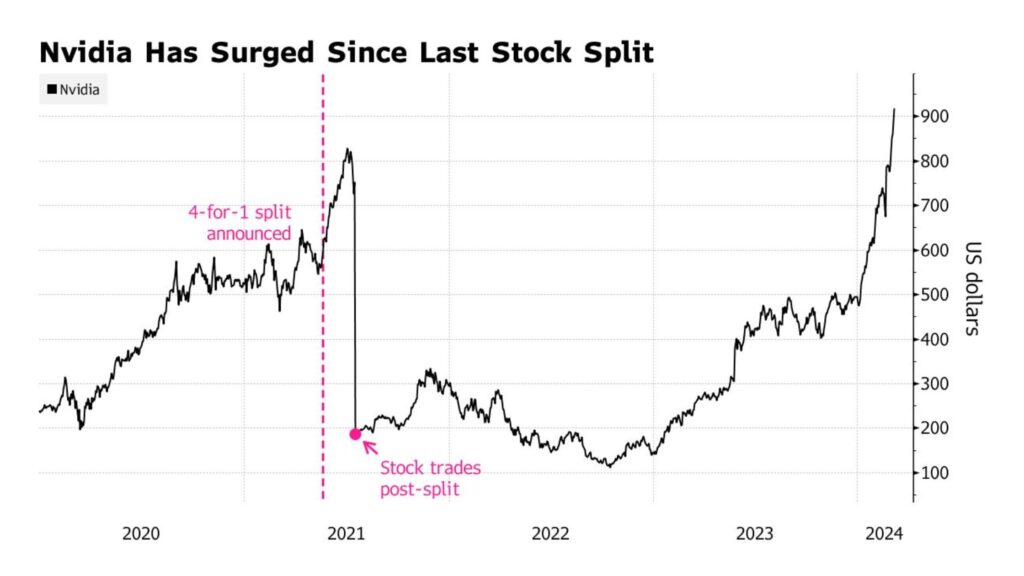
The most recent and widely publicized stock split for Nvidia occurred on July 20, 2021, when the company executed a 4-for-1 forward stock split. This event was highly anticipated by the market, given Nvidia’s skyrocketing stock price driven by explosive demand for its chips across various sectors, most notably gaming, data centers, and the burgeoning artificial intelligence industry. Prior to the announcement, Nvidia’s stock had surpassed the $600 per share mark, and by the time the split became effective, it was trading well above that, presenting a significant per-share cost for new investors.
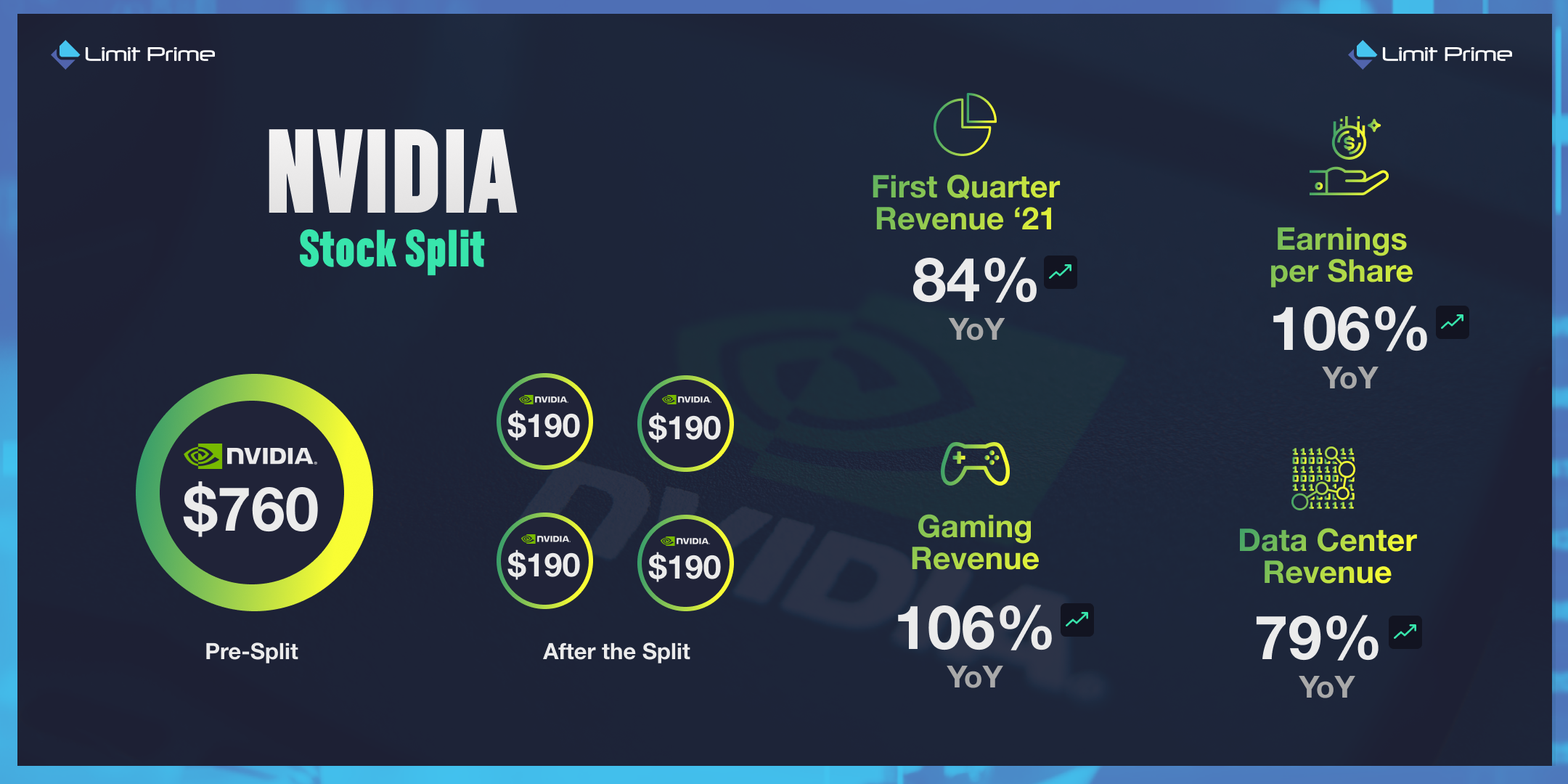
The record date for the 2021 split was July 19, 2021, meaning shareholders on record at the close of business on that date received three additional shares for every share they owned. Trading on a split-adjusted basis began on July 20, 2021. For an investor holding, for example, 100 shares of Nvidia stock priced at $800 each before the split, their investment totaled $80,000. After the 4-for-1 split, they would own 400 shares, with each share valued at approximately $200 (a quarter of the pre-split price), maintaining their total investment value at $80,000.
Investor Impact and Market Perception
The 2021 stock split had several tangible effects on investors and market perception. For existing shareholders, while their total investment value remained the same, they gained increased flexibility. Having more shares at a lower individual price point meant they could sell off smaller portions of their holdings without significantly impacting their overall portfolio balance, if they chose to do so. It also made it easier for some investors to manage their portfolio rebalancing strategies.
Perhaps the most significant impact was on potential new investors, particularly retail participants. The perceived affordability of a $200 share compared to an $800 share removed a psychological and practical barrier for many. This increased accessibility often leads to a broader ownership base, diversifying the shareholder composition and potentially contributing to greater liquidity. The market generally reacted positively to the split announcement, viewing it as a sign of Nvidia’s continued growth and management’s confidence. Historically, stock splits often precede periods of further stock appreciation, though it’s important to note that this is a market observation rather than a guaranteed outcome, as the underlying business fundamentals are the true drivers of long-term value.
Understanding Stock Splits in Your Investment Portfolio
For investors, a stock split is more than just a change in the number of shares; it has practical implications for portfolio management, tax considerations, and investment strategy. While the immediate financial value of your holdings doesn’t change, understanding how splits affect your investment records is essential.
One of the most critical adjustments is to your cost basis. Your cost basis is the original value of an asset for tax purposes, usually the purchase price. After a stock split, your cost basis per share must be adjusted downwards proportionally. For example, if you bought 100 shares of Nvidia at $400 per share (total $40,000) and it undergoes a 4-for-1 split, you would then own 400 shares. Your new cost basis per share would be $100 ($40,000 / 400 shares). This adjustment is vital for accurately calculating capital gains or losses when you eventually sell the shares. Brokerage firms typically handle these adjustments automatically, but investors should always verify their statements for accuracy, especially for tax reporting.
Dividend adjustments are also a consideration. If a company pays a dividend, the dividend per share will also be adjusted downwards proportionally after a split. For instance, if Nvidia paid a $0.04 quarterly dividend per share pre-split, a 4-for-1 split would typically result in a $0.01 quarterly dividend per share, ensuring the total cash dividend received by the shareholder remains the same for their total holding.
Distinguishing Splits from Dividends and Buybacks
It’s crucial for investors to understand that a stock split is fundamentally different from cash dividends or stock buybacks, although all three are corporate actions that can impact shareholder value or perception. A stock split involves issuing new shares to existing shareholders without any cash exchange and does not change the company’s total market capitalization or shareholder equity. Its primary goal is to lower the per-share price and increase liquidity.
A cash dividend, conversely, is a direct payout of a portion of a company’s earnings to shareholders, usually in cash. This action reduces the company’s cash reserves and shareholder equity, directly impacting the investor’s bank account with a taxable income. It’s a way for mature, profitable companies to return value to shareholders.
A stock buyback (or share repurchase) involves a company buying back its own shares from the open market. This reduces the number of outstanding shares, which typically boosts earnings per share (EPS) and can lead to an increase in the stock price due to scarcity and improved financial metrics. Unlike a split, a buyback reduces the overall share count and can directly increase the value of remaining shares by increasing their proportional claim on the company’s earnings. Each of these actions serves a distinct financial purpose and has different implications for a company’s balance sheet and an investor’s portfolio.
The Strategic Implications for a Growth Company like Nvidia
For a high-growth company like Nvidia, stock splits are not just about making shares more accessible; they are part of a broader financial strategy aimed at maintaining broad investor appeal and signaling confidence in the company’s future trajectory. By periodically adjusting the per-share price downwards through splits, Nvidia can ensure that its stock remains attractive to a diverse range of investors, from large institutional funds to individual retail traders. This broad appeal can help maintain a healthy trading volume and market interest, which are crucial for a company that relies on capital markets for visibility and potential future financing.
Moreover, a stock split can be seen as a strategic communication tool. When a company with a strong growth narrative, like Nvidia, announces a stock split, it often reinforces the market’s perception that the company anticipates continued growth and believes its stock price will further appreciate over time. It’s a move typically made when management feels the company’s fundamental value has grown significantly, justifying a recalibration of the share structure. This proactive management of its share price can contribute to sustained investor confidence and positive market sentiment, both of which are invaluable for a company operating in dynamic, capital-intensive sectors like semiconductors and AI.
Beyond the Split: Nvidia’s Enduring Investment Appeal
While stock splits garner significant attention, it is imperative for investors to remember that these actions are merely adjustments to the share structure and do not alter the fundamental value or operational health of a company. Nvidia’s enduring investment appeal stems from its robust business model, technological leadership, and consistent financial performance. The company’s dominance in high-growth markets such as artificial intelligence, data center computing, professional visualization, and automotive solutions continues to drive substantial revenue growth and profitability.
Investors looking at Nvidia for long-term value creation should focus on key financial metrics such as revenue growth, gross margins, net income, cash flow from operations, and market share in its core segments. The company’s continued innovation in chip design, software platforms (like CUDA), and strategic partnerships are the true engines behind its stock appreciation. A stock split, like the one in 2021 or its predecessors, merely facilitates broader participation in that growth by making ownership more granular. Ultimately, Nvidia’s position as a critical enabler of future technological advancements solidifies its appeal as a compelling investment, irrespective of its periodic share price adjustments.
aViewFromTheCave is a participant in the Amazon Services LLC Associates Program, an affiliate advertising program designed to provide a means for sites to earn advertising fees by advertising and linking to Amazon.com. Amazon, the Amazon logo, AmazonSupply, and the AmazonSupply logo are trademarks of Amazon.com, Inc. or its affiliates. As an Amazon Associate we earn affiliate commissions from qualifying purchases.