
In the high-stakes world of business, where capital is a precious commodity and every investment counts, a well-crafted business plan serves as the ultimate roadmap to financial success. At the core of every robust business plan, particularly its financial projections and funding requests, lies diligent market research. It’s not merely an academic exercise; it’s an indispensable financial due diligence step that provides the data-driven insights necessary to validate assumptions, mitigate risks, and attract the crucial investment needed to transform an idea into a profitable enterprise. For anyone venturing into entrepreneurship or seeking to expand an existing operation, understanding how to conduct thorough market research isn’t just a best practice—it’s a financial imperative.
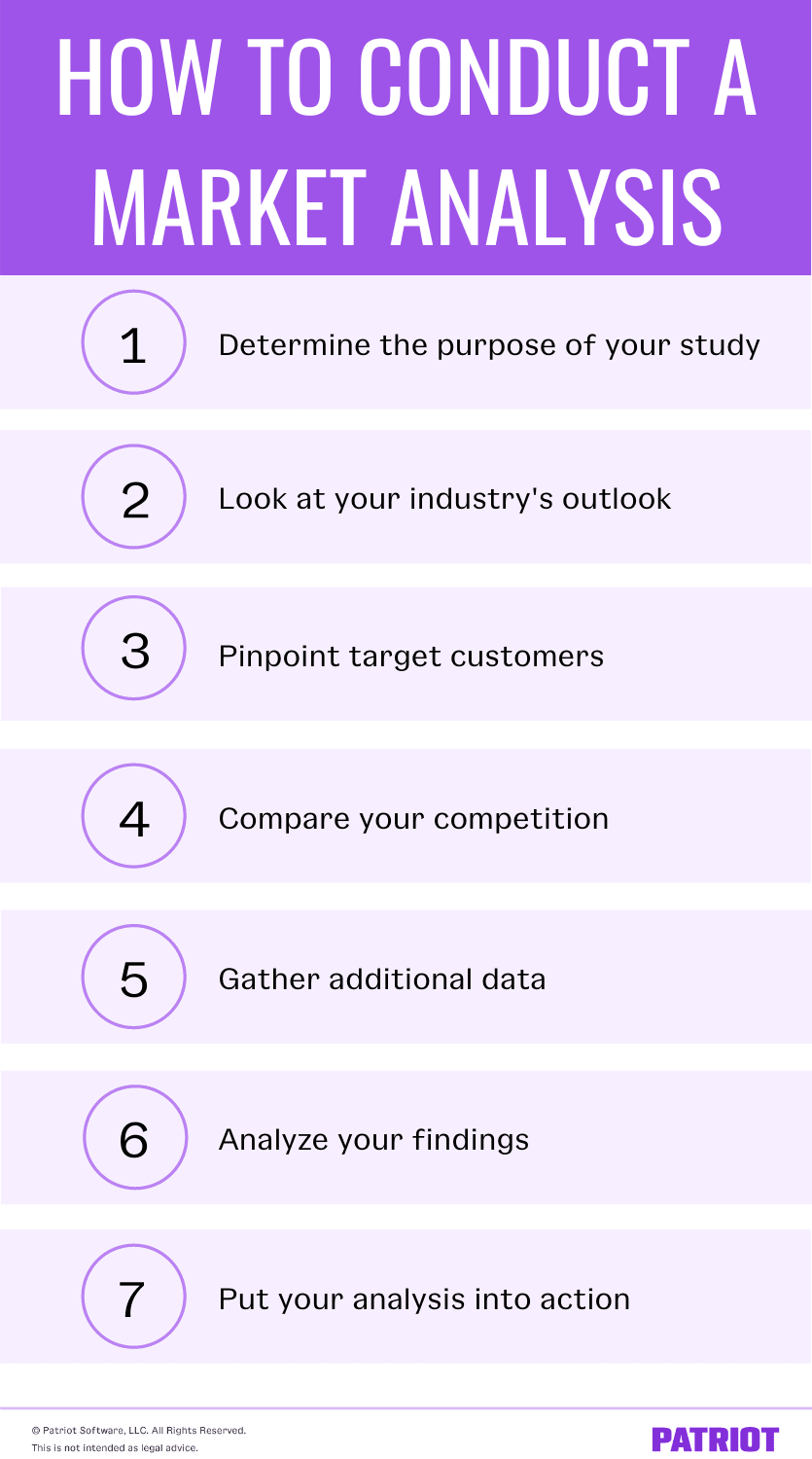
This comprehensive guide delves into the methodology of market research specifically tailored for a business plan, focusing on its profound implications for business finance, investment attraction, and the ultimate profitability of your venture. By grounding your strategic decisions in verifiable market data, you fortify your financial narrative, making your business plan not just persuasive, but demonstrably viable.
The Indispensable Role of Market Research in Financial Planning
Market research is the bedrock upon which realistic financial planning is built. Without it, financial projections are mere speculation, and investment appeals lack conviction. For financial stakeholders—investors, lenders, and even internal management—robust market data provides the comfort and confidence required to commit capital. It transforms a hopeful narrative into a substantiated financial opportunity.
Validating Your Business Concept and Financial Viability
Before a single dollar is invested, market research helps answer the critical question: Is there a viable market for your product or service that can generate sustainable revenue? This isn’t just about identifying demand; it’s about quantifying that demand in monetary terms. Research allows you to determine if enough customers are willing to pay for your offering at a price point that supports profitability. It helps identify unmet needs or underserved segments that represent lucrative opportunities, or conversely, highlight areas of intense competition where achieving financial traction might be prohibitively expensive.
A core output of this validation is the ability to project sales volumes with a degree of certainty. If research indicates a significant unmet demand for a specific solution, you can more confidently forecast the initial uptake and subsequent growth in sales. This direct link between market need and projected revenue forms the backbone of your financial model, making it less speculative and more evidence-based. Without this validation, any financial forecasts are built on shaky ground, making potential investors wary of committing funds to an unproven concept.
Informing Realistic Financial Projections
The financial section of a business plan is often the most scrutinized by potential investors and lenders. Market research directly informs key components of these projections, making them credible and defensible.
- Sales Forecasts: By understanding market size, growth rates, customer purchasing behavior, and competitive landscape, you can develop sales forecasts that are not arbitrary but rather grounded in data. This includes estimating unit sales, average transaction values, and the pace of customer acquisition.
- Pricing Strategy: Research into competitor pricing, customer willingness-to-pay, and perceived value helps establish an optimal pricing strategy that maximizes revenue while remaining competitive. Incorrect pricing can either leave money on the table or deter potential customers, both leading to financial underperformance.
- Cost Estimations: Market research can also shed light on potential costs. For instance, understanding customer acquisition costs (CAC) through competitor analysis or industry benchmarks is crucial for marketing budget allocation. Research into supplier availability and pricing, or regulatory compliance costs in a given market, also refines operational expense forecasts.
- Break-Even Analysis: Accurate sales forecasts and cost estimations, derived from market research, are vital for conducting a precise break-even analysis. Knowing when your venture will become financially self-sufficient is a critical piece of information for financial planning and investor confidence.
Attracting Investors and Securing Funding
For startups and growing businesses, securing funding is often contingent on presenting a compelling business plan underpinned by solid market research. Investors are inherently risk-averse; they seek opportunities with a clear path to profitability and return on investment.
Data-backed market research mitigates perceived risk by demonstrating that your business concept has been rigorously tested against market realities. It shows investors you understand your target market, the competitive landscape, and the financial opportunities and challenges ahead. When you can articulate the market size in monetary terms, identify specific segments with high purchasing power, and project realistic revenue streams based on evidence, you instill confidence. This proactive de-risking through research can be the deciding factor in attracting venture capital, securing a bank loan, or winning over angel investors who are evaluating numerous business proposals. It portrays you as a financially astute entrepreneur who has done their homework, rather than an idealist chasing an unverified dream.
Essential Market Research Steps for Financial Acumen
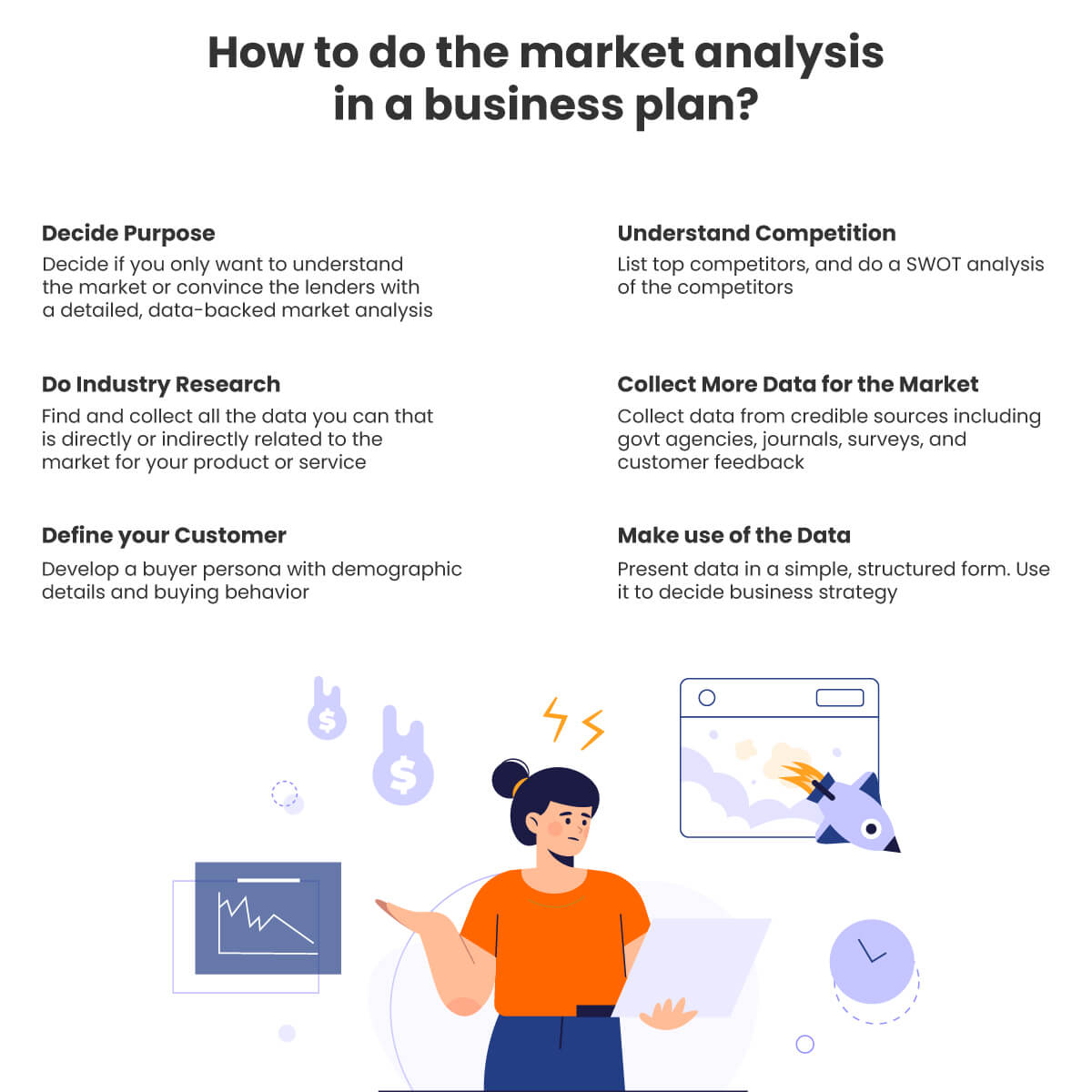
Effective market research for a business plan requires a structured approach that prioritizes data relevant to financial performance and strategic positioning. These steps ensure that the insights gathered directly contribute to a robust financial model and compelling investment narrative.
Defining Your Target Market and Customer Segment (Monetary Value)
The first step is to precisely define who your ideal customers are. Beyond demographics, this involves understanding their financial capacity and willingness to spend.
- Who are they? (Age, location, income, profession, lifestyle, psychographics).
- What are their needs and pain points? (Identify problems your product/service solves).
- What is their purchasing power? (Average disposable income, spending habits, budget allocation for similar products/services).
- What is their willingness to pay? (How much are they prepared to spend on a solution, and what value do they perceive at different price points?).
- Customer Lifetime Value (CLV): Estimate the potential revenue a customer can generate over their relationship with your business. This is crucial for justifying customer acquisition costs.
By segmenting your market and understanding the monetary value of each segment, you can prioritize marketing efforts and resource allocation towards the most financially promising customer groups.
Analyzing the Competitive Landscape (Financial Benchmarking)
Understanding your competitors is not just about knowing who they are; it’s about understanding their financial strategies, market share, and revenue streams to identify opportunities and threats.
- Identify Direct and Indirect Competitors: Who offers similar solutions, and who provides alternative solutions to the same customer pain point?
- Analyze Competitor Pricing and Business Models: How do they price their products/services? What are their subscription models, payment terms, or upselling strategies? This helps you position your own pricing competitively yet profitably.
- Assess Market Share and Revenue: While often difficult to obtain precise figures for private companies, industry reports and financial news can provide estimates of competitor revenue and market share. This helps benchmark your own potential and identify how much of the pie is left for you.
- Evaluate Competitor Strengths and Weaknesses (Financial Implications): If a competitor has a strong brand, how much will it cost to compete for market attention? If they have high operational costs, can you gain an advantage through efficiency? Look at their investment in R&D, marketing spend, and customer retention strategies, and consider the financial burden or advantage these present.
- Barrier to Entry: What financial resources would a new entrant need to compete effectively in your market? This helps assess the sustainability of your financial model against future competition.
This competitive financial benchmarking allows you to develop a differentiated value proposition that justifies your pricing and outlines how you will capture a share of the market’s monetary value.

Assessing Market Size and Growth Potential (Revenue Opportunity)
Quantifying the market size is paramount for financial projections, as it defines the total revenue opportunity. This involves calculating the Total Addressable Market (TAM), Serviceable Available Market (SAM), and Serviceable Obtainable Market (SOM).
- Total Addressable Market (TAM): The total revenue opportunity if 100% of the relevant market purchased your product/service. This often requires aggregating data on industry revenue, population segments, or economic indicators.
- Serviceable Available Market (SAM): The portion of the TAM that your business can realistically reach with its current business model and geographical scope. This narrows down the financial opportunity to a more actionable figure.
- Serviceable Obtainable Market (SOM): The realistic share of the SAM that your business can capture in the short to medium term, considering competition, resources, and market penetration strategies. This is the most conservative and financially relevant figure for initial projections.
Beyond current market size, understanding growth trends is crucial. A rapidly growing market offers more revenue potential and investor appeal. Conversely, a stagnant or declining market poses significant financial challenges. Research into industry growth rates, technological advancements, and shifting consumer trends helps you project future revenue streams and allocate resources for scalable growth. Quantifying these figures in monetary terms provides investors with a clear understanding of the potential financial upside and the scalability of your business.
Practical Approaches to Data Collection for Financial Modeling
The insights derived from market research are only as good as the data they are based on. Employing a mix of primary and secondary research methods ensures a comprehensive and accurate foundation for your financial model.
Primary Research for Direct Financial Insights
Primary research involves collecting new data directly from your target market. This is invaluable for gaining specific financial insights that are not publicly available.
- Surveys: Design surveys to gauge customer willingness to pay (e.g., using Van Westendorp’s Price Sensitivity Meter), purchase intent, feature preferences, and budget allocations for solutions like yours. Online survey tools make this cost-effective.
- Interviews: Conduct in-depth interviews with potential customers, industry experts, and even budget holders in B2B contexts. These provide qualitative data on financial pain points, budgeting processes, and perceived value, offering rich context to quantitative survey data.
- Focus Groups: Facilitate discussions with small groups of target customers to explore their attitudes towards different pricing models, product features, and overall financial value proposition. This can reveal nuances in financial decision-making that surveys might miss.
- Pilot Programs/MVPs: Launch a minimum viable product (MVP) or pilot program to test pricing, demand, and customer acquisition costs in a real-world scenario. The revenue and cost data from these initial tests are incredibly powerful for refining financial projections.
Secondary Research for Broad Market & Economic Data
Secondary research involves analyzing existing data collected by others. This is often the starting point, providing a broad understanding of the market and economic context.
- Industry Reports: Access reports from market research firms (e.g., Gartner, Forrester, Statista), trade associations, and consulting firms. These often contain valuable data on market size, growth rates, industry revenue, competitive analysis, and key trends, all presented in monetary terms.
- Government Statistics: Utilize data from national statistical agencies (e.g., U.S. Census Bureau, Eurostat) for demographic information, economic indicators (GDP growth, inflation, consumer spending), and business statistics relevant to your market. These provide a macroeconomic context for your financial projections.
- Financial Databases: Explore financial data from public companies in your sector via resources like Bloomberg, S&P Capital IQ, or Yahoo Finance. This allows for benchmarking of financial performance, profit margins, and valuation metrics, even if your direct competitors are private.
- Academic Research and Journals: University studies and peer-reviewed journals can offer theoretical frameworks and empirical data on consumer behavior, pricing strategies, and economic models that may be applicable to your venture.
Leveraging Digital Tools for Efficiency and Accuracy
While the focus is on “Money,” digital tools can significantly enhance the efficiency and accuracy of data collection, thereby impacting the financial resources required for research and the reliability of the resulting financial models.
- CRM and Analytics Platforms: If you have existing customers, use your CRM and website analytics to understand purchasing patterns, customer lifetime value, and the effectiveness of different marketing channels in driving revenue.
- Competitor Analysis Tools: Tools like SEMrush, SimilarWeb, or SpyFu can provide insights into competitor traffic, advertising spend, and keyword performance, helping you estimate their marketing budgets and potential customer acquisition costs.
- Social Listening Tools: Monitor social media conversations to gauge public sentiment, identify emerging needs, and understand how consumers perceive different brands and their value propositions. This qualitative data can inform pricing and product development, ultimately impacting revenue.
- Financial Data Aggregators: Platforms that aggregate economic and industry financial data can save significant time in secondary research, ensuring your financial models are based on the latest available market figures.
Translating Market Insights into a Robust Financial Plan
The culmination of your market research is its integration into the financial section of your business plan. This is where data transforms into actionable financial forecasts and a compelling narrative for investment.
Developing Revenue Forecasts and Pricing Strategies
Market research provides the justification for every line item in your revenue forecast. Based on your market size estimates (SOM), customer acquisition rates, and projected customer lifetime value, you can build a detailed sales projection. Your pricing strategy, informed by competitor analysis and willingness-to-pay research, directly feeds into these revenue figures. You can confidently explain why you anticipate a certain sales volume at a particular price point, significantly bolstering the credibility of your financial model.
Estimating Startup and Operating Costs
Market research also helps in estimating both one-time startup costs and ongoing operational expenses. Understanding competitor operational models can provide benchmarks for staffing, technology infrastructure, and marketing spend. Research into market entry regulations, labor costs in your chosen location, and supplier pricing can inform initial capital expenditures and recurring operating costs, making your cost projections more accurate and less prone to expensive surprises. This precision in cost estimation is crucial for accurate break-even analysis and profitability assessments.
Crafting a Compelling Financial Summary
The financial summary is the investor’s first glance at your business’s monetary potential. When it’s backed by thorough market research, it becomes far more persuasive. You can confidently present your projected income statements, cash flow statements, and balance sheets, explaining the market-driven assumptions behind key figures like revenue growth, gross margins, and customer acquisition costs. Highlighting the market opportunity (TAM, SAM, SOM in monetary terms) and your competitive financial advantages derived from research will underscore the investment potential and demonstrate a clear path to financial returns.
In conclusion, market research is not an optional add-on but an essential investment for any business plan seeking financial backing and long-term success. It grounds your vision in economic reality, de-risks capital allocation, and empowers you to articulate a financially sound strategy that resonates with investors and guides your venture towards sustainable profitability. By meticulously executing market research with a financial lens, you lay a solid groundwork for a compelling business plan and, more importantly, a flourishing financial future.
aViewFromTheCave is a participant in the Amazon Services LLC Associates Program, an affiliate advertising program designed to provide a means for sites to earn advertising fees by advertising and linking to Amazon.com. Amazon, the Amazon logo, AmazonSupply, and the AmazonSupply logo are trademarks of Amazon.com, Inc. or its affiliates. As an Amazon Associate we earn affiliate commissions from qualifying purchases.