
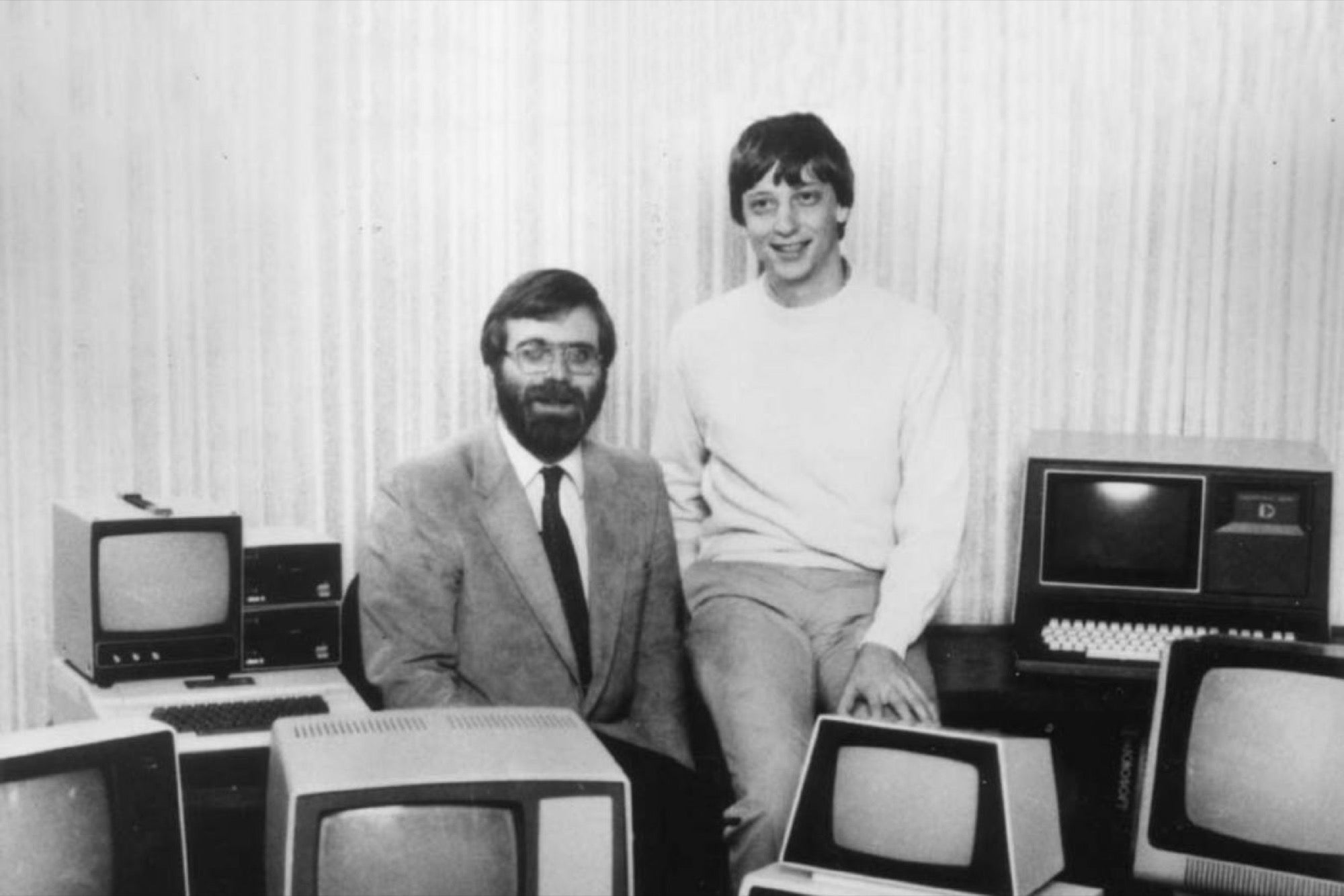
The history of modern computing is punctuated by several “big bang” moments, but few carry the weight and lasting impact of April 4, 1975. This was the date Microsoft—originally stylized as “Micro-soft”—was officially founded by childhood friends Bill Gates and Paul Allen. While the question “when was Microsoft started” yields a simple date, the technological context surrounding that date reveals a narrative of foresight, engineering prowess, and a fundamental shift in how humans interact with silicon.
In the mid-1970s, the concept of a “personal computer” was relegated to the fringes of hobbyist magazines and garage workshops. Computing was the domain of massive mainframes owned by corporations and universities. By starting Microsoft in 1975, Gates and Allen weren’t just launching a business; they were betting on a technological paradigm shift that would move the power of processing from centralized basements to the top of every desk.
The 1975 Breakthrough: The Birth of a Software Powerhouse
Microsoft’s inception was triggered by a specific piece of hardware: the MITS Altair 8800. In early 1975, Paul Allen showed Bill Gates an issue of Popular Electronics featuring this microcomputer. They realized that if hardware was becoming affordable, the missing link was accessible software. They contacted MITS, claiming they had a BASIC interpreter for the Altair. In reality, they hadn’t written a single line of code for it yet.
The MITS Altair 8800 and the BASIC Interpreter
The “start” of Microsoft was essentially an eight-week coding marathon. Gates and Allen worked tirelessly to develop a version of BASIC (Beginner’s All-purpose Symbolic Instruction Code) for the 8080 microprocessor. This was a monumental technical achievement because they had to simulate the 8080’s environment on a PDP-10 computer at Harvard.
When Allen flew to Albuquerque to demonstrate the software, it worked on the very first try. This success proved that software could be unbundled from hardware. Before this, hardware manufacturers wrote their own proprietary code. Microsoft’s foundation was built on the revolutionary idea that a software company could exist independently, creating tools that could run on various machines.
From Albuquerque to the World: The Move to Bellevue
While the company officially started in New Mexico to be near MITS, the technical ambitions of Microsoft soon outgrew its surroundings. In 1979, the company relocated to Bellevue, Washington. This move marked the transition from a small startup writing code for hobbyists to a professional software house.
During this era, Microsoft focused on refining languages like COBOL and FORTRAN for the burgeoning microcomputer market. Their technical strategy was clear: create the underlying tools that other developers would use to build applications. By capturing the “language” layer of the tech stack, Microsoft ensured that they were the gatekeepers of the software ecosystem long before the term “ecosystem” was a tech industry buzzword.
Architectural Shifts: From MS-DOS to the Graphical User Interface
As the 1980s dawned, the technology world underwent its most significant transformation yet: the entry of IBM into the personal computer market. When IBM sought an operating system for its new PC, they eventually turned to Microsoft. This partnership, solidified in 1980 and launched in 1981, changed the trajectory of the tech industry forever.
The IBM Partnership and the Rise of the Operating System
To meet IBM’s needs, Microsoft purchased the rights to QDOS (Quick and Dirty Operating System) from Seattle Computer Products and refined it into MS-DOS (Microsoft Disk Operating System). The technical genius of the IBM deal wasn’t just in the code, but in the licensing. Microsoft retained the right to license MS-DOS to other hardware manufacturers.
This led to the “PC Clone” explosion. Because MS-DOS was the standardized software layer, any company could build hardware that ran Microsoft’s OS. This created a unified technical architecture for the industry. Developers no longer had to rewrite their software for dozens of different machines; they wrote for MS-DOS, and Microsoft became the platform upon which the entire software economy was built.
Windows 1.0 and the Evolution of Personal Computing
While MS-DOS was powerful, its command-line interface was a barrier to mainstream adoption. Microsoft’s next technical leap began in the mid-80s with the development of Windows. Launched in November 1985, Windows 1.0 was not a standalone operating system but a graphical shell that ran on top of MS-DOS.

Technically, Windows introduced the concept of multitasking and the use of a mouse to a wider audience. Over the next decade, through versions 3.0, 3.1, and the revolutionary Windows 95, Microsoft moved toward the NT (New Technology) architecture. Windows NT was a game-changer because it moved away from the limitations of DOS, offering a 32-bit, multi-processor capable, and highly stable environment. This architecture remains the backbone of the Windows versions we use today, proving the long-term technical vision established decades ago.
The Cloud Revolution: Microsoft’s Pivot to Azure and SaaS
If the first thirty years of Microsoft were defined by the desktop, the last fifteen have been defined by the “Intelligent Cloud.” In the late 2000s, the tech industry began shifting away from local installations toward distributed computing. Microsoft, under the technical leadership of figures like Ray Ozzie and later Satya Nadella, began building what would become Azure.
Transitioning from On-Premise to the Cloud
The shift to Azure represented a total re-engineering of Microsoft’s technical DNA. Instead of shipping code on discs once every few years, Microsoft had to build a global infrastructure of data centers. Azure allowed businesses to rent computing power, storage, and networking on demand.
Technically, this required Microsoft to embrace open-source technologies—a massive departure from their previous stance. Today, more than half of the virtual machines on Azure run Linux. This pragmatism allowed Microsoft to dominate the enterprise tech space, providing the “plumbing” for the modern internet, from streaming services to complex scientific simulations.
Microsoft 365 and the Subscription Model
The transition from Office to Microsoft 365 is another masterclass in technical evolution. By moving productivity tools like Word, Excel, and PowerPoint to a Software-as-a-Service (SaaS) model, Microsoft ensured that users always had the latest security patches and feature updates.
This model relies on sophisticated synchronization engines (OneDrive) and web-based versions of complex desktop applications. The engineering challenge of making a browser-based spreadsheet perform as well as a native desktop application cannot be understated. It required a complete overhaul of how these legacy applications were coded and delivered.
The AI Frontier: Continuing the Legacy of Innovation
As we look back at when Microsoft started, it is impossible not to look forward at where they are leading. Today, the company is at the forefront of the Artificial Intelligence (AI) revolution, mirroring the excitement of the 1975 BASIC era but on a much more complex scale.
Strategic Partnerships with OpenAI
Microsoft’s technical roadmap is currently intertwined with Large Language Models (LLMs). By investing heavily in OpenAI and securing a partnership that grants them early access to GPT (Generative Pre-trained Transformer) models, Microsoft has integrated cutting-edge AI across its entire stack.
From a technical perspective, this involved building massive AI supercomputers within Azure, specifically designed to train and run these enormous models. Microsoft is no longer just a software or cloud company; it is an AI infrastructure provider. This pivot ensures that they remain the foundation for the next generation of software developers, just as they were for the Altair 8800 hobbyists.
Integrating Generative AI into the Tech Stack
The introduction of Microsoft Copilot marks the next phase of human-computer interaction. By embedding AI into Windows, Office, and GitHub, Microsoft is changing how code is written and how documents are created. For developers, GitHub Copilot acts as an AI pair programmer, suggesting entire blocks of code in real-time.
This is the spiritual successor to the BASIC interpreter of 1975. While BASIC allowed people to talk to computers using simple logic, Copilot allows people to talk to computers using natural language. The technical journey that started in Albuquerque has come full circle, consistently lowering the barrier to entry for technology while increasing the power available to the end-user.
In conclusion, when Microsoft was started in 1975, the goal was “a computer on every desk and in every home.” Having largely achieved that, the company’s technical mission has evolved into empowering every person and every organization on the planet to achieve more through cloud computing and artificial intelligence. From the 8-bit code of the 70s to the multi-billion parameter models of today, Microsoft’s history is a testament to the enduring power of software innovation.
aViewFromTheCave is a participant in the Amazon Services LLC Associates Program, an affiliate advertising program designed to provide a means for sites to earn advertising fees by advertising and linking to Amazon.com. Amazon, the Amazon logo, AmazonSupply, and the AmazonSupply logo are trademarks of Amazon.com, Inc. or its affiliates. As an Amazon Associate we earn affiliate commissions from qualifying purchases.