
In the landscape of modern investing, few names command as much gravity as Amazon (AMZN). Since its initial public offering in 1997, the company has transformed from a niche online bookseller into a global juggernaut spanning e-commerce, cloud computing, digital streaming, and artificial intelligence. For the individual investor, the question is rarely whether Amazon is a powerful company, but rather “how much Amazon stock is right for my portfolio?”
Determining the ideal allocation of a high-growth, high-volatility asset requires a deep dive into personal risk tolerance, financial goals, and the fundamental principles of diversification. This guide explores the strategic considerations necessary to decide how much of this tech titan belongs in your investment strategy.
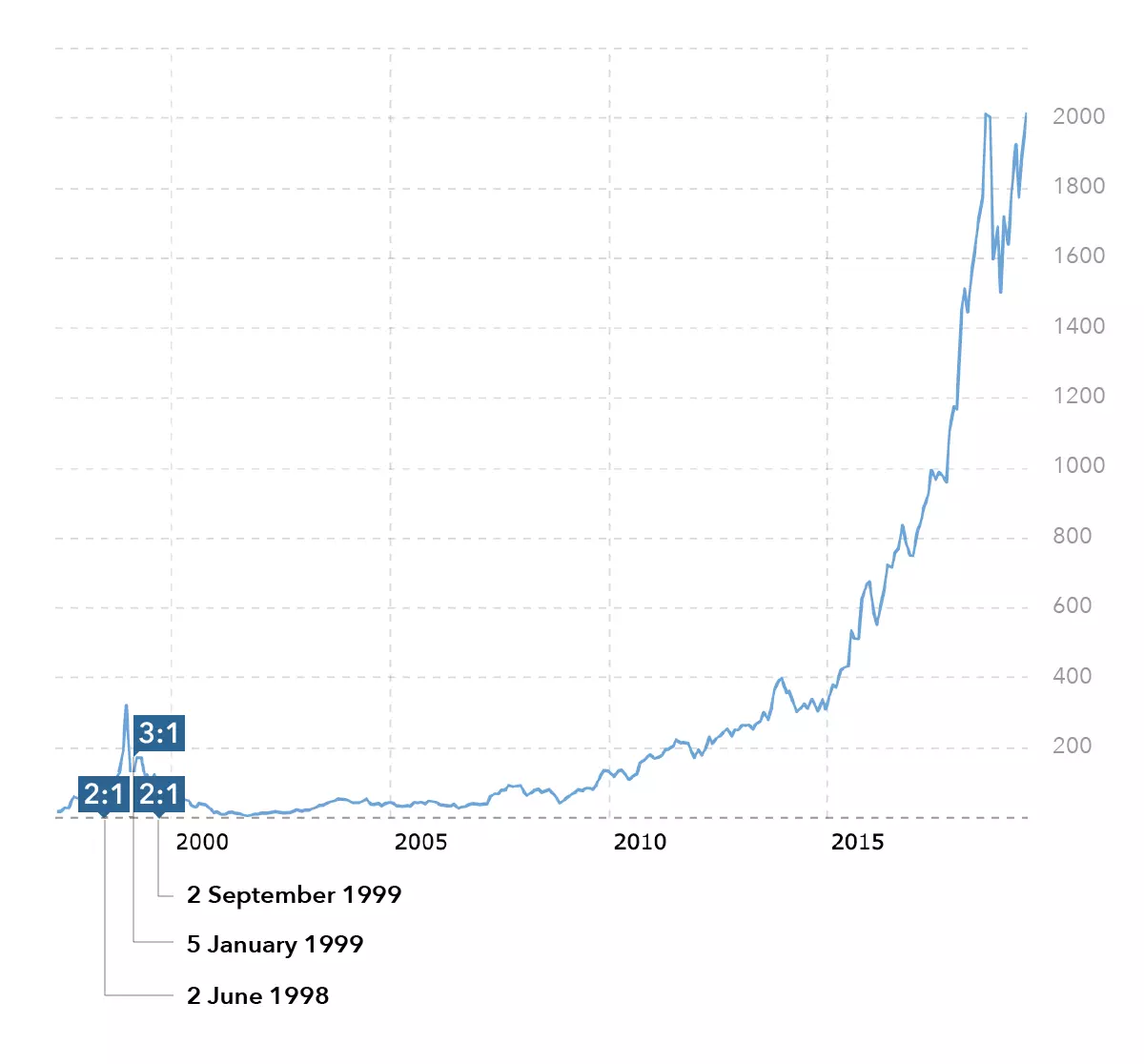
Understanding Amazon as a Financial Asset
Before deciding on a dollar amount or a percentage, an investor must understand the financial mechanics of Amazon. Unlike traditional retail stocks, Amazon operates on a model of aggressive reinvestment, which historically prioritized growth and market dominance over short-term dividends.
The Profitability of AWS vs. E-commerce
To understand how much to invest, you must understand where the money comes from. While the retail marketplace is the most visible part of the brand, Amazon Web Services (AWS) is the primary engine of its operating income. As a pioneer in the “Infrastructure as a Service” (IaaS) space, AWS provides high-margin revenue that cushions the lower-margin, capital-intensive retail business. When you buy Amazon stock, you are essentially investing in a high-margin software business tethered to a global logistics powerhouse.
Historical Volatility and Price Action
Amazon is famously volatile. Even during its most successful decades, the stock has experienced significant drawdowns, sometimes losing more than 30% of its value in a single market cycle. Investors must ask themselves if they have the emotional and financial fortitude to hold a large position during these downturns. If a 20% drop in Amazon’s price would cause you to panic-sell, your allocation is likely too high.
Calculating Your Ideal Allocation: The “How Much”
In the world of personal finance, there is no one-size-fits-all answer, but there are several frameworks used by wealth managers to determine position sizing.
The 5% Rule and Diversification
A common rule of thumb in conservative portfolio management is the 5% rule. This suggests that no single equity position should make up more than 5% of your total investment portfolio. By limiting your Amazon holdings to this threshold, you ensure that even if the company faces an unprecedented regulatory hurdle or a massive market shift, your overall financial health remains intact. For a $100,000 portfolio, this would mean a maximum of $5,000 in AMZN shares.
The Core-Satellite Strategy
For investors who are particularly bullish on big tech, the “Core-Satellite” strategy offers a more aggressive alternative. In this model, the “core” of your portfolio consists of low-cost, broad-market index funds (like an S&P 500 ETF), which likely already have a 3% to 4% weighting in Amazon. The “satellite” portion consists of individual stocks like Amazon that you believe will outperform the market. In this scenario, an investor might hold 10% to 15% in Amazon, acknowledging that they are intentionally taking on higher risk for the potential of higher rewards.
Assessing Risk Tolerance and Time Horizon
Your age and when you need the money are the most critical factors. A 25-year-old with a 40-year time horizon can afford a much larger “how much” than a 60-year-old nearing retirement. If you are in the wealth-accumulation phase, a higher concentration in growth stocks like Amazon can be justified. If you are in the wealth-preservation phase, your Amazon exposure should likely be scaled back in favor of income-generating assets or bonds.
Financial Metrics and Valuation: Timing Your Entry
Deciding “how much” to buy often depends on the current valuation of the stock. Buying a great company at an inflated price can lead to years of stagnation.
Moving Beyond the P/E Ratio
Traditional investors often look at the Price-to-Earnings (P/E) ratio to judge if a stock is expensive. Historically, Amazon’s P/E has been astronomical because the company reinvests almost all its profits back into the business. A more effective metric for Amazon is Price-to-Operating Cash Flow. By looking at the cash the business generates before reinvestment, investors can get a clearer picture of whether the current stock price is a “deal” or an “overpayment.”

The Impact of Macroeconomics on Tech Valuation
Interest rates play a massive role in how much Amazon stock you should hold at any given time. Growth stocks are generally valued based on their future cash flows. When interest rates rise, those future cash flows are “discounted” more heavily, often leading to a contraction in the stock price. If you are entering a high-interest-rate environment, you might decide to scale into your Amazon position slowly through Dollar-Cost Averaging (DCA) rather than buying a large lump sum.
Assessing Competitive Moats
When determining the size of your position, consider the “moat”—the competitive advantage that protects a company from rivals. Amazon’s moat is its logistics network and its Prime ecosystem. If you believe this moat is widening (through AI integration or healthcare expansion), it may justify a larger percentage of your “Money” niche investments. If you see signs of “diworsification”—spending money on ventures that don’t yield returns—it may be time to trim the position.
Practical Execution: Managing Your Amazon Position
Once you have determined the “how much,” the next step is managing that position over time. Investing is not a “set it and forget it” activity; it requires periodic maintenance.
The Power of Fractional Shares
For many years, Amazon’s high share price made it difficult for small investors to manage their allocation precisely. However, following the 20-for-1 stock split in 2022 and the rise of fractional share trading on platforms like Fidelity, Schwab, and Robinhood, investors can now buy exactly as much as they want. You no longer need thousands of dollars to own a piece of the company; you can start with as little as $10, allowing for more precise portfolio balancing.
Rebalancing to Avoid Over-Concentration
Suppose you start with a 5% allocation in Amazon. Because Amazon has historically outperformed the broader market, that 5% could easily grow to 10% or 15% of your portfolio over several years. While this growth is positive, it also increases your risk. Professional investors practice “rebalancing”—periodically selling a portion of their winning stocks to bring them back down to their target percentage. This forces you to “sell high” and allows you to move that profit into other undervalued areas of your portfolio.
Dollar-Cost Averaging (DCA)
Instead of trying to guess the perfect “how much” to buy today, many successful investors use DCA. By investing a fixed dollar amount every month, you buy more shares when the price is low and fewer when the price is high. This strategy removes the emotional stress of market timing and is an excellent way to build a significant Amazon position over several years without risking a large capital loss on a single poorly timed trade.
Long-Term Wealth Building and Exit Strategies
Owning Amazon stock is a marathon, not a sprint. To truly benefit from the “Money” aspect of this investment, you must have a clear vision for the end game.
Amazon in a Retirement Portfolio
Many investors hold Amazon within tax-advantaged accounts like a 401(k) or an IRA. Since Amazon does not currently pay a dividend, it does not provide the “passive income” that many retirees seek. Therefore, the value of Amazon in a retirement portfolio is purely for capital appreciation. If your goal is income, you may eventually need to sell your Amazon shares to transition into dividend-paying stocks or Treasury bonds as you age.
Tax Implications of Capital Gains
Before you sell any portion of your Amazon holdings, you must consider the tax consequences. If you have held the stock for more than a year, you will likely qualify for long-term capital gains tax rates, which are generally lower than ordinary income tax rates. Understanding the “cost basis” of your Amazon shares is essential for tax planning. If you are sitting on massive gains, selling all at once could trigger a significant tax bill, making a staggered exit strategy more financially sound.
The Role of Artificial Intelligence and Future Growth
As we look toward the next decade, Amazon’s involvement in AI through its “Bedrock” platform and custom chips (Trainium and Inferentia) represents a new frontier for growth. When deciding how much to hold, you are essentially placing a bet on Amazon’s ability to remain at the forefront of the AI revolution. If Amazon successfully integrates AI into its logistics and cloud services, the “how much” of yesterday may seem small compared to the potential of tomorrow.

Conclusion
Deciding how much Amazon stock to own is a balance between ambition and discipline. For most investors, a position ranging from 3% to 10% of their total liquid net worth provides significant exposure to one of the world’s most innovative companies without creating an existential threat to their financial future.
By focusing on valuation, utilizing strategic tools like rebalancing and dollar-cost averaging, and maintaining a clear-eyed view of your own risk tolerance, you can make Amazon a cornerstone of a robust, growth-oriented portfolio. In the end, the “right” amount is the one that allows you to sleep soundly at night while still participating in the long-term wealth creation that the digital economy offers.
aViewFromTheCave is a participant in the Amazon Services LLC Associates Program, an affiliate advertising program designed to provide a means for sites to earn advertising fees by advertising and linking to Amazon.com. Amazon, the Amazon logo, AmazonSupply, and the AmazonSupply logo are trademarks of Amazon.com, Inc. or its affiliates. As an Amazon Associate we earn affiliate commissions from qualifying purchases.