
The story of Microsoft is not merely a timeline of a corporate entity; it is the blueprint for the modern computing era. While many people ask “when was Microsoft invented,” the answer lies on April 4, 1975. However, the “invention” of Microsoft was less a singular moment of physical creation and more a visionary pivot in how humanity interacts with technology. Founded by childhood friends Bill Gates and Paul Allen in Albuquerque, New Mexico, Microsoft began as a small partnership with a singular, audacious goal: to put a computer on every desk and in every home.
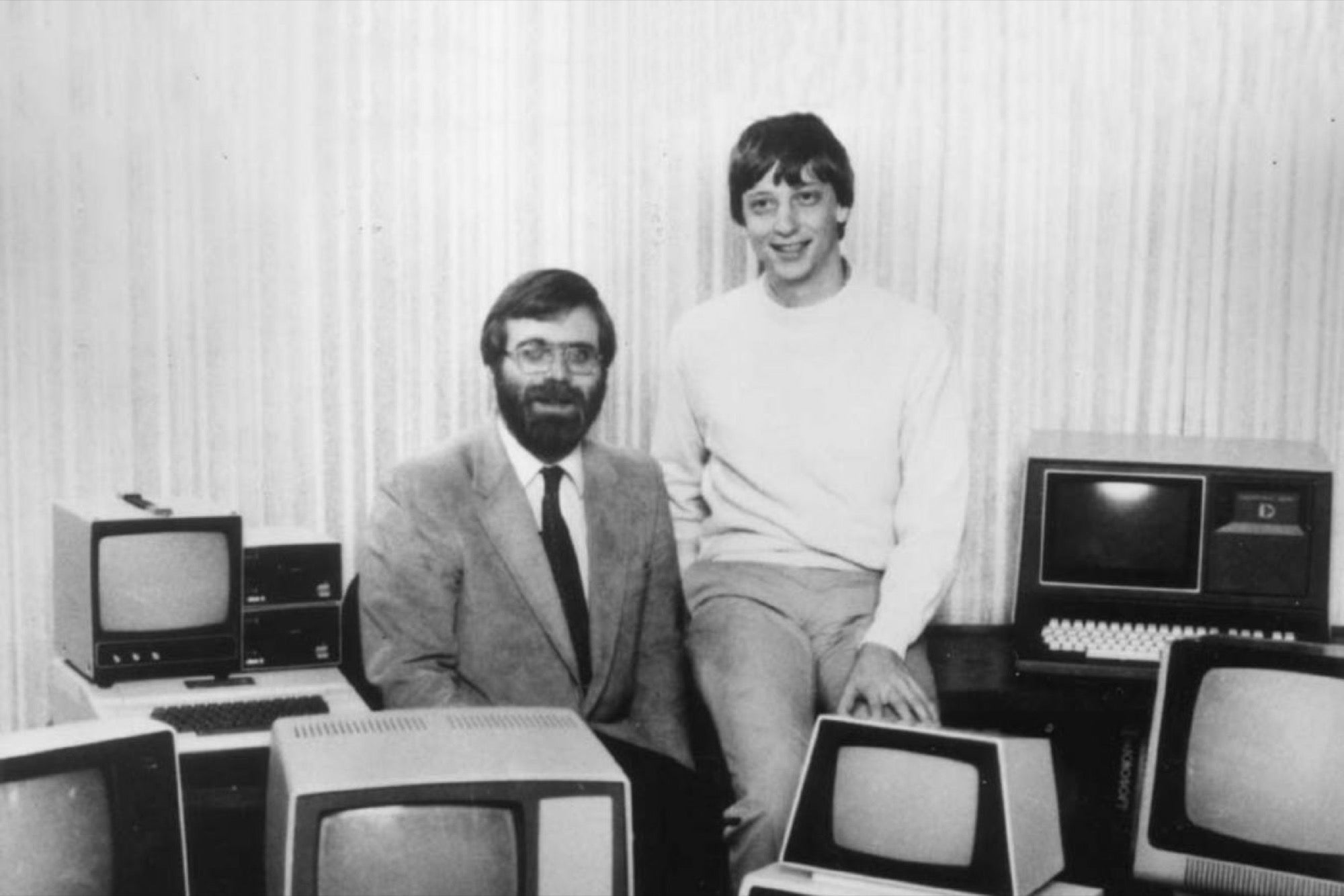
In 1975, the concept of a personal computer was a fringe hobbyist pursuit. The dominant machines of the era were massive mainframes housed in climate-controlled rooms, accessible only to large corporations and academic institutions. When the MITS Altair 8800 appeared on the cover of Popular Electronics in January 1975, Gates and Allen recognized that the hardware revolution was finally here, but it lacked the one thing that would make it useful to the masses: software. This realization was the spark that ignited the founding of Micro-Soft (originally hyphenated), a company that would eventually define the software industry for half a century.
The Genesis of Software as a Product
Before Microsoft, software was often bundled with hardware or shared freely among researchers. Gates and Allen changed the fundamental economics of technology by treating software as a standalone, high-value product. Their first major success was the development of a BASIC (Beginner’s All-purpose Symbolic Instruction Code) interpreter for the Altair 8800. Writing code for a machine they didn’t even physically possess—using a simulator Allen wrote for a PDP-10 mainframe—they demonstrated that software could be portable and scalable.
This era marked the shift from “hard-wired” logic to programmable intelligence. By 1977, Microsoft had signed an agreement with Apple Computer for Apple II BASIC and was beginning to license its software to various hardware manufacturers. This strategy of hardware-agnostic software licensing became the cornerstone of Microsoft’s dominance. Unlike their competitors who built closed ecosystems, Microsoft sought to become the “software layer” for every machine on the market.
In 1979, the company moved from Albuquerque to Bellevue, Washington, signaling its transition from a scrappy startup to a professional enterprise. By this point, the tech world was beginning to notice that the real power in computing didn’t reside in the plastic and silicon of the boxes, but in the lines of code that told those boxes what to do.
The MS-DOS Revolution and the IBM Partnership
The most pivotal moment in Microsoft’s history occurred in 1980. IBM, the titan of corporate computing, was looking to enter the personal computer market quickly to compete with Apple. They approached Microsoft to provide an operating system for their upcoming PC. Microsoft didn’t actually have an operating system at the time, so they famously purchased QDOS (Quick and Dirty Operating System) from Seattle Computer Products for $50,000, refined it, and rebranded it as MS-DOS (Microsoft Disk Operating System).
The brilliance of the IBM deal was not in the software itself, but in the contract. Bill Gates insisted that Microsoft retain the right to license MS-DOS to other manufacturers. IBM, believing the money was in the hardware, agreed. This proved to be one of the most significant strategic errors in business history for IBM and a masterstroke for Microsoft. As “IBM-compatible” clones flooded the market, Microsoft became the universal provider of the operating system. If you bought a PC in the 1980s, regardless of the brand, you were likely using Microsoft software.
This period established the “Wintel” duopoly (Windows and Intel), creating a standardized platform that allowed the software industry to explode. Developers knew that if they wrote a program for MS-DOS, it would work on millions of machines. This network effect made Microsoft’s ecosystem virtually untouchable for decades.
From Command Lines to Graphical Interfaces
While MS-DOS was successful, it was not user-friendly. It required users to memorize cryptic commands and navigate a text-only interface. The next leap in Microsoft’s evolution was the move toward a Graphical User Interface (GUI). Inspired by work done at Xerox PARC and the subsequent release of the Apple Macintosh, Microsoft began developing Windows.

Windows 1.0, released in 1985, was initially just a graphical shell that ran on top of MS-DOS. It featured tiled windows, mouse support, and basic applications like Paint and Notepad. However, it wasn’t until the release of Windows 3.0 in 1990 and Windows 3.1 in 1992 that the platform truly took off. These versions offered better memory management, improved graphics, and the ability to multitask effectively.
The cultural peak of this era arrived in 1995 with the launch of Windows 95. It was a global event, featuring a massive marketing campaign and the debut of the “Start” button and the Taskbar—elements that remain central to the Windows experience today. Windows 95 bridged the gap between the hobbyist and the everyday consumer, making the PC a standard appliance in households worldwide.
The Productivity Powerhouse: Microsoft Office
Parallel to the operating system’s growth was the development of the Microsoft Office suite. Recognizing that business users needed more than just an OS, Microsoft bundled Word, Excel, and PowerPoint into a single package in 1989 (initially for the Mac, then for Windows in 1990).
The impact of Excel on the financial world and Word on professional documentation cannot be overstated. By creating a unified “ecosystem of productivity,” Microsoft ensured that its software was indispensable in the workplace. The integration between these tools created another layer of “vendor lock-in,” as the .doc and .xls formats became the global standards for data exchange. This solidified Microsoft’s status not just as an OS provider, but as the primary architect of the digital workspace.
The Modern Pivot: Cloud Computing and Azure
By the mid-2000s, Microsoft faced significant challenges. The rise of the mobile web, the dominance of Google in search, and the resurgence of Apple with the iPhone made Microsoft appear like a legacy giant. For a time, the company struggled to find its footing in a “mobile-first” world. However, the appointment of Satya Nadella as CEO in 2014 marked a radical shift in the company’s trajectory.
Nadella moved Microsoft away from its “Windows-only” obsession and pivoted toward a “Cloud-first, Mobile-first” strategy. The centerpiece of this transformation was Microsoft Azure. Azure represents the modern “invention” of Microsoft—a massive, distributed global infrastructure that provides computing power, storage, and networking to businesses.
Unlike the era of physical software disks, the cloud era is about services and subscriptions (SaaS). Office 365 replaced the one-time purchase model with a recurring revenue stream, and Azure grew to become the second-largest cloud provider in the world. This transition proved that Microsoft could reinvent its technical foundations without losing its enterprise dominance. Today, Microsoft’s value is driven more by its server-side capabilities and enterprise cloud solutions than by the sale of individual Windows licenses.

The AI Frontier and the Future of Software
As we look at Microsoft today, nearly 50 years after its founding, the company is undergoing yet another reinvention: the integration of Artificial Intelligence (AI). Through its multi-billion dollar partnership with OpenAI and the development of Microsoft Copilot, the company is positioning itself at the forefront of the generative AI revolution.
This is a return to the company’s roots in 1975—providing the fundamental tools that empower others to build. Just as BASIC made the Altair 8800 usable and MS-DOS made the PC functional, AI is being integrated into every corner of the Microsoft stack to make computing more intuitive. From GitHub Copilot helping developers write code to AI-driven insights in Excel, Microsoft is betting that the next “OS” won’t be a window on a screen, but a conversational intelligence that understands intent.
The tech giant’s evolution from a two-man operation in a New Mexico office to a multi-trillion dollar leader in AI and cloud computing is a testament to its ability to adapt. While the company was “invented” in 1975, it has been reinvented through the eras of the PC, the internet, the cloud, and now, artificial intelligence. Microsoft’s journey reflects the broader history of technology itself—from the raw potential of microprocessors to the sophisticated, AI-driven digital world we inhabit today.
aViewFromTheCave is a participant in the Amazon Services LLC Associates Program, an affiliate advertising program designed to provide a means for sites to earn advertising fees by advertising and linking to Amazon.com. Amazon, the Amazon logo, AmazonSupply, and the AmazonSupply logo are trademarks of Amazon.com, Inc. or its affiliates. As an Amazon Associate we earn affiliate commissions from qualifying purchases.