
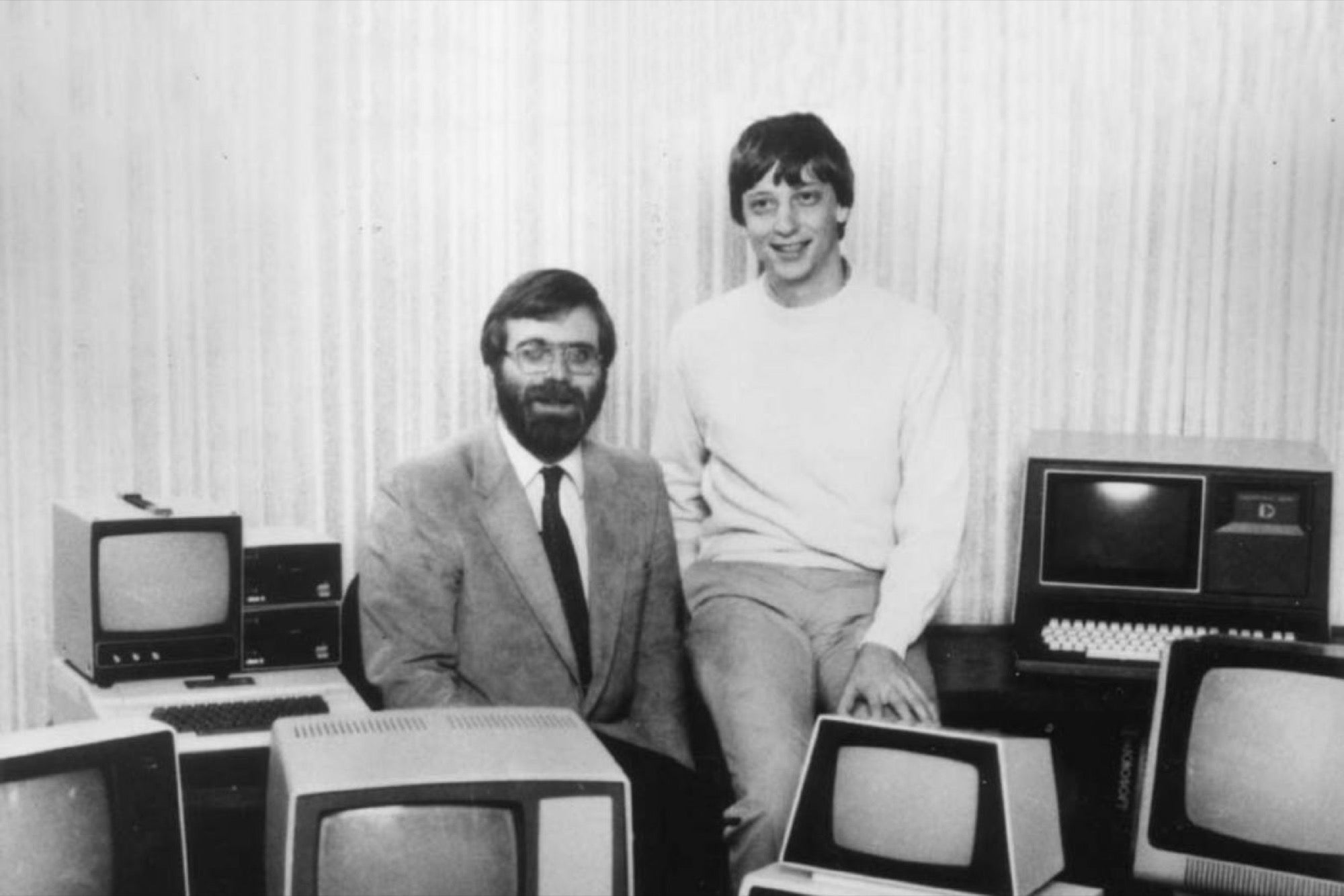
Microsoft was established on April 4, 1975. While many corporate histories begin in a polished boardroom, Microsoft’s story began in a small office in Albuquerque, New Mexico. Founded by childhood friends Bill Gates and Paul Allen, the company was born out of a singular, visionary realization: the microcomputer revolution was coming, and software would be the engine that drove it.
To understand when and why Microsoft was established is to understand the birth of the modern tech industry. At the time, the concept of a “software company” was almost non-existent. Computers were massive, expensive machines owned by governments and large corporations, and software was usually bundled as a free afterthought with the hardware. Gates and Allen saw a different future—one where “a computer on every desk and in every home” would become a reality through the power of standardized software.
The Genesis of Modern Computing: From BASIC to Bellevue
The establishment of Microsoft was catalyzed by the January 1975 issue of Popular Electronics, which featured the MITS Altair 8800. This machine was the world’s first successful microcomputer kit. Paul Allen saw the magazine and immediately realized that if someone could write a programming language for this machine, it would transform from a hobbyist’s toy into a functional tool.
The Altair 8800 and the Birth of Microsoft BASIC
Gates and Allen contacted Ed Roberts, the creator of the Altair, claiming they had a version of the BASIC (Beginners’ All-purpose Symbolic Instruction Code) programming language ready for the machine. In reality, they hadn’t written a single line of code for the Altair’s specific hardware. Working feverishly at Harvard University, they developed an interpreter that worked on the very first try during the demonstration in Albuquerque. This success led to the formal incorporation of “Micro-soft” (a portmanteau of microcomputer and software) on April 4, 1975.
Relocation and the Shift to Professional Software Development
By 1979, Microsoft had outgrown its New Mexico roots. The founders decided to move the company to Bellevue, Washington, closer to their hometown of Seattle. This move marked the transition of Microsoft from a small startup into a serious technological contender. During this period, the company focused on refining programming languages, creating versions of COBOL and FORTRAN, which allowed developers to build more complex applications for the burgeoning PC market.
The OS Revolution: MS-DOS and the IBM Partnership
If 1975 was the year of establishment, 1980 was the year of transformation. IBM, then the world’s dominant hardware manufacturer, decided to enter the personal computer market. They approached Microsoft to provide an operating system for their upcoming “IBM PC.”
The Pivot to Operating Systems
Microsoft did not actually own an operating system at the time. In a legendary move of business and technical strategy, Microsoft purchased “86-DOS” from Seattle Computer Products and refined it into MS-DOS (Microsoft Disk Operating System). Crucially, Bill Gates insisted that Microsoft retain the right to license the software to other manufacturers. This decision ensured that MS-DOS would become the industry standard, not just for IBM, but for the entire “PC clone” market that followed.
Standardizing the PC Landscape
Before MS-DOS, the computing landscape was fragmented. Different machines used different, incompatible software. By establishing a unified operating system, Microsoft provided a stable platform for third-party software developers. This created a “network effect”—the more people who used MS-DOS, the more software was written for it; the more software available, the more people bought MS-DOS-powered machines. This cycle cemented Microsoft’s dominance in the tech sector for decades.
The Windows Era and the Graphical User Interface (GUI)
While MS-DOS was powerful, its command-line interface was intimidating for average users. To truly bring computers into the home, Microsoft needed a more intuitive approach. This led to the development of Windows, a graphical layer that sat on top of MS-DOS, introducing icons, windows, and the mouse pointer.

From Windows 1.0 to the Windows 95 Milestone
Microsoft announced Windows in 1983 and released version 1.0 in 1985. However, it wasn’t until Windows 3.0 (1990) and Windows 3.1 (1992) that the software became a global phenomenon. These versions introduced improved memory management and the ability to run multiple programs simultaneously with a professional aesthetic.
The launch of Windows 95 in August 1995 remains one of the most significant events in tech history. It introduced the “Start” menu and “Plug and Play” features, effectively merging the operating system and the graphical interface into a single, cohesive experience. It sold seven million copies in its first five weeks, signaling that Microsoft had successfully moved from being a software vendor to being the architect of the digital world.
The Rise of the Productivity Suite: Microsoft Office
Parallel to the evolution of Windows was the development of the Microsoft Office suite. By integrating Word, Excel, and PowerPoint into a unified package, Microsoft established the technical standard for business productivity. The interoperability between these tools—the ability to embed an Excel chart into a Word document—created a workflow that remains the benchmark for professional environments today.
The Cloud Pivot: Software as a Service (SaaS) and Azure
As the 21st century progressed, the tech landscape shifted from desktop-centric computing to mobile and cloud-centric models. Under the leadership of CEO Satya Nadella, who took the helm in 2014, Microsoft underwent its most significant technical evolution since its establishment.
The “Cloud First, Mobile First” Strategy
The establishment of Microsoft Azure in 2010 marked the company’s entry into cloud infrastructure. Azure allowed businesses to move away from physical on-premise servers to a scalable, virtual environment. This shift transformed Microsoft from a company that sold “boxed software” into a provider of “Software as a Service” (SaaS). Products like Office 365 (now Microsoft 365) moved to the cloud, ensuring users always had the latest updates and security patches without needing to manually reinstall software.
Integrating Artificial Intelligence and Future Technologies
Today, Microsoft is at the forefront of the AI revolution. By establishing a deep partnership with OpenAI and integrating “Copilot” (an AI-powered assistant) across its tech stack, Microsoft is redefining how humans interact with software. From GitHub Copilot for developers to AI-driven insights in Excel, the company is leveraging Large Language Models (LLMs) to automate complex tasks. This represents the next stage of the journey that began in 1975: making technology more accessible and powerful for everyone.
Ensuring Digital Security in a Hyper-Connected World
As Microsoft’s software grew to run the world’s infrastructure, the company had to establish itself as a leader in digital security. In the early 2000s, the “Trustworthy Computing” memo sent by Bill Gates signaled a pivot toward making security the company’s highest priority.
The Evolution of Microsoft Defender and Enterprise Security
Initially viewed as a basic antivirus, Microsoft Defender has evolved into a sophisticated, AI-driven security suite. In the modern tech environment, Microsoft utilizes billions of signals from its global network to identify and mitigate threats in real-time. This security layer is now baked into the Windows kernel and Azure cloud services, protecting everything from individual laptops to multinational data centers.
The Zero Trust Architecture
In response to increasingly sophisticated cyber-attacks, Microsoft has been a primary advocate for the “Zero Trust” model. This technological framework operates on the principle of “never trust, always verify.” By establishing strict identity verification, device health checks, and least-privileged access, Microsoft ensures that the software ecosystems established decades ago remain resilient against modern digital threats.
Conclusion: A Legacy of Technological Evolution
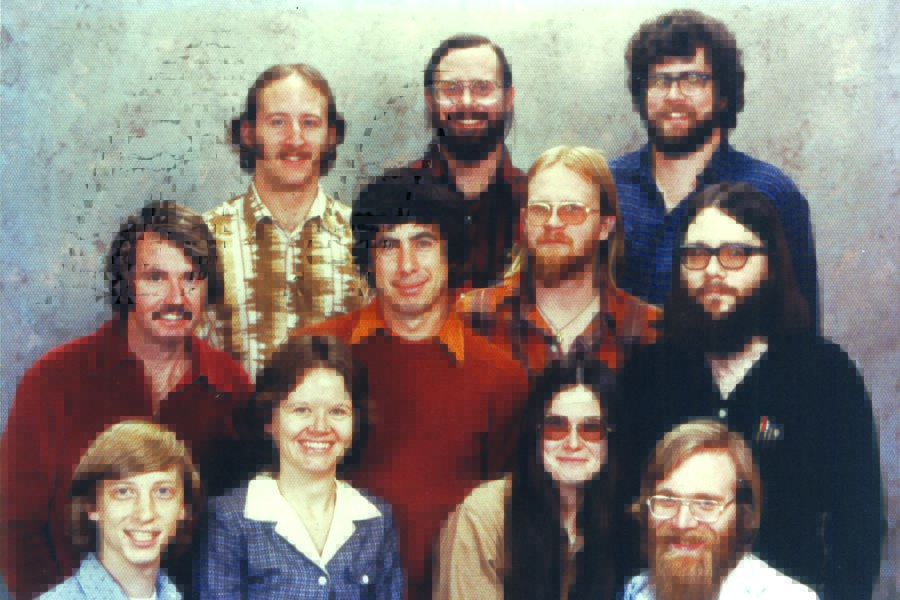
When Microsoft was established in 1975, the founders could hardly have imagined the sheer scale of the digital empire they were building. From a two-man operation in Albuquerque to a trillion-dollar entity that powers the global economy, Microsoft’s journey is a testament to the power of software.
The company’s success was never about a single product, but about its ability to establish and maintain technical standards. Whether it was the BASIC interpreter, the MS-DOS operating system, the Windows GUI, or the Azure cloud platform, Microsoft has consistently identified the “next big thing” in technology and built the tools to make it work. As we enter the age of AI, the principles established in 1975—innovation, scalability, and the democratization of technology—continue to guide the company toward the next frontier of human achievement.
aViewFromTheCave is a participant in the Amazon Services LLC Associates Program, an affiliate advertising program designed to provide a means for sites to earn advertising fees by advertising and linking to Amazon.com. Amazon, the Amazon logo, AmazonSupply, and the AmazonSupply logo are trademarks of Amazon.com, Inc. or its affiliates. As an Amazon Associate we earn affiliate commissions from qualifying purchases.