
The traditional path to finding the right medical specialist was once a linear journey involving a primary care physician, a physical referral slip, and a series of fragmented phone calls. Today, as the prevalence of osteoarthritis rises globally, the question of “what doctor treats osteoarthritis” is increasingly being answered by sophisticated technological ecosystems. From AI-driven triage software to advanced telehealth platforms, technology is redefining how patients identify, connect with, and receive treatment from joint specialists.
Leveraging AI and Algorithms to Identify the Right Specialist
The initial challenge for any patient experiencing joint pain is determining whether their symptoms require a General Practitioner (GP), a Rheumatologist, or an Orthopedic Surgeon. In the modern tech landscape, Artificial Intelligence (AI) and Machine Learning (ML) are stepping in to act as the first line of digital triage.

AI-Driven Symptom Checkers: The New Front Door to Medicine
Digital symptom checkers have evolved far beyond basic search engine queries. Sophisticated apps now utilize Natural Language Processing (NLP) to understand patient descriptions of pain, stiffness, and mobility limitations. By analyzing these inputs against vast databases of clinical outcomes, these AI tools can suggest whether a patient’s symptoms align with the systemic nature of rheumatoid arthritis—requiring a rheumatologist—or the mechanical wear-and-tear of osteoarthritis, which might necessitate an orthopedic specialist.
These algorithms are trained on millions of data points, allowing them to provide a probability-based recommendation. This reduces “doctor shopping” and ensures that the patient reaches the correct specialist on the first attempt, optimizing the efficiency of the healthcare system.
Algorithmic Matching: How Data Science Connects Patients with Rheumatologists
Once the need for a specialist is identified, data-driven platforms use algorithmic matching to find the best local provider. These platforms analyze more than just proximity; they evaluate specialist “performance data,” including patient satisfaction scores, successful surgical outcomes, and adherence to evidence-based protocols. For a patient looking for an osteoarthritis specialist, these tools can filter for doctors who specialize specifically in “joint preservation” or “minimally invasive robotic surgery,” ensuring a high-tech match for their specific stage of the disease.
The Rise of Telehealth and Virtual Consultations in Joint Health
The digital transformation of the “doctor-patient” relationship has reached a pinnacle with the integration of high-bandwidth telehealth services. For osteoarthritis patients, many of whom face mobility challenges, the ability to consult a specialist via a digital interface is a transformative technological shift.
Remote Monitoring Tools for Chronic Osteoarthritis Management
Telehealth is no longer just a video call; it is a comprehensive remote monitoring ecosystem. Integrated software allows doctors to track a patient’s range of motion and pain levels through smartphone sensors and peripheral devices. This “Remote Patient Monitoring” (RPM) technology sends real-time data to the specialist’s dashboard, allowing them to adjust treatment plans without the patient needing to travel to a clinic. This tech-heavy approach is particularly useful for those in rural areas where access to specialized rheumatologists or orthopedic clinics is limited.
Virtual Physical Therapy: Merging Motion Sensors with Medical Guidance
A critical part of osteoarthritis treatment is physical therapy. Tech startups are now deploying Computer Vision (CV) technology to facilitate “virtual” therapy sessions. Using a tablet or laptop camera, the software tracks the patient’s joints in 3D space as they perform exercises. If the patient’s form is incorrect, the AI provides immediate haptic or visual feedback. This data is then shared with the treating physician, providing a granular look at the patient’s progress that was previously impossible to capture between office visits.
Smart Diagnostics: Imaging Tech and Wearables in Osteoarthritis Treatment

When a patient finally meets with their specialist, the “tech stack” used for diagnosis and treatment planning is more advanced than ever. The transition from traditional X-rays to digital, data-rich diagnostic tools has changed the way osteoarthritis is managed.
Advanced Imaging Software and 3D Modeling
While traditional imaging reveals bone-on-bone contact, modern diagnostic software can now perform “quantitative MRI” (qMRI) analysis. This software measures the biochemical composition of cartilage, allowing doctors to detect osteoarthritis years before it appears on a standard X-ray.
Furthermore, 3D modeling software allows orthopedic surgeons to create a digital twin of a patient’s joint. If a joint replacement is necessary, surgeons can use this software to perform a “virtual surgery” before entering the operating room. This level of technological precision reduces operative time and improves the longevity of the prosthetic joint, a crucial factor for younger patients suffering from early-onset osteoarthritis.
Wearable Tech: Real-Time Biomechanical Data for Precision Care
The consumer wearable market—including smartwatches and specialized gait-tracking insoles—has provided doctors with a goldmine of longitudinal data. Advanced wearables now include accelerometers and gyroscopes capable of measuring “gait asymmetry.” For a doctor treating osteoarthritis, this data reveals how much a patient is “favoring” one knee over the other during their daily life.
Instead of relying on a patient’s subjective memory of their pain, a doctor can look at a software-generated report showing exactly how activity levels fluctuate throughout the week. This objective data allows for a highly personalized approach to medication, activity modification, and surgical timing.
Digital Health Platforms: Integrated Ecosystems for Osteoarthritis Patients
The final layer of the modern approach to osteoarthritis treatment is the emergence of integrated digital health platforms. these platforms act as a “central nervous system” for the patient’s journey, ensuring that data flows seamlessly between the patient, the primary care doctor, and the specialist.
Patient Portals and Blockchain for Secure Health Records
Data security and interoperability are paramount in modern tech-enabled healthcare. Emerging platforms are beginning to utilize blockchain technology to ensure that a patient’s imaging results and treatment history are securely accessible to any doctor in the care loop. This eliminates the need for patients to carry physical CDs of their MRIs from one specialist to another. These encrypted portals allow for instant sharing of high-resolution diagnostic files, ensuring that the specialist has the most up-to-date data available the moment a consultation begins.
The Future of Preventive Tech: Predicting Joint Degeneration
Looking forward, the integration of Big Data and predictive analytics is set to move osteoarthritis care from “reactive” to “proactive.” Large-scale health tech firms are developing models that analyze lifestyle data, genetic markers, and early-stage biomechanical shifts to predict which individuals are at the highest risk of developing severe osteoarthritis.
By the time a patient asks “what doctor treats osteoarthritis,” future technology may have already flagged them for preventive intervention. Software-based coaching programs can then guide the user toward weight management and joint-strengthening exercises, potentially delaying the need for specialized medical intervention for decades.
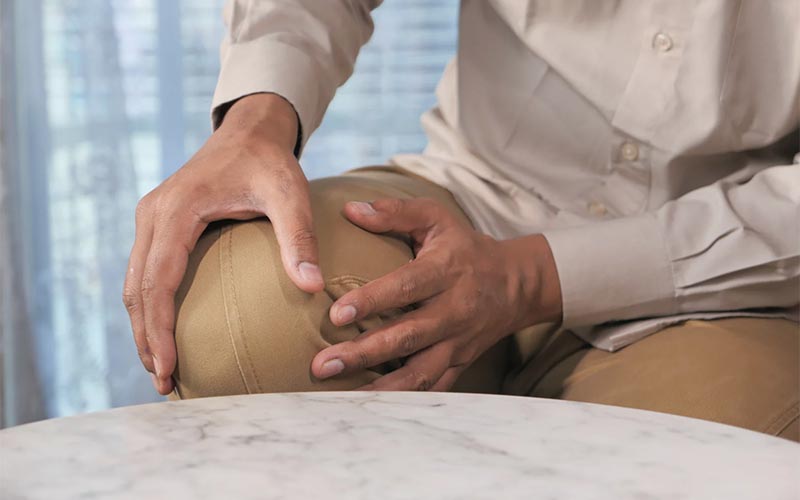
The Intersection of Human Expertise and Digital Innovation
In conclusion, the question of which specialist treats osteoarthritis is now inextricably linked to the technology used to find and interact with them. While the core medical expertise remains with rheumatologists and orthopedic surgeons, the delivery of that expertise has been revolutionized by AI, telehealth, and advanced diagnostic software.
For the modern patient, navigating osteoarthritis is no longer a matter of guesswork. It is a data-driven process where software identifies the need for care, digital platforms facilitate the connection, and smart diagnostics ensure that the treatment is as precise as possible. As we continue to integrate AI and wearable tech into the musculoskeletal field, the “tech-first” approach to joint health will become the standard, offering hope for more efficient diagnoses and significantly improved patient outcomes.
aViewFromTheCave is a participant in the Amazon Services LLC Associates Program, an affiliate advertising program designed to provide a means for sites to earn advertising fees by advertising and linking to Amazon.com. Amazon, the Amazon logo, AmazonSupply, and the AmazonSupply logo are trademarks of Amazon.com, Inc. or its affiliates. As an Amazon Associate we earn affiliate commissions from qualifying purchases.