
The history of finance is often measured in centuries, defined by the rise and fall of empires, the establishment of central banks, and the evolution of the gold standard. However, the most significant shift in modern monetary history occurred not in a marble-clad boardroom, but on a cryptography mailing list in the wake of the 2008 global financial crisis.
When was BTC created? The technical answer points to a specific date in early 2009, but the conceptual birth of Bitcoin began months earlier. Understanding the timeline of Bitcoin’s creation is essential for any investor, business owner, or personal finance enthusiast looking to grasp why this digital asset has become a trillion-dollar cornerstone of the modern financial landscape.

The Genesis of a New Financial Era: The Timeline of Bitcoin’s Birth
Bitcoin did not appear out of thin air. It was a calculated response to the fragility of the traditional banking system. To understand its creation, we must look at the crucial months between late 2008 and early 2009.
The Whitepaper: The Conceptual Blueprint (October 31, 2008)
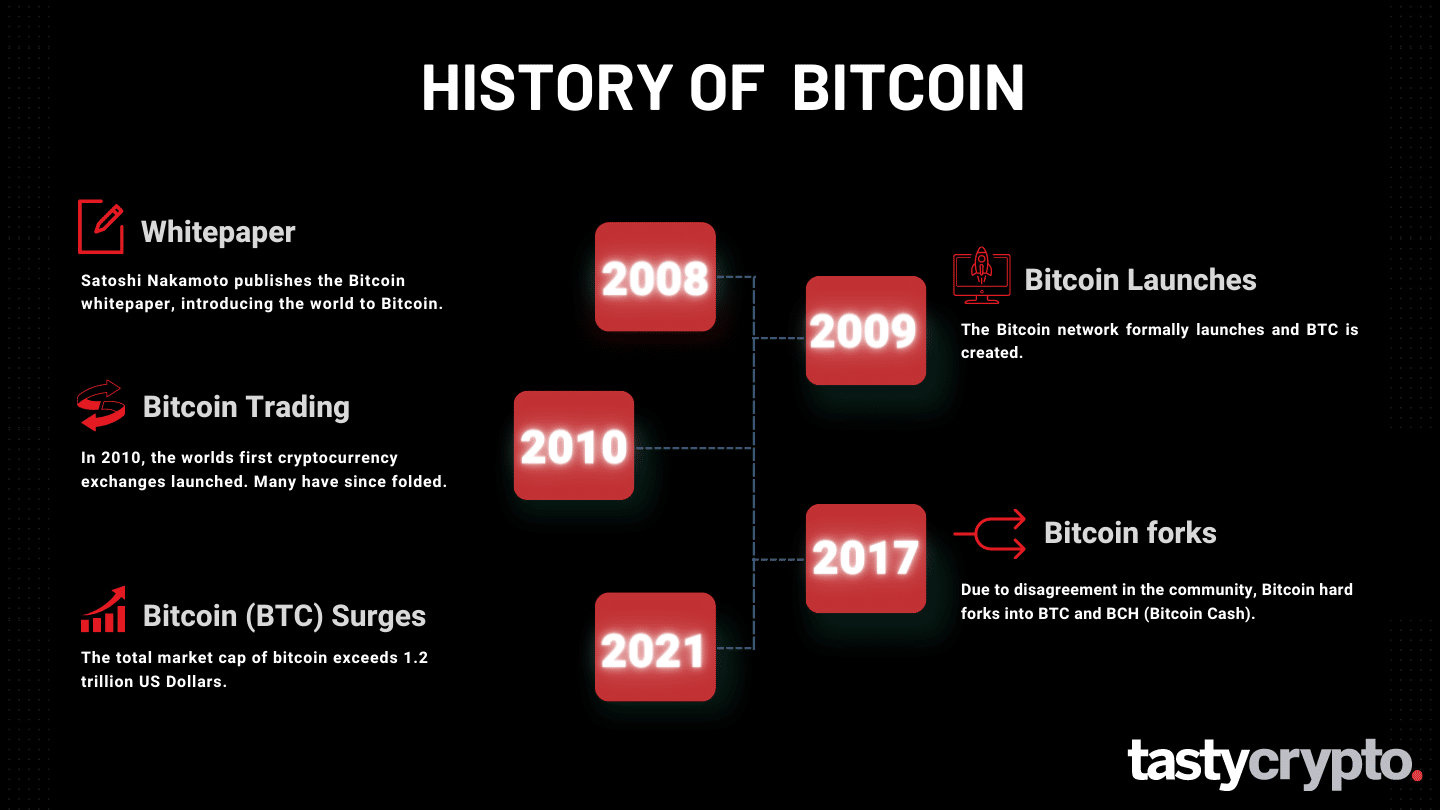
On Halloween of 2008, a person or group using the pseudonym Satoshi Nakamoto published a document titled Bitcoin: A Peer-to-Peer Electronic Cash System. This wasn’t just a technical manual; it was a manifesto for financial independence. Released just weeks after the collapse of Lehman Brothers, the whitepaper proposed a way for individuals to exchange value without the need for a “trusted third party” like a bank or government. From a money management perspective, this was the first time in history that a “triple-entry” accounting system was proposed on a global scale.
The Genesis Block: The Network Goes Live (January 3, 2009)
While the whitepaper was the plan, the actual creation of BTC occurred on January 3, 2009. This is when Satoshi Nakamoto mined the “Genesis Block” (Block 0) of the Bitcoin network. Within the code of this first block, Satoshi embedded a message: “The Times 03/Jan/2009 Chancellor on brink of second bailout for banks.” This headline from a London newspaper served as a timestamp, but more importantly, it served as a permanent reminder of Bitcoin’s purpose: to provide a financial alternative to a system that required taxpayer-funded bailouts for corporate failures.
The First Transaction and Value Discovery (January 2009 – 2010)
Following the launch, the first-ever Bitcoin transaction took place on January 12, 2009, when Satoshi sent 10 BTC to developer Hal Finney. At this stage, BTC had no market price. It was a theoretical currency. It wasn’t until May 22, 2010—now famously known as “Bitcoin Pizza Day”—that BTC was used for a commercial transaction. A programmer named Laszlo Hanyecz paid 10,000 BTC for two pizzas. At the time, those coins were worth roughly $40; today, they represent one of the most expensive financial lessons in history, highlighting the astronomical growth of Bitcoin as an investment.
Bitcoin as a Disruptive Asset Class: From Zero to Digital Gold
Since its creation in 2009, Bitcoin has evolved from a niche experiment into a legitimate asset class that rivals gold and traditional equities. Its journey is a testament to the changing philosophy of wealth in the digital age.
The Shift from Currency to “Digital Gold”
Initially envisioned as “electronic cash,” Bitcoin’s primary financial role has shifted toward being a “Store of Value” (SoV). In the world of personal finance, gold has long been the hedge against inflation. However, Bitcoin offers several advantages over physical gold: it is easily transportable, infinitely divisible, and verifiable on a public ledger. This has earned it the moniker “Digital Gold.” Investors now view it as a “non-sovereign” reserve asset—money that no single government can print or devalue.
Impact on Personal Finance and Wealth Building
The creation of Bitcoin opened a new door for retail investors. Historically, high-yield investment opportunities were reserved for “accredited investors” or those with significant capital. Bitcoin democratized access to a high-performing asset. Because you can buy a fraction of a Bitcoin (a Satoshi), individuals can start their investment journey with as little as $10. This inclusivity has reshaped how the younger generation approaches savings and long-term wealth building, moving away from traditional savings accounts that offer near-zero interest rates.
Institutional Adoption and Market Maturity
The narrative of Bitcoin changed significantly around 2020. Major corporations like MicroStrategy and Tesla began adding BTC to their balance sheets, treating it as a corporate reserve asset. The subsequent approval of Spot Bitcoin ETFs (Exchange-Traded Funds) in the United States marked a final milestone in its financial legitimacy. For the first time, pension funds, 401(k) providers, and institutional wealth managers could allocate capital to Bitcoin within a regulated framework, cementing its place in the global financial ecosystem.

Understanding the Economic Mechanics of Bitcoin
What makes Bitcoin “money”? Unlike fiat currencies (USD, EUR, GBP) which can be printed at will by central banks, Bitcoin is governed by immutable mathematical laws. These mechanics are what drive its value in the marketplace.
The 21 Million Cap: Hardcoded Scarcity
The most critical aspect of Bitcoin’s monetary policy is its fixed supply. There will only ever be 21 million BTC. In an era of “quantitative easing” and rising national debts, this scarcity is a powerful economic draw. From an investing standpoint, Bitcoin is the first truly scarce global asset. While more gold can be mined if the price rises, or more dollars can be printed, the 21 million limit of Bitcoin is unchangeable. This scarcity is a fundamental driver of its long-term price appreciation.
The Halving Cycles and Price Action
Bitcoin’s supply is released through a process called mining, and every four years, an event called “The Halving” occurs. This cuts the reward for miners in half, effectively reducing the rate at which new Bitcoin enters the market. For financial analysts, these cycles have historically correlated with massive bull markets. By creating a “supply shock,” the halving enforces a deflationary pressure that contrasts sharply with the inflationary nature of modern fiat currencies.
BTC vs. Traditional Fiat Systems
To understand the “Money” niche of Bitcoin, one must compare it to the traditional system. Central banks manage the economy by adjusting interest rates and the money supply. This “discretionary” policy can lead to currency debasement. Bitcoin, however, operates on “algorithmic” policy. The rules are known, transparent, and predictable. For business finance, this provides a level of certainty that is often missing in volatile emerging market currencies or during periods of high inflation in developed nations.
Investing in Bitcoin: Strategies and Considerations
Knowing when BTC was created is the first step; knowing how to integrate it into a financial strategy is the next. As Bitcoin matures, the strategies for managing it have become more sophisticated.
Long-Term Holding (HODLing) and Dollar-Cost Averaging
The most successful strategy for the average person has historically been “HODLing”—a term derived from a misspelling of “hold.” Because of Bitcoin’s volatility, trying to time the market is often a losing game for retail investors. Instead, many financial advisors suggest Dollar-Cost Averaging (DCA). By investing a fixed amount of money at regular intervals (e.g., $100 every month), investors can mitigate the impact of price swings and build a significant position over time.
Risk Management and Volatility
It is impossible to discuss Bitcoin as money without mentioning risk. Bitcoin is a highly volatile asset. While its 10-year CAGR (Compound Annual Growth Rate) has outperformed almost every other asset class, it has also seen drawdowns of 50% to 80%. Professional financial planning requires treating Bitcoin as a “high-risk, high-reward” component of a portfolio. It is generally recommended that investors only allocate a percentage of their net worth that they are comfortable seeing fluctuate significantly in the short term.
The Role of BTC in a Diversified Portfolio
Modern Portfolio Theory (MPT) suggests that adding a non-correlated asset to a portfolio can increase returns while reducing overall risk. For much of its history, Bitcoin has shown a low correlation with the S&P 500 and bonds. By including even a small allocation (1% to 5%) of BTC, investors may improve the Sharpe ratio (risk-adjusted return) of their total investment portfolio. As Bitcoin becomes more integrated into the financial system, it is increasingly being viewed not as a gamble, but as a necessary hedge against systemic financial risks.
Conclusion: The Legacy of January 2009
When Bitcoin was created on January 3, 2009, it was a quiet revolution. It didn’t launch with a marketing campaign or a Wall Street IPO; it launched with a single block of data and a commitment to financial transparency. Today, Bitcoin has grown into a global financial network that facilitates billions of dollars in transactions and provides a lifeboat for those living under failing monetary regimes.
Whether you view it as a speculative asset, a technological marvel, or a necessary evolution of money, one thing is certain: the creation of BTC changed the trajectory of personal and corporate finance forever. By understanding its origins and the economic principles that govern it, investors can better navigate the complex and exciting future of the digital economy.
aViewFromTheCave is a participant in the Amazon Services LLC Associates Program, an affiliate advertising program designed to provide a means for sites to earn advertising fees by advertising and linking to Amazon.com. Amazon, the Amazon logo, AmazonSupply, and the AmazonSupply logo are trademarks of Amazon.com, Inc. or its affiliates. As an Amazon Associate we earn affiliate commissions from qualifying purchases.