
In the modern landscape of personal finance, efficiency is the cornerstone of wealth management. For many, the monthly ritual of managing utilities, mortgage payments, credit card balances, and subscription services once involved a chaotic desk covered in paper statements and a checkbook. However, the advent of digital banking has introduced a transformative tool: Bill Pay.
At its core, Bill Pay is a service offered by banks, credit unions, and third-party financial applications that allows users to centralize and automate their outgoing payments. By shifting from manual payments to a streamlined digital ecosystem, individuals can gain unprecedented control over their cash flow. This guide explores the mechanics of Bill Pay, its strategic advantages in a personal finance portfolio, and how to optimize it to protect your credit and enhance your financial security.
Understanding the Basics of Online Bill Pay
To master your money, you must first understand the tools at your disposal. Online Bill Pay is not merely a digital version of writing a check; it is a sophisticated financial management system designed to bridge the gap between your liquid assets and your liabilities.
The Definition of Bill Pay Services
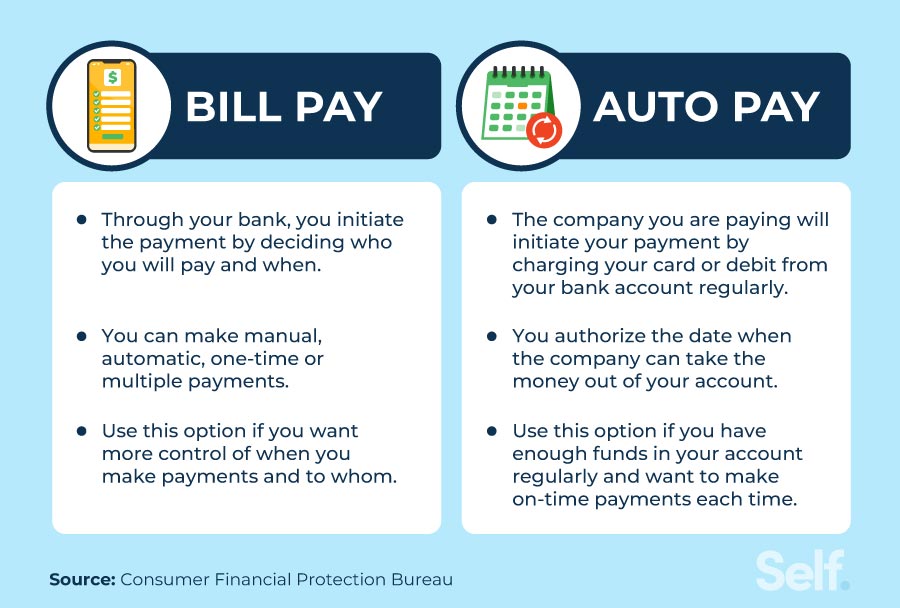
Bill Pay is a feature typically integrated into your online banking portal or mobile app. It serves as a command center where you can list all your “payees”—the companies or individuals you owe money to—and send funds directly from your checking account to them. Unlike a debit card transaction that happens at the point of sale, Bill Pay is a push-payment system. You dictate the amount, the date, and the frequency, giving you the power to manage exactly when capital leaves your account.
How Bill Pay Functions Behind the Scenes
When you initiate a payment through your bank’s Bill Pay service, the bank attempts to send the funds electronically via the Automated Clearing House (ACH) network. This is the fastest and most secure method, usually taking one to three business days. However, if the recipient is a smaller entity—such as a local landlord or a specialized service provider—that is not set up for electronic transfers, the bank will actually print a physical check and mail it on your behalf. This hybrid nature makes Bill Pay a universal solution, capable of paying a massive utility corporation or a neighborhood lawn care service from the same interface.
Bank-Based vs. Biller-Direct: Choosing Your Strategy
In the world of financial tools, there are two primary ways to handle digital payments: through your bank’s centralized Bill Pay or through “Biller-Direct” systems (paying on the service provider’s own website). Understanding the nuances between these two is vital for effective money management.
The Convenience of Consolidated Banking Portals
The primary advantage of using your bank’s Bill Pay service is consolidation. Instead of logging into twelve different websites to pay twelve different bills, you log into one. This provides a “birds-eye view” of your monthly obligations. From a budgeting perspective, this is invaluable. You can see your total monthly burn rate in one list, making it easier to identify subscriptions you no longer need or utility spikes that require investigation. Furthermore, centralized Bill Pay keeps your sensitive banking data in one place—your bank—rather than spreading your account or routing numbers across multiple corporate databases.
When to Use Biller-Direct Payment Portals
While bank-centered Bill Pay is excellent for organization, Biller-Direct payments have their own strategic place. When you pay a bill directly on a service provider’s website (like a credit card issuer or a cell phone provider), the payment is often credited to your account instantly. This is particularly useful for credit cards, where you might want to see your available credit increase immediately. Additionally, some companies offer “Auto-pay discounts.” For example, many mobile carriers provide a monthly credit if you set up recurring payments directly through their portal. In these specific cases, the direct financial incentive may outweigh the convenience of centralized banking.
The Strategic Advantages of Automating Your Finances

Using Bill Pay is more than a convenience; it is a tactical move to improve your overall financial health. When utilized correctly, it acts as a safeguard for your credit score and a tool for wealth preservation.
Enhancing Financial Discipline and Credit Health
One of the largest components of your FICO credit score—roughly 35%—is payment history. Even a single late payment can cause a significant drop in your score, which in turn increases the interest rates you pay on future loans and mortgages. Bill Pay allows you to schedule payments in advance, ensuring that “life getting in the way” never results in a missed deadline. By automating the minimum payments on all liabilities, you create a floor of financial safety that protects your creditworthiness around the clock.
Security Features and Fraud Protection
From a security standpoint, Bill Pay is significantly safer than mailing paper checks. Paper checks contain your account number and routing number in plain text, making them a prime target for mail theft and “check washing” fraud. Digital Bill Pay encrypts your data and uses the bank’s internal security protocols. Furthermore, many Bill Pay services offer “Payment Guarantees.” If the bank fails to deliver a payment by the scheduled date despite you having sufficient funds, they will often cover any resulting late fees. This level of institutional backing is something that manual payments simply cannot offer.
Setting Up Your Bill Pay System: A Step-by-Step Approach
Transitioning to a fully digital Bill Pay system requires an initial investment of time, but the long-term dividends in time saved and stress reduced are immense.
Gathering Necessary Information
To set up a payee, you need three pieces of information found on your most recent statement: the company’s legal name, your account number with them, and the billing address. Once this data is entered into your bank’s system, it is saved for future use. You can then categorize these payees (e.g., Housing, Utilities, Insurance) to better track your spending habits.
Establishing Payment Logic: Fixed vs. Variable
There are two ways to schedule your Bill Pay:
- Fixed Payments: For bills that never change, such as a mortgage or a car loan, set up a recurring “Auto-pay” for the exact amount.
- Variable Payments: For bills that fluctuate, like electricity or credit cards, you can use “E-bills.” Many banks allow you to link your account so that the biller sends the digital statement directly to your bank. You can then review the amount and click “pay” with a single button, or set rules (e.g., “Always pay the full balance of my electric bill as long as it is under $200”). This hybrid automation keeps you in the loop while removing the friction of manual entry.
Common Pitfalls and How to Avoid Them
Even the best financial tools require oversight. To ensure your Bill Pay system runs smoothly, you must be aware of the operational realities of digital transfers.
Managing Overdraft Risks
The most common issue with automated Bill Pay is the “set it and forget it” mentality leading to an empty account. If a large payment is scheduled to go out on the 1st of the month, but your paycheck doesn’t clear until the 3rd, you could face hefty overdraft fees. To mitigate this, practitioners of sound personal finance often keep a “buffer” in their checking account—usually equal to one month’s worth of expenses—to ensure that automated withdrawals never trigger a negative balance.
Handling Delivery Lag Times
It is a common misconception that Bill Pay is instantaneous. As mentioned, if the bank has to mail a physical check, it can take 5–7 business days to arrive and be processed by the recipient. When setting up your schedule, always look at the “Deliver By” date rather than the “Send On” date. A professional tip is to schedule all payments at least two days before the actual due date. This provides a margin of error for banking holidays or postal delays, ensuring your payment history remains spotless and your relationship with creditors remains strong.
By integrating Bill Pay into your financial routine, you are doing more than just paying bills; you are building a system of accountability and efficiency. In the journey toward financial independence, automating the mundane tasks allows you to focus your mental energy on higher-level strategies, such as investing and income generation, while knowing that your financial foundation is secure.
aViewFromTheCave is a participant in the Amazon Services LLC Associates Program, an affiliate advertising program designed to provide a means for sites to earn advertising fees by advertising and linking to Amazon.com. Amazon, the Amazon logo, AmazonSupply, and the AmazonSupply logo are trademarks of Amazon.com, Inc. or its affiliates. As an Amazon Associate we earn affiliate commissions from qualifying purchases.