
The name Amazon today evokes images of unparalleled convenience, vast product selection, and a dominant force in nearly every facet of commerce and technology. Yet, like all colossal entities, Amazon had a beginning—a precise moment of invention that laid the groundwork for its subsequent evolution into an indispensable global brand. Understanding when Amazon was invented is more than just marking a date on a calendar; it’s an exploration into the foundational brand strategy, the audacious vision, and the relentless iteration that transformed a fledgling online bookstore into one of the world’s most powerful corporate identities. This journey offers a compelling case study in brand building, market disruption, and the strategic positioning that underpins enduring success.
The Dawn of E-commerce: Amazon’s Founding Vision
Amazon was not an overnight sensation, but rather the deliberate creation of an entrepreneur with a profound foresight into the internet’s potential. Its official inception marks a pivotal moment in the history of e-commerce and brand development.
From “Cadabra” to Amazon: The Naming Strategy
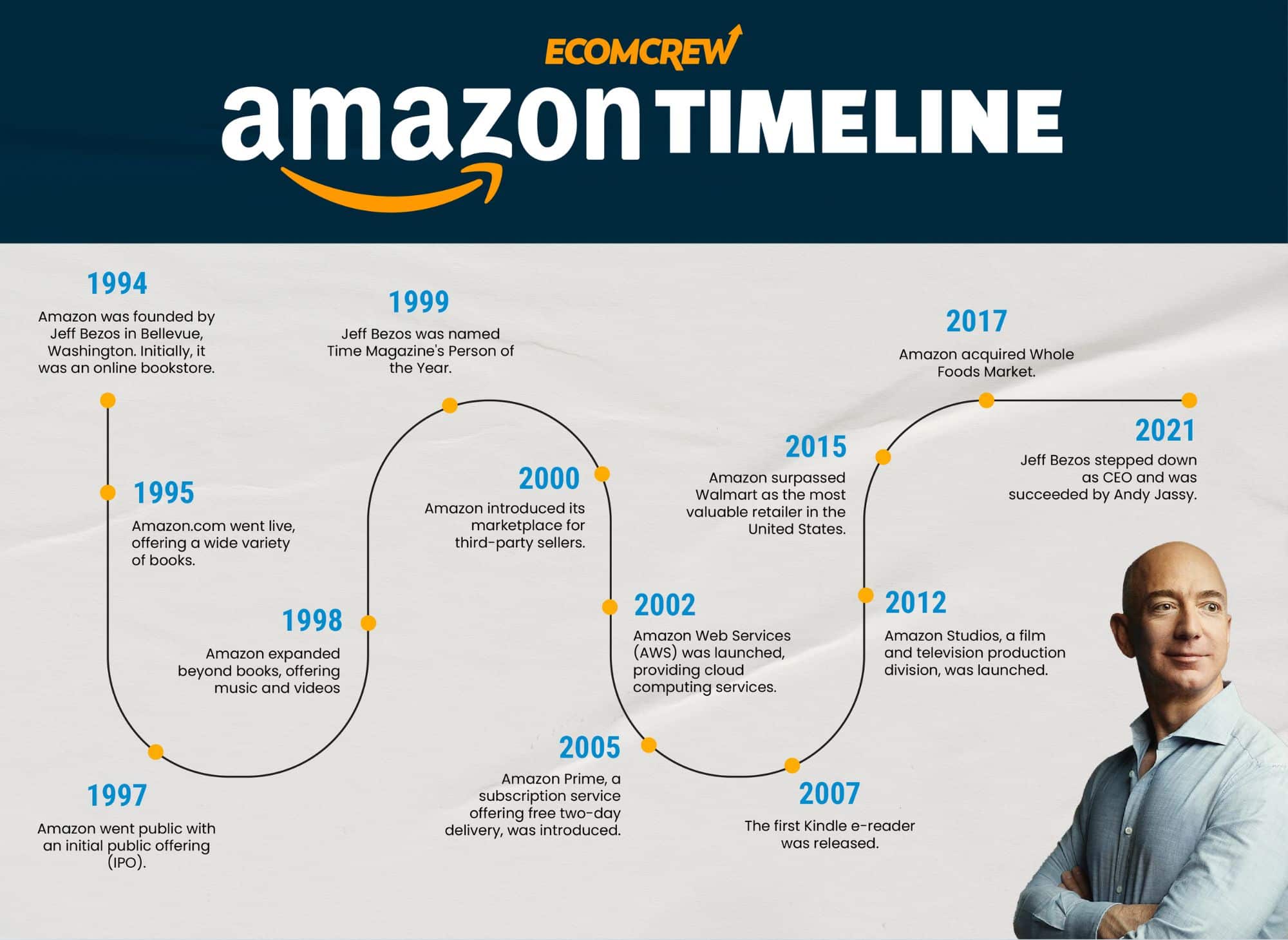
The year was 1994. Jeff Bezos, then a successful vice president at a Wall Street hedge fund, left his lucrative career to pursue an audacious idea: an online bookstore. He saw the exponential growth of internet usage and correctly predicted the shift towards digital commerce. Initially, Bezos toyed with the name “Cadabra”—short for abracadabra, suggesting magic. However, his lawyer wisely pointed out its unfortunate similarity to “cadaver,” prompting a strategic rethink.
The quest for a new name was more than a cosmetic change; it was a fundamental branding decision. Bezos sought a name that conveyed vastness, uniqueness, and global scale, aligning with his long-term vision for the company. He poured over dictionaries, eventually landing on “Amazon.” The Amazon River, the largest river in the world by discharge volume, perfectly encapsulated the immense scale and endless possibilities he envisioned for his online venture. This naming choice was a masterstroke of corporate identity, immediately setting a tone of ambition and breadth that transcended the initial offering of books. It positioned the brand for future expansion long before that expansion even began, hinting at an eventual “everything store.” On July 5, 1994, Jeff Bezos incorporated his company in Washington state, officially inventing what would become Amazon.com. The website, however, didn’t launch until a year later.
The Initial Bet: Books as a Strategic Entry Point
When Amazon.com officially launched in July 1995, its focus was exclusively on books. This wasn’t a limitation; it was a highly strategic branding and market entry decision. Bezos recognized several key advantages:
- High demand and universal appeal: Books have a broad audience and are not constrained by geographical preferences as much as other goods.
- Standardized product: A book is a book; there’s little variation in quality between sellers for the same title, simplifying the online shopping experience and reducing customer hesitation.
- Vast catalog: Physical bookstores were limited by shelf space, but an online store could theoretically offer every book in print. This “long tail” strategy was a core differentiator and a powerful brand promise of unparalleled selection.
By starting with books, Amazon could build operational expertise, establish trust with online shoppers, and refine its logistics without the complexities of diverse product categories. This focused approach allowed Amazon to carve out a distinct brand identity as the definitive online destination for books, setting the stage for future diversifications. It was a classic example of identifying a niche to dominate before expanding the brand’s scope.
Early Brand Identity: Customer Obsession from Day One
From its very inception, Amazon’s brand identity was forged around one central tenet: customer obsession. Bezos famously left an empty chair in early meetings, reminding his executives that “the most important person in the room” was the customer. This ethos permeated every aspect of the nascent company’s operations and marketing. Features like one-click ordering, personalized recommendations, and an emphasis on user reviews were not just technological innovations; they were brand-building tools designed to make the online shopping experience as seamless, intuitive, and trustworthy as possible.
This early commitment to the customer experience, even when the internet was a nascent and often clunky medium, was instrumental in building the crucial brand trust needed for an entirely new retail model. It communicated a corporate identity that prioritized user satisfaction above all else, laying the groundwork for a reputation that would become Amazon’s most valuable asset. The brand promise was clear: Amazon would make your life easier by delivering what you need, reliably and efficiently.
Navigating Early Challenges and Forging Brand Trust
The path from an online bookstore to “The Everything Store” was fraught with challenges, requiring consistent strategic agility and an unwavering commitment to its core brand values.
Building an Online Reputation in an Uncharted Digital Sea
In the mid-to-late 1990s, the internet was a wild frontier. Online transactions were viewed with suspicion, and security concerns were paramount. Amazon’s immediate challenge was not just to sell books, but to convince millions of potential customers that online shopping was safe, reliable, and convenient. This required meticulous attention to detail in its backend systems, transparent communication with customers, and a relentless focus on fulfilling orders accurately and promptly. Every successful delivery, every positive customer interaction, became a brick in the wall of Amazon’s burgeoning brand reputation.
The brand’s nascent marketing efforts emphasized convenience and selection, but it was the consistent delivery on these promises that truly built trust. Amazon wasn’t just selling products; it was selling a new way of life, a new retail paradigm. Its success in doing so made it a standard-bearer for online commerce, proving to a skeptical world that e-commerce was viable and trustworthy. This early reputation building was foundational to its long-term brand equity.
Strategic Pivots and Expanding Product Lines
By 1998, Amazon had already begun its strategic brand diversification, moving beyond books to music and videos. This expansion was a critical test of its “everything store” vision. Could the brand identity built around books successfully translate to other categories? The answer was a resounding yes, largely because Amazon had branded itself around customer convenience and selection, not just products. Its operational excellence and customer-centric approach proved transferable.
The brand’s ability to maintain its high standards across new product categories reinforced its corporate identity as a reliable, comprehensive retailer. Each new product line—from electronics to toys—expanded the brand’s scope and strengthened its position as a universal shopping destination, gradually fulfilling the promise inherent in its name. These strategic pivots were not merely about increasing sales; they were about systematically expanding the brand’s perceived utility and market presence.
The Dot-Com Bubble and Amazon’s Resilience
The late 1990s saw an explosion of internet companies, many of which were built on hype rather than sustainable business models. When the dot-com bubble burst in the early 2000s, countless online ventures collapsed. Amazon, despite heavy losses and investor skepticism about its profitability, weathered the storm. Its resilience during this tumultuous period was a testament to its deep-seated customer loyalty, its growing brand recognition, and its relentless focus on long-term growth over short-term profits.

While many “dot-coms” disappeared, Amazon’s brand endured, emerging stronger and more trusted. The market saw a company that, despite the chaos, continued to deliver on its brand promise. This period solidified Amazon’s corporate identity as a survivor and an innovator, differentiating it from the transient fads of the era. It demonstrated that a strong, customer-focused brand could withstand even the most severe economic downturns, reinforcing its position as a leader in the digital landscape.
The Brand’s Metamorphosis: Beyond Books to “The Everything Store”
The 2000s and 2010s saw Amazon truly embrace its “everything store” moniker, evolving its brand strategy and corporate identity in revolutionary ways.
Diversification as a Core Brand Strategy
Amazon’s strategic diversification went far beyond adding new product categories. It began to build an ecosystem, each part reinforcing the overall brand. The introduction of third-party sellers to its marketplace fundamentally changed Amazon’s corporate identity from a retailer to a platform provider. This move, initially controversial internally, became a genius brand strategy, massively expanding product selection without requiring Amazon to hold inventory, thus reinforcing its “everything store” promise at scale.
Acquisitions like Zappos (shoes) and Whole Foods (groceries) were not just about expanding into new markets; they were about strategically acquiring strong brands with complementary values or market positions, integrating them into the broader Amazon ecosystem while often allowing them to retain distinct identities under the Amazon umbrella. This allowed Amazon to leverage its brand power while also benefiting from the niche appeal and established customer bases of acquired companies. Each acquisition further solidified Amazon’s brand message of unparalleled convenience and breadth.
AWS: An Unseen Pillar of Brand Strength
Perhaps one of Amazon’s most significant and transformative innovations from a brand perspective, though often unseen by the average consumer, was the launch of Amazon Web Services (AWS) in 2206. What started as an internal infrastructure solution quickly became the world’s leading cloud computing platform. AWS fundamentally redefined Amazon’s corporate identity beyond retail. It positioned Amazon not just as a consumer-facing brand, but as a critical infrastructure provider for countless businesses, from startups to Fortune 500 companies.
AWS, while having its own distinct sub-brand, contributes immensely to the overall Amazon brand equity. It showcases Amazon’s technological prowess, reliability, and innovative spirit. It’s a powerful testament to the company’s engineering capabilities and its ability to build scalable, robust systems—qualities that indirectly reassure consumers about the reliability and sophistication behind their retail experiences. This strategic diversification into B2B services underscored the brand’s underlying strength and technological leadership, demonstrating a level of foresight and execution that few companies achieve.
Prime: Cultivating Customer Loyalty and Brand Affinity
The launch of Amazon Prime in 2005 was a pivotal moment in solidifying customer loyalty and elevating the Amazon brand from a transactional retailer to an indispensable lifestyle service. Offering unlimited two-day shipping for an annual fee, Prime was a bold move that initially seemed financially risky. However, it created a powerful psychological bond with customers, making Amazon their default choice for virtually all online purchases.
Prime rapidly evolved beyond just shipping, incorporating streaming video (Prime Video), music (Prime Music), exclusive deals, and other benefits. This transformation positioned Prime as a comprehensive loyalty program, weaving Amazon deeper into the daily lives of its subscribers. Prime members became Amazon’s most valuable customers, exhibiting higher purchase frequency and brand affinity. The Prime brand became synonymous with value, convenience, and a premium customer experience, dramatically increasing customer lifetime value and solidifying Amazon’s market dominance through a sticky, multi-faceted offering. It’s a prime example of building brand loyalty through an ecosystem of integrated services.
Amazon Today: A Global Brand and Its Future Trajectory
From its invention in 1994, Amazon has consistently redefined its brand, adapting to technological shifts and consumer demands while retaining its core customer-centric philosophy.
The Power of Data and Personalization in Brand Experience
Today, Amazon leverages vast amounts of data to personalize the customer experience to an unprecedented degree. From highly tailored product recommendations to customized advertising, Amazon uses data not just for efficiency but as a core component of its brand experience. This personalization makes shopping feel more intuitive and relevant, reinforcing the brand’s promise of making life easier.
The brand’s AI-driven tools, such as Alexa, extend this personalization into the home, making Amazon an ambient presence in daily life. This data-driven approach allows Amazon to anticipate needs and offer solutions, further cementing its corporate identity as an indispensable service provider rather than just a storefront. It’s a sophisticated evolution of its original customer-obsessed strategy, leveraging technology to deepen brand engagement and relevance.
Corporate Social Responsibility and Brand Perception
As a global corporate behemoth, Amazon faces increasing scrutiny regarding its social and environmental impact. Issues ranging from labor practices to sustainability and market dominance significantly influence its brand perception. In response, Amazon has intensified its focus on corporate social responsibility (CSR), investing in renewable energy, sustainable packaging initiatives, and community programs.
These efforts are crucial for maintaining a positive brand image and appealing to a new generation of consumers who prioritize ethical and sustainable businesses. While challenges remain, Amazon’s strategic communication around its CSR initiatives is a vital part of managing its global brand reputation, demonstrating a commitment to more than just profit. It’s an ongoing effort to align its brand values with societal expectations.
Sustaining Innovation: The Brand’s Perpetual Reinvention
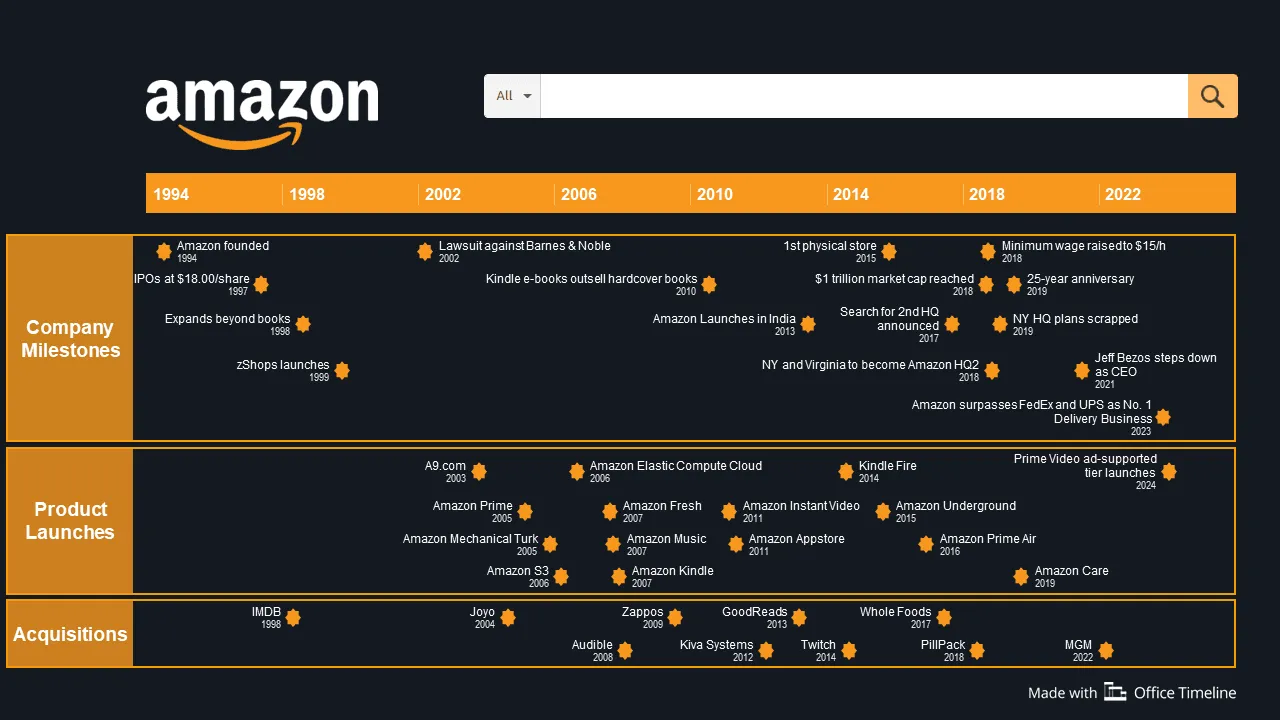
The story of Amazon since its invention is a testament to perpetual reinvention. From a humble online bookstore, it has transformed into a diversified global brand empire encompassing retail, cloud computing, logistics, entertainment, artificial intelligence, and more. The common thread throughout this journey has been a relentless focus on innovation and an unshakeable commitment to the customer.
The future trajectory of the Amazon brand will undoubtedly involve further technological advancements, deeper integration into daily life, and continued expansion into new sectors. Its corporate identity remains that of a pioneer, always pushing boundaries and redefining what’s possible in commerce and technology. The invention of Amazon in 1994 wasn’t just the birth of a company; it was the genesis of a brand that would continually adapt, disrupt, and innovate, solidifying its place as a quintessential case study in modern brand strategy and market dominance. The question “When was Amazon invented?” ultimately points to the very beginning of a brand saga that continues to unfold, proving that a strong founding vision, coupled with strategic branding and relentless execution, can create an empire.
aViewFromTheCave is a participant in the Amazon Services LLC Associates Program, an affiliate advertising program designed to provide a means for sites to earn advertising fees by advertising and linking to Amazon.com. Amazon, the Amazon logo, AmazonSupply, and the AmazonSupply logo are trademarks of Amazon.com, Inc. or its affiliates. As an Amazon Associate we earn affiliate commissions from qualifying purchases.