
Navigating the complexities of Social Security benefits is a critical component of a comprehensive retirement plan. The decision of when to claim your benefits can have profound and lasting implications for your financial well-being throughout your retirement years. It’s not merely a matter of reaching a certain age, but rather a strategic choice influenced by a myriad of personal, financial, and health factors. Understanding these variables and their interplay is paramount to making an informed decision that maximizes your lifetime benefits and aligns with your overall financial objectives.
Understanding Your Full Retirement Age (FRA)
At the heart of the Social Security claiming decision lies the concept of your Full Retirement Age (FRA). This pivotal age serves as the baseline for calculating your primary Social Security benefit, representing the age at which you are entitled to receive 100% of your earned benefit amount.

What is FRA?
Your Full Retirement Age is determined by the year you were born. For individuals born in 1943 through 1954, FRA is 66. This age gradually increases for those born in later years, reaching 67 for anyone born in 1960 or later. Knowing your specific FRA is the first crucial step in evaluating your claiming options, as it dictates the adjustments applied to your benefits if you claim either earlier or later. Claiming before your FRA results in a permanent reduction of your monthly benefit, while delaying beyond your FRA leads to a permanent increase.
How FRA Impacts Your Benefits
The Social Security Administration (SSA) uses your FRA as the benchmark. If you claim benefits at your FRA, you receive your Primary Insurance Amount (PIA). This PIA is based on your highest 35 years of indexed earnings. Claiming benefits before your FRA reduces your monthly benefit by a certain percentage for each month you claim early. Conversely, delaying benefits past your FRA increases your monthly benefit through Delayed Retirement Credits (DRCs). This system incentivizes individuals to carefully consider their claiming age, as the choice directly impacts the size of their monthly income stream for the rest of their lives.
The Financial Implications of Early Claiming
While the earliest age you can claim Social Security retirement benefits is 62, doing so comes with significant financial consequences that must be thoroughly understood and weighed against your immediate needs and long-term goals.
Reduced Monthly Benefits
Claiming Social Security benefits before your Full Retirement Age results in a permanent reduction of your monthly payout. The reduction is approximately 5/9 of 1% for each month you claim early, up to 36 months. If you claim more than 36 months early, the reduction is approximately 5/12 of 1% per month. For someone with an FRA of 67, claiming at age 62 would result in a permanent reduction of roughly 30%. This means that if your PIA at FRA was $2,000 per month, claiming at 62 would reduce your monthly benefit to approximately $1,400. This reduced amount is what you will receive for the rest of your life, making it a critical consideration for your long-term financial stability. While you receive payments for a longer period, the individual payments are smaller, and actuarial studies suggest that over a typical lifespan, the total amount received may be similar to waiting, assuming average life expectancy. However, individual circumstances can vastly alter this equation.
The Earnings Test Explained
If you claim Social Security benefits before your Full Retirement Age and continue to work, you may be subject to the Social Security earnings test. This test can temporarily reduce or even eliminate your benefits if your earnings exceed a certain annual limit. For 2024, if you are under FRA for the entire year, the SSA deducts $1 from your benefits for every $2 you earn above $22,320. In the year you reach FRA, the earnings limit is higher ($59,520 for 2024), and the SSA deducts $1 for every $3 you earn above this limit, but only for earnings before the month you reach FRA. Once you reach your FRA, the earnings test no longer applies, and you can earn any amount without it affecting your Social Security benefits. It’s important to note that any benefits withheld due to the earnings test are not lost forever; your monthly benefit will be recalculated at your FRA to account for the withheld amounts, potentially leading to a higher monthly payment going forward. However, for many, the immediate reduction can be a disincentive to claim early while still working.
Considerations for Spousal and Survivor Benefits
The decision to claim early also impacts spousal and survivor benefits. If you claim early, your spouse’s potential spousal benefits, which are based on your work record, will be reduced if they claim them before their own FRA. Furthermore, if you pass away, your surviving spouse’s benefit amount will be influenced by your claiming age. If you claimed early, your reduced benefit becomes the basis for their survivor benefit. Maxing out your own benefit can often create a larger safety net for your spouse, especially if they are likely to outlive you or have a lower earning history. This spousal dynamic adds another layer of complexity to the claiming decision, requiring couples to plan together.
Maximizing Benefits Through Delayed Claiming
Delaying your Social Security benefits beyond your Full Retirement Age can be one of the most powerful strategies for increasing your guaranteed retirement income. This approach leverages the Social Security system’s incentives for those who defer claiming.
Accumulating Delayed Retirement Credits
For each month you delay claiming benefits past your Full Retirement Age, up until age 70, you earn Delayed Retirement Credits (DRCs). These credits permanently increase your monthly benefit amount. The annual increase for DRCs is 8% per year for those born in 1943 or later. This means that if your FRA is 67, and you delay claiming until age 70, you will accrue an additional 24% (3 years x 8% per year) on top of your full retirement benefit. This translates into a significantly higher monthly check for the rest of your life. For someone with a PIA of $2,000 at FRA, delaying to age 70 would boost their monthly payment to $2,480. This increase is often seen as a form of “longevity insurance,” providing a larger, inflation-adjusted income stream in your later years.
Long-Term Financial Security
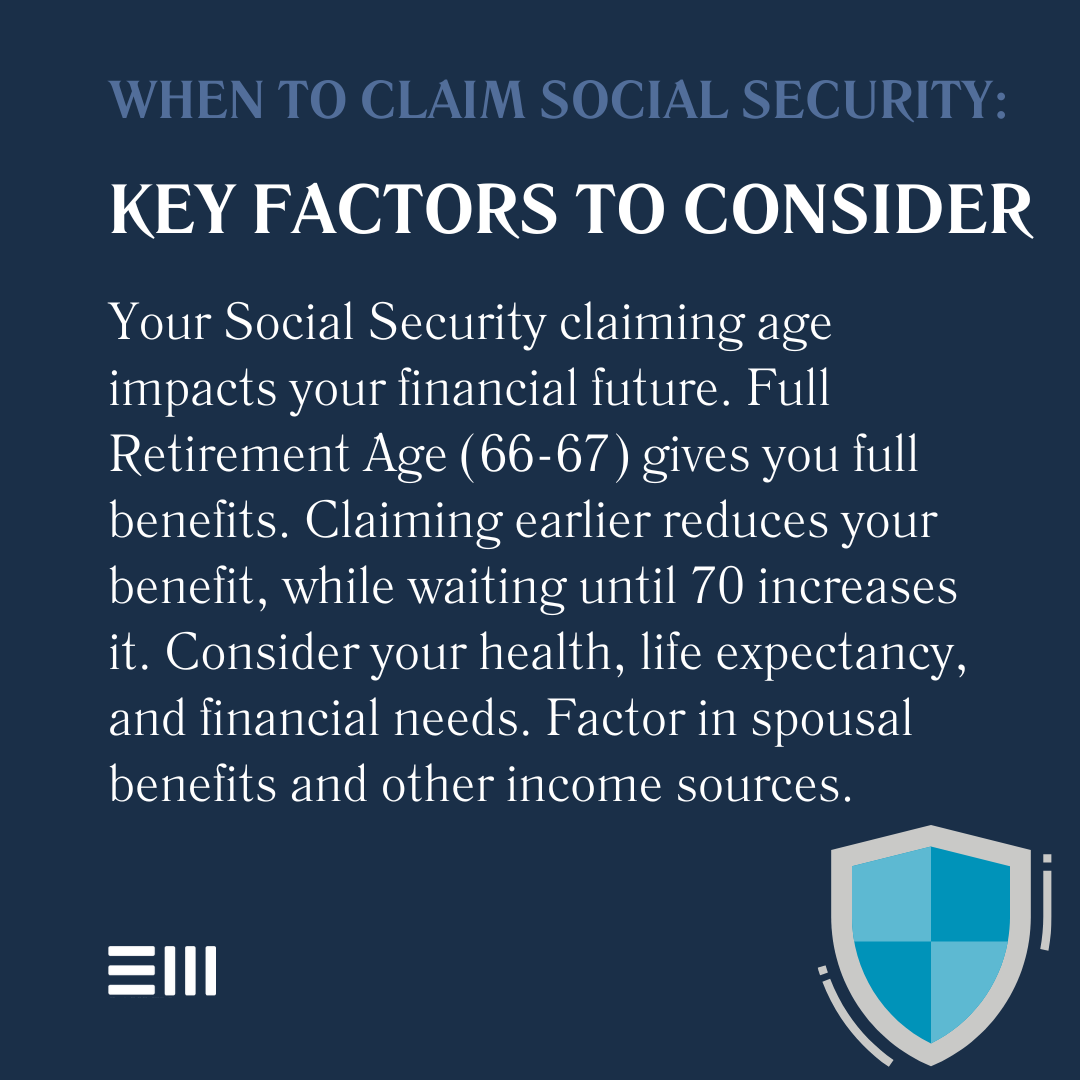
The guaranteed, inflation-adjusted nature of Social Security benefits makes maximizing them a cornerstone of long-term financial security. By delaying benefits, you create a larger, predictable income stream that can help cover essential living expenses throughout a potentially long retirement. This larger base benefit can reduce your reliance on personal savings and investments, which can be subject to market volatility. For individuals who have sufficient other income or savings to bridge the gap between their FRA and age 70, delaying Social Security can be an incredibly effective way to enhance their financial resilience and reduce the risk of outliving their assets. It essentially transfers some of your longevity risk to the Social Security Administration.
Longevity Risk and Health Factors
One of the primary benefits of delayed claiming is its effectiveness in mitigating longevity risk – the risk of outliving your savings. As life expectancies continue to rise, many individuals face the prospect of a 20-, 30-, or even 40-year retirement. A larger Social Security check provides a guaranteed income floor that can help sustain you through these extended years. Your personal health and family history of longevity play a crucial role in this calculation. If you anticipate a long life, delaying benefits becomes even more attractive, as you’ll collect the higher monthly payment for a longer period, potentially leading to a greater cumulative payout over your lifetime compared to claiming early. Conversely, if health issues suggest a shorter life expectancy, the equation might shift, making earlier claiming a more rational choice to ensure you receive benefits for as long as possible.
Key Factors Influencing Your Decision
The optimal claiming strategy is highly individualized, requiring a thorough assessment of your personal circumstances. There is no one-size-fits-all answer, and a thoughtful evaluation of several key factors is essential.
Personal Health and Life Expectancy
As highlighted earlier, your health status and family history of longevity are paramount. If you are in excellent health with a family history of living into their 80s or 90s, delaying until age 70 generally provides the most significant advantage. The longer you expect to live, the more total benefits you are likely to receive by maximizing your monthly payment through delayed claiming. Conversely, if you have significant health challenges or a family history of shorter lifespans, claiming benefits earlier might be prudent to ensure you receive benefits for the years you are expected to be alive. It’s a difficult conversation, but a necessary one to ensure your financial plan aligns with your reality.
Other Income Sources and Savings
Your financial resources outside of Social Security are critical. Do you have a robust pension, substantial 401(k) or IRA savings, or other sources of income that can support your lifestyle between your FRA and age 70? If you do, delaying Social Security becomes much more feasible and beneficial, as you won’t need to draw down your retirement accounts as aggressively in the early years. If you are solely reliant on Social Security for your retirement income, or have limited savings, claiming earlier might be a necessity to cover your immediate living expenses, even with the understanding of reduced benefits. The goal is to avoid depleting your other assets prematurely.
Marital Status and Spousal Considerations
For married couples, the claiming decision is a joint strategy, not an individual one. Couples have opportunities to optimize their combined lifetime benefits. Often, the higher earner in the couple will delay their benefits until age 70 to maximize the primary benefit, which then also forms the basis for potential survivor benefits for the lower-earning spouse. The lower-earning spouse might claim their own benefits earlier, or claim spousal benefits (which allow them to receive up to 50% of the higher earner’s FRA benefit) while their own benefits continue to grow. Divorced individuals may also be able to claim benefits based on their ex-spouse’s work record, provided certain conditions are met, without impacting their ex-spouse’s benefits. These strategies can be complex and often benefit from professional advice.
Debt Levels and Financial Obligations
Your current debt load and ongoing financial obligations can also influence your claiming decision. If you have significant high-interest debt, such as credit card balances, using early Social Security benefits to pay down these debts might be a viable strategy to improve your overall financial health, even with the reduction in future benefits. However, for most, it’s advisable to try and eliminate or significantly reduce debt before retirement to allow for greater flexibility in claiming Social Security. The goal is to enter retirement with as few financial burdens as possible, which can provide more freedom in choosing your optimal claiming age.
Strategic Planning for Social Security
Making the right Social Security claiming decision requires careful planning and often involves leveraging available resources and professional guidance. It’s a multi-faceted process that should be integrated into your broader retirement strategy.
Utilizing Social Security Calculators
The Social Security Administration offers online calculators and tools that can help you estimate your future benefits based on different claiming ages. There are also numerous independent financial planning tools that provide more detailed projections, factoring in your other income sources, spending habits, and life expectancy assumptions. These calculators allow you to run various scenarios, comparing the cumulative benefits of claiming at age 62, your FRA, age 70, or any age in between. They can visually illustrate the trade-offs between a smaller, earlier payout versus a larger, later payout. Utilizing these tools is a crucial first step in understanding the financial impact of your choices.
Consulting with a Financial Advisor
Given the complexity and the significant financial implications of the Social Security claiming decision, seeking advice from a qualified financial advisor is highly recommended. A professional can help you:
-
Analyze your unique financial situation, including your savings, investments, and other income streams.
-
Project your life expectancy and health considerations.
-
Evaluate the impact of different claiming strategies on your overall retirement income, factoring in taxes, inflation, and market performance.
-
Develop a strategy for married couples that optimizes combined lifetime benefits.
-
Understand the nuances of spousal, survivor, and divorced spouse benefits.
A financial advisor can provide an unbiased perspective and help you integrate your Social Security strategy into a holistic retirement plan, ensuring it aligns with your long-term goals and risk tolerance.

Regularly Reviewing Your Statement
The Social Security Administration provides an annual Social Security Statement to workers who are at least 25 years old and not yet receiving benefits. This statement summarizes your earnings record and provides estimates of your retirement, disability, and survivor benefits. It’s crucial to review this statement regularly to:
-
Verify the accuracy of your earnings record. Any errors could reduce your future benefits.
-
Stay informed about your estimated benefits at different claiming ages.
-
Ensure that the SSA has your correct personal information.
This statement is a valuable tool for monitoring your progress toward retirement and serves as a foundational document for your Social Security claiming analysis.
In conclusion, the decision of when to claim Social Security is deeply personal and multifaceted. It’s a strategic choice that should be made after careful consideration of your health, financial resources, family situation, and long-term retirement goals. By understanding your FRA, evaluating the pros and cons of early versus delayed claiming, and leveraging expert advice and available tools, you can make an informed decision that significantly enhances your financial security in retirement.
aViewFromTheCave is a participant in the Amazon Services LLC Associates Program, an affiliate advertising program designed to provide a means for sites to earn advertising fees by advertising and linking to Amazon.com. Amazon, the Amazon logo, AmazonSupply, and the AmazonSupply logo are trademarks of Amazon.com, Inc. or its affiliates. As an Amazon Associate we earn affiliate commissions from qualifying purchases.