
NVIDIA (NVDA) has evolved from a specialized manufacturer of graphics processing units (GPUs) for gamers into the undisputed engine of the artificial intelligence revolution. As its market capitalization has rivaled the world’s largest tech titans, the question for retail and institutional investors alike has shifted from “Is NVIDIA a good company?” to “At what price should I buy NVIDIA stock?” Determining the optimal entry point for a high-growth, high-volatility asset requires a blend of fundamental analysis, technical timing, and a deep understanding of the semiconductor industry’s cyclical nature.

For the modern investor, NVIDIA represents more than just a chipmaker; it is a gateway to the AI economy. However, because the stock often trades at a premium valuation, jumping in at the wrong time can lead to significant short-term drawdowns. To build a successful position, one must evaluate the company through the lens of its long-term growth trajectory while respecting the technical indicators that signal when the market has reached an overbought or oversold extreme.
Understanding NVIDIA’s Market Valuation and Growth Trajectory
The first step in deciding when to buy NVIDIA is understanding what drives its value. Unlike traditional hardware companies that face commoditization, NVIDIA has built a comprehensive ecosystem of hardware and software that creates a powerful competitive moat. This “platform” approach justifies a higher valuation than its peers, but it also means the stock is highly sensitive to shifts in enterprise AI spending.
The AI Revolution as a Primary Value Driver
NVIDIA’s dominance is currently rooted in the massive shift toward accelerated computing and generative AI. The company’s data center business has become its primary revenue engine, dwarfing its traditional gaming and professional visualization segments. When considering a purchase, investors must look at the capital expenditure (CapEx) plans of “hyperscalers” like Microsoft, Alphabet, Meta, and Amazon. As long as these entities continue to invest billions into AI infrastructure, NVIDIA’s forward earnings are likely to support its stock price.
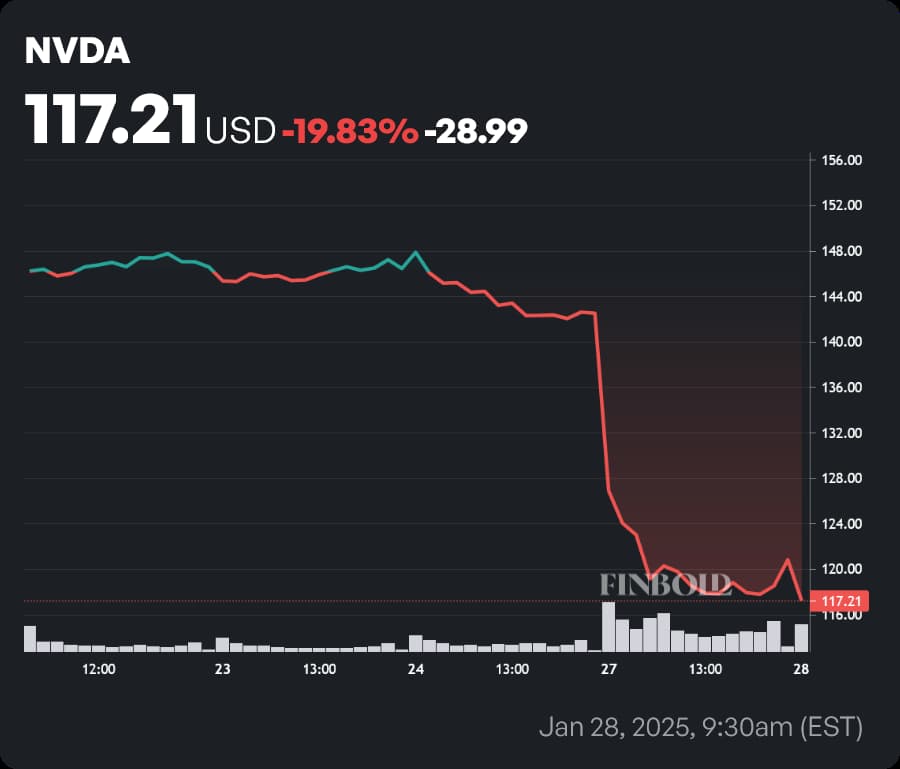
A strategic time to buy is often during periods when the market doubts the longevity of the AI build-out. Whenever headlines suggest an “AI bubble” or a “slowdown in enterprise adoption,” the stock often undergoes a healthy correction. For the long-term investor, these periods of skepticism often provide the most attractive entry points, provided the underlying demand for GPU clusters remains intact.
Data Center Dominance and the Blackwell Cycle
The release of new chip architectures, such as the Hopper and the more recent Blackwell series, creates distinct product cycles. Historically, NVIDIA’s stock experiences significant appreciation leading up to a major product launch as anticipation builds. However, the period immediately following a launch can sometimes see a “sell the news” reaction or a temporary dip as the market waits for the first full quarter of shipment data.
Buying during the early stages of a new architecture rollout can be lucrative. As NVIDIA transitions customers to higher-margin, more efficient chips like the Blackwell B200, its earnings power increases. Investors should monitor the supply chain—specifically reports from manufacturing partners like TSMC—to gauge whether NVIDIA can meet the overwhelming demand. If supply constraints ease while demand remains high, it signals a period of sustainable revenue growth.
Technical Analysis and Optimal Entry Points
While fundamentals tell you what to buy, technical analysis helps you decide when to buy. NVIDIA is known for its high beta, meaning it tends to move more aggressively than the broader market. This volatility is a double-edged sword; it creates stress during downturns but offers excellent opportunities for disciplined buyers.
Identifying Support Levels and Moving Averages
For many institutional investors, the 50-day and 200-day simple moving averages (SMAs) are the primary gauges for entry. NVIDIA’s stock has a historical tendency to find support at its 50-day SMA during minor pullbacks in a bull market. A touch of this line often represents a “buy the dip” opportunity for those looking to add to a position.
More significant corrections often see the stock gravitate toward the 200-day SMA. While reaching this level can feel bearish, it has historically served as a generational buying opportunity for NVIDIA. Investors who wait for these deeper retracements—typically 20% to 30% off recent highs—often achieve a much higher margin of safety. Combining these moving averages with the Relative Strength Index (RSI) can further refine timing. An RSI below 30 indicates that the stock is technically oversold, which, for a company with NVIDIA’s growth profile, is often a strong signal to initiate or expand a position.
Navigating Market Volatility and Earnings Cycles
NVIDIA’s earnings reports have become “macro events” for the entire stock market. Because the company frequently beats expectations and raises guidance, the stock often gaps up following these reports. However, buying right before an earnings announcement is essentially a gamble on the market’s reaction rather than the company’s performance.
A more conservative strategy is to wait for the post-earnings “digestion” period. Even after a stellar report, the stock may trade sideways or slightly down for several weeks as institutional investors rebalance their portfolios. This period of consolidation is often a safer time to enter than the volatile days immediately surrounding the announcement.
Fundamental Metrics Every Investor Should Monitor
To determine if the current price is a bargain or a trap, investors must look beyond the stock price and examine the underlying valuation metrics. NVIDIA rarely looks “cheap” on a trailing price-to-earnings (P/E) basis, but its growth rate often justifies its premium.
P/E Ratio vs. Forward Growth (The PEG Ratio)
The standard P/E ratio can be misleading for a company growing its bottom line at triple-digit percentages. Instead, savvy investors look at the Forward P/E and the Price/Earnings-to-Growth (PEG) ratio. If NVIDIA’s Forward P/E is significantly lower than its historical average, or if its PEG ratio drops near 1.0, the stock may be undervalued relative to its future earnings potential.
When the PEG ratio begins to contract while the company continues to beat revenue estimates, it suggests that the market has not yet priced in the full extent of NVIDIA’s growth. This disconnect between price and projected earnings is often the “green light” for value-oriented growth investors.
Gross Margins and Competitive Moats
NVIDIA’s gross margins, which have hovered above 70% in recent quarters, are a testament to its pricing power and its software moat (CUDA). Any compression in gross margins could signal increased competition from rivals like AMD or custom silicon efforts from big tech firms. Conversely, as long as margins remain stable or expanding, it indicates that NVIDIA maintains its “must-have” status in the data center. A stable margin profile combined with a stock price pullback is one of the strongest fundamental signals to buy.
Macroeconomic Factors Influencing the Semiconductor Sector
NVIDIA does not trade in a vacuum. Its price is heavily influenced by the broader macroeconomic environment, particularly interest rates and geopolitical tensions.
Interest Rates and Tech Multiples
As a growth stock, NVIDIA is sensitive to interest rate fluctuations. When the Federal Reserve raises interest rates, the “discount rate” applied to future cash flows increases, which can compress the valuation multiples of high-growth tech stocks. If you are looking for the best time to buy, periods of stabilizing or falling interest rates generally provide a more favorable tailwind for NVIDIA. Conversely, a spike in bond yields often triggers a sell-off in NVIDIA, creating a potential entry point for those with a long-term horizon who believe the company’s growth will outpace inflationary pressures.
Geopolitical Risks and Supply Chain Dynamics
The semiconductor industry is at the heart of global geopolitics. Export restrictions to certain markets and the concentration of manufacturing in Taiwan are persistent risks. Whenever new trade barriers are announced, NVIDIA’s stock often reacts negatively. While these risks are real, they are often overblown in the short term. Sophisticated investors use the “geopolitical discount”—the price drop caused by trade headlines—to buy the stock at a lower valuation, recognizing that NVIDIA’s global demand remains diversified.
The Dollar-Cost Averaging Strategy for NVIDIA
Given the inherent volatility of the semiconductor sector, attempting to “time the bottom” perfectly is a difficult task even for professional traders. For the majority of investors, the most effective way to build a position in NVIDIA is through Dollar-Cost Averaging (DCA).
Managing Portfolio Concentration Risk
Because NVIDIA has the potential for massive gains, it can quickly become an outsized portion of a portfolio. When buying, it is important to decide on a target allocation. If NVIDIA drops by 10%, you might buy a predetermined amount. If it drops 20%, you buy more. This disciplined approach removes the emotional stress of volatility and ensures that you are buying more shares when prices are low and fewer shares when prices are high.

Long-Term Conviction vs. Short-Term Trading
The ultimate “when to buy” depends on your investment horizon. If you believe that AI is a permanent shift in the global economy and that NVIDIA will remain its primary hardware provider, then the specific entry price matters less than the time spent in the market. Historically, investors who bought NVIDIA at “all-time highs” in previous years still saw massive returns because the company’s fundamental growth eventually caught up to and surpassed its previous valuations.
In summary, the best time to buy NVIDIA stock is typically during periods of technical consolidation, following a 15-20% market correction, or when the forward-looking valuation metrics (like the PEG ratio) indicate that the market is underestimating its future earnings power. By combining a “buy the dip” mentality with a long-term focus on the AI infrastructure cycle, investors can navigate the volatility of this high-performing tech giant and build a position that benefits from the ongoing transformation of the digital world.
aViewFromTheCave is a participant in the Amazon Services LLC Associates Program, an affiliate advertising program designed to provide a means for sites to earn advertising fees by advertising and linking to Amazon.com. Amazon, the Amazon logo, AmazonSupply, and the AmazonSupply logo are trademarks of Amazon.com, Inc. or its affiliates. As an Amazon Associate we earn affiliate commissions from qualifying purchases.