
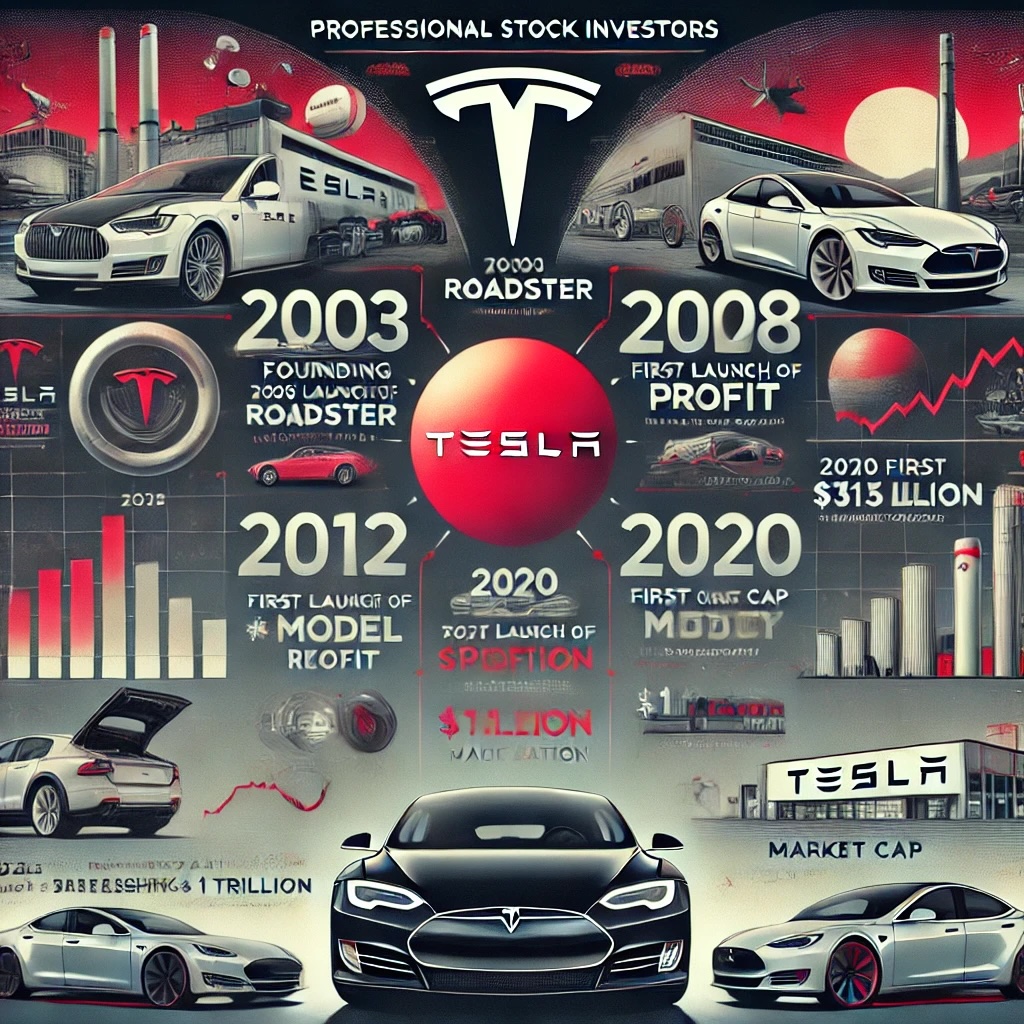
The story of Tesla’s inception is often told through the lens of business drama or celebrity CEOs, but at its core, the company’s “start” was a profound technological gamble. Founded in July 2003 by Martin Eberhard and Marc Tarpenning, Tesla Motors emerged not from the assembly lines of Detroit, but from the innovation hubs of Silicon Valley. Unlike traditional automotive manufacturers who viewed cars as mechanical hardware, Tesla’s founders envisioned the automobile as a sophisticated technological platform. This shift in perspective—treating the vehicle as a “computer on wheels”—is what truly marks the start of the modern electric vehicle (EV) era.

The Silicon Valley Roots: Merging Software with Automotive Engineering
When Tesla started, the prevailing wisdom in the automotive industry was that electric cars were destined to remain niche products, akin to glorified golf carts with limited range and lackluster performance. The technological hurdle wasn’t just building a motor; it was reinventing the entire energy storage and management ecosystem.
Challenging the Internal Combustion Paradigm
The primary technical challenge at Tesla’s inception was the energy density of batteries. Traditional lead-acid batteries were too heavy and inefficient for high-performance use. Tesla’s founding team looked toward the consumer electronics industry for a solution. By utilizing lithium-ion (Li-ion) cells—the same technology powering laptops and cell phones—they realized they could achieve a power-to-weight ratio that could rival, and eventually surpass, internal combustion engines (ICE). This decision was the first major “tech” pivot that separated Tesla from failed EV attempts of the 1990s, such as the EV1.
The Lithium-Ion Breakthrough and the 18650 Cell
The specific choice of the 18650 commodity cell was a masterstroke of engineering pragmatism. Instead of waiting for a bespoke, large-format automotive battery that didn’t yet exist, Tesla engineers figured out how to wire thousands of small, reliable cells in parallel and series. This required a revolutionary Battery Management System (BMS). When Tesla started developing this system, they had to solve complex problems regarding heat dissipation and “thermal runaway.” If one cell overheated, it could trigger a chain reaction. The development of liquid-cooling systems and intricate fuse mechanisms within the battery pack became the bedrock of Tesla’s intellectual property.
The Roadster Era: A Proof of Concept for High-Performance Tech
Tesla’s first vehicle, the Roadster, was never intended to be a mass-market car. It was a technological demonstrator designed to prove that an electric powertrain could be sexy, fast, and efficient. The Roadster was built on the chassis of a Lotus Elise, but the “guts” of the machine were entirely new.
Power Electronics and the AC Propulsion Heritage
The early days of Tesla involved a deep collaboration with AC Propulsion, a company that had developed a high-performance EV prototype called the tzero. Tesla’s engineers took the core concepts of the tzero’s induction motor and refined them. The induction motor, originally patented by Nikola Tesla himself, offered several advantages over permanent magnet motors, including the ability to operate without rare-earth metals. The technical challenge, however, lay in the inverter—the device that converts DC power from the battery into the AC power needed by the motor. Tesla’s development of high-speed digital signal processors to manage these power transitions allowed for the instantaneous torque that has since become a hallmark of the brand.
Overcoming Thermal Management Hurdles
One of the most significant technological achievements during the Roadster’s development was the integration of a sophisticated thermal management system. Unlike an ICE vehicle, which uses a radiator primarily to cool the engine, an EV must manage the temperature of the battery, the inverter, and the motor simultaneously. Tesla’s engineers developed a multi-loop cooling system that could either heat or cool the battery pack to maintain its “sweet spot” for performance and longevity. This focus on thermal efficiency is why early Teslas maintained their range in varying climates far better than their early competitors.

The Architecture of Innovation: Developing the Model S Platform
If the Roadster proved that the technology could work, the Model S, launched in 2012, proved that the technology could scale. This was the moment Tesla transitioned from a startup to a legitimate technological powerhouse, introducing architectural concepts that would change car design forever.
The Skateboard Chassis Revolution
Standard cars are built around the engine and transmission tunnel, which dictates the interior layout and safety structures. Tesla’s engineering team started with a “clean sheet” design, resulting in the “skateboard” chassis. By placing the heavy battery pack at the very bottom of the vehicle between the axles, they achieved a remarkably low center of gravity and a rigid structural floor. This tech-first approach to structural engineering didn’t just improve handling; it revolutionized safety by creating massive “crumple zones” in the front of the car where an engine would normally sit.
Over-the-Air (OTA) Updates: The Birth of the Software-Defined Vehicle
Perhaps the most significant technological contribution Tesla made at its start was the concept of Over-the-Air (OTA) updates. Traditionally, a car’s features were “frozen” the moment it left the factory. Tesla designed the Model S with a centralized computing architecture rather than the dozens of disconnected Electronic Control Units (ECUs) used by legacy automakers. This allowed Tesla to send software patches that could improve 0-60 mph times, fix braking distances, or add entirely new user interface features overnight. This shift turned the car into a living piece of software, fundamentally altering the lifecycle of automotive hardware.
Vertical Integration and the Path to Autonomy
As Tesla moved from its early stages into mass production, its technological focus shifted toward vertical integration and the pursuit of artificial intelligence. The goal was no longer just to build a better battery, but to build a car that could perceive its environment.
The Giga-Strategy: Engineering the Supply Chain
Tesla realized early on that to dominate the EV market, they couldn’t just buy components; they had to engineer the machines that make the machines. This led to the creation of the Gigafactory. The technical innovation here wasn’t just in the chemistry of the 2170 or 4680 cells, but in the manufacturing process itself. By bringing battery production in-house and partnering with Panasonic, Tesla reduced the cost per kilowatt-hour (kWh) faster than any analyst predicted. They applied “first principles” thinking to manufacturing, looking for ways to eliminate unnecessary wiring and move toward massive single-piece castings (Gigacastings) to simplify the vehicle’s body.
From Autopilot to FSD: The AI Integration
In 2014, Tesla began equipping vehicles with the hardware for “Autopilot,” its suite of advanced driver-assistance systems. While other companies relied heavily on LIDAR (Laser Imaging, Detection, and Ranging), Tesla took a different technological path: computer vision. By using a suite of external cameras and ultrasonic sensors, processed by custom-designed AI chips (the Full Self-Driving or FSD computer), Tesla aimed to replicate the human visual system. This required the development of massive neural networks and the “Dojo” supercomputer to train these models using billions of miles of real-world driving data collected from their fleet. This data-driven feedback loop is a quintessential tech-industry strategy, applied to the physical world of driving.
The Legacy of the Start: A Tech-First Future
When we look back at when Tesla started, it is clear that their success was not a result of traditional automotive prowess, but of a relentless commitment to technological disruption. By refusing to accept the limitations of existing battery tech, by reimagining car architecture as a software platform, and by betting heavily on artificial intelligence, Tesla forced the entire global economy to pivot toward sustainable energy.
The “start” of Tesla was more than the registration of a business name; it was the start of an era where software dictates hardware performance. Today, every major automaker is racing to catch up with the technological benchmarks Tesla set nearly two decades ago. Whether it is through revolutionary battery chemistry, centralized compute, or autonomous neural networks, the DNA of Tesla remains rooted in the belief that the best way to predict the future of transportation is to engineer it from the ground up. In the end, Tesla’s beginning was the moment the car stopped being a machine of fire and gears and became a machine of silicon and code.
aViewFromTheCave is a participant in the Amazon Services LLC Associates Program, an affiliate advertising program designed to provide a means for sites to earn advertising fees by advertising and linking to Amazon.com. Amazon, the Amazon logo, AmazonSupply, and the AmazonSupply logo are trademarks of Amazon.com, Inc. or its affiliates. As an Amazon Associate we earn affiliate commissions from qualifying purchases.