
Entering the workforce or launching a new business venture is a significant milestone in any individual’s financial journey. However, with the acquisition of income comes a fundamental responsibility that every earner must eventually face: the obligation to pay taxes. For many, the question of “when taxes start” is not merely a matter of reaching a certain age, but rather a complex intersection of income levels, filing statuses, and the nature of the work performed. Understanding when you are legally required to file a return and pay taxes is crucial for maintaining financial health and avoiding the pitfalls of interest charges or penalties from the Internal Revenue Service (IRS).
This guide explores the specific triggers that initiate tax obligations, the nuances of self-employment, and the strategic considerations every taxpayer should keep in mind as they navigate their early financial years.
Understanding the Income Thresholds for Filing
The most common misconception regarding taxes is that they begin when a person turns eighteen. In reality, the IRS does not care how old you are; it cares how much you earn. Whether you are a teenager with a summer job or a retiree with a new consulting gig, your tax obligation is determined by your gross income relative to the standard deduction.
The Standard Deduction and Filing Requirements
For most individuals, the requirement to file a tax return starts when their gross income exceeds the standard deduction for their filing status. The standard deduction is a set dollar amount that reduces the amount of income on which you’re taxed. If your total income for the year is less than this amount, you generally do not owe federal income tax and may not be required to file a return.
For the 2024 tax year, the standard deduction for a single filer is $14,600. If you are a single individual under the age of 65 and your total earned income is below this threshold, you typically do not have a federal filing requirement. However, this changes if you are claimed as a dependent on someone else’s return. For dependents, the rules are stricter: you must file a return if your earned income exceeds the standard deduction, or if your unearned income (such as interest and dividends) exceeds a much lower threshold, typically around $1,300.
Filing Status and Its Impact
Your filing status is a major factor in determining your tax “start date.” While single filers have one threshold, those who are Married Filing Jointly have a combined standard deduction that is significantly higher ($29,200 for 2024). Head of Household filers—those who are unmarried but pay more than half the cost of keeping up a home for a qualifying person—also enjoy a higher threshold than single filers.
It is important to note that even if you fall below the income threshold, it is often beneficial to file a return anyway. If your employer withheld federal income tax from your paychecks, the only way to get that money back via a refund is to file a tax return. In this sense, while your obligation to pay may not have started, your engagement with the tax system should begin as soon as you have any withholding.
The Gig Economy and Self-Employment: Why the Rules Change
In the modern economy, many people start their financial lives through side hustles, freelance work, or the gig economy. Whether it is driving for a ride-share service, selling handmade goods online, or providing freelance graphic design, these activities fall under the category of self-employment. The tax rules for self-employed individuals are fundamentally different from those for traditional W-2 employees, and the threshold for when taxes start is significantly lower.
The $400 Self-Employment Threshold
If you are self-employed, the IRS requires you to file an income tax return if your net earnings from self-employment were $400 or more. This is a drastically lower bar than the $14,600 threshold for standard employees. The reason for this disparity is the Self-Employment Tax (SE tax).
When you work for an employer, they pay half of your Social Security and Medicare taxes, and you pay the other half through payroll deductions. When you are self-employed, you are both the employer and the employee. Therefore, you are responsible for the full 15.3% of Social Security and Medicare taxes on your earnings. Because these taxes fund social safety nets, the government requires payment on almost all self-employment income, regardless of whether you owe actual income tax.
Estimated Tax Payments for Side Hustlers
For those whose “start” in taxes comes through a side hustle, the concept of “pay-as-you-go” becomes vital. Unlike a traditional job where taxes are withheld every pay period, self-employed individuals must manually calculate and pay their taxes throughout the year.
If you expect to owe $1,000 or more in taxes for the year, you are generally required to make quarterly estimated tax payments. Failure to do so can result in an underpayment penalty. This marks a significant shift in financial management; once your income reaches a certain level, you are no longer just an earner—you are essentially a small business owner responsible for your own tax administration.
Investment Income and Passive Earnings

Taxes do not only start when you trade your time for money; they also begin when your money starts making money. Investment income, also known as unearned income, is subject to its own set of rules and thresholds.
Interest, Dividends, and Capital Gains
As soon as you open a high-yield savings account, purchase stocks, or invest in mutual funds, you enter the realm of unearned income. Banks and brokerage firms will issue 1099 forms (such as 1099-INT or 1099-DIV) if you earn more than $10 in interest or dividends. While $10 does not necessarily trigger a requirement to file a full tax return, that income must be reported if you are already filing for other reasons.
Capital gains—the profit made from selling an asset like a stock or a piece of real estate—are also taxable. Short-term capital gains (assets held for one year or less) are taxed at your ordinary income tax rate. Long-term capital gains (assets held for more than a year) benefit from preferential tax rates, which can be as low as 0% for those in lower income brackets. Understanding these brackets is essential for young investors who want to maximize their wealth accumulation while minimizing their tax liability.
The “Kiddie Tax” for Minors and Young Adults
To prevent parents from shifting high-yield assets to their children to take advantage of the children’s lower tax brackets, the IRS implemented the “Kiddie Tax.” This rule applies to children under 19 (or full-time students under 24) who have unearned income above a certain threshold ($2,600 for 2024). Any unearned income above that amount is taxed at the parents’ marginal tax rate. This ensures that the tax obligation “starts” at a higher rate for families attempting to circumvent traditional income brackets.
Key Dates and Deadlines: Navigating the Tax Calendar
Once you have determined that your income has reached the level where taxes start, the next hurdle is understanding the timeline. The tax world operates on a specific calendar that is distinct from the standard fiscal year of many businesses.
The Tax Year vs. The Filing Season
For the vast majority of individual taxpayers, the tax year follows the calendar year, beginning on January 1 and ending on December 31. Everything you earn and every deductible expense you incur within those twelve months dictates your tax liability.
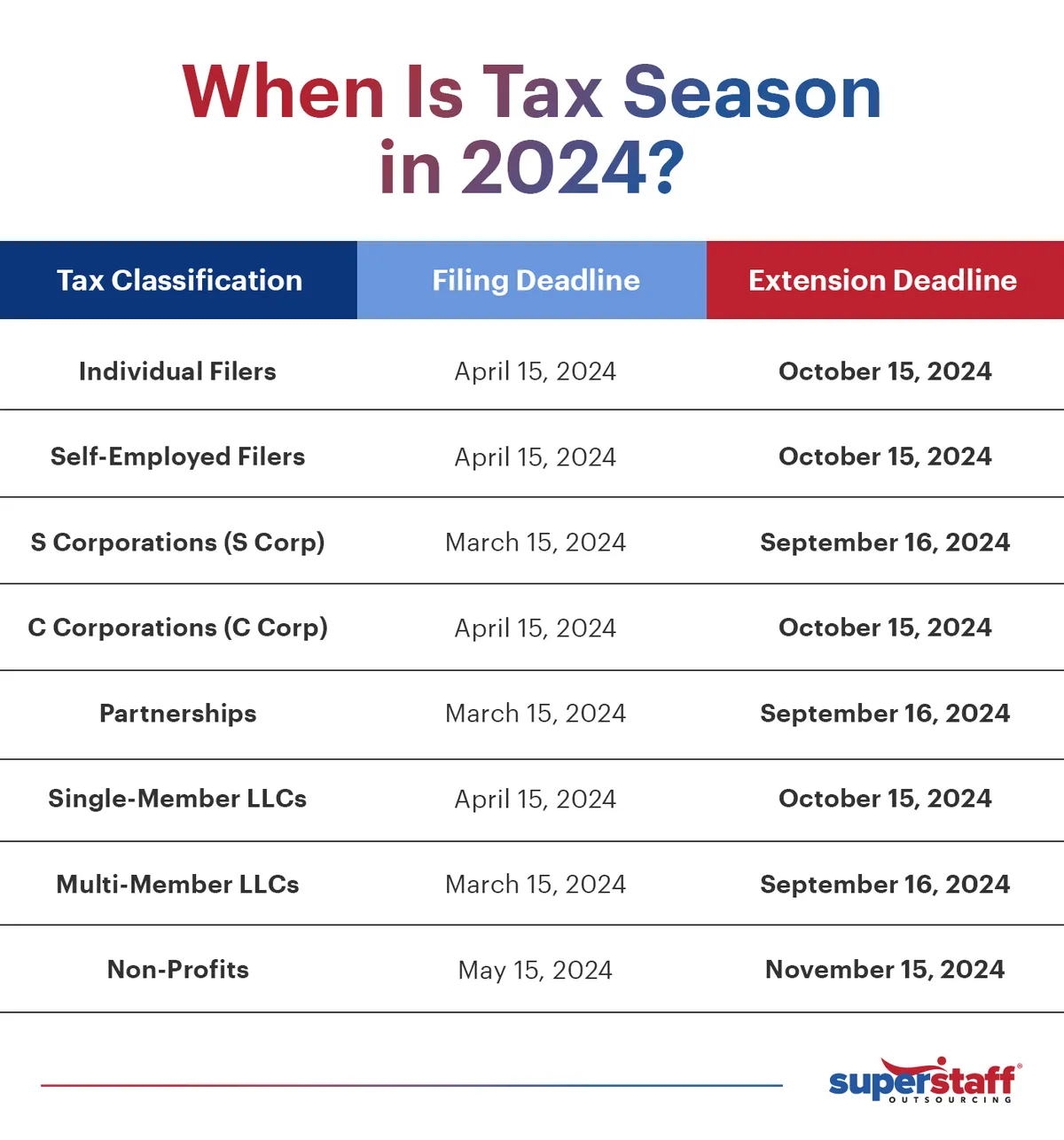
The “filing season” begins in late January of the following year, when the IRS starts accepting returns. The most famous date on the calendar is April 15, the deadline for filing your annual return and paying any taxes owed. If April 15 falls on a weekend or a holiday, the deadline is moved to the next business day.
It is a common misconception that filing an extension (which moves the filing deadline to October 15) also moves the payment deadline. It does not. An extension only gives you more time to submit your paperwork; any money owed to the IRS must still be paid by April 15 to avoid interest and late-payment penalties.
Strategies for Managing Your First Tax Obligations
When taxes start, they often bring a sense of complexity and stress. However, with the right strategies and tools, the transition into being a taxpayer can be managed smoothly.
Record-Keeping and Documentation
The foundation of successful tax management is meticulous record-keeping. From your very first job or business venture, you should maintain a dedicated system for tracking income and expenses. For employees, this means keeping track of W-2s and 1099s. For the self-employed, this means saving receipts for every business-related expense—from software subscriptions and office supplies to a portion of your home internet and phone bills.
Utilizing financial tools like digital bookkeeping software or even a simple, well-maintained spreadsheet can save dozens of hours during tax season. In the eyes of the IRS, if you cannot document an expense, it does not exist.

Utilizing Tax-Advantaged Accounts
One of the most effective ways to manage your tax burden as it begins to grow is to utilize tax-advantaged accounts. Contributions to a traditional 401(k) or a traditional IRA (Individual Retirement Account) are often tax-deductible, meaning they reduce your taxable income for the year.
Conversely, contributing to a Roth IRA does not provide an immediate tax break, but the money grows tax-free, and withdrawals in retirement are also tax-free. For young earners who are just starting their tax journey and are likely in a lower tax bracket now than they will be in the future, the Roth IRA is often the most powerful tool in their financial arsenal. By understanding when taxes start and how they work, you can make informed decisions that will protect your wealth for decades to come.
aViewFromTheCave is a participant in the Amazon Services LLC Associates Program, an affiliate advertising program designed to provide a means for sites to earn advertising fees by advertising and linking to Amazon.com. Amazon, the Amazon logo, AmazonSupply, and the AmazonSupply logo are trademarks of Amazon.com, Inc. or its affiliates. As an Amazon Associate we earn affiliate commissions from qualifying purchases.