
Deciding when to claim Social Security is arguably the most significant financial decision a retiree will ever make. It is not merely a matter of filling out government paperwork; it is a complex strategic choice that dictates the cash flow of your “second act” and serves as a foundational pillar of your broader personal finance strategy. Unlike private savings or market-driven investments, Social Security provides a guaranteed, inflation-adjusted income stream that lasts as long as you live.
However, the flexibility of the system—allowing individuals to claim anywhere between the ages of 62 and 70—often leads to “analysis paralysis.” Should you take the money as soon as possible, or is there a tangible mathematical advantage to waiting? To answer this, we must look beyond the surface and analyze the mechanics of the system, the implications of longevity, and the tax landscape.

The Mechanics of the Claiming Timeline: 62, 67, and 70
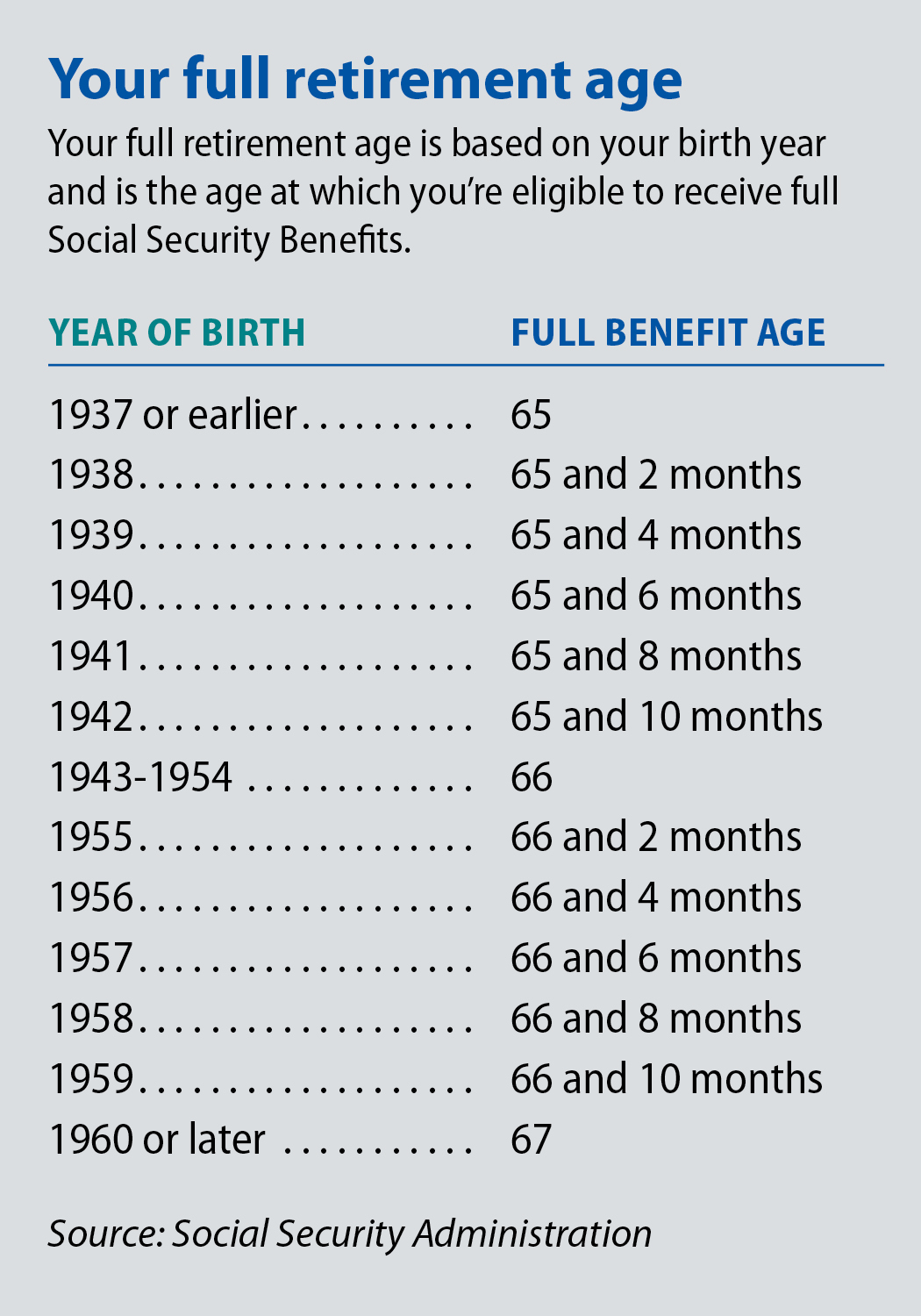
The Social Security Administration (SSA) uses a formula to determine your Primary Insurance Amount (PIA)—the benefit you receive if you wait until your Full Retirement Age (FRA). For anyone born in 1960 or later, the FRA is 67. The timing of your claim relative to this date creates a permanent shift in your monthly income.
The Financial Penalty of Early Filing
You can begin receiving benefits as early as age 62. However, doing so comes at a steep price. If your FRA is 67 and you claim at 62, your monthly benefit is permanently reduced by approximately 30%. This reduction is designed to be actuarially neutral—meaning if you live to the average life expectancy, you’ll receive the same total amount whether you start early or late. But in a modern financial context, a 30% haircut is a massive opportunity cost that reduces your “safety net” for the decades to come.
The Full Retirement Age (FRA) Benchmark
Reaching your FRA is a psychological and financial milestone. At this point, you receive 100% of your earned benefit. More importantly, reaching FRA eliminates the “Earnings Test.” If you claim benefits before your FRA and continue to work, the SSA may withhold a portion of your benefits if your earnings exceed certain thresholds. Once you hit FRA, you can earn an unlimited income without any reduction in your Social Security checks.
The 8% Annual Reward for Patience
For every year you delay claiming past your FRA up until age 70, your benefit increases by 8% in the form of “delayed retirement credits.” There is virtually no other financial instrument in the world that offers a guaranteed, government-backed 8% annual return. By waiting from age 67 to 70, your monthly check grows by 24%. When combined with annual Cost of Living Adjustments (COLA), this can result in a significantly higher floor for your retirement budget.
Analyzing Longevity and the Breakeven Point
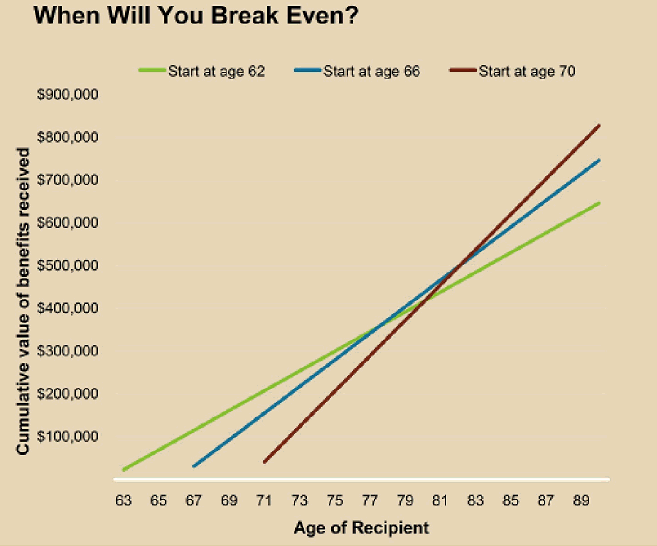
In personal finance, we often talk about the “breakeven point”—the age at which the total cumulative benefits of waiting to claim exceed the total cumulative benefits of taking it early.
The Math of the Breakeven Age
If you choose to wait until age 70 instead of claiming at 62, you are essentially “forfeiting” eight years of checks. To make up for that lost income, you need to live long enough for the much larger checks to bridge the gap. Typically, the breakeven point is around age 80 to 83. If you believe you will live past your early 80s, the mathematical “winner” is almost always the delayed filing strategy. With advances in modern healthcare, many retirees today should plan for a 30-year retirement, making the long-term play more attractive.
Assessing Your Personal Health and Family History
While the math favors waiting, personal finance is personal. If you have chronic health issues or a family history of shorter lifespans, claiming earlier may be the rational choice. Conversely, if you are in excellent health and your parents lived into their 90s, Social Security acts as “longevity insurance.” The greatest risk in retirement is outliving your money; by maximizing your Social Security benefit, you minimize the risk of poverty in your 90s.
Cash Flow vs. Asset Preservation
Sometimes, the decision isn’t about the total amount of Social Security, but about which assets you tap first. Some financial planners suggest taking Social Security early to avoid drawing down a 401(k) or IRA. Others argue the opposite: spend down taxable or tax-deferred accounts first to allow the Social Security benefit to grow at that guaranteed 8%. The latter often results in a higher net worth later in life because it maximizes the only retirement asset that is indexed for inflation.
The Spousal and Survivor Benefit Strategy
Social Security is not just an individual benefit; it is a family asset. For married couples, the decision of when one person claims can have a profound impact on the surviving spouse.
Maximizing the Survivor Benefit
This is perhaps the most critical reason for the higher-earning spouse to delay benefits until age 70. When one spouse passes away, the survivor is entitled to the higher of the two Social Security checks. If the high-earner claims at 62, they have permanently locked in a lower survivor benefit for their spouse. By waiting until 70, the high-earner ensures that the surviving spouse will have the largest possible monthly income to cover household expenses, which often do not decrease significantly when one person dies.
Understanding Spousal Benefits
A lower-earning spouse is entitled to either their own benefit or 50% of their partner’s FRA benefit, whichever is higher. However, to claim a spousal benefit, the primary earner must have already filed for their own. This creates a strategic “dance” where couples must coordinate their filing dates to maximize the total household lifetime income.
Divorced Spouse Benefits
Many are unaware that if you were married for at least 10 years and have been divorced for at least two years, you may be eligible to claim benefits based on your ex-spouse’s earnings record. This does not reduce the ex-spouse’s benefit, nor does it affect their current spouse’s benefits. This can be a vital component of financial independence for divorcees entering retirement.
Tax Implications and the “Tax Torpedo”
A common mistake in retirement planning is failing to account for how Social Security benefits are taxed. Your “combined income”—which includes your adjusted gross income, non-taxable interest, and half of your Social Security benefits—determines how much of your benefit is subject to federal income tax.
The Thresholds for Taxation
If your combined income as a couple is between $32,000 and $44,000, 50% of your benefits may be taxable. If it’s over $44,000, up to 85% may be taxable. For individuals, these thresholds are even lower ($25,000 to $34,000).
Navigating the Retirement Earnings Test
As mentioned earlier, if you work and receive benefits before your FRA, the SSA will withhold $1 for every $2 you earn above a certain limit ($22,320 in 2024). While these withheld funds are eventually added back to your benefit amount once you reach FRA, the immediate impact is a reduced cash flow. For those still in their peak earning years or pursuing a lucrative side hustle, it almost never makes sense to claim Social Security before reaching Full Retirement Age.
Strategic Withdrawals
To manage your tax bracket, you might consider “filling up” lower tax brackets with Roth conversions or capital gains harvesting before you start Social Security. By reducing the size of your required minimum distributions (RMDs) from traditional IRAs later in life, you can keep your combined income lower, thereby shielding more of your Social Security from the IRS.
Utilizing Modern Financial Tools for the Decision
Because the variables are so numerous—ranging from COLA estimates to investment return assumptions—relying on a “gut feeling” is insufficient.
Leveraging Retirement Calculators
There are several high-quality software tools and calculators (such as “Open Social Security” or specialized modules in software like eMoney and RightCapital) that can run thousands of simulations. These tools can show you the “optimal” month to file to maximize the total dollar amount your household receives over a projected lifetime.
The Role of a Fee-Only Financial Planner
While software is helpful, it cannot account for the emotional nuances of retirement. A fee-only financial planner can help you integrate Social Security into a holistic plan that includes your estate goals, tax strategy, and insurance needs. They can help you determine if you have enough “bridge” money—cash or liquid assets to live on while you wait for the higher benefit at age 70.
The Value of Flexibility
Finally, it is important to remember that the decision, while semi-permanent, has a “reset” button in very specific circumstances. If you claim benefits and change your mind within 12 months, you can withdraw your application by paying back everything you received. This allows you to restart the clock and let your benefit grow again. After 12 months, you can no longer withdraw, but once you reach FRA, you can “suspend” your benefits to earn delayed credits until age 70.
Conclusion: A Balanced Perspective
When should you take Social Security? There is no universal “right” age, but there is a “right” process for finding your answer. For those with sufficient savings and good health, waiting until age 70 is often the most sophisticated financial move, offering a guaranteed, inflation-protected return that no market investment can reliably beat.
However, for those who need the income to retire from a physically demanding job, or those with pressing health concerns, claiming at 62 or FRA is a valid choice that provides immediate utility. The goal is to view Social Security not as a standalone check, but as a strategic component of your total wealth. By analyzing the breakeven math, considering survivor needs, and planning for taxes, you can transform Social Security from a confusing government program into a powerful engine for long-term financial security.
aViewFromTheCave is a participant in the Amazon Services LLC Associates Program, an affiliate advertising program designed to provide a means for sites to earn advertising fees by advertising and linking to Amazon.com. Amazon, the Amazon logo, AmazonSupply, and the AmazonSupply logo are trademarks of Amazon.com, Inc. or its affiliates. As an Amazon Associate we earn affiliate commissions from qualifying purchases.