
Navigating the landscape of modern retail requires more than just a passing interest in consumer goods; it demands a sophisticated understanding of market cycles and financial timing. For the savvy consumer and the budget-conscious investor alike, knowing exactly when the next sale on Amazon occurs is less about chasing trends and more about optimizing capital allocation. In a world where inflation fluctuates and disposable income is a precious resource, mastering the Amazon sales calendar is a foundational skill in personal finance management.
Amazon does not merely host sales; it orchestrates massive economic events that shift market dynamics across the globe. By aligning your purchasing power with these specific windows, you can significantly reduce your annual cost of living and increase your net savings rate. This guide delves into the predictable patterns of Amazon’s discount cycles, providing a roadmap for financial discipline and strategic spending.
Understanding the Amazon Sales Cycle: A Foundation for Personal Budgeting
To effectively manage a household or business budget, one must move away from reactive spending and toward proactive procurement. Amazon’s sales are not random; they follow a highly calculated fiscal rhythm designed to maximize volume during specific quarters. Understanding this cycle allows you to treat your recurring expenses—and your occasional big-ticket upgrades—as managed financial events.
The Big Spring Sale: Capturing Early-Year Momentum
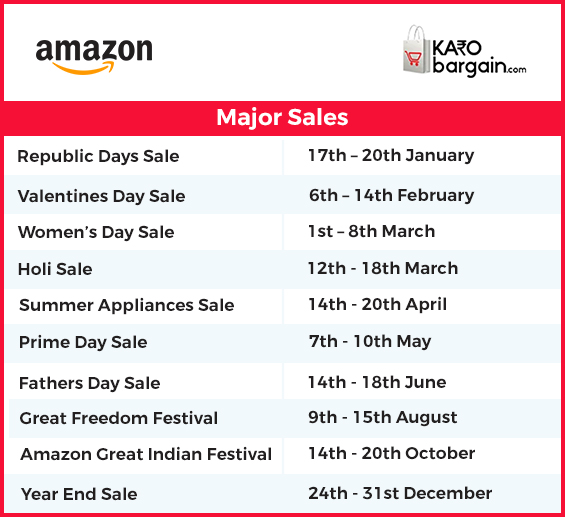
Typically occurring in late March, the Big Spring Sale is Amazon’s relatively new entry into the annual discount calendar. From a financial planning perspective, this event is the ideal time to audit your home maintenance and lifestyle needs for the upcoming warmer months. While it lacks the brand recognition of Prime Day, the Spring Sale offers significant price drops on seasonal equipment, outdoor gear, and fitness technology. For those following a strict annual budget, this is the first major opportunity of the year to secure high-ticket items without paying the “convenience premium” associated with last-minute summer shopping.
Prime Day: The Mid-Year Financial Pivot
Prime Day, usually held in mid-July, is arguably the most significant shopping event for the personal finance enthusiast. It serves as a mid-year point to reassess your “sinking funds”—savings accounts set aside for specific future purchases. Prime Day often features the lowest prices of the year on Amazon’s own ecosystem of devices, which can be essential for both personal productivity and home security.
Beyond tech, the sale often includes deep discounts on household staples and pantry items. Strategically bulk-buying non-perishables during this window can lead to a measurable reduction in monthly grocery expenses for the remainder of the year. The key to Prime Day success is not found in the “Lightning Deals,” but in the pre-planned acquisition of items that were already on your balance sheet for the third or fourth quarter.
Prime Big Deal Days: The Q4 Kickoff
In recent years, Amazon has introduced a second major Prime-exclusive event in October, often referred to as “Prime Big Deal Days.” Financially, this event serves a dual purpose. First, it allows for early holiday procurement, spreading out the fiscal impact of gift-giving over three months rather than concentrating it in December. Second, it acts as a precursor to Black Friday, often price-matching the expected November lows. For those who prioritize cash flow management, utilizing the October sale can prevent the “holiday debt hangover” that often plagues consumers in January.
Advanced Financial Strategies for Amazon Shopping
Identifying the date of a sale is only the first step. To truly excel in personal finance, one must employ a suite of tools and strategies to ensure that every dollar spent is optimized for maximum return on investment (ROI).
Price Tracking Tools as Financial Instruments
The price of an item on Amazon is a fluid metric, often changing multiple times in a single day based on algorithmic demand. To combat this, sophisticated shoppers use price tracking tools that provide historical data on an item’s valuation. By analyzing the price history, you can determine if a “sale” price is a genuine historic low or merely a return to a standard baseline after a temporary hike.
Treating price charts with the same scrutiny one might apply to a stock ticker allows you to set “buy triggers.” For example, if you know a specific high-end kitchen appliance historically drops to $299 every November, you can set a notification and ignore all other marketing noise until that price point is met. This discipline prevents the emotional spending that typically erodes a savings account.
Leveraging Cash Back and Reward Points Optimization
The intersection of Amazon sales and fintech provides a unique opportunity for compound savings. Utilizing an Amazon-branded credit card—or a third-party card with high rotating rewards for online retail—can effectively add an additional 5% to 6% discount on top of the existing sale price.

When these rewards are reinvested into a high-yield savings account or used to offset future essential purchases, the long-term financial benefit is substantial. However, this strategy requires the discipline to pay off the balance in full every month. If you carry a balance, the interest charges will quickly negate the savings found during the sale. The goal is to use the credit infrastructure as a tool for efficiency, not as a vehicle for debt.
The Subscription Economy: Evaluating Prime for Long-Term ROI
The “Prime” membership itself is a recurring financial obligation. To justify the annual fee, a consumer must perform a simple cost-benefit analysis. Does the value of the shipping savings, the exclusive sale access, and the ancillary services (like Prime Video or Amazon Music) exceed the membership cost?
For high-volume households, the “Subscribe & Save” feature—which often stacks with sale prices—can result in an additional 15% discount. When combined with the deep discounts of Prime Day, the ROI of a membership becomes clear. If your annual savings from these combined strategies do not significantly exceed the membership fee, the most financially sound move may be to cancel the subscription and wait for the few windows where shipping is free for all users.
Using Amazon Sales as a Side Hustle: Arbitrage and Reselling
For those looking to increase their online income, Amazon sales are more than a way to save; they are a source of inventory. The practice of “Retail Arbitrage”—buying items at a steep discount during a sale and reselling them for a profit when prices normalize—has become a legitimate side hustle for many.
Identifying Margin Opportunities in Sale Cycles
The key to reselling is understanding the delta between the sale price and the standard market value. During events like Black Friday, certain categories—such as toys, small electronics, and beauty sets—often see price drops that are unsustainable for the long term. A savvy reseller with available capital can purchase inventory during these windows, hold the stock for 60 to 90 days, and resell the items through various marketplaces once the supply at the discount price has vanished.
Inventory Management and Cash Flow Timing
Success in this niche requires meticulous financial tracking. You must account for Amazon’s seller fees, shipping costs, and the “time value of money.” Capital tied up in inventory is capital that isn’t earning interest elsewhere. Therefore, the goal of a reselling side hustle centered on Amazon sales is to identify high-velocity items that will turn over quickly. By timing your purchases with the Amazon sales calendar, you effectively lower your “Cost of Goods Sold” (COGS), which is the most direct way to increase your profit margin.
Avoiding Impulse Spending: The Psychology of “Deals”
The greatest threat to a healthy financial plan during a major sale is the psychological pressure of “limited-time offers.” Amazon’s interface is designed to trigger urgency through countdown timers and “percent claimed” progress bars. To maintain financial integrity, one must understand the behavioral economics at play.
Building a Shopping Sinking Fund
The most effective way to avoid debt during a sale is to utilize a “sinking fund.” Instead of relying on future income or credit, you set aside a small amount of money each month specifically for the next major sale. By the time Prime Day or Black Friday arrives, you are spending money that has already been accounted for in your budget. This transforms the shopping experience from a stressful financial burden into a planned execution of a strategy.
The True Cost of “Limited Time Offers”
In personal finance, the most expensive item is the one you bought only because it was on sale. Before clicking “Add to Cart,” ask yourself if you would have purchased the item at full price. If the answer is no, the sale isn’t saving you 40%; it is costing you 60%. A sale is only a financial victory if it applies to a pre-existing need or a carefully considered want. By adhering to a “wait 24 hours” rule—even during Lightning Deals—you allow the emotional impulse to subside, often realizing that the “must-have” item is actually an unnecessary drain on your capital.

Conclusion: Mastering the Financial Calendar
The question of “when is the next sale on Amazon” is ultimately a question of when you will next have the opportunity to optimize your personal economy. By viewing these sales as fixed points on a financial calendar rather than surprises, you move from a position of passive consumption to one of active financial management.
Whether you are using these dates to lower your household’s cost of living, maximize your credit card rewards, or fuel a reselling side hustle, the strategy remains the same: plan ahead, use data-driven tools, and remain disciplined in the face of marketing pressure. In the long run, the hundreds or thousands of dollars saved through strategic timing can be redirected toward investments, debt repayment, or long-term wealth building, proving that smart shopping is indeed a vital component of professional financial planning.
aViewFromTheCave is a participant in the Amazon Services LLC Associates Program, an affiliate advertising program designed to provide a means for sites to earn advertising fees by advertising and linking to Amazon.com. Amazon, the Amazon logo, AmazonSupply, and the AmazonSupply logo are trademarks of Amazon.com, Inc. or its affiliates. As an Amazon Associate we earn affiliate commissions from qualifying purchases.