
Travel is one of the most significant discretionary expenses in a modern household budget. For many, the dream of exploring new horizons is often tempered by the volatility of airfare pricing. Unlike retail goods with stable price tags, airline tickets are dynamic financial instruments, fluctuating based on complex algorithms, global oil prices, and consumer demand. Understanding when to book is not merely a matter of luck; it is a strategic financial decision that requires an understanding of market timing, data analysis, and behavioral economics. To optimize your personal finance strategy, mastering the art of the “booking window” is essential for maximizing the value of your liquid assets.

Decoding the Economics of Airfare Pricing
To understand when flights are cheapest, one must first understand how airlines price their inventory. Airlines utilize sophisticated Revenue Management Systems (RMS) that employ AI-driven dynamic pricing. These systems are designed to maximize the “yield” per seat, ensuring that the airline extracts the highest possible price from every passenger based on their perceived urgency and willingness to pay.
Dynamic Pricing and Yield Management
Airlines do not sell every seat at the same price. Instead, they divide the cabin into “fare buckets.” As the cheaper buckets sell out, the system automatically moves to the next, more expensive tier. This is why you might see a price jump significantly within minutes of refreshing a page. From a financial perspective, the goal of the consumer is to identify when these lower-tier fare buckets are most likely to be open. These buckets are influenced by historical data, real-time demand, and even competitor pricing. For the budget-conscious traveler, treating airfare as a commodity—much like a stock or a currency—allows for a more disciplined approach to purchasing.
The Role of Seasonality in Travel Budgets
Seasonality is the most predictable variable in the pricing equation. In the world of personal finance, planning around “peak,” “off-peak,” and “shoulder” seasons can lead to savings of 40% or more. Peak seasons, such as mid-summer or the December holiday corridor, see demand far outstrip supply, allowing airlines to maintain high prices regardless of how far in advance you book. Conversely, the shoulder seasons—typically April through June and September through October—offer a sweet spot where weather is favorable but demand is lower, leading to significant downward pressure on prices. Analyzing your travel goals through the lens of seasonal arbitrage is the first step in protecting your savings.
The Strategic Booking Window: A Data-Driven Approach
The most common question in travel finance is how far in advance one should commit capital to a flight. Booking too early can be as detrimental as booking too late, as airlines often set high “baseline” prices a year out and only begin to discount once they have a clearer picture of demand.
The Domestic Sweet Spot
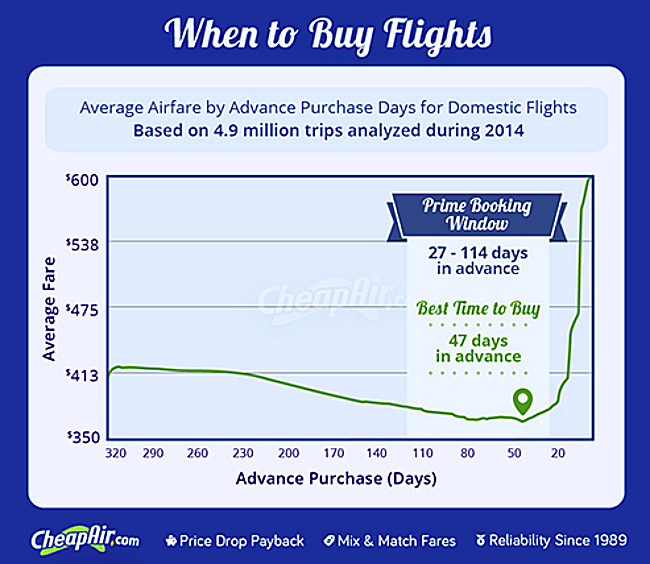
For domestic travel, historical data suggests that the “Goldilocks” window for booking is typically between one and three months before departure. During this period, airlines have a better grasp of seat occupancy and will often release lower-fare buckets to ensure the aircraft reaches a profitable load factor. Research consistently shows that booking approximately 28 to 60 days out yields the lowest average prices. Waiting until the 21-day mark is often a financial mistake, as many corporate travel policies require employees to book at least three weeks in advance. Airlines know this and typically hike prices exactly 21, 14, and 7 days before departure to capture higher-margin business spending.
International Capital Allocation
International travel requires a much longer lead time due to the complexity of global routes and the lower frequency of flights. For transoceanic journeys, the ideal booking window expands to three to eight months. If you are planning to travel during a major international event or a peak holiday, extending that window to ten months is often a prudent financial move. Unlike domestic flights, international fares rarely see “last-minute deals” that justify the risk of waiting. In the context of a long-term financial plan, international flights should be treated as a major capital expenditure, booked well in advance to avoid the high volatility of the final 90 days.
Debunking the “Tuesday at Midnight” Myth
One of the most persistent myths in personal finance circles is that flights are cheaper if purchased on a Tuesday at midnight. While this may have been true decades ago when airlines manually updated their fare databases once a week, modern technology has rendered this advice obsolete. Prices now update in real-time, 24/7. While the day you fly (typically Tuesday or Wednesday) significantly impacts the cost, the day you click “buy” is far less relevant than the number of days remaining until departure. Your focus should be on the timeline, not the day of the week the transaction occurs.
Leveraging Financial Tools and Technology

In the digital age, consumers have access to the same type of data that was once reserved for travel agents and hedge fund analysts. Utilizing these tools is a hallmark of a savvy financial mind.
Price Tracking and Predictive Analytics
Tools like Google Flights, Hopper, and Skyscanner allow users to set price alerts and view historical price graphs. These platforms use big data to predict whether a fare is likely to rise or fall, providing a “buy” or “wait” recommendation. For someone managing a strict budget, these tools act as a financial advisor for travel. By monitoring the “price floor” for a specific route, you can establish a target entry price and execute the purchase immediately when the market hits that level.
Maximizing Credit Card Rewards and Points
For those who treat their personal finances with high rigor, the “price” of a flight is not just the cash value but the net cost after accounting for rewards. Utilizing travel-focused credit cards can effectively discount a flight by 2% to 5% through points accumulation. Furthermore, using “Points Transfer Partners” can often unlock business-class seats for the cash price of an economy ticket, representing a massive return on investment (ROI) for your spending. When calculating the cheapest time to book, one must also consider the “burn rate” of their points and miles, as these assets can devalue over time due to airline policy changes.
Behavioral Hacks for Significant Savings
Financial efficiency in travel often requires a shift in behavior. By adjusting how you approach the search process, you can find “hidden” savings that the average consumer misses.
The Flexibility Asset
In financial terms, flexibility is an asset with a tangible cash value. If your travel dates are rigid, you are a “price taker,” forced to accept whatever the market offers. If you are flexible by even 24 to 48 hours, you become a “price maker.” Mid-week departures (Tuesday and Wednesday) are almost universally cheaper than Friday or Sunday departures. Similarly, flying during “socially inconvenient” times—such as the first flight at 5:00 AM or a red-eye—can reduce the cost of a ticket by 20% or more. When building a travel budget, factor in the “cost of convenience” to see if the savings justify the early wake-up call.
The Hidden City and Multi-City Strategy
Advanced travelers often use “Hidden City” ticketing (booking a flight with a layover in your actual destination and skipping the second leg) or multi-city itineraries to lower costs. While these require a deeper understanding of airline ticketing rules and carry certain risks (such as only being able to bring a carry-on), they represent a form of geographical arbitrage. By looking at the “hub and spoke” model of airlines, you can often find that flying through a major hub is cheaper than flying directly, even if the distance is greater.
Integrating Travel Costs into Your Broader Financial Plan
A one-off “cheap flight” is a win, but sustainable travel requires a systematic approach to funding these experiences.
The Travel Sinking Fund
Instead of relying on credit card debt or dipping into emergency savings, the most financially sound way to book flights is through a “sinking fund.” By automating a monthly transfer into a high-yield savings account specifically for travel, you ensure that when the “Goldilocks window” for booking opens, you have the liquidity to strike immediately. This removes the emotional stress of the purchase and allows you to focus purely on the data-driven best time to buy.
Inflation and the Future of Airfare
As global energy prices and labor costs fluctuate, the baseline price of airfare is subject to inflationary pressure. In a high-inflation environment, the “cheapest time to book” often trends earlier. If you anticipate that fuel surcharges or airport taxes will rise, locking in a price six months in advance serves as a hedge against future price increases.
Mastering the timing of flight bookings is a vital component of modern personal finance. By understanding the underlying economics of the airline industry, utilizing predictive technology, and maintaining a disciplined booking window, you can ensure that your travel experiences are an enrichment of your life rather than a drain on your net worth. The cheapest time to book is not a single date on a calendar, but a calculated moment where data, timing, and financial readiness intersect.
aViewFromTheCave is a participant in the Amazon Services LLC Associates Program, an affiliate advertising program designed to provide a means for sites to earn advertising fees by advertising and linking to Amazon.com. Amazon, the Amazon logo, AmazonSupply, and the AmazonSupply logo are trademarks of Amazon.com, Inc. or its affiliates. As an Amazon Associate we earn affiliate commissions from qualifying purchases.