
In the fast-paced world of modern finance, timing is often just as critical as the assets one chooses to hold. For retail investors and seasoned institutional traders alike, the question of “when is the stock market close today” serves as more than just a logistical query; it is a fundamental marker that dictates liquidity, volatility, and strategy. While the simple answer for the major United States exchanges is 4:00 PM Eastern Time, the nuances surrounding that closing bell are complex and carry significant implications for your portfolio.
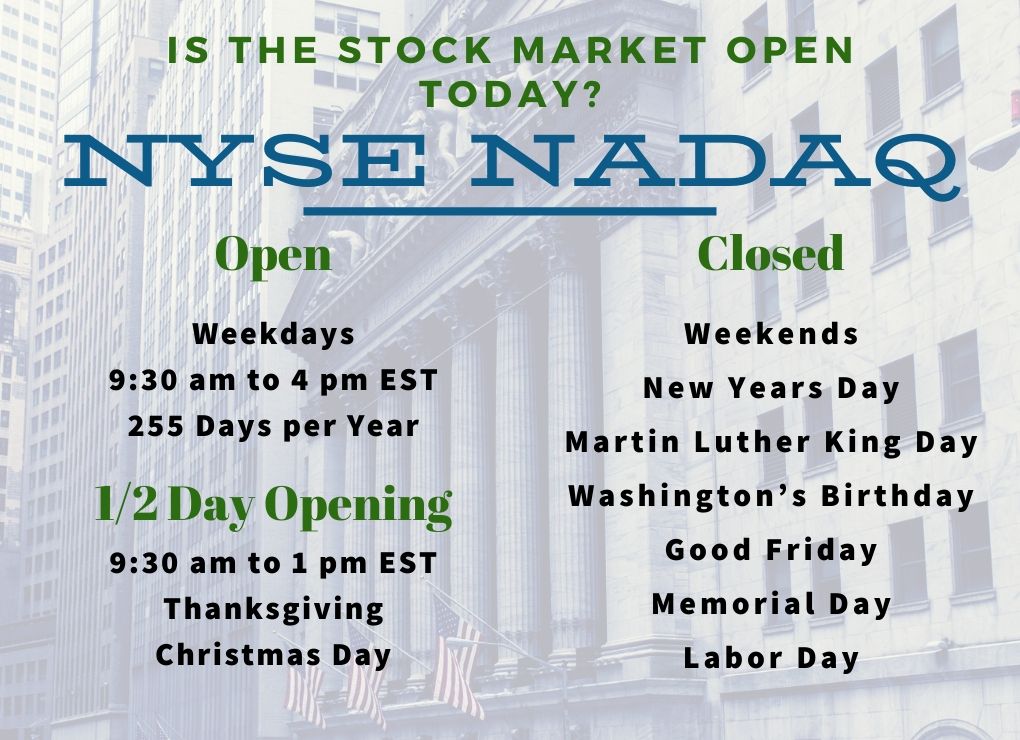
Understanding the rhythm of the market—when it opens, when it closes, and what happens in the shadows of the extended-hours sessions—is essential for anyone looking to navigate the financial markets successfully. This guide explores the standard operating hours of the stock market, the impact of holidays, the mechanics of the closing cross, and the strategic importance of the “power hour.”
Standard Trading Hours and the Closing Bell
The primary theater for equity trading in the United States consists of the New York Stock Exchange (NYSE) and the Nasdaq. Both of these institutions follow a standardized schedule that provides a predictable framework for global commerce.
The 9:30 AM to 4:00 PM Window
The “core” trading session runs from 9:30 AM to 4:00 PM Eastern Time, Monday through Friday. This 6.5-hour window represents the period of highest liquidity and the narrowest bid-ask spreads. During these hours, the vast majority of retail trades are executed, and institutional algorithms are most active. For the casual investor, this is the safest time to execute trades, as the high volume of participants ensures that prices are relatively stable and reflective of current market sentiment.
The closing bell at 4:00 PM ET is an iconic moment in finance. It signifies the end of the continuous trading session and triggers a series of automated processes designed to determine the official closing price for every listed security. This closing price is the benchmark used by mutual funds to calculate their Net Asset Value (NAV) and by analysts to chart historical performance.
Holiday Schedules and Early Closures
While the Monday-to-Friday schedule is the norm, the market observes several federal holidays during which the exchanges are closed entirely. These include New Year’s Day, Martin Luther King Jr. Day, Washington’s Birthday (Presidents’ Day), Good Friday, Memorial Day, Juneteenth National Independence Day, Independence Day, Labor Day, Thanksgiving Day, and Christmas Day.
It is also important to note “early close” days. Typically occurring on the day after Thanksgiving (Black Friday) and sometimes on the day before or after July 4th or Christmas, the market will close at 1:00 PM ET. On these days, liquidity is often lower, and the “power hour” shift happens much earlier in the afternoon. Keeping a calendar of these events is vital for preventing missed opportunities or unexpected exposure to weekend risk.
The Mechanics of the Market Close: MOC and LOC Orders
The final minutes of the trading day are not just a countdown; they are a sophisticated mechanical process. As 4:00 PM approaches, a significant portion of the day’s volume is executed through specific order types designed to catch the official closing price.
Market-on-Close (MOC) Orders
A Market-on-Close (MOC) order is an instruction to execute a trade as close to the closing price as possible. These are particularly popular among institutional investors and index funds that need to match the performance of a specific benchmark. Because an index’s value is calculated based on closing prices, fund managers use MOC orders to ensure their portfolio’s value aligns perfectly with the index at the end of the day.
Limit-on-Close (LOC) Orders
Similar to MOC orders, Limit-on-Close (LOC) orders are intended to be executed at the closing price, but only if that price is at or better than a specified limit. This provides a layer of protection for the investor. If the closing price moves too far beyond the investor’s comfort zone due to a sudden spike in volatility at 3:59 PM, the order will not execute.
The Closing Cross
The Nasdaq and NYSE utilize a “Closing Cross” to facilitate these orders. This is a centralized auction that aggregates all MOC, LOC, and standard limit orders to find the single price that maximizes the number of shares traded. By concentrating liquidity into one final moment, the exchanges reduce the impact of “price discovery” volatility that might otherwise occur if thousands of large orders hit the tape simultaneously in the final seconds.
Extended Hours Trading: Pre-Market and After-Hours

While the “official” close is at 4:00 PM, the digital nature of modern exchanges allows for trading well beyond the ringing of the bell. Extended-hours trading is divided into two segments: pre-market and after-hours.
The Risks of After-Hours Trading
After-hours trading typically runs from 4:00 PM to 8:00 PM ET. While it offers the flexibility to react to news that breaks after the bell—such as corporate earnings reports or geopolitical events—it comes with significant risks. The primary concern is “thin” liquidity. With far fewer participants than the core session, the gap between what a buyer is willing to pay and what a seller is willing to accept (the spread) can widen dramatically. This means an investor might end up paying a much higher price—or receiving a much lower one—than they would during normal hours.
Liquidity and Volatility Outside Normal Hours
Volatility is a double-edged sword in the after-hours market. Because there is less volume to absorb large trades, a single significant sell order can send a stock price tumbling far lower than its fundamental value would suggest. Conversely, positive earnings news can cause a stock to “moon” in the after-hours, only for it to settle back down once the broader market opens the following morning and provides a reality check. For most individual investors, after-hours trading should be approached with caution and the strict use of limit orders rather than market orders.
Global Perspectives: When Do International Markets Close?
In our interconnected global economy, the close of the U.S. market is often the start of a cycle elsewhere. For investors with international exposure, understanding the “close” requires a global clock.
The London Stock Exchange (LSE) and European Markets
The London Stock Exchange typically closes at 4:30 PM local time (GMT or BST). For an investor in New York, this means the UK market closes at 11:30 AM ET. European markets often provide a “lead-in” to the U.S. session, and the overlap between the London open and the New York morning (9:30 AM to 11:30 AM ET) is frequently the most liquid and volatile period for global currency and equity pairs.
The Tokyo Stock Exchange (TSE) and Asian Markets
The Tokyo Stock Exchange closes at 3:00 PM local time. Due to the time difference, this occurs in the early morning hours for U.S. investors. Asian markets often react to the previous day’s U.S. close, creating a feedback loop where sentiment from Wall Street travels through Tokyo, Hong Kong, and London before returning to New York the next morning.
Integrating Global Time Zones into Your Strategy
Sophisticated investors monitor these international closing times to gauge global “risk-on” or “risk-off” sentiment. If the European markets close with heavy losses while the U.S. market is still in its morning session, it can often signal a downward trend for the remainder of the American trading day.
Strategic Considerations for Trading Near the Close
The final hour of trading, often referred to as the “Power Hour” (3:00 PM to 4:00 PM ET), is one of the most important periods for any active participant in the money markets.
The “Closing Power Hour”
During the Power Hour, trading volume surges as day traders close out their positions to avoid overnight risk and institutional investors adjust their holdings based on the day’s developments. This hour is characterized by increased volatility and rapid price movements. For a momentum trader, this is the time to capitalize on established trends. For a long-term investor, it is often a time to sit back and observe, as the noise of the Power Hour can obscure the long-term value of a security.
Managing Risk and Portfolio Rebalancing
The close of the market is also the deadline for many risk management protocols. Margin calls are often calculated based on closing prices, and many traders will liquidate losing positions right before the bell to prevent further losses overnight.
Furthermore, the “End of Month” close is particularly significant. This is when pension funds and large mutual funds perform “rebalancing”—selling assets that have outperformed to buy those that have underperformed to maintain their target asset allocation. This can lead to massive, seemingly inexplicable price swings in the final minutes of the final trading day of the month.
The Psychology of the Close
Finally, there is a psychological element to the market close. The closing price is the “permanent record” for the day. It is what people see on the evening news and what appears in their brokerage apps. A “strong close,” where a stock finishes at its daily high, often suggests bullish sentiment that may carry over into the next day. A “weak close” can suggest that sellers are in control.
In conclusion, knowing “when the stock market closes today” is only the beginning. To truly master the flow of money, one must understand the mechanics of the closing auction, the risks of the after-hours sessions, and the global interconnectedness of financial time zones. Whether you are rebalancing a retirement account or day-trading the latest tech volatility, the 4:00 PM bell remains the most important heartbeat in the world of finance.
aViewFromTheCave is a participant in the Amazon Services LLC Associates Program, an affiliate advertising program designed to provide a means for sites to earn advertising fees by advertising and linking to Amazon.com. Amazon, the Amazon logo, AmazonSupply, and the AmazonSupply logo are trademarks of Amazon.com, Inc. or its affiliates. As an Amazon Associate we earn affiliate commissions from qualifying purchases.