
For the modern investor, few dates on the financial calendar carry as much weight as the NVIDIA (NVDA) earnings call. Once a company primarily known by gamers and computer enthusiasts, NVIDIA has transformed into the primary engine of the global artificial intelligence revolution. Consequently, its quarterly financial reports have become a “macro” event, often moving not just the semiconductor sector but the entire S&P 500 and Nasdaq 100. Understanding when the next earnings call occurs—and more importantly, how to interpret the data presented—is essential for any serious participant in the financial markets.

Navigating the NVIDIA Earnings Calendar
NVIDIA operates on a fiscal year that differs from the standard calendar year. Their fiscal year typically ends in late January. This means their “First Quarter” usually concludes in April, with the earnings call following in May. To answer the burning question of “when,” investors must look at the historical cadence of the company’s reporting cycle.
Determining the Likely Date
Typically, NVIDIA releases its quarterly results approximately three to four weeks after the close of the fiscal quarter. For the first quarter (Q1), the call usually lands in late May. For the second quarter (Q2), it falls in late August. The third quarter (Q3) results are generally shared in late November, and the fourth quarter (Q4) and full-year results are announced in mid-to-late February.
To find the exact date, investors should prioritize the NVIDIA Investor Relations website. The company officially announces the date and time (usually 2:00 PM PT / 5:00 PM ET) roughly one to two weeks in advance. Setting alerts on financial news platforms or checking the “Investor Events” section of NVIDIA’s corporate portal is the most reliable way to ensure you don’t miss the live webcast.
Why the “Whisper Number” Matters
In the weeks leading up to the call, Wall Street analysts publish their estimates for Revenue and Earnings Per Share (EPS). However, experienced investors also pay attention to the “whisper number”—the unofficial expectation held by traders and institutional investors. Because NVIDIA has a history of significantly outperforming official guidance, the market often “prices in” a beat. If the company meets analyst expectations but fails to exceed the whisper number, the stock price may actually decline. This makes the timing of the call a period of intense volatility and speculation.
Key Financial Metrics Every Investor Must Monitor
When the earnings report finally drops, the headline numbers (Revenue and EPS) are only the beginning of the story. To understand the true health of the business and its potential for future growth, investors must dive into specific segments and margins.
Data Center Revenue: The AI Bellwether
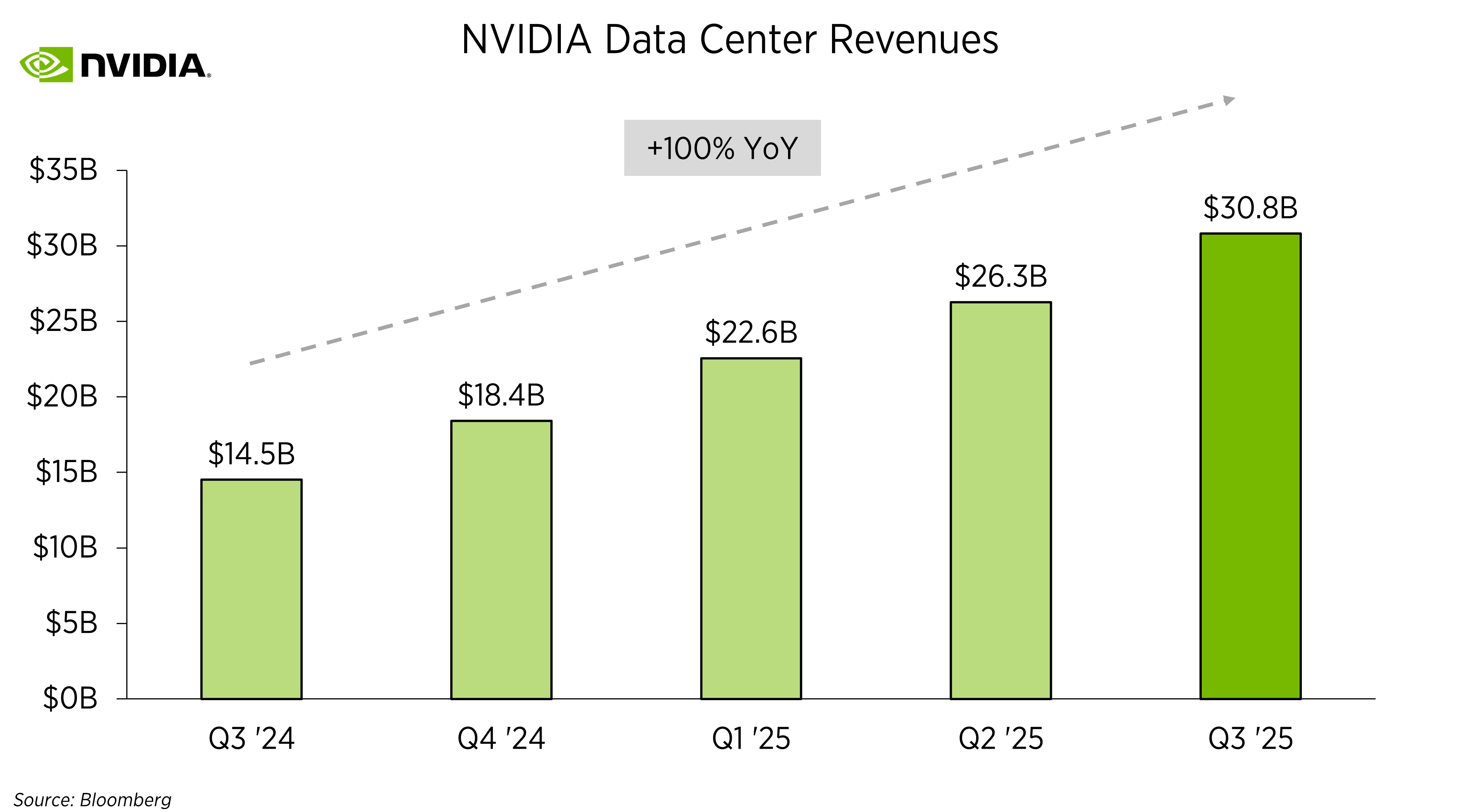
In the current economic climate, the Data Center segment is the crown jewel of NVIDIA’s balance sheet. This segment includes the sales of H100 and B200 (Blackwell) GPUs, which power large language models like ChatGPT. Investors look for triple-digit year-over-year growth in this area. If Data Center revenue slows, it is often interpreted as a sign that the “AI gold rush” may be cooling, which can lead to a broader sell-off in tech stocks.
Gross Margins and Operational Efficiency
One of NVIDIA’s greatest strengths is its pricing power. In recent quarters, the company has maintained non-GAAP gross margins in the neighborhood of 70% to 75%. For a hardware company, these margins are extraordinary—more akin to a software-as-a-service (SaaS) business. A contraction in gross margins could indicate rising supply chain costs or increased competition from rivals like AMD or custom silicon developed by Big Tech firms (Amazon, Google, Microsoft).
Forward Guidance: The Market’s North Star
The most critical part of the earnings call isn’t what happened in the past three months, but what management expects for the next three. NVIDIA’s guidance acts as a forecast for the entire tech industry. If CEO Jensen Huang and CFO Colette Kress project continued demand outstripping supply, it reinforces the “higher for longer” narrative regarding AI capital expenditures. Strong guidance can ignite a multi-week rally, while conservative or “soft” guidance can erase billions in market capitalization in minutes.

The Broader Economic Implications of NVIDIA’s Performance
NVIDIA is no longer just a “stock”; it is a systemic indicator of global corporate spending. When the earnings call occurs, the ripple effects are felt across the entire financial ecosystem.
Influence on Major Indices and ETFs
As one of the largest companies in the world by market cap, NVIDIA carries immense weight in the S&P 500 and the Nasdaq. On the day of its earnings report, it is common to see these indices move purely based on NVIDIA’s results. Furthermore, specialized ETFs such as the VanEck Semiconductor ETF (SMH) or the iShares Semiconductor ETF (SOXX) are highly sensitive to NVIDIA’s data. For diversified investors, even those who do not own NVIDIA directly, the earnings call is a “must-watch” because it dictates the direction of their retirement accounts and mutual funds.
Tracking Capital Expenditure (CapEx) Trends
NVIDIA’s earnings call provides a window into the spending habits of the world’s wealthiest corporations. During the Q&A session with analysts, management often discusses the demand levels from “Hyperscalers”—companies like Meta, Microsoft, and Alphabet. If NVIDIA reports that these giants are continuing to increase their orders, it signals a healthy environment for business investment. Conversely, if there is a hint of “digestion”—a period where companies stop buying new chips to integrate what they already have—it could signal a looming slowdown in the broader tech sector.
Risk Management and Investment Strategies for Earnings Season
Earnings calls are notoriously volatile. For NVIDIA, it is not uncommon for the stock to swing 5% to 10% in after-hours trading. Developing a disciplined strategy is vital for protecting capital.
Navigating the “Implied Move”
Before the call, the options market calculates an “implied move,” which is the expected percentage change in the stock price based on option premiums. For retail investors, this is a crucial metric for risk assessment. If the implied move is 8% and your portfolio cannot handle a sudden 8% drawdown, it may be prudent to trim your position or use hedging strategies, such as buying protective puts, before the announcement date.
Long-Term Fundamentals vs. Short-Term Noise
It is easy to get caught up in the drama of a single earnings report. However, successful “Money” management requires a focus on the long-term thesis. Is the transition to accelerated computing still in its early stages? Is NVIDIA’s software moat (CUDA) still intact? If the answer is yes, then a post-earnings dip might be viewed as a buying opportunity rather than a reason to panic. Many institutional investors use the volatility surrounding the earnings call to add to their “core” positions at more favorable valuations.
Preparing Your Portfolio for the Earnings Outcome
As the earnings date approaches, investors should conduct a “pre-flight” check of their portfolios. This involves more than just knowing the time of the call; it requires a deep dive into valuation and position sizing.
Analyzing Valuation Multiples
NVIDIA often trades at a high Price-to-Earnings (P/E) ratio compared to the broader market. However, when adjusted for its growth rate (the PEG ratio), the valuation sometimes appears more reasonable. Investors should compare NVIDIA’s current P/E to its historical averages and to its peers. If the stock has run up 30% in the month leading up to the earnings call, the “good news” may already be priced in, increasing the risk of a “sell the news” reaction even if the report is positive.
The Role of Share Repurchases and Dividends
While NVIDIA is primarily a growth stock, its massive cash flow allows it to return capital to shareholders. During the earnings call, pay close attention to updates regarding share buyback programs. A significant increase in a buyback authorization is a sign of management’s confidence in the stock’s value and can provide a “floor” for the share price during periods of market turbulence.
In conclusion, the NVIDIA earnings call is the ultimate intersection of technology and finance. For the investor focused on the “Money” niche, the date of this call represents a pivotal moment for liquidity, valuation, and strategic decision-making. By understanding the calendar, focusing on the right metrics, and managing risk through the inevitable volatility, you can turn these high-stakes announcements into a cornerstone of your long-term investment success. Keep a close eye on the Investor Relations page, prepare your spreadsheets, and listen closely to the guidance—the future of the market is often whispered on these calls.
aViewFromTheCave is a participant in the Amazon Services LLC Associates Program, an affiliate advertising program designed to provide a means for sites to earn advertising fees by advertising and linking to Amazon.com. Amazon, the Amazon logo, AmazonSupply, and the AmazonSupply logo are trademarks of Amazon.com, Inc. or its affiliates. As an Amazon Associate we earn affiliate commissions from qualifying purchases.