
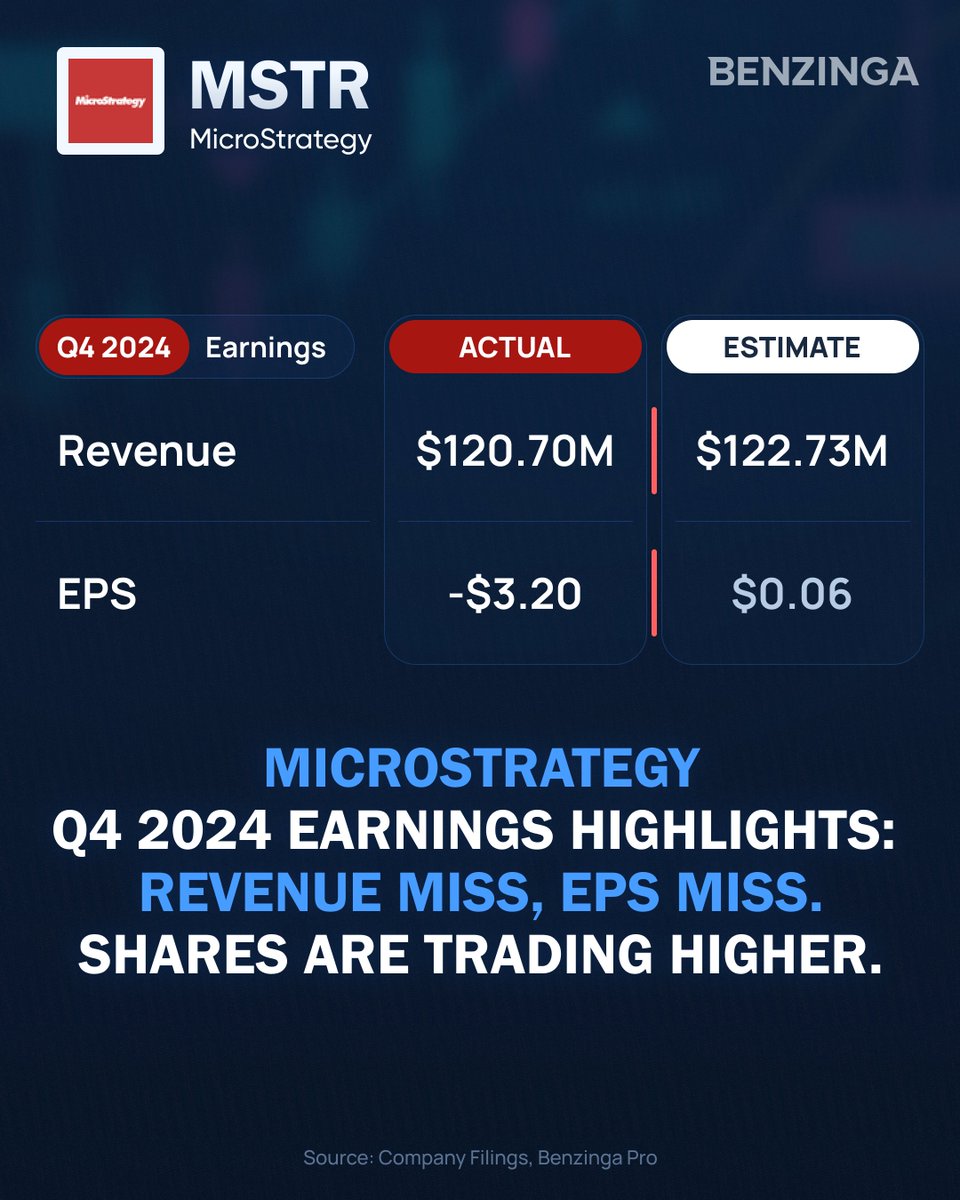
For investors in the modern financial landscape, few tickers evoke as much debate and volatility as MicroStrategy (MSTR). Traditionally known as a business intelligence software provider, the company has undergone a radical transformation into what it now terms a “Bitcoin Development Company.” Because of this unique dual identity, the question of “when is MicroStrategy earnings” carries significantly more weight than it does for a standard enterprise software firm. An earnings announcement for MicroStrategy is not just a report on software sales; it is a high-stakes update on the largest corporate treasury of Bitcoin in the world.
Understanding the MicroStrategy Earnings Calendar
MicroStrategy typically follows a standard quarterly reporting cycle aligned with the fiscal year, which ends on December 31st. Like most publicly traded companies in the United States, MicroStrategy releases its financial results four times a year. These reports generally occur in late January or early February (Q4 and Full Year), late April or early May (Q1), late July or early August (Q2), and late October or early November (Q3).
Historical Patterns and Typical Schedules
While the exact date is usually confirmed via a press release roughly one to two weeks before the event, seasoned investors look for patterns. MicroStrategy often schedules its earnings calls after the market closes on Tuesday or Thursday during the traditional “earnings season.” For those tracking the stock, monitoring the MicroStrategy Investor Relations website is the most reliable way to secure the exact date and time, as well as the link to the live webcast where executive leadership, including Chairman Michael Saylor and CEO Phong Le, provide commentary.
Why the Date Matters for Market Volatility
The announcement date serves as a focal point for both institutional and retail investors. Because MicroStrategy’s market capitalization is heavily influenced by the price of Bitcoin, the earnings call often acts as a catalyst for significant price action. Traders look to the earnings date to hedge positions or capitalize on the heightened liquidity that surrounds the event. Beyond the raw numbers, the date is significant because it represents one of the few times each quarter when the company provides a comprehensive update on its Bitcoin acquisition strategy and the health of its underlying software business.
The Financial Blueprint: Why MSTR is More Than a Software Company
To understand MicroStrategy’s earnings, one must understand the company’s bifurcated financial structure. It operates a legacy business intelligence (BI) arm while simultaneously functioning as a de facto Bitcoin holding company. This makes the quarterly report a complex document that requires a nuanced reading of GAAP (Generally Accepted Accounting Principles) versus non-GAAP metrics.
The Pivot to a Bitcoin Treasury Reserve
Beginning in August 2020, MicroStrategy adopted Bitcoin as its primary treasury reserve asset. This decision fundamentally altered the company’s risk profile and financial reporting. When the earnings report is released, the first metric many analysts look for is the total number of Bitcoins held and the “current value” of those holdings compared to the acquisition cost. This treasury strategy is funded through a combination of cash flows from operations and, more significantly, the issuance of debt and equity.
Operating Income vs. Digital Asset Impairment
One of the most confusing aspects of MicroStrategy’s earnings for the uninitiated is the “impairment charge.” Under current accounting rules (though changes are being implemented), digital assets have historically been treated as indefinite-lived intangible assets. This means if the price of Bitcoin drops even momentarily below the price the company paid for it during a quarter, MicroStrategy must record an impairment charge that reduces its reported net income.
However, these are non-cash charges. A company can report a massive net loss on paper due to Bitcoin impairment while remaining operationally profitable and holding assets that have actually increased in value since the time of purchase. Investors must therefore look closely at “Non-GAAP” numbers which often strip out these impairments to show the true performance of the software business.
Key Metrics to Watch in the Upcoming Earnings Report

When the earnings date arrives, the market focuses on several key performance indicators (KPIs) that determine whether the report is a “beat” or a “miss.” These metrics bridge the gap between traditional software analytics and aggressive treasury management.
Software Subscription Growth and Cloud Transition
While the Bitcoin narrative dominates the headlines, the core BI business provides the “engine” for the company’s creditworthiness. Analysts watch for:
-
Total Revenue: Is the software business growing, or is it a “melting ice cube”?
-
Subscription Services Revenue: MicroStrategy is transitioning from a traditional license model to a cloud-based subscription model. High growth in this area indicates a successful modernization of their software suite.
-
Operating Margins: Efficient operations in the software sector provide the cash flow necessary to service the interest on the debt used to buy Bitcoin.
BTC Holdings and Average Purchase Price
The “Bitcoin dashboard” is perhaps the most scrutinized part of the earnings presentation. Investors want to see:
-
The “Yield”: A metric popularized by Michael Saylor, representing the percentage change over time in the ratio between the company’s Bitcoin holdings and its assumed fully diluted shares.
-
Accumulation Velocity: How many Bitcoins were added during the quarter?
-
Average Cost Basis: How the new purchases affected the overall average cost of the company’s total holdings.
Debt Obligations and Convertible Note Management
MicroStrategy has been a prolific issuer of convertible senior notes to fund its Bitcoin purchases. During earnings, the company provides updates on its debt structure. Investors monitor the interest rates on these notes and their maturity dates. The ability of the company to issue debt at low interest rates (sometimes even 0% or 0.25% coupons) is a testament to the market’s appetite for MSTR’s unique “leveraged Bitcoin” play.
The Relationship Between MSTR Earnings and the Broader Crypto Market
MicroStrategy does not exist in a vacuum. Its earnings are often a bellwether for institutional sentiment toward digital assets. Because MSTR is included in many major indices, its performance has ripple effects across both the software sector and the cryptocurrency market.
Correlation with Bitcoin Price Action
There is an undeniable correlation between MicroStrategy’s stock price and the price of Bitcoin. However, MSTR often trades at a “premium” to its Net Asset Value (NAV). Earnings reports are a time when the market reassesses whether that premium is justified. If the company shows that it can effectively use its “intelligent leverage” to acquire more Bitcoin per share than an investor could by buying the coin directly, the premium tends to expand.
Market Sentiment and Investor Expectations
The earnings call is also a platform for Michael Saylor to articulate the long-term vision for Bitcoin as “digital capital.” For many investors, the earnings date is less about the last 90 days of revenue and more about the forward-looking guidance. If the leadership expresses confidence in further debt-funded acquisitions, it can signal a bullish outlook for the entire crypto ecosystem. Conversely, any talk of tapering purchases or focusing on debt repayment might be interpreted as a more conservative shift.
Strategic Considerations for MSTR Investors
Approaching a MicroStrategy earnings date requires a different strategy than approaching a typical “Magnificent Seven” tech stock. The risks are unique, and the rewards are asymmetric.
Managing Risk in a High-Beta Environment
MSTR is a high-beta stock, meaning it is significantly more volatile than the broader market. Investors should be aware that the days surrounding an earnings announcement can see double-digit percentage swings. For those using MicroStrategy as a proxy for Bitcoin in a brokerage account (such as an IRA or 401k where direct crypto ownership might be restricted), the earnings report is the primary source of due diligence for the “management” of that proxy.

Long-term Outlook for the “Bitcoin Development Company”
Recently, MicroStrategy has shifted its branding to emphasize that it is not just a holder of Bitcoin, but a developer of the Bitcoin network. This includes exploring Lightning Network applications and other decentralized identity solutions. During earnings, look for updates on these “development” initiatives. If MicroStrategy can successfully monetize software built on top of Bitcoin, it adds a third layer of value: the legacy BI revenue, the Bitcoin treasury appreciation, and the new Bitcoin-native software revenue.
In conclusion, knowing “when is MicroStrategy earnings” is only the first step. For the sophisticated investor, the date marks a deep dive into a pioneer’s financial engineering. It is a moment to evaluate the health of a legacy software firm and the audacity of a multi-billion dollar treasury experiment. Whether you view MSTR as a visionary leader in corporate finance or a cautionary tale of concentration risk, its earnings reports remain one of the most essential events on the financial calendar.
aViewFromTheCave is a participant in the Amazon Services LLC Associates Program, an affiliate advertising program designed to provide a means for sites to earn advertising fees by advertising and linking to Amazon.com. Amazon, the Amazon logo, AmazonSupply, and the AmazonSupply logo are trademarks of Amazon.com, Inc. or its affiliates. As an Amazon Associate we earn affiliate commissions from qualifying purchases.