
For anyone navigating the complex world of finance, understanding when markets are open is fundamental. It’s not just a matter of knowing the clock; it’s about grasping the underlying mechanics that dictate trading opportunities, liquidity, and even the pace of information dissemination. From individual day traders strategizing their next move to institutional investors managing vast portfolios, market hours are the boundaries within which financial dreams are pursued and fortunes are made or lost. This seemingly simple question unlocks a deeper understanding of market dynamics, investor behavior, and the global interconnectedness of financial systems.
The concept of “market open” extends far beyond a single time slot for a single exchange. It encompasses a mosaic of schedules spanning different asset classes, geographical locations, and even pre- and post-trading windows that defy the conventional 9-to-5 workday. Mastering these timings is not merely about convenience; it is a critical component of risk management, strategic planning, and maximizing investment potential. Without this knowledge, investors risk missing crucial opportunities, executing trades at suboptimal times, or being caught off guard by market movements occurring outside their awareness.
This article delves into the intricacies of market operating hours, providing a comprehensive guide for investors of all levels. We will explore the standard trading windows for major exchanges, illuminate the often-overlooked extended trading sessions, journey through the global landscape of international markets, analyze the various factors that influence market schedules, and ultimately, underscore why this knowledge is indispensable for every astute financial participant.
Understanding Standard Market Hours
At the heart of the financial world are the core trading hours of major stock exchanges. These are the periods when the vast majority of trading activity occurs, characterized by high liquidity and tight spreads, reflecting broad market participation.
The Core Trading Window
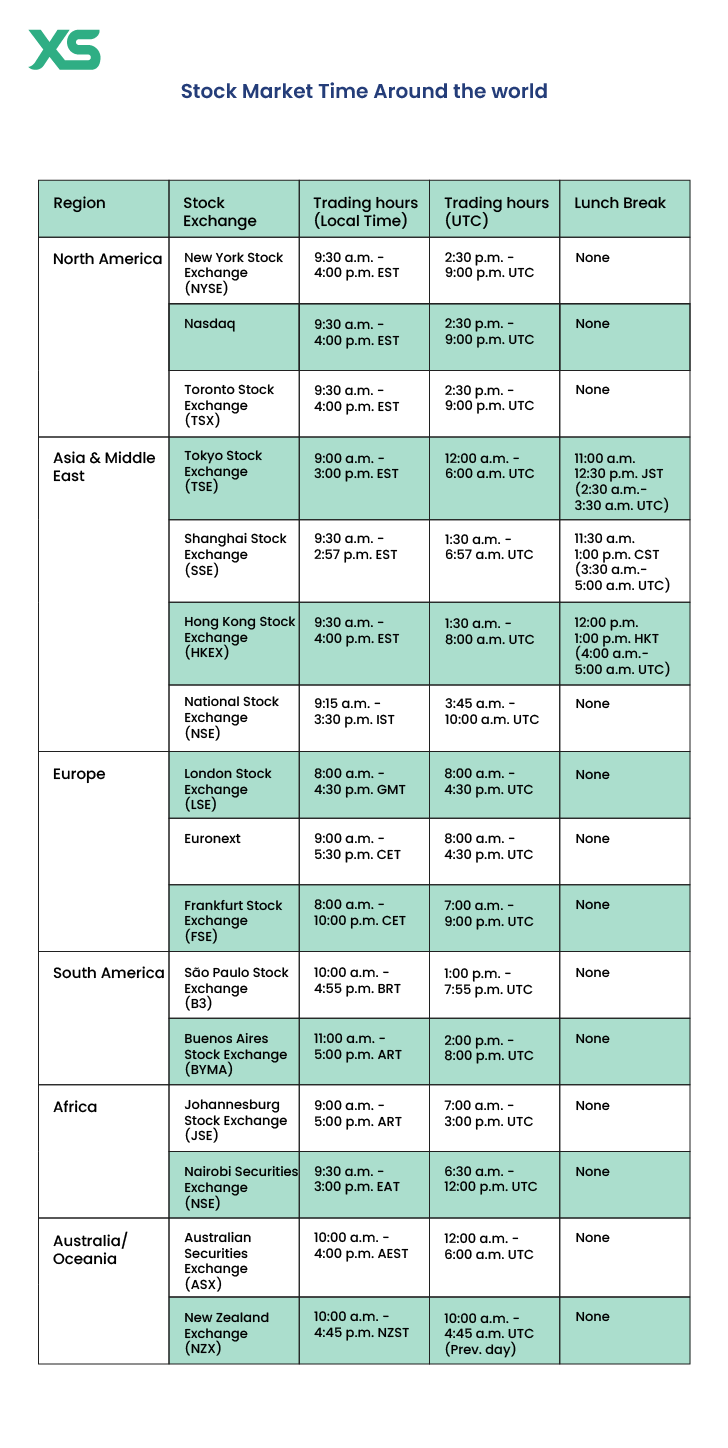
In the United States, the New York Stock Exchange (NYSE) and NASDAQ, two of the world’s largest stock exchanges, operate on a standard schedule. Their core trading hours are from 9:30 AM to 4:00 PM Eastern Time (ET), Monday through Friday. This 6.5-hour window is often referred to as “regular market hours” or “cash market hours.” During this time, buyers and sellers are most active, leading to the most efficient price discovery and the greatest depth of market. For most retail investors, this is the primary window for executing trades in stocks, exchange-traded funds (ETFs), and other listed securities.
Commodity markets, such as those trading futures and options on oil, gold, or agricultural products, often have slightly different but equally standardized hours, frequently extending well into the evening or even operating almost 24 hours a day with short breaks, reflecting the global nature of these underlying assets. Similarly, bond markets typically operate on their own schedule, often closing earlier than stock markets. Understanding these subtle differences is crucial for investors with diversified portfolios.
Weekends and Major Holidays
A universal truth across most regulated financial markets is that they are closed on weekends (Saturday and Sunday). This closure allows for a break from continuous trading, giving participants time to process information, strategize, and simply rest. Beyond weekends, markets observe a specific set of national holidays. In the U.S., these include holidays like New Year’s Day, Martin Luther King, Jr. Day, Presidents’ Day, Good Friday, Memorial Day, Juneteenth, Independence Day, Labor Day, Thanksgiving Day, and Christmas Day. On these days, the markets are fully closed, and no trading occurs.
It’s important to note that if a holiday falls on a weekend, the market typically observes it on the closest weekday (e.g., if Christmas falls on a Saturday, the market might close on Friday). Additionally, some holidays might involve early market closures, such as the day before Thanksgiving or Christmas Eve, where trading might cease at 1:00 PM ET. Investors must consult the official holiday schedules published by their respective exchanges and brokers to avoid surprises and plan their trading activities accordingly.
Beyond Standard Hours: Pre-Market and After-Hours Trading
While the core trading window defines the most active periods, the market’s pulse doesn’t entirely stop outside these hours. Modern technology and changing investor demands have led to the proliferation of “extended hours” trading.
Navigating Extended Trading Sessions
Pre-market trading refers to the period before the official market open, typically running from 4:00 AM to 9:30 AM ET for U.S. exchanges. After-hours trading occurs after the official close, usually from 4:00 PM to 8:00 PM ET. These sessions allow investors to react to news that breaks outside regular hours, such as earnings announcements, economic data releases, or geopolitical events that can significantly impact stock prices.
Access to extended hours trading is typically provided by brokerage firms and executed through Electronic Communication Networks (ECNs) rather than the main exchange floor. These sessions are crucial for institutional investors and active traders who need to adjust positions promptly based on new information. For instance, a company announcing better-than-expected earnings after 4 PM ET might see its stock jump significantly in after-hours trading, reflecting immediate investor optimism. Conversely, negative news can trigger rapid sell-offs.
Risks and Opportunities in Extended Hours
While extended hours offer flexibility, they come with a distinct set of characteristics and risks. The most significant concern is lower liquidity. With fewer participants trading, the number of buyers and sellers for a given stock is reduced. This can lead to wider bid-ask spreads, meaning a greater difference between the price a buyer is willing to pay and a seller is willing to accept. Wider spreads can increase transaction costs and make it harder to execute large orders at desired prices.
Another key risk is increased volatility. Lower liquidity coupled with news-driven trading can cause stock prices to swing dramatically on relatively small trading volumes. Price movements in extended hours might also not necessarily reflect the direction the stock will take during regular market hours. A stock that surges in pre-market on good news might give back some or all of those gains once the full market opens and more participants weigh in.
Despite these risks, extended hours present opportunities for nimble traders. They allow for quick reactions to breaking news, potentially enabling investors to establish positions or exit trades before the broader market reacts. For international investors, these hours can also align better with their local time zones, offering a chance to trade U.S. stocks during their business day. However, retail investors should approach extended hours trading with caution, understanding the magnified risks associated with reduced liquidity and higher volatility.
A Global Perspective: International Market Hours
The financial world is a truly global ecosystem, with major exchanges operating around the clock across different time zones. Understanding these international schedules is vital for investors with global portfolios or those interested in macro-economic trends.
Key Global Stock Exchanges and Their Schedules
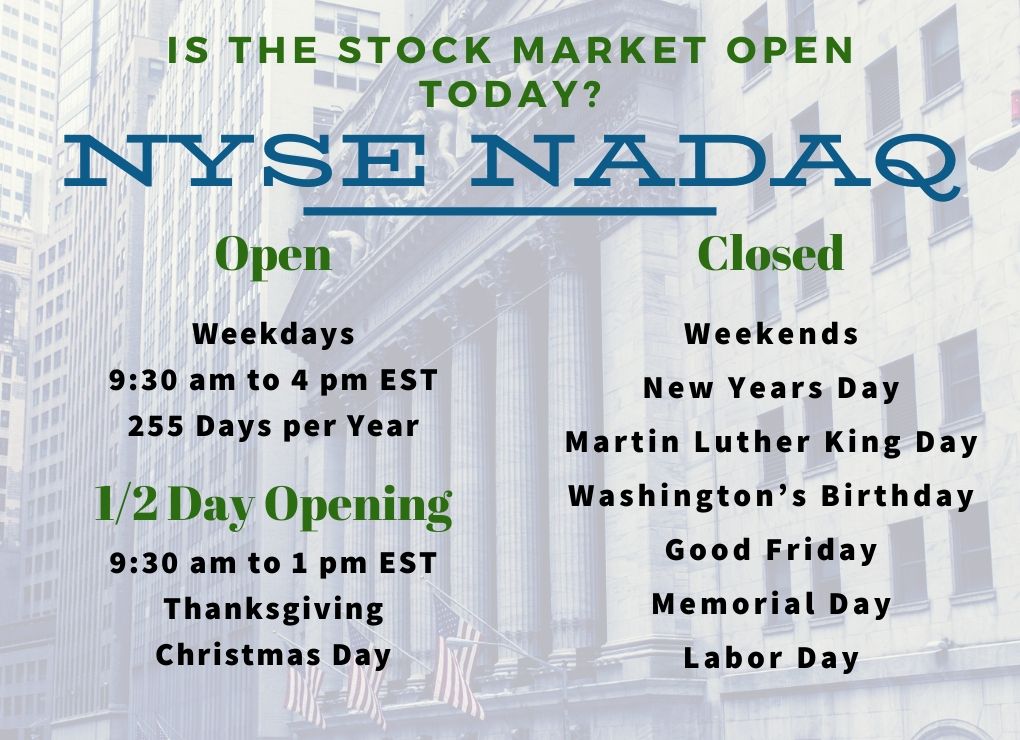
The continuous cycle of trading begins in Asia, moves to Europe, and then concludes in North America, only to restart again. Here are some key international exchanges and their typical local operating hours:
-
Asia-Pacific:
- Tokyo Stock Exchange (TSE): 9:00 AM to 3:00 PM JST (Japan Standard Time), with a lunch break from 11:30 AM to 12:30 PM.
- Shanghai Stock Exchange (SSE): 9:30 AM to 3:00 PM CST (China Standard Time), with a lunch break from 11:30 AM to 1:00 PM.
- Hong Kong Stock Exchange (HKEX): 9:30 AM to 4:00 PM HKT (Hong Kong Time), with a lunch break from 12:00 PM to 1:00 PM.
- Australian Securities Exchange (ASX): 10:00 AM to 4:00 PM AEST (Australian Eastern Standard Time).
-
Europe:
- London Stock Exchange (LSE): 8:00 AM to 4:30 PM GMT/BST (Greenwich Mean Time/British Summer Time).
- Euronext (Paris, Amsterdam, Brussels, Lisbon): 9:00 AM to 5:30 PM CET/CEST (Central European Time/Central European Summer Time).
- Frankfurt Stock Exchange (Xetra): 9:00 AM to 5:30 PM CET/CEST.
-
North America (reiterated for context):
- New York Stock Exchange (NYSE) & NASDAQ: 9:30 AM to 4:00 PM ET (Eastern Time).
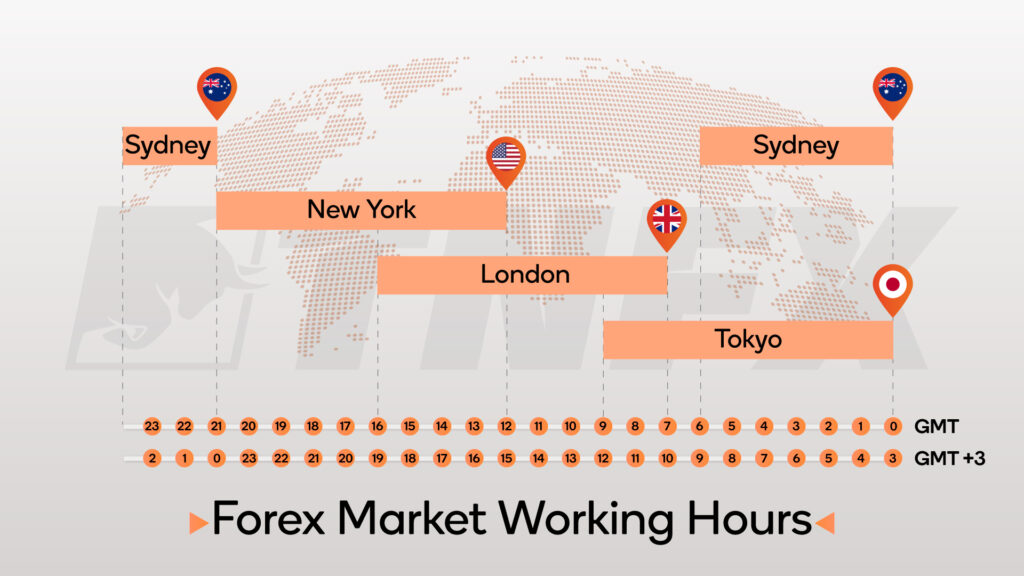
These timings overlap significantly, creating windows where markets in different regions are simultaneously open. For example, the end of the Asian trading day often coincides with the beginning of the European session, which in turn overlaps with the North American open.
Impact of Time Zones on Global Trading
The staggered opening and closing of global markets due to time zones create a continuous flow of trading opportunities and market influence. News from Asia can impact European markets, which then influence North American markets. For example, a major economic announcement from China during its trading hours can lead to a ripple effect, influencing commodity prices and company stocks globally as other markets open.
This interconnectedness means that investors need to be aware of events happening when their local market is closed. A significant development in Europe overnight can set the tone for the U.S. market open. Many brokers now offer access to international exchanges, allowing investors to participate directly in these markets, though considerations like currency exchange rates, foreign tax implications, and regulatory differences must be taken into account. Understanding global market hours is not just for international traders; it provides a crucial context for domestic market movements and helps in forming a more holistic investment strategy.
Factors Influencing Market Operating Hours
Market hours are not arbitrarily set; they are influenced by a combination of regulatory frameworks, historical traditions, and operational considerations.
Exchange Regulations and Local Customs
Each stock exchange operates under the regulatory authority of its respective country or region. These authorities, such as the SEC in the U.S. or the FCA in the UK, define the rules governing market operations, including trading hours. The core rationale behind these hours often balances the need for robust trading activity with logistical considerations like clearing and settlement processes, which typically occur after market close.
Local customs and holidays also play a significant role. The list of market holidays is deeply intertwined with national holidays and cultural observances. For instance, markets in predominantly Islamic countries might adjust their weekend closures to Friday and Saturday instead of Saturday and Sunday. Similarly, the specific length of lunch breaks or early closures around certain festive periods often reflects local traditions and workforce practices. These nuances highlight the importance of understanding the local context when dealing with international markets.
Unscheduled Closures and Circuit Breakers
While most market closures are planned, there are provisions for unscheduled closures in extraordinary circumstances. These can include natural disasters (e.g., severe weather impacting physical infrastructure), major national emergencies, or cyberattacks that disrupt trading systems. Such closures are rare but represent critical measures to protect market integrity and investor confidence.
Another important mechanism that influences trading flow, though not a full closure, is the circuit breaker. These are pre-defined thresholds that, when triggered by a sudden and significant market decline, temporarily halt trading across the entire exchange. For instance, in the U.S., there are three levels of circuit breakers based on drops in the S&P 500 index:
- Level 1 (7% drop): 15-minute halt.
- Level 2 (13% drop): 15-minute halt.
- Level 3 (20% drop): Market closes for the remainder of the day.
The purpose of circuit breakers is to provide a “cooling-off” period during extreme volatility, allowing investors to process information and prevent panic selling from spiraling out of control. While not altering the scheduled open/close, they directly impact the flow of trading within operating hours.
Why Market Hours Matter for Investors
For every investor, from the novice to the seasoned professional, understanding market hours is more than a trivial detail; it’s a fundamental aspect of effective financial strategy.
Strategic Implications for Different Investor Types
The relevance of market hours varies significantly depending on an investor’s strategy and time horizon:
- Day Traders and Active Traders: For this group, market hours are paramount. They rely on the liquidity and volatility of regular and extended sessions to execute numerous trades within a short timeframe. Missing a crucial hour or being unaware of pre-market news can directly impact their profitability. They often leverage extended hours to react quickly to news, but also need to be acutely aware of the associated risks like wider spreads and lower liquidity.
- Swing Traders: Who hold positions for a few days to a few weeks, need to be aware of weekend and holiday closures, as market-moving news can occur during these off-hours, leading to “gap up” or “gap down” openings on the next trading day. This requires careful position sizing and risk management, especially when holding positions over a weekend.
- Long-Term Investors: While not trading frequently, long-term investors still benefit from understanding market hours. Knowledge of when key economic data releases occur or when earnings reports are typically announced can help them interpret price movements and inform their decisions to buy or sell for rebalancing their portfolios. They might not be checking prices minute-by-minute, but knowing when the market is actively processing new information is still valuable for contextual understanding.
- International Investors: For those trading across borders, understanding the various time zones and overlapping market hours is essential for strategic planning and execution, helping them decide the optimal time to trade specific securities or currencies.
The Role of Technology in Market Access
Modern technology has fundamentally changed how investors interact with market hours. Online brokerage platforms provide 24/7 access for placing orders, even if those orders are only executed when the market is open. Advanced trading platforms offer sophisticated tools for monitoring pre-market and after-hours movements, setting alerts for news releases, and scheduling trades.
Furthermore, the rise of algorithmic trading means that many market movements, particularly in extended hours, are driven by automated systems reacting instantly to data. This technological edge means that retail investors need to be even more informed to compete effectively. While technology offers unparalleled convenience, it also underscores the importance of a deep understanding of market mechanics, including when and how these markets operate, to make truly informed decisions.
In conclusion, “When is market open?” is a question with a multitude of answers, each critical to a comprehensive understanding of financial markets. From the standard trading windows of major exchanges to the nuances of extended hours, global schedules, and the regulatory frameworks that govern them, market hours are more than just a schedule; they are the rhythmic heartbeat of the global economy. For any participant in the financial arena, a thorough grasp of these timings is not merely advantageous—it is absolutely essential for strategic planning, effective risk management, and ultimately, for navigating the complex journey towards financial success.
aViewFromTheCave is a participant in the Amazon Services LLC Associates Program, an affiliate advertising program designed to provide a means for sites to earn advertising fees by advertising and linking to Amazon.com. Amazon, the Amazon logo, AmazonSupply, and the AmazonSupply logo are trademarks of Amazon.com, Inc. or its affiliates. As an Amazon Associate we earn affiliate commissions from qualifying purchases.