
Timing is often cited as the most critical element in successful investing. While the long-term trajectory of the market is driven by fundamental economic health and corporate earnings, the short-term mechanics of price action are dictated by the clock. For the modern investor, “when the market opens” is a more complex question than it was thirty years ago. In an era of globalized finance and 24-hour digital access, the traditional ringing of the bell at 11 Wall Street is merely one chapter in a continuous story of global capital movement.
Understanding the specific windows of liquidity, the nuances of extended-hours trading, and the overlap of international markets is essential for any participant looking to optimize their entry and exit points. This guide provides an exhaustive look at the temporal structure of the financial markets, ensuring you know not just when the doors open, but how to navigate the different phases of the trading day.
The Standard Trading Day: When the Big Boards Open
For the vast majority of retail investors in the United States, the trading day is defined by the operating hours of the two largest exchanges in the world: the New York Stock Exchange (NYSE) and the NASDAQ. These institutions set the pace for the global financial ecosystem.
The New York Stock Exchange (NYSE) and NASDAQ
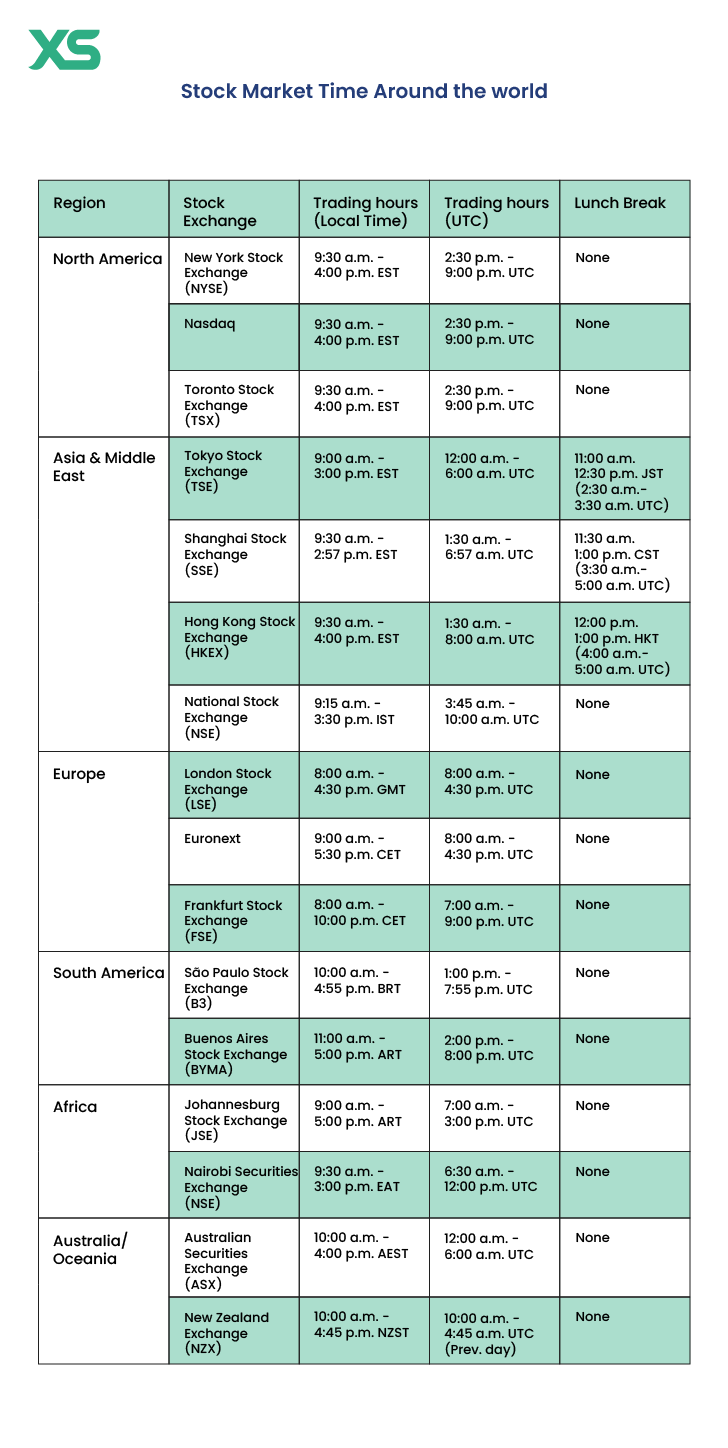
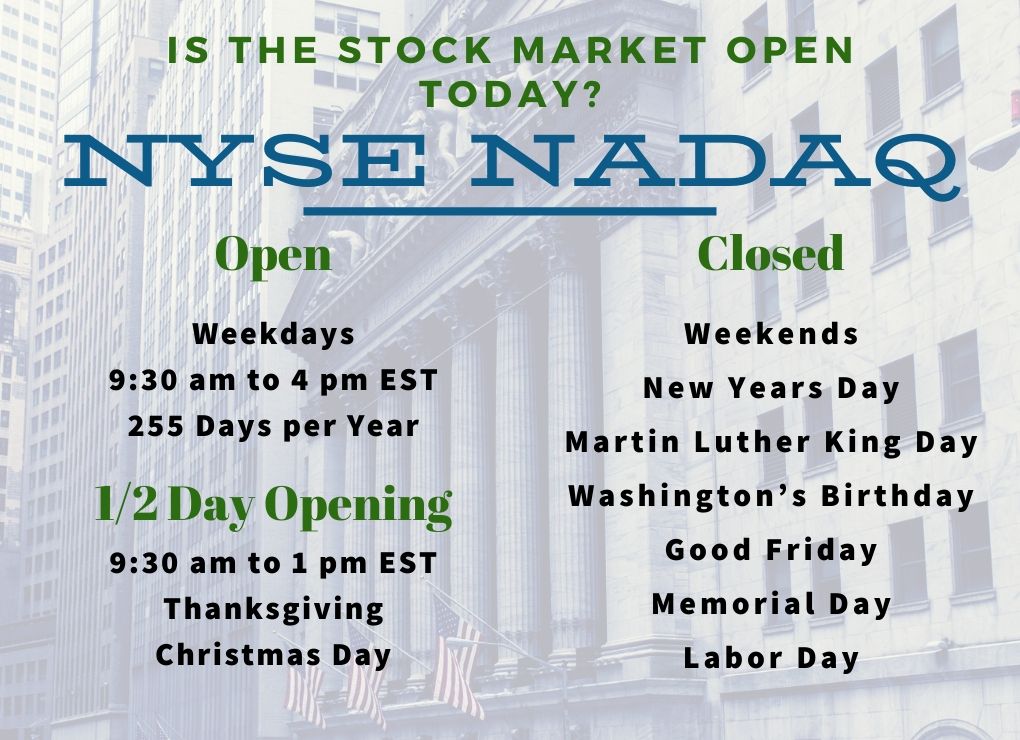
The core trading session for both the NYSE and the NASDAQ begins at 9:30 AM Eastern Time (ET) and concludes at 4:00 PM ET, Monday through Friday. This 6.5-hour window is when the highest volume of trading occurs, providing the tightest “bid-ask spreads”—the difference between the price a buyer is willing to pay and the price a seller is willing to accept.
Unlike many international exchanges, particularly those in Asia, major U.S. stock exchanges do not close for a lunch break. Trading continues uninterrupted through the midday hours, although volume typically thins out between 12:00 PM and 2:00 PM ET as institutional traders step away. This “lunchtime lull” often results in lower volatility, making it a difficult time for day traders but a potentially stable window for long-term investors to fill larger orders without moving the price significantly.
Market Holidays and Early Closures
The stock market does not operate on a 365-day calendar. It observes several federal holidays, during which the exchanges are closed entirely. These typically include New Year’s Day, Martin Luther King Jr. Day, Washington’s Birthday (Presidents’ Day), Good Friday, Memorial Day, Juneteenth, Independence Day, Labor Day, Thanksgiving Day, and Christmas Day.
In addition to full closures, the market occasionally observes “early close” days. For instance, on the Friday following Thanksgiving (Black Friday) and sometimes on Christmas Eve, the market closes at 1:00 PM ET. It is vital for investors to track the annual holiday schedule, as liquidity dries up significantly in the days leading up to these breaks, often leading to unpredictable price swings.
The Extended Session: Pre-Market and After-Hours Trading
While the “official” bell rings at 9:30 AM, the digital nature of modern exchanges allows for trading well before and after the standard session. This is known as extended-hours trading, facilitated by Electronic Communication Networks (ECNs) that match buyers and sellers without a centralized exchange floor.
The Mechanics of Pre-Market Trading
Pre-market trading in the U.S. can begin as early as 4:00 AM ET, though the bulk of the activity starts around 8:00 AM ET. This period is particularly critical because many economic indicators—such as the Consumer Price Index (CPI), employment reports, and Department of Labor data—are released at 8:30 AM ET.
Investors use the pre-market session to react to overnight news, such as geopolitical events in Europe or Asia, or early-morning corporate earnings announcements. However, trading during this window requires caution. Because there are fewer participants, the “liquidity” is much lower than during the standard session. This means that even a relatively small order can cause a significant jump or drop in a stock’s price.
Navigating the Risks of After-Hours Volatility
The after-hours session begins immediately following the 4:00 PM ET close and typically runs until 8:00 PM ET. This is arguably the most volatile period for individual stocks, as the vast majority of public companies release their quarterly earnings reports shortly after the closing bell.
When a company like Apple or Microsoft releases a surprise earnings beat or miss at 4:05 PM, the stock can move 5% or 10% in a matter of seconds. For the retail investor, after-hours trading offers the opportunity to react to news instantly, but it comes with a high risk of “slippage,” where the executed price is significantly different from the intended price due to the wide bid-ask spreads. Most brokers require the use of “limit orders” during these sessions to protect investors from executing trades at extreme prices.
Global Market Perspectives: Trading Across Time Zones

The sun never truly sets on the global financial markets. For an investor with a diversified portfolio, the “open” is a rolling event that moves across the globe from East to West.
European Markets (LSE, Euronext)
The London Stock Exchange (LSE) and other major European boards like the Euronext Paris or the Frankfurt Stock Exchange (DAX) usually open at 8:00 AM local time and close at 4:30 PM local time. For a trader based in New York, the London market opens at 3:00 AM ET.
There is a critical two-hour window between 9:30 AM ET and 11:30 AM ET when both the U.S. and European markets are open simultaneously. This “overlap” period is often characterized by the highest global liquidity of the day, as institutional desks in London and New York are both active, facilitating massive cross-border capital flows.
Asian-Pacific Markets (TSE, HKEX, ASX)
The trading day begins in the Asia-Pacific region. The Tokyo Stock Exchange (TSE) generally opens at 9:00 AM local time, followed by the Hong Kong Stock Exchange (HKEX) and the Shanghai Stock Exchange. A unique feature of many Asian markets is the mandatory lunch break. For example, the HKEX typically pauses trading from 12:00 PM to 1:00 PM local time.
For U.S. investors, the Asian markets are “overnight” markets. If the Nikkei 225 in Japan drops significantly during their session (which would be late evening in New York), it often sets a bearish tone for the U.S. pre-market session the following morning. Monitoring these markets provides a “preview” of global sentiment before the domestic open.
The Psychology of the Opening Bell: Volatility and Volume
The first and last thirty minutes of the trading day are often referred to as “the amateur hour” and “the institutional hour,” respectively. Understanding the psychological and mechanical forces at play during these times can prevent costly mistakes.
The First Hour: Price Discovery in Action
The 9:30 AM open is a moment of intense price discovery. All the orders that accumulated overnight, all the reactions to news, and all the adjustments to global market moves collide at once. This creates a “gap”—where a stock opens at a price significantly higher or lower than its previous close.
Professional traders often advise against placing “market orders” at the open. The volatility is so high that prices can whip back and forth by several percentage points within minutes as the market seeks an equilibrium. This initial period is when “weak hands” are often shaken out of positions, while “smart money” waits for the volatility to settle before committing to a direction.
The Closing Cross: Final Liquidity and Institutional Movement
The final minutes of the day, leading up to 4:00 PM, are equally vital. This is when institutional fund managers, pension funds, and ETFs rebalance their portfolios. To ensure they receive a price close to the official closing price, they participate in the “Closing Cross,” a centralized process that aggregates all buy and sell interest to determine a single final price.
Because of this institutional activity, the volume in the last ten minutes of the day often rivals the volume of the entire midday session. For investors looking to exit a large position, the “close” provides the necessary liquidity to do so without causing a massive price disruption.
Strategic Timing: When Should You Execute Your Trades?
Knowing when the market opens is the first step; knowing when to trade is the second. Different strategies require different timing.
Best Times for Beginners vs. Professionals
For the average long-term investor, the best time to trade is often during the middle of the day (10:30 AM to 3:00 PM ET). During this window, the initial morning volatility has subsided, and the bid-ask spreads are relatively stable. Execution is more predictable, and the risk of being caught in a sudden “flash” move is lower.
Conversely, day traders and momentum investors thrive on the volatility of the open (9:30 AM – 10:30 AM) and the close (3:30 PM – 4:00 PM). These periods provide the price movement necessary for short-term profits, though they require sophisticated tools and the ability to act in milliseconds.
The Role of Economic Calendars
To truly master market timing, an investor must align their knowledge of opening hours with the economic calendar. Beyond the standard 9:30 AM start, the market has “micro-opens” throughout the day. When the Federal Reserve releases its interest rate decision at 2:00 PM ET on specific Wednesdays, the market essentially “re-opens” with a surge of volatility.
Successful financial management requires a holistic view of time. By respecting the opening bell while acknowledging the 24-hour nature of global finance, investors can better protect their capital and capitalize on the unique opportunities presented by different market phases. Whether you are a casual saver or a dedicated trader, the clock is just as important as the ticker symbol.
aViewFromTheCave is a participant in the Amazon Services LLC Associates Program, an affiliate advertising program designed to provide a means for sites to earn advertising fees by advertising and linking to Amazon.com. Amazon, the Amazon logo, AmazonSupply, and the AmazonSupply logo are trademarks of Amazon.com, Inc. or its affiliates. As an Amazon Associate we earn affiliate commissions from qualifying purchases.