
Navigating the global financial landscape often requires understanding how different currencies translate into one another. Whether you’re planning a trip, managing international investments, or simply curious about the value of money across borders, currency conversion is a fundamental skill. One common query that arises for those engaging with the South Korean economy is: “How much is 45 million Won in USD?”
The immediate, exact answer to this question is dynamic, fluctuating constantly with the global financial markets. However, we can provide a current estimate and, more importantly, equip you with the knowledge and tools to confidently make such conversions yourself, understand the underlying mechanisms, and appreciate the broader financial implications. As of early 2024, the Korean Won (KRW) to US Dollar (USD) exchange rate typically hovers around 1 USD = 1,300 to 1,400 KRW.

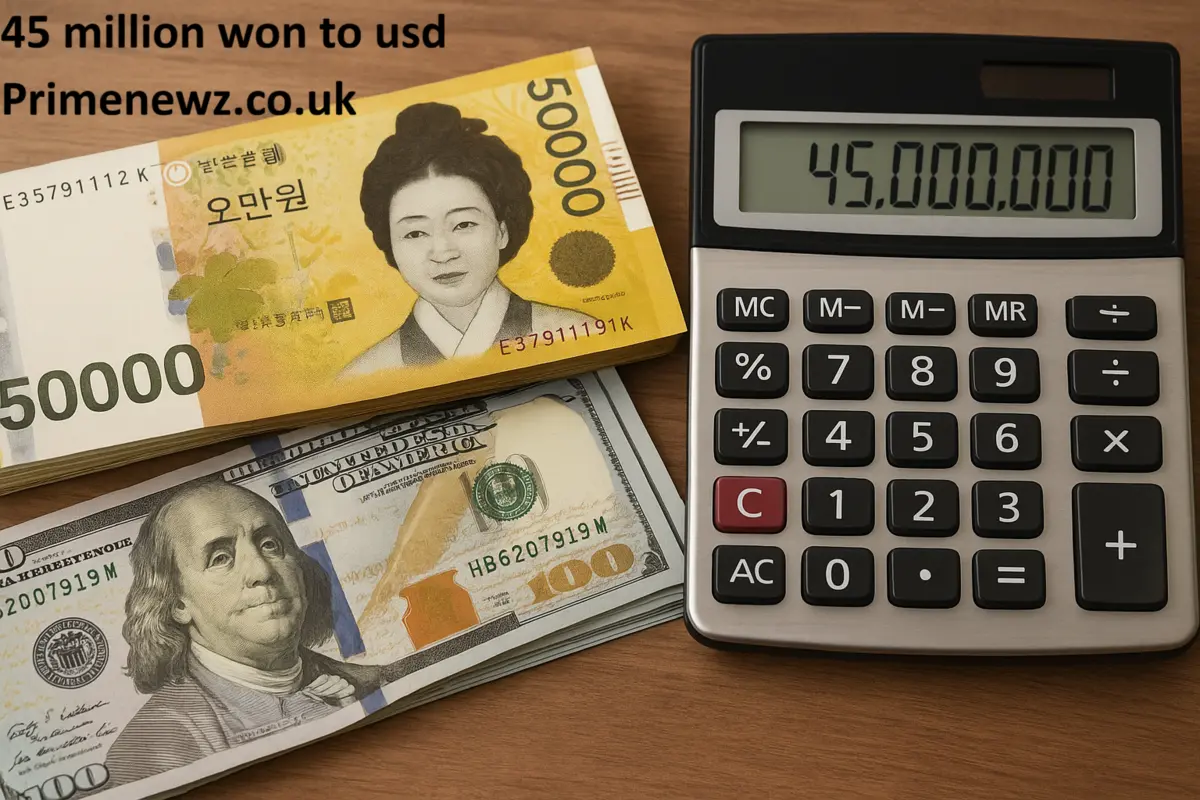
Using a representative rate of 1 USD = 1,350 KRW for our calculation, 45,000,000 KRW would convert to approximately $33,333.33 USD.
This figure, however, is merely a snapshot. The real value you receive or pay can be influenced by a myriad of factors, from bank fees to market volatility. This article will delve into these intricacies, providing a comprehensive guide to understanding and executing currency conversions within the “Money” domain.
The Fundamentals of Currency Exchange
At its core, currency exchange is the process of converting one country’s currency into another. This seemingly simple transaction is underpinned by a complex interplay of economic forces, geopolitical events, and market dynamics that dictate the “price” of one currency against another.
What is an Exchange Rate?
An exchange rate is the value of one currency for the purpose of conversion to another. For instance, if 1 USD = 1,350 KRW, it means one US Dollar can buy 1,350 Korean Won. This rate is determined by the supply and demand for each currency in the foreign exchange (forex) market.
Several key factors constantly influence exchange rates:
-
Economic Indicators: A country’s economic health, measured by indicators like GDP growth, inflation rates, employment figures, and trade balances, significantly impacts its currency’s strength. A strong economy typically leads to a stronger currency.
-
Interest Rates: Central banks use interest rates as a monetary policy tool. Higher interest rates can attract foreign investment, increasing demand for a country’s currency and strengthening it. Conversely, lower rates can weaken a currency.
-
Political Stability and Geopolitical Events: Political stability fosters investor confidence. Unrest, elections, trade wars, or major international conflicts can introduce uncertainty, leading to currency depreciation as investors seek safer haven assets.
-
Market Sentiment and Speculation: Traders and investors continuously react to news and anticipate future economic trends, often leading to speculative buying or selling that can move exchange rates.
Spot vs. Forward Rates
When you’re looking to convert currency right now, you’re dealing with the spot rate. This is the current market price for immediate delivery of a currency. It’s the rate you’d typically see on online converters or at a bank for a same-day transaction.
In contrast, a forward rate is an exchange rate agreed upon today for a currency exchange that will take place at a specified date in the future. Businesses often use forward contracts to hedge against currency risk, locking in a rate to protect against adverse movements. While less relevant for a casual inquiry like “45 million won in USD,” it’s a crucial concept in international finance.
Bid and Ask Spreads
When you exchange currency, you rarely get the exact mid-market rate you see on financial news sites. Financial institutions, like banks and currency exchange services, make money through the “spread” between the bid and ask prices. The bid price is the rate at which they are willing to buy a currency from you, and the ask price is the rate at which they are willing to sell it to you. The ask price is always higher than the bid price, and the difference is the institution’s profit margin. This spread is a hidden cost of conversion that needs to be factored in.
The Role of Central Banks
Central banks, such as the Federal Reserve in the US and the Bank of Korea, play a pivotal role in influencing currency values. Through monetary policy tools (like interest rates, quantitative easing/tightening) and direct intervention in the forex market, they aim to maintain price stability, promote economic growth, and ensure financial system stability. Their decisions can have immediate and significant impacts on exchange rates.
Performing the Conversion: 45 Million KRW to USD
Now, let’s apply these fundamentals to our specific query: converting 45 million Korean Won to US Dollars.
Real-Time vs. Historical Rates
It’s crucial to understand that the exchange rate is a live, constantly moving target. The rate today might be different from the rate tomorrow, or even an hour from now. When you see a conversion rate, it’s either a real-time snapshot or a historical average. For any financial planning, always refer to real-time data.
To illustrate, let’s use a recent plausible exchange rate. Suppose the current interbank mid-market rate is 1 USD = 1,350 KRW.
Step-by-Step Calculation
The calculation is straightforward:
To convert a foreign currency amount to your local currency (USD in this case), you divide the foreign currency amount by the exchange rate (expressed as foreign currency per USD).
-
Amount in KRW: 45,000,000 KRW
-
Exchange Rate: 1,350 KRW per 1 USD
Calculation: 45,000,000 KRW / 1,350 KRW/USD = $33,333.33 USD
So, at this hypothetical (but realistic) rate, 45 million Korean Won is equivalent to approximately $33,333.33 US Dollars.
Factors Affecting Your Actual Payout
While the calculation gives us a base figure, the amount you actually receive when converting 45 million Won will likely be slightly less due to various fees and spreads:
-
Bank/Service Fees: Most banks and traditional money transfer services charge a flat fee or a percentage of the transaction amount for currency conversion and international transfers.
-
Exchange Rate Markup: As mentioned with bid/ask spreads, the rate offered by your bank or exchange service will likely be less favorable than the interbank mid-market rate. They embed their profit margin into the exchange rate itself.
-
Transfer Fees: If you’re physically transferring money, there might be additional wire transfer fees.
-
Timing: Volatility means that even a slight delay between checking the rate and executing the transaction could result in a different final amount.
For a large sum like 45 million Won, even a small percentage difference in the exchange rate or a fixed fee can accumulate into a significant amount.
Practical Applications and Financial Implications
Understanding currency conversion extends beyond mere calculation; it has profound practical implications for individuals, businesses, and investors alike.
For Travelers and Tourists
For individuals traveling to or from South Korea, converting 45 million Won (or any significant sum) is directly tied to budgeting and spending power. Understanding the current exchange rate helps:
-
Budgeting: Accurately estimate how much your local currency will be worth abroad and plan your expenses accordingly. 45 million Won could be a substantial budget for an extended trip to Korea, or it could represent a payout you’re bringing back home.
-
Spending Power: A stronger USD against the KRW means your dollars go further in South Korea, increasing your purchasing power for goods and services. Conversely, a weaker USD means less spending power.
-
Avoiding Scams: Being aware of fair exchange rates helps you avoid predatory rates offered by less reputable exchange bureaus.
For Investors and Businesses
For investors looking at South Korean markets or businesses engaging in international trade, currency conversion is a strategic concern:
-
International Trade: Companies importing or exporting goods and services must account for currency fluctuations. A depreciation of the KRW against the USD makes Korean exports cheaper for US buyers but makes US imports more expensive for Korean buyers.
-
Investment Decisions: Investors in foreign stocks, bonds, or real estate need to consider currency risk. If you invest in a Korean company with Won, and the Won depreciates against the USD, your returns (when converted back to USD) will be reduced, even if the underlying investment performed well in Won terms.
-
Hedging Strategies: Large corporations and institutional investors often employ hedging strategies (like forward contracts) to mitigate the risk of adverse currency movements on future transactions.
For Expats and Remittances
Expatriates living and working abroad, or individuals sending money to family across borders, are constantly dealing with currency conversion:
-
Sending Money Home: An expat earning 45 million Won in Korea and sending it home to the US would directly experience the impact of the exchange rate and transfer fees on the USD amount their family receives.
-
Cost of Living Adjustments: For expats, understanding how their foreign income converts to their home currency (or vice-versa) is crucial for assessing their actual financial standing and cost of living.
Tools and Strategies for Efficient Currency Exchange
Given the complexities, utilizing the right tools and strategies can significantly improve the efficiency and cost-effectiveness of your currency exchanges.
Online Converters and Financial Apps
The easiest way to get an immediate, real-time estimate for “45 million won in USD” is through online converters and financial apps.
-
Google Search: Simply typing “45 million KRW to USD” into Google will typically provide a direct, real-time conversion using the current mid-market rate.
-
Specialized Websites/Apps: Services like XE.com, OANDA, or CurrencyFair offer detailed charts, historical data, and real-time rates. Many banking and investment apps also include currency conversion features.
These tools are invaluable for getting the interbank rate, which is the benchmark against which other services charge their fees.
Banks vs. Specialized Remittance Services
When it comes to actually executing a transfer, choosing the right service can save you a substantial amount, especially for sums like 45 million Won.
-
Traditional Banks: While convenient, traditional banks often have higher fees and less favorable exchange rates (larger spreads) compared to specialized services. Their advantage lies in security and familiarity for many users.
-
Specialized Remittance Services: Companies like Wise (formerly TransferWise), Remitly, Xoom, and Revolut are designed specifically for international money transfers. They typically offer:
-
Lower Fees: Often a small, transparent flat fee or a very low percentage.
-
Better Exchange Rates: Closer to the mid-market rate with smaller spreads.
-
Faster Transfers: Many offer same-day or next-day delivery.
-
Transparency: They are generally clearer about the exact exchange rate you will receive and all associated costs upfront.
-
For a transfer of 45 million Won, the difference in fees and exchange rate markups between a traditional bank and a specialized service could easily amount to hundreds, if not thousands, of dollars. It’s always advisable to compare several options before initiating a large transfer.
Timing Your Exchange
For non-urgent large conversions, monitoring currency trends and timing your exchange can be a smart strategy.
-
Monitor Trends: Use financial news, apps, and websites to track the KRW/USD exchange rate. Look for patterns, economic announcements, or geopolitical events that might influence the rate.
-
Set Alerts: Many currency apps allow you to set alerts to notify you when the exchange rate reaches a desired level.
-
Understand Volatility: Currencies can be volatile. Deciding whether to exchange now or wait depends on your risk tolerance and your assessment of future market movements.
Hedging Strategies (Briefly)
For businesses or very large personal transactions, more sophisticated strategies might be considered:
-
Forward Contracts: As mentioned, locking in a future exchange rate.
-
Currency Options: Giving the holder the right, but not the obligation, to exchange currency at a pre-determined rate.
These are typically for mitigating significant risks and require expert financial advice.
Beyond the Number: Understanding Purchasing Power
While converting 45 million Won to USD gives us a numerical equivalent, the true “value” of that money is best understood through its purchasing power in different economies.
Cost of Living Comparison
$33,333.33 USD (our converted amount) will likely have a different purchasing power in the United States compared to what 45 million Won has in South Korea.
-
In South Korea: 45 million Won can represent a significant amount, potentially enough to cover a year or more of average living expenses for a single person, fund a down payment on a modest property in a non-major city, or finance a substantial education.
-
In the United States: $33,333.33 USD, while a respectable sum, might cover less in terms of living expenses, especially in high-cost-of-living areas. It could be a down payment on a car, a portion of a house down payment, or several months of living expenses depending on location and lifestyle.
This disparity arises from differences in the cost of goods, services, housing, and wages between countries.
Inflation and Economic Stability
The long-term value of 45 million Won (or $33,333.33 USD) is also affected by inflation. High inflation erodes purchasing power over time. Stable economies with low inflation help maintain the value of money. Understanding the inflation rates in both South Korea and the US provides context for the long-term implications of holding either currency.

Regional Variations
Even within a single country, purchasing power can vary greatly. 45 million Won might go much further in a rural Korean province than in Seoul. Similarly, $33,333.33 USD will buy significantly more in a small town in Oklahoma than in New York City or San Francisco. These regional nuances are crucial for a holistic understanding of monetary value.
In conclusion, understanding “how much is 45 million Won in USD” is more than just a quick calculation. It involves appreciating the dynamic nature of exchange rates, the underlying economic forces, the practical implications for various financial activities, and the strategic choices available for efficient conversion. By using reliable tools, comparing services, and staying informed, individuals and businesses can navigate the world of international finance with greater confidence and optimize their financial outcomes. Always remember to check the latest rates and consider all associated costs for any significant currency transaction.
aViewFromTheCave is a participant in the Amazon Services LLC Associates Program, an affiliate advertising program designed to provide a means for sites to earn advertising fees by advertising and linking to Amazon.com. Amazon, the Amazon logo, AmazonSupply, and the AmazonSupply logo are trademarks of Amazon.com, Inc. or its affiliates. As an Amazon Associate we earn affiliate commissions from qualifying purchases.