
For the modern investor, the rhythmic chime of the opening bell represents more than just a chronological marker; it signals the commencement of global liquidity, price discovery, and the realization of financial strategies. Whether you are a seasoned day trader, a long-term value investor, or someone exploring side hustles in the equity markets, understanding the precise timing of the stock market is foundational to your financial success.
While the digital age allows us to check portfolio balances at 2:00 AM on a Sunday, the actual execution of trades occurs within a structured framework of operating hours. This guide explores when the stock market opens, why those hours exist, and how global time zones influence your personal finance journey.
Understanding Standard Trading Hours in the United States
In the United States, the equity markets are dominated by two primary exchanges: the New York Stock Exchange (NYSE) and the Nasdaq. Both institutions follow a synchronized schedule designed to concentrate liquidity and ensure a fair, orderly market for participants.
The Core Session: NYSE and NASDAQ
The standard trading session for the U.S. stock market begins at 9:30 AM Eastern Time (ET) and concludes at 4:00 PM ET. This 6.5-hour window is when the vast majority of trading volume occurs. During these hours, “limit orders” and “market orders” are processed with high efficiency because the number of buyers and sellers is at its peak. For the average retail investor, this is the safest and most transparent time to execute trades, as the “bid-ask spread”—the difference between the highest price a buyer will pay and the lowest price a seller will accept—is usually at its narrowest.
Pre-Market and After-Hours Trading
The financial world does not actually sleep when the 4:00 PM bell rings. Electronic Communication Networks (ECNs) allow for “Extended-Hours Trading.”
- Pre-Market Trading: Generally runs from 4:00 AM to 9:30 AM ET.
- After-Hours Trading: Generally runs from 4:00 PM to 8:00 PM ET.
While these sessions offer flexibility for those balancing a full-time career with an interest in investing, they come with significant risks. Liquidity is substantially lower, meaning prices can swing wildly on small news items, and you may not get the “best execution” price you would see during core hours.
Why the 9:30 AM Opening Bell Matters
The opening bell is a psychological and mechanical catalyst. During the hours the market is closed, news continues to break—earnings reports, geopolitical shifts, and economic data releases. When the market opens at 9:30 AM, all that pent-up information is priced into the stocks almost instantly through a process called the “opening auction.” This is often the most volatile period of the day, as the market seeks to find a “fair value” based on the overnight news cycle.
Navigating Global Market Timelines
In our interconnected global economy, the U.S. market is only one piece of the puzzle. If you are diversifying your portfolio with international equities or tracking global trends, you must understand the “follow-the-sun” nature of finance.
European Markets: The London and Frankfurt Sync
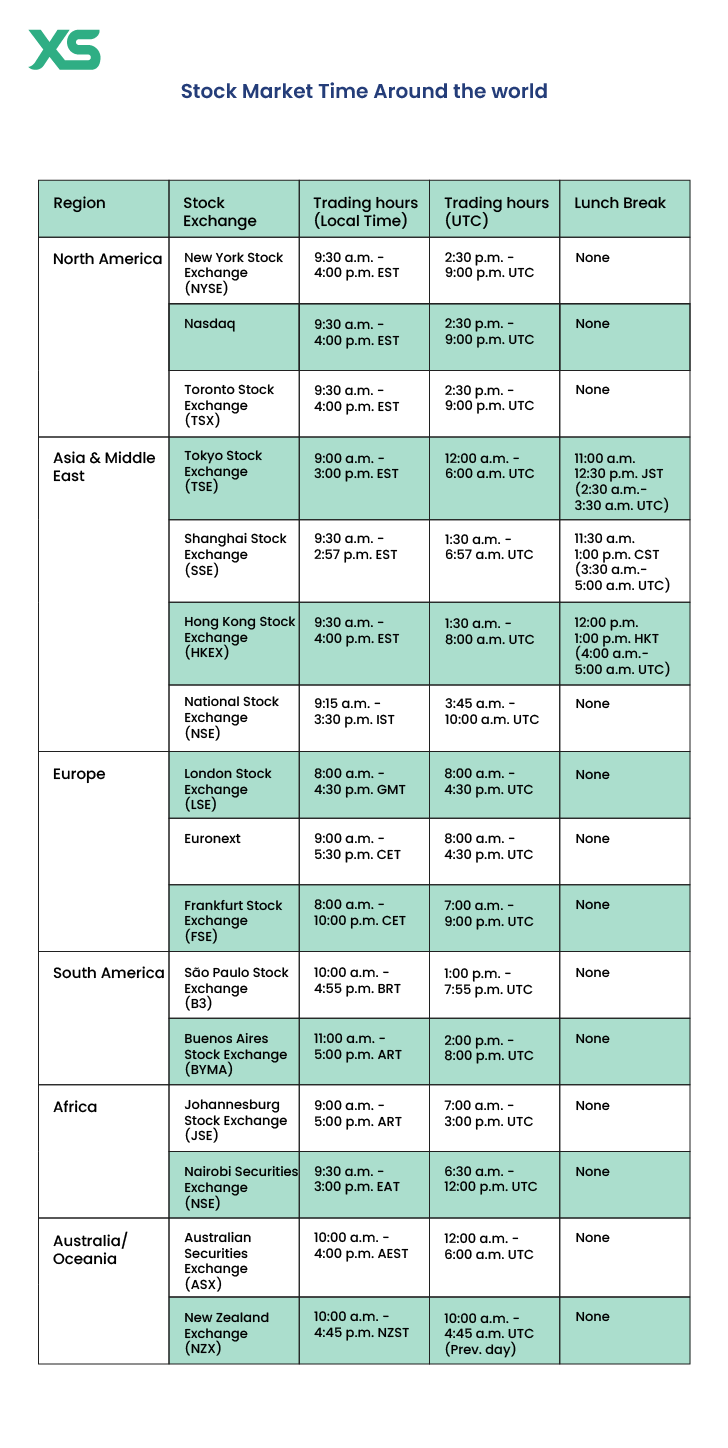
European markets generally open as the sun rises over the Atlantic. The London Stock Exchange (LSE), one of the world’s oldest and most influential, operates from 8:00 AM to 4:30 PM GMT. For an investor on the U.S. East Coast, the London market opens at 3:00 AM ET. This means that by the time the U.S. market opens at 9:30 AM, the European markets are already in their final hours of trading. The overlap between 9:30 AM and 11:30 AM ET is often characterized by high volatility and volume, as both U.S. and European traders are active simultaneously.
Asian Markets: Tokyo, Hong Kong, and Shanghai
The Asian trading day begins while the U.S. is finishing dinner. The Tokyo Stock Exchange (TSE) typically operates from 9:00 AM to 3:00 PM JST, with a notable midday break for lunch—a practice less common in Western markets. Hong Kong and Shanghai follow similar patterns. Because these markets close before the U.S. opens, they often set the “tone” for the American trading day. If the Nikkei 225 drops significantly overnight, U.S. futures often reflect that bearish sentiment long before the 9:30 AM opening bell.
Dealing with Time Zone Shifts and GMT
One of the greatest challenges for the international investor is Daylight Saving Time (DST). Not all countries observe DST, and those that do often switch on different dates. This can cause the “gap” between the NYSE and the LSE to shift by an hour for several weeks a year. Professional investors often use Greenwich Mean Time (GMT) or Coordinated Universal Time (UTC) as a standard reference point to ensure they never miss an opening or closing cross due to a local clock change.
The Impact of Market Holidays and Weekend Closures
Unlike the cryptocurrency market, which operates 24/7/365, traditional stock markets respect weekends and national holidays. These closures provide a necessary “cooling-off” period for the financial system and allow for administrative settlement processes to catch up.
Major U.S. Stock Market Holidays
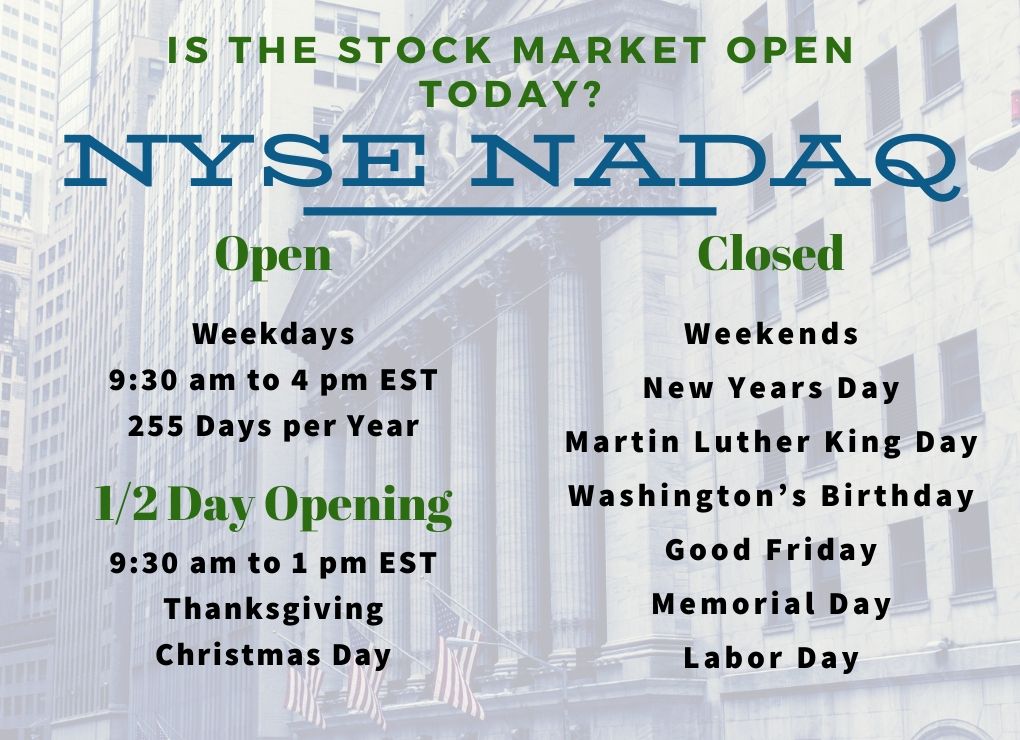
The U.S. stock market observes nine major holidays (and occasionally others by special proclamation). These include New Year’s Day, Martin Luther King Jr. Day, Washington’s Birthday (Presidents’ Day), Good Friday, Memorial Day, Juneteenth National Independence Day, Independence Day, Labor Day, Thanksgiving Day, and Christmas Day. On these days, the NYSE and Nasdaq are completely closed. If a holiday falls on a Saturday, the market usually closes on the preceding Friday; if it falls on a Sunday, it closes on the following Monday.
The “Weekend Effect” and Monday Volatility
The market is closed on Saturdays and Sundays. This 48-hour hiatus creates what researchers call the “Weekend Effect.” Because news accumulates over the weekend without a venue for immediate trading, Monday mornings often see significant “gaps” in stock prices—where a stock opens much higher or lower than it closed on Friday. For personal finance enthusiasts, this reinforces the importance of long-term thinking over reactionary trading; trying to predict a Monday morning gap is often more akin to gambling than investing.
Early Closures and Special Trading Sessions
There are specific days, most notably the day after Thanksgiving (Black Friday) and sometimes Christmas Eve, when the U.S. stock market closes early at 1:00 PM ET. These “half-days” typically see very low volume, as many institutional traders are away. Low volume can lead to “thin” markets where even small trades can move a stock’s price disproportionately, making it a tricky time for retail execution.
Strategies for Trading the Open
Understanding when the market opens is the first step; understanding how to behave during those first few minutes is where wealth is built or lost.
The Opening Auction and Price Discovery
In the minutes leading up to 9:30 AM, the exchanges conduct an automated auction. They look at all the “buy” and “sell” orders that have been placed overnight and calculate the price that will satisfy the greatest number of orders. This is known as the “opening cross.” For a retail investor, placing a “market order” to execute right at the open can be risky, as the price may spike or dip momentarily before stabilizing.
Managing Risk During High Volatility Periods
The first 30 to 60 minutes of the trading day (9:30 AM – 10:30 AM ET) are often referred to as “Amateur Hour” by professional floor traders—not because only amateurs trade then, but because the price action is often driven by emotional reactions to overnight news. Professional money managers often wait for the “initial balance” to be set before committing large amounts of capital. If your goal is steady wealth accumulation, waiting until 10:30 AM or 11:00 AM can often provide a clearer picture of the day’s true trend.
Tooling and Platforms for Real-Time Execution
To navigate opening hours effectively, your choice of financial tools is paramount. Most modern brokerages offer real-time streaming data, but “basic” accounts may sometimes have a 15-minute delay. In the context of a 9:30 AM open, a 15-minute delay is an eternity. Ensure your trading platform provides “Real-Time Quotes” and allows you to view “Level 2” data if you intend to trade during the opening or closing minutes.
Why Timing is Everything in Personal Finance
While time in the market is generally more important than timing the market, understanding operational hours is a vital component of a sophisticated financial plan.
Passive vs. Active Management Timing
If you are a passive investor contributing to a 401(k) or an IRA via index funds, the exact opening time of the market matters very little to your daily life. Your trades are often bundled and executed at the Net Asset Value (NAV) at the end of the day. However, if you are an active investor or a business owner looking to hedge currency or commodity risk, the opening bell is your primary point of engagement. Knowing when liquidity is highest allows you to enter and exit positions without “slippage”—the hidden cost of trading when volume is low.

The Role of Economic Indicators and Pre-Market News
Many of the most important economic indicators—such as the Consumer Price Index (CPI) or the Non-Farm Payrolls report—are released at 8:30 AM ET, exactly one hour before the market opens. This hour is critical for financial planning. By observing how the “S&P 500 Futures” react to the 8:30 AM data, you can anticipate how the broader market will open at 9:30 AM. This insight allows you to adjust your strategy, perhaps choosing to hold off on a purchase or setting a specific limit order to take advantage of an expected dip.
In conclusion, the opening of the stock market is not merely a bureaucratic start to a business day; it is a global synchronization of value, news, and human psychology. By mastering the schedule of the NYSE, understanding the influence of international exchanges, and respecting the volatility of the opening cross, you position yourself to make more informed, professional, and profitable financial decisions. Whether you are building a side hustle in swing trading or managing a corporate treasury, the clock is just as important as the ticker symbol.
aViewFromTheCave is a participant in the Amazon Services LLC Associates Program, an affiliate advertising program designed to provide a means for sites to earn advertising fees by advertising and linking to Amazon.com. Amazon, the Amazon logo, AmazonSupply, and the AmazonSupply logo are trademarks of Amazon.com, Inc. or its affiliates. As an Amazon Associate we earn affiliate commissions from qualifying purchases.