
For investors, traders, and anyone engaged with the financial markets, understanding the operational hours of the New York Stock Exchange (NYSE) is fundamental. The closing bell of the NYSE marks not just the end of a trading day, but a critical pause in market activity that influences investment strategies, financial planning, and the flow of global capital. Beyond the standard 9:30 AM to 4:00 PM EST window, there are nuances involving weekends, federal holidays, and even extended trading sessions that require careful consideration. Navigating these intricacies is essential for making informed financial decisions and effectively managing market exposure.
Understanding the NYSE’s Standard Operating Hours
The New York Stock Exchange operates on a meticulously defined schedule, designed to provide a structured and predictable environment for the trading of securities. This schedule forms the backbone of the market’s liquidity and price discovery mechanisms.
The Regular Trading Day: Open and Close
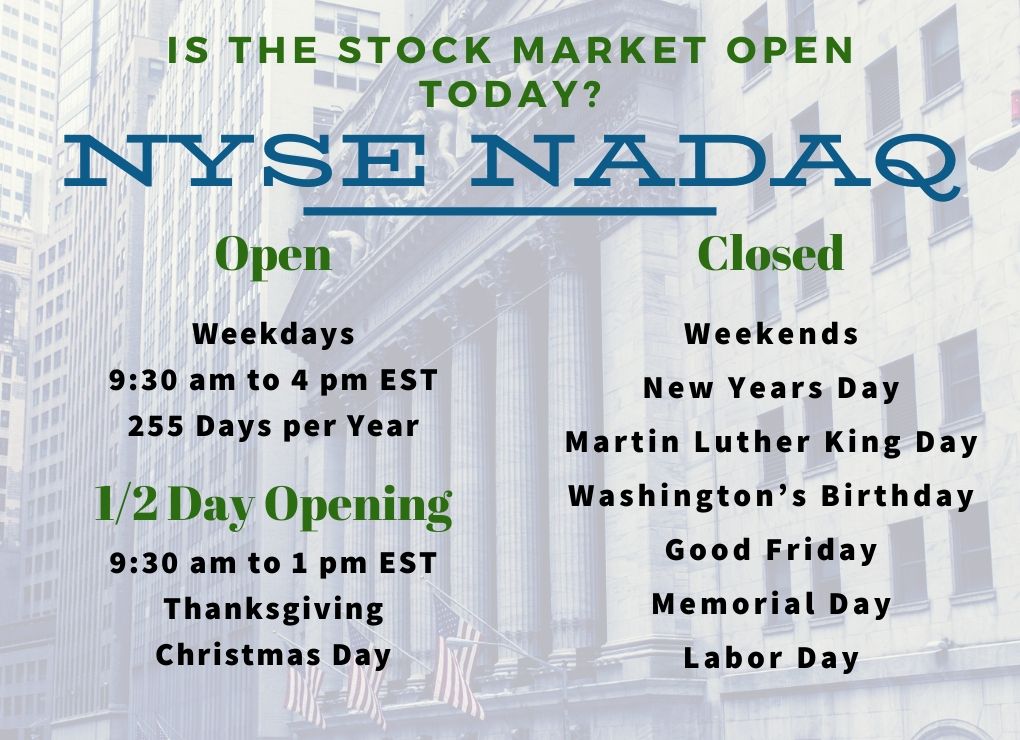
The standard trading session for the NYSE begins promptly at 9:30 AM Eastern Standard Time (EST) and concludes at 4:00 PM EST, Monday through Friday. These hours, often referred to as “market hours” or “cash market hours,” represent the core period when the vast majority of trading volume occurs. During this window, buyers and sellers interact through their brokers, executing trades that determine the real-time valuation of publicly traded companies. The opening bell ceremony is a symbolic start to the day’s business, often rung by executives of listed companies or distinguished guests, while the closing bell signifies the end of the official session. This regular schedule has been a hallmark of the NYSE for decades, providing a consistent framework for market participants.
The Rationale Behind Fixed Hours
The establishment of fixed trading hours is not arbitrary; it serves several crucial functions within the financial ecosystem. Firstly, it concentrates liquidity, ensuring a high volume of transactions occurs within a specific timeframe. This concentration helps facilitate efficient price discovery, as a greater number of participants interacting simultaneously leads to more accurate and representative prices for securities. Secondly, fixed hours provide a necessary period for market participants, including institutional investors, analysts, and individual traders, to process information, conduct research, and formulate strategies without the pressure of continuous real-time trading. It allows for a breather, enabling market professionals to analyze the day’s events, assess company news released after hours, and prepare for the next trading session. This structured approach also supports the operational logistics of brokerage firms, clearinghouses, and regulatory bodies.
The Significance of the Closing Bell
The sound of the NYSE closing bell is more than just an auditory signal; it carries significant financial weight. For many, it marks the official end of market volatility for the day, signaling a time to review portfolios, calculate daily gains or losses, and process end-of-day reports. The prices at the closing bell are the official closing prices for most securities, which are critical benchmarks used in financial reporting, portfolio valuations, and the calculation of various financial indices. Furthermore, significant announcements from companies or economic data releases often occur after the market closes, giving investors time to absorb and react to new information before the next trading day begins. This structured rhythm helps prevent knee-jerk reactions during highly sensitive news events, allowing for a more considered response when the market reopens.
Navigating Non-Trading Days and Early Closures
While the 9:30 AM to 4:00 PM EST schedule is standard, the NYSE, like all major financial institutions, observes a number of non-trading days and sometimes implements early closures. Awareness of these exceptions is paramount for all investors.
Weekend Limitations: Saturday and Sunday
The most consistent non-trading days for the NYSE are Saturdays and Sundays. During these two days, the exchange is entirely closed for regular trading. This weekend pause is a universal characteristic of major global stock exchanges, providing a structured break from market activity. For investors, this means no new trades can be executed on listed securities, and market prices remain static based on the Friday closing bell. While the cash market is closed, some financial instruments, such as certain derivatives or cryptocurrencies, may trade around the clock, but this does not involve direct trading on the NYSE itself. The weekend closure allows individuals and institutions to disconnect, strategize, and prepare for the upcoming trading week without the constant pressure of market fluctuations.
Federal Holidays Observed by the NYSE
In addition to weekends, the NYSE observes a specific set of U.S. federal holidays, during which the market is closed for the entire day. These typically include:
- New Year’s Day (January 1)
- Martin Luther King, Jr. Day (Third Monday in January)
- Washington’s Birthday / Presidents’ Day (Third Monday in February)
- Good Friday (Friday before Easter)
- Memorial Day (Last Monday in May)
- Juneteenth National Independence Day (June 19)
- Independence Day (July 4)
- Labor Day (First Monday in September)
- Thanksgiving Day (Fourth Thursday in November)
- Christmas Day (December 25)
It’s important to note that if a holiday falls on a Saturday, the market typically observes it on the preceding Friday. If it falls on a Sunday, it’s observed on the following Monday. These closures are planned well in advance, and the NYSE publishes its holiday schedule annually, making it easily accessible for investors to plan their financial activities around these breaks. These holidays align with national observances, ensuring that the financial community can participate in national celebrations and commemorations.
Planned Early Closures and Half-Day Trading
On certain occasions, the NYSE may implement early closures, meaning the market operates for a shortened session, typically closing at 1:00 PM EST. These half-day trading sessions often occur on days immediately preceding or following major holidays. Common examples include:
- The day after Thanksgiving (Black Friday)
- Christmas Eve (if it falls on a weekday)
- The day before Independence Day (if July 4th falls on a weekday)
These early closures are also announced far in advance, providing ample time for investors and firms to adjust their trading strategies and operational plans. The rationale behind these shortened days is often to allow market participants to travel or spend time with family during holiday periods, while still providing a limited opportunity for market activity. While shorter, these sessions can still be highly liquid and volatile, particularly as institutional investors adjust positions before the extended break.
Unforeseen Market Interruptions
While rare, the NYSE may also experience unforeseen market interruptions or emergency closures. These are typically triggered by extraordinary circumstances such as severe weather events (e.g., major blizzards impacting New York City), national emergencies, or significant technical malfunctions that could compromise market integrity. Historically, such closures have been infrequent but underscore the NYSE’s commitment to maintaining an orderly and fair market. In such scenarios, public announcements are made as quickly as possible through official channels and major financial news outlets to inform market participants. The last prolonged closure of the NYSE was in the aftermath of Hurricane Sandy in 2012, and before that, after the September 11th attacks in 2001.
Beyond Regular Hours: The World of Extended Trading
While the regular 9:30 AM to 4:00 PM EST window defines the NYSE’s core operations, the modern financial landscape includes extended trading sessions that allow for activity outside these conventional hours. These sessions are primarily driven by electronic trading and offer both opportunities and unique challenges for investors.
Pre-Market Trading: Getting a Head Start
Pre-market trading allows investors to trade securities before the official market open. For the NYSE, this typically runs from 4:00 AM EST to 9:30 AM EST. This session is crucial for investors who want to react swiftly to news that breaks overnight, such as corporate earnings reports released after the previous day’s close, economic data published early in the morning, or international market developments. Institutional investors and highly active traders often utilize pre-market sessions to establish positions or adjust strategies ahead of the main trading day, aiming to capitalize on early price movements. While offering an early start, pre-market trading often experiences lower liquidity and wider bid-ask spreads compared to regular hours, which can lead to increased volatility and potentially less favorable execution prices.
After-Hours Trading: Reacting to Late News
Conversely, after-hours trading takes place once the regular market closes, typically from 4:00 PM EST to 8:00 PM EST. This session provides a similar avenue for investors to react to news that emerges after the closing bell, such as late-breaking company announcements, updated analyst ratings, or unexpected global events. Just like pre-market, after-hours trading is characterized by reduced liquidity. Many individual investors use after-hours trading to manage positions based on post-market news without waiting until the next day’s open. The volume can be significantly lower, and prices can be more susceptible to large swings on relatively small trading activity. This makes after-hours trading a more speculative environment that requires a strong understanding of its unique dynamics.
The Mechanics and Risks of Extended Sessions
Extended trading sessions are facilitated primarily through Electronic Communication Networks (ECNs) rather than the traditional auction-based system of the NYSE trading floor. ECNs match buy and sell orders electronically, enabling continuous trading outside regular market hours. While convenient, these sessions come with inherent risks:
- Lower Liquidity: Fewer participants mean fewer buyers and sellers, which can make it harder to execute large orders without significantly impacting the price.
- Wider Spreads: The difference between the highest bid and lowest ask price (the bid-ask spread) tends to be wider, increasing transaction costs for traders.
- Increased Volatility: Lower liquidity combined with sensitivity to breaking news can lead to exaggerated price movements on smaller volumes.
- Professional Dominance: Institutional investors and sophisticated traders often dominate these sessions, potentially putting individual investors at a disadvantage.
- Limited Order Types: Some advanced order types available during regular hours may not be supported in extended sessions.
Investors participating in extended hours must be acutely aware of these factors and adjust their strategies accordingly, often using limit orders to control their execution prices.
Why Trading Hours Matter for Investors
Understanding NYSE trading hours goes beyond mere scheduling; it profoundly impacts investment strategies, risk management, and overall financial outcomes.
Impact on Liquidity and Volatility
The concentrated activity during regular trading hours ensures high liquidity, meaning there are plenty of buyers and sellers for most securities, making it easy to enter or exit positions without significantly affecting prices. This high liquidity helps to mitigate price manipulation and ensures fair market pricing. Conversely, during extended hours or around market closures, liquidity often dwindles, leading to increased volatility. Prices can swing more dramatically on smaller trade volumes, presenting both opportunities for swift profits and heightened risks of significant losses. Investors must consider these liquidity and volatility dynamics when deciding when to execute trades, especially for larger positions.
Strategy Adjustments for Different Sessions
Different trading sessions necessitate different strategic approaches.
- Regular Hours: Ideal for executing large orders, relying on volume-weighted average price (VWAP) strategies, and for long-term investors making steady portfolio adjustments. Information is widely disseminated, and market depth is at its peak.
- Pre-Market: Favored by day traders and those looking to capitalize on immediate reactions to overnight news. It requires quick decision-making and a tolerance for higher risk due to lower liquidity.
- After-Hours: Useful for reacting to post-market earnings calls or news releases. It often involves smaller position sizes and careful use of limit orders to manage potential price disparities.
Long-term investors typically focus on regular hours, while short-term traders and those engaged in event-driven strategies might leverage extended sessions.
International Comparisons and Time Zone Considerations
For global investors, understanding the NYSE’s hours in relation to other major exchanges is critical. When the NYSE closes, markets in Asia and Europe may be open or about to open, creating a continuous chain of global trading. News breaking during NYSE off-hours can impact these other markets, and their performance can, in turn, influence the NYSE’s opening prices. Time zone differences also necessitate careful planning for international investors looking to trade on the NYSE, often requiring them to adjust their schedules to match EST trading hours. This interconnectedness highlights the importance of a global perspective in financial markets.
Staying Informed: Key Resources for NYSE Trading Schedules
In a dynamic financial world, staying updated on the NYSE’s operational schedule is a non-negotiable aspect of responsible investing.
Official NYSE Calendars
The most reliable source for NYSE trading hours, holiday schedules, and early closures is the official website of the New York Stock Exchange. The NYSE publishes annual calendars detailing all planned market closures, well in advance. These calendars are meticulously maintained and serve as the definitive source for institutional and individual investors alike. Regularly checking this official resource ensures investors are always aware of upcoming non-trading days, preventing missed opportunities or unexpected portfolio inactivity.
Financial News Outlets and Brokerage Platforms
Beyond the official NYSE site, reputable financial news outlets (e.g., Bloomberg, Reuters, Wall Street Journal, CNBC) consistently report on market opening and closing times, especially around holidays or potential early closures. Many brokerage platforms also integrate market hour information directly into their trading interfaces, often providing pop-up notifications or calendar views for upcoming non-trading days. These platforms are often the primary point of interaction for individual investors and are an invaluable resource for real-time updates and schedule reminders. Setting up alerts or subscribing to financial news feeds can help investors stay proactive.

Planning Your Investment Decisions Around Market Hours
Ultimately, knowing when the NYSE closes allows investors to make more strategic and informed decisions. It enables better risk management, as investors can choose to reduce exposure before extended closures that might see significant news break. It also allows for efficient execution of trades, ensuring orders are placed during periods of optimal liquidity. Whether it’s planning the timing of a large block trade, deciding when to review portfolio performance, or simply understanding why your order wasn’t filled on a particular day, the simple question “when does the New York Stock Exchange close?” unlocks a deeper understanding of market mechanics and empowers more effective financial planning. By integrating this knowledge into their daily routines, investors can navigate the complexities of the financial markets with greater confidence and foresight.
aViewFromTheCave is a participant in the Amazon Services LLC Associates Program, an affiliate advertising program designed to provide a means for sites to earn advertising fees by advertising and linking to Amazon.com. Amazon, the Amazon logo, AmazonSupply, and the AmazonSupply logo are trademarks of Amazon.com, Inc. or its affiliates. As an Amazon Associate we earn affiliate commissions from qualifying purchases.