
The calendar year’s turn often brings with it a fresh set of financial resolutions, but for many, it also signals the inevitable approach of tax season. Understanding when to file taxes is not merely about marking a date on a calendar; it’s a crucial aspect of responsible personal finance, business operation, and overall financial well-being. For the 2024 tax season, which pertains to income earned in the 2023 calendar year, the deadlines are largely consistent with previous years, but knowing the nuances, potential shifts, and broader implications is essential for a stress-free and compliant filing experience. This guide will demystify the federal tax filing schedule, touch upon state-specific considerations, and provide actionable insights for proactive tax planning.

Understanding the Standard Tax Filing Deadline for 2024
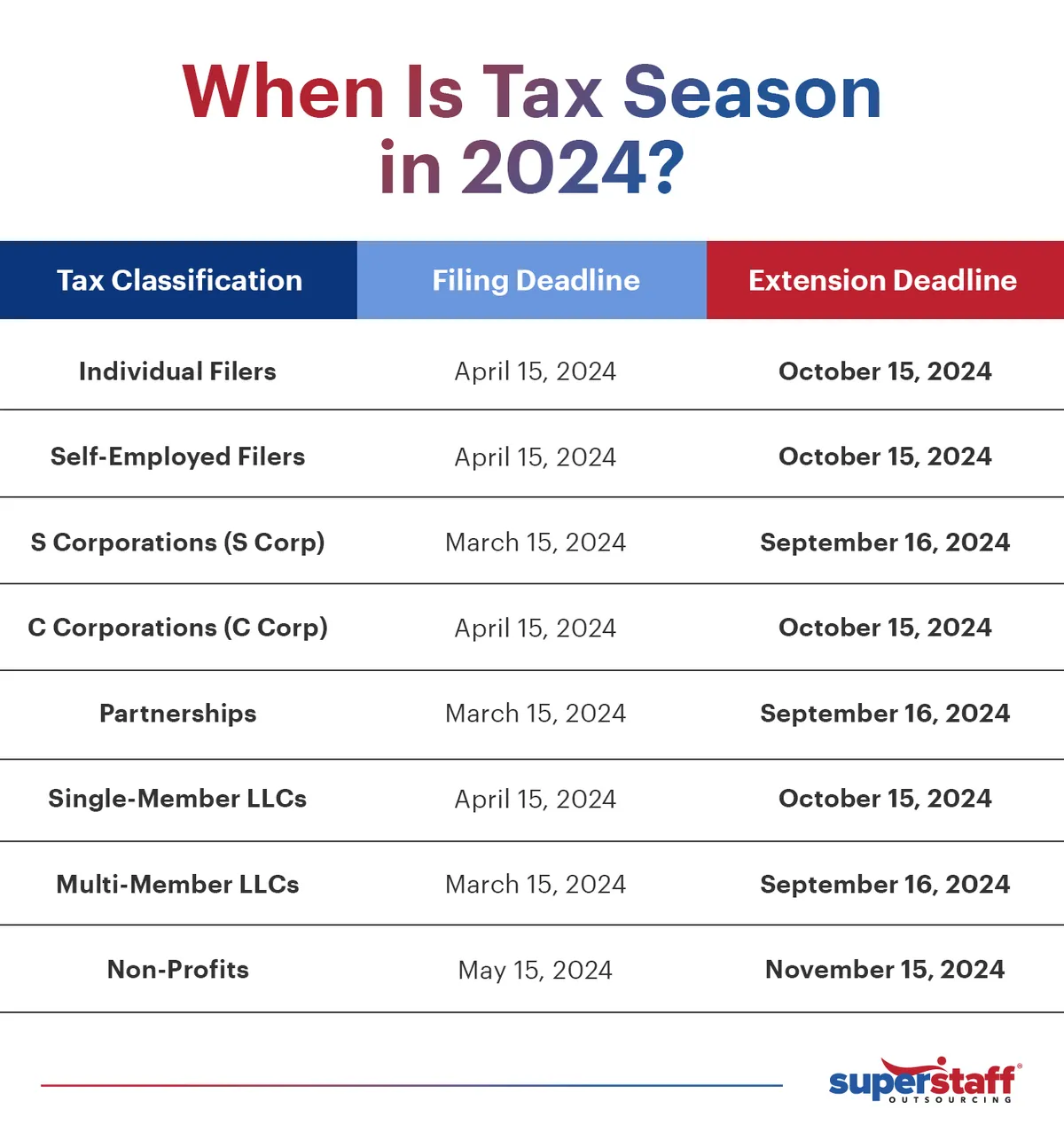
The cornerstone of the U.S. tax system is its annual filing requirement. While the tax year runs from January 1st to December 31st, the filing period for income earned in that year typically extends into the subsequent year. For most individual taxpayers and many businesses, one date looms largest: April 15th.
The All-Important April 15th (or Closest Business Day)
The primary deadline for filing federal income tax returns (Form 1040 for individuals) for the 2023 tax year is April 15, 2024. This date is etched into the minds of millions, representing the culmination of a year’s worth of financial activity and the last chance to submit your tax forms without requesting an extension. However, this date is not always rigid. The Internal Revenue Service (IRS) is mindful of weekends and federal holidays. If April 15th falls on a Saturday, Sunday, or a holiday observed in Washington, D.C., the deadline automatically shifts to the next business day. For 2024, April 15th falls on a Monday, meaning it is the definitive deadline for most taxpayers.
This deadline applies to individuals, partnerships, and S corporations. For those who owe taxes, this is also the deadline to pay any outstanding balances to avoid penalties and interest charges. It’s crucial to remember that filing on time is only half the battle; paying on time is equally important. Even if you file an extension, the payment deadline typically remains April 15th.
Special Considerations for State Taxes
While the IRS sets the federal deadline, each state has its own independent tax authority and may set different deadlines for state income tax returns. Most states that levy an income tax tend to align their individual filing deadline with the federal April 15th date to simplify the process for taxpayers. However, there are exceptions. Some states might have slightly earlier or later deadlines, or they might observe different holidays.
For example, states like Virginia and New York often align closely with the federal date, while others like Delaware or Hawaii might have a slightly later deadline. It is imperative for taxpayers to check their specific state’s Department of Revenue website or consult with a tax professional to confirm their state tax filing obligations and deadlines. Failing to meet state deadlines can result in penalties and interest similar to federal infractions, adding an unnecessary layer of financial burden.
Navigating Tax Extensions and What They Mean
Life can be unpredictable. Sometimes, despite the best intentions, circumstances make it impossible to gather all necessary documentation or complete your tax return by the standard April 15th deadline. Fortunately, the IRS provides a mechanism for taxpayers to request additional time: the tax extension.
How to Request an Extension (Form 4868)
If you find yourself needing more time, you can request an automatic six-month extension to file your federal income tax return by submitting Form 4868, Application for Automatic Extension of Time to File U.S. Individual Income Tax Return, by the original April 15, 2024, deadline. This form is relatively straightforward to complete and can be filed electronically through tax software, via a tax preparer, or by mail.
It’s vital to understand what an extension does and does not do. An extension grants you an additional six months to file your tax return, pushing your filing deadline to October 15th. However, it does not extend the time to pay any taxes you owe. The IRS expects taxpayers to estimate their tax liability and pay any due amount by the original April 15th deadline. If you fail to pay by April 15th, even with an extension to file, you may still be subject to failure-to-pay penalties and interest on the unpaid balance. Therefore, it’s a good practice to pay as much as you can reasonably estimate you will owe when you file Form 4868.
The October Extension Deadline
For those who successfully file Form 4868, the new federal filing deadline for the 2023 tax year becomes October 15, 2024. This date provides a significant reprieve, allowing individuals and businesses more time to gather complex documentation, address unforeseen issues, or simply alleviate the pressure of the initial deadline. This extended period is particularly beneficial for those with intricate financial situations, such as significant investments, foreign income, or complex business structures, where compiling all necessary information can be time-consuming.
Again, the October 15th deadline is strictly for filing. Any taxes that were due on April 15th should have been paid by then, along with any applicable interest that has accrued since that date on underpayments. If you receive a refund, filing an extension won’t impact your refund amount, but it will delay when you receive it. State tax extensions often mirror the federal extension, but taxpayers should verify this with their specific state tax authority.
Key Dates Beyond the Main Deadlines
While April 15th and October 15th are the tentpole dates for tax filing, the tax calendar is dotted with several other critical deadlines that impact various segments of the taxpayer population, particularly those with non-traditional income streams or business responsibilities.
Estimated Tax Payment Due Dates
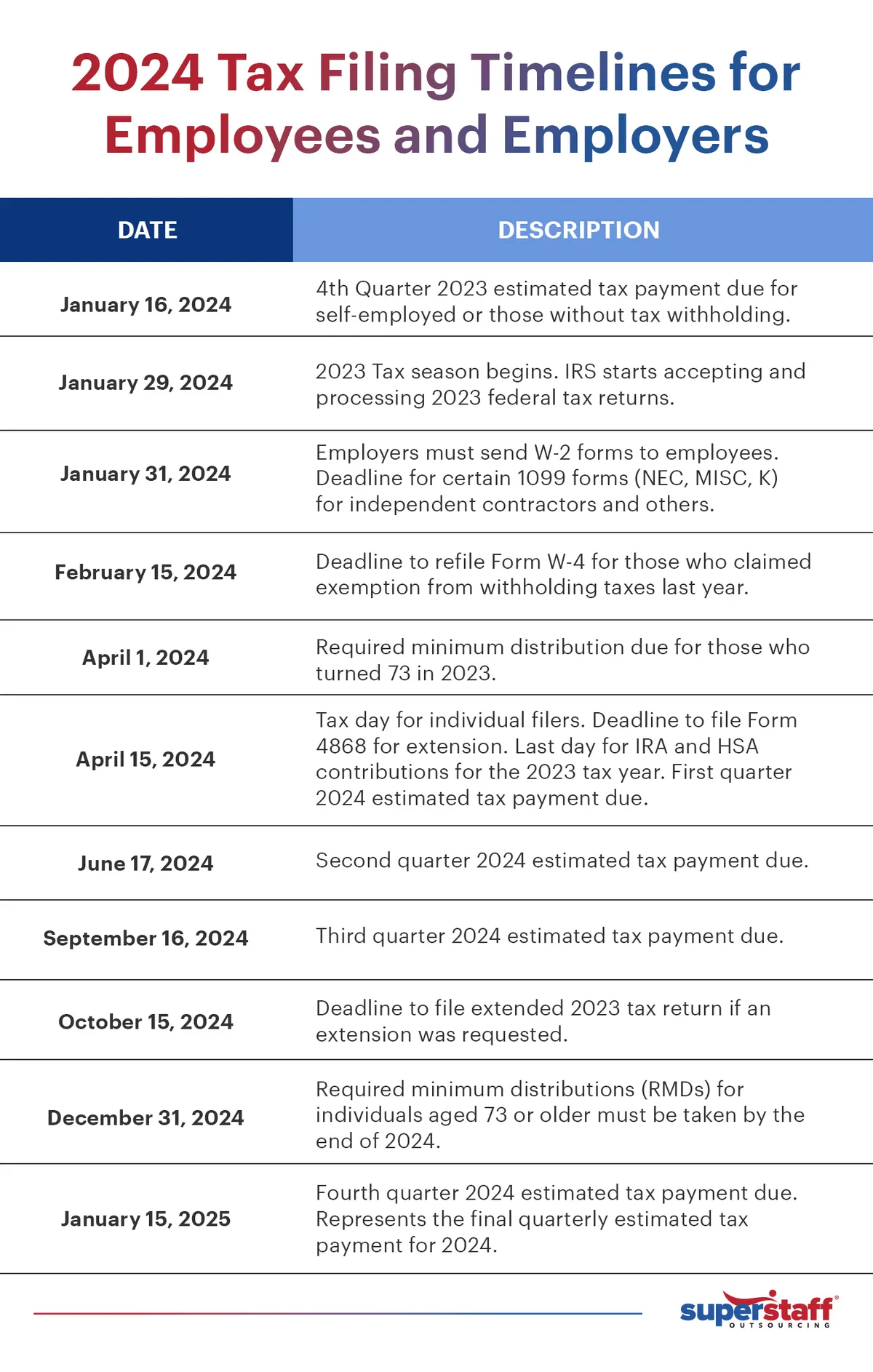
The “pay-as-you-go” system is a fundamental principle of U.S. tax law. For individuals who earn income not subject to withholding, such as self-employed individuals, freelancers, gig workers, investors, or those with significant interest and dividends, estimated tax payments are required throughout the year. These payments are made quarterly to cover income, self-employment, and alternative minimum taxes. Missing these deadlines can lead to underpayment penalties.
The estimated tax payment due dates for the 2023 tax year (which you would pay in 2023 and early 2024) are:
- April 15, 2024: For income earned January 1 to March 31.
- June 15, 2024: For income earned April 1 to May 31.
- September 15, 2024: For income earned June 1 to August 31.
- January 15, 2025: For income earned September 1 to December 31.
Similar to the main filing deadline, if any of these dates fall on a weekend or holiday, the deadline shifts to the next business day. Proactive estimation and timely payment are crucial for avoiding penalties.
Important Dates for Small Businesses and Employers
Businesses, regardless of size, face a more intricate web of tax deadlines. Beyond income tax, employers must contend with payroll taxes, information return filings, and various industry-specific taxes. Key dates include:
- January 31, 2024: This is a major deadline for businesses. Employers must furnish W-2 forms to employees and 1099-NEC (Nonemployee Compensation) forms to independent contractors. Many other 1099 series forms (e.g., 1099-MISC for rents, royalties) are also due to recipients by this date. This deadline ensures that individuals have the necessary documents to prepare their own tax returns.
- February 28, 2024 (Paper Filers) / March 31, 2024 (Electronic Filers): These are the deadlines for sending copies of W-2s and 1099s to the IRS. Electronic filing is generally preferred and often required for businesses filing a large number of forms.
- March 15, 2024: This is the filing deadline for calendar year S corporations (Form 1120-S) and partnerships (Form 1065). These entities are pass-through, meaning their income or loss is reported on the owners’ personal tax returns, but the entity itself must file an informational return. Like individuals, they can file for a six-month extension if needed.
- April 15, 2024: Corporations (Form 1120) that operate on a calendar year basis must file their income tax returns by this date. They also have the option to file an extension.
Businesses must also adhere to specific payroll tax deposit schedules (e.g., semi-weekly or monthly), which depend on the amount of tax liability. Staying abreast of these varying deadlines is fundamental to a business’s financial compliance and health.
Proactive Tax Planning for a Smoother 2024
The best way to navigate the complexities of tax season is through proactive planning. Waiting until the last minute can lead to errors, missed opportunities, and unnecessary stress. Strategic financial management throughout the year can significantly ease the burden when filing deadlines arrive.
Gathering Your Documents Early
One of the most time-consuming aspects of tax preparation is compiling all the necessary documents. By getting organized early, you can streamline the process. As soon as you receive documents like W-2s, 1099s (for interest, dividends, independent contractor income, etc.), 1098s (for mortgage interest, student loan interest), K-1s (from partnerships or S corporations), and statements related to charitable contributions, medical expenses, or investment income, file them in a designated folder, whether physical or digital. Having these documents readily accessible by early February can significantly cut down on the time and effort required to prepare your return. Consider using cloud storage or secure digital platforms for easy access and backup.
Understanding Common Deductions and Credits
Maximizing your tax savings often comes down to effectively utilizing available deductions and credits. A deduction reduces your taxable income, while a credit directly reduces the amount of tax you owe.
- Standard vs. Itemized Deductions: Most taxpayers opt for the standard deduction, which is a fixed amount based on your filing status. However, if your eligible itemized deductions (e.g., mortgage interest, state and local taxes, medical expenses above a certain threshold, charitable contributions) exceed the standard deduction amount, itemizing can result in greater tax savings. Keep meticulous records of all potential itemized deductions throughout the year.
- Key Credits: Researching and understanding common tax credits can yield substantial benefits. Examples include the Child Tax Credit, Earned Income Tax Credit (EITC), Education Credits (e.g., American Opportunity Tax Credit, Lifetime Learning Credit), Retirement Savings Contributions Credit (Saver’s Credit), and various energy-efficient home improvement credits. Eligibility for these credits can vary based on income, family status, and specific expenditures. Annual financial reviews can help identify new eligibility or changes to existing credits.
The Benefits of Professional Assistance
While tax software has made DIY tax preparation accessible, there are times when professional assistance is invaluable. If your financial situation is complex (e.g., you own a business, have significant investments, rental properties, foreign income, or experienced major life changes like marriage, divorce, or the birth of a child), a qualified tax preparer or Certified Public Accountant (CPA) can offer expert guidance.
A professional can help you navigate intricate tax laws, identify all applicable deductions and credits, ensure compliance, and even represent you in the event of an audit. They can also offer valuable tax planning advice to minimize your future tax liabilities. Even for simpler returns, a professional can provide peace of mind and help avoid costly mistakes. If you opt for tax software, ensure it’s reputable and consider purchasing versions that include audit support or access to tax experts for questions.
Potential Consequences of Missed Deadlines
Ignoring tax deadlines or underpaying your tax liability can lead to a series of undesirable outcomes. The IRS has clear penalties for non-compliance, designed to encourage timely filing and payment.
Penalties for Failure to File and Failure to Pay
- Failure to File Penalty: This is one of the more significant penalties. If you fail to file your return by the due date (including extensions), the penalty is typically 5% of the unpaid taxes for each month or part of a month that a return is late, capped at 25% of your unpaid taxes. If your return is more than 60 days late, the minimum penalty is either $485 (for returns due in 2024) or 100% of the tax required to be shown on the return, whichever is smaller.
- Failure to Pay Penalty: If you don’t pay your taxes by the original due date (April 15th, even if you filed an extension), you may face a failure-to-pay penalty. This penalty is 0.5% of the unpaid taxes for each month or part of a month the taxes remain unpaid, also capped at 25%.
- Interest: In addition to penalties, the IRS charges interest on underpayments and unpaid penalties. The interest rate can change quarterly but is typically the federal short-term rate plus three percentage points. This interest compounds daily, making it critical to pay any outstanding balances as soon as possible.
It’s worth noting that if both failure-to-file and failure-to-pay penalties apply in the same month, the failure-to-file penalty is reduced by the failure-to-pay penalty amount, so the combined total penalty for that month does not exceed 5%.
What to Do If You Miss a Deadline
If you realize you’ve missed a tax deadline, the worst thing you can do is nothing. The IRS encourages taxpayers to file and pay as soon as they can.
- File Immediately: Even if it’s late, file your tax return as quickly as possible. This stops the accrual of the failure-to-file penalty.
- Pay What You Owe: Pay any taxes you owe immediately to stop interest and failure-to-pay penalties from accumulating further.
- Contact the IRS: If you can’t pay the full amount due, contact the IRS to discuss payment options. They offer various solutions, including short-term payment plans, Offer in Compromise (OIC), or installment agreements, which can help manage your tax debt and potentially mitigate further penalties.
- Reasonable Cause: In some cases, if you have a reasonable cause for missing a deadline (e.g., serious illness, natural disaster), the IRS may waive penalties. You’ll need to provide a written explanation and supporting documentation.
In conclusion, tax season for 2024 (for 2023 income) revolves primarily around the April 15th deadline for most individual and corporate filers, with October 15th serving as the extended filing deadline. However, a comprehensive understanding of estimated tax payments, business-specific dates, and the serious consequences of non-compliance is vital for anyone managing their finances. Proactive planning, meticulous record-keeping, and seeking professional advice when necessary are the most effective strategies for navigating the tax landscape with confidence and efficiency, ensuring financial compliance and peace of mind.
aViewFromTheCave is a participant in the Amazon Services LLC Associates Program, an affiliate advertising program designed to provide a means for sites to earn advertising fees by advertising and linking to Amazon.com. Amazon, the Amazon logo, AmazonSupply, and the AmazonSupply logo are trademarks of Amazon.com, Inc. or its affiliates. As an Amazon Associate we earn affiliate commissions from qualifying purchases.