
For the modern investor, understanding the clock is just as critical as understanding the balance sheet. In the fast-paced world of global finance, the operating hours of the United States stock markets serve as the heartbeat of international commerce. Whether you are a retail investor managing a retirement portfolio or a day trader looking for high-volatility opportunities, knowing exactly when the doors open—and what happens before and after those hours—is fundamental to a successful financial strategy.
The two primary exchanges in the United States, the New York Stock Exchange (NYSE) and the Nasdaq, follow a synchronized schedule. While the digital age allows for 24/7 information flow, the actual execution of trades within the most liquid environment occurs during specific windows. This guide explores the nuances of market timing, the mechanics of extended sessions, and the strategic implications of the trading bell.
Understanding Standard Market Hours: The Core Trading Session
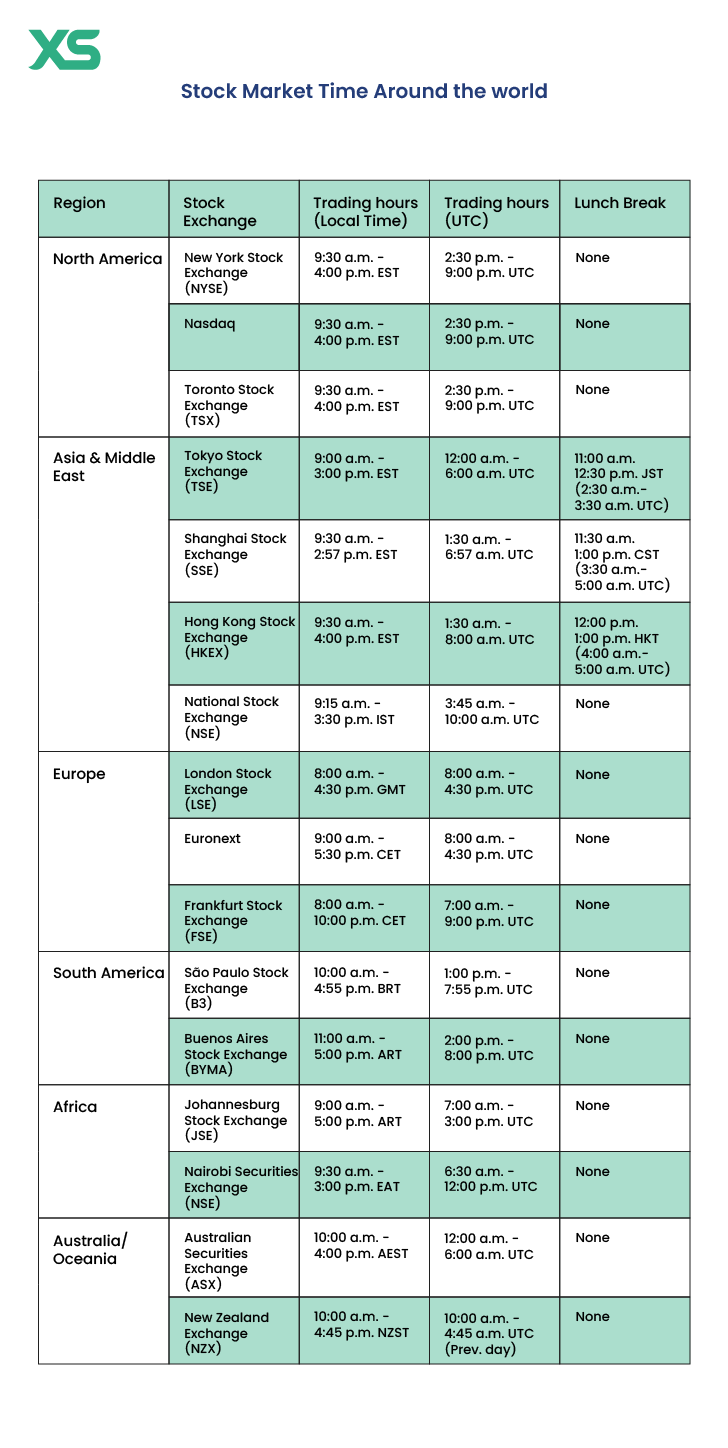
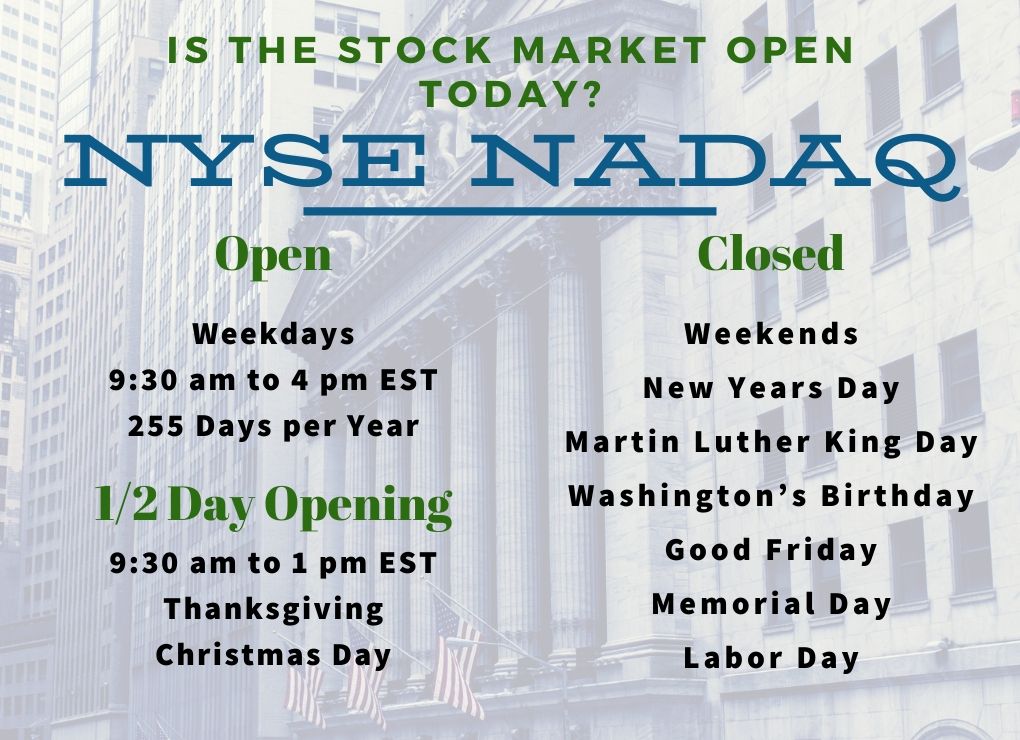
The standard trading session for the U.S. stock market is consistent across the major exchanges. For both the NYSE and the Nasdaq, the core trading hours are from 9:30 AM to 4:00 PM Eastern Time (ET), Monday through Friday.
The Significance of 9:30 AM ET
The opening bell at 9:30 AM ET represents the moment of “price discovery.” During the overnight hours, news breaks, earnings reports are released, and international markets (such as those in London, Tokyo, and Hong Kong) fluctuate. When the U.S. market opens, all of this pent-up information is processed into the stock prices.
This initial period is often characterized by high volume and significant volatility. For institutional investors, this is the time to execute large orders that require the deep liquidity provided by the “opening cross.” For retail investors, the first 30 minutes of the trading day can be treacherous, as price swings can be erratic before a clear trend is established for the day.
The Closing Bell and the 4:00 PM ET Finish
The market closes at 4:00 PM ET, a moment marked by the famous ringing of the bell on the floor of the NYSE. This closing time is vital because it determines the “closing price” for the day, which is the official benchmark used by mutual funds to calculate their Net Asset Value (NAV) and by analysts to chart historical performance.
The final hour of trading, often referred to as the “Power Hour” (3:00 PM to 4:00 PM ET), frequently sees a surge in volume as traders “square their positions”—closing out intraday bets to avoid the risk of holding assets overnight.
Time Zone Considerations
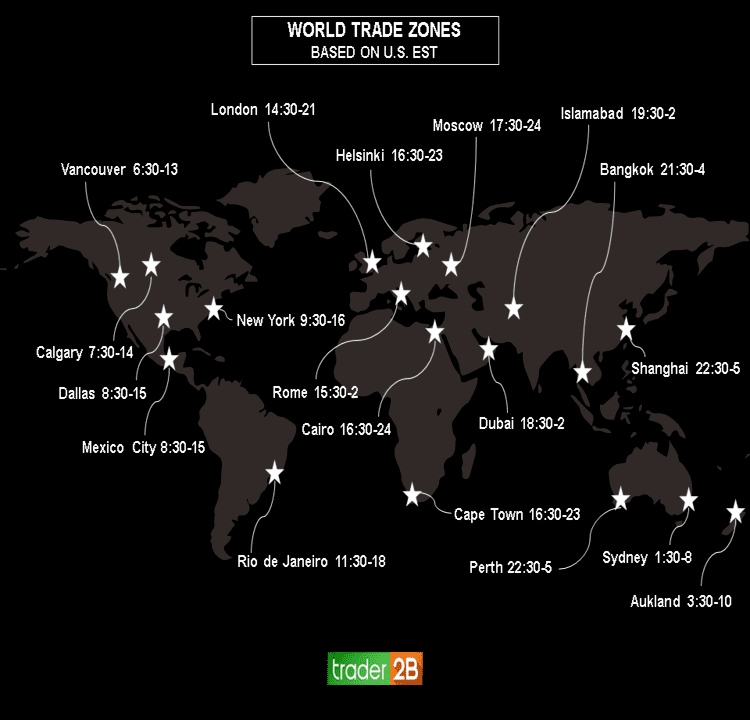
For investors located outside the Eastern Time zone, adjusting to these hours is a daily requirement.
-
Pacific Time (PT): 6:30 AM to 1:00 PM.
-
Central Time (CT): 8:30 AM to 3:00 PM.
-
Greenwich Mean Time (GMT): Typically 2:30 PM to 9:00 PM.
Understanding these shifts is crucial for West Coast investors, who must often begin their research before sunrise to be ready for the opening volatility.
Beyond the Bell: Pre-Market and After-Hours Trading
While the core hours are 9:30 AM to 4:00 PM, the “actual” trading day is much longer. Electronic Communication Networks (ECNs) allow for trading to occur outside of standard hours, creating what is known as the extended-hours market.
Pre-Market Trading Mechanics
Pre-market trading in the U.S. can begin as early as 4:00 AM ET, though the majority of activity picks up around 8:00 AM ET. This session allows investors to react to overnight developments, such as early-morning economic data releases (like the Jobs Report or Consumer Price Index) or European market movements.
However, pre-market trading is not identical to the regular session. It is characterized by much lower liquidity, meaning there are fewer buyers and sellers. This can lead to wider “bid-ask spreads”—the difference between what a buyer is willing to pay and what a seller is willing to accept. Consequently, a small trade can move a stock price significantly more in the pre-market than it would during the day.
After-Hours Trading Sessions
After-hours trading begins immediately at 4:00 PM ET and can run until 8:00 PM ET. This session is most famous for its reaction to corporate earnings. Most major U.S. companies release their quarterly financial results shortly after the 4:00 PM closing bell to ensure the information is disseminated when the main market is closed, theoretically allowing for a more orderly digestion of the news.
Investors participating in after-hours trading should be aware that many brokerage firms require the use of “limit orders” during these sessions. A limit order ensures that you only buy or sell at a specific price, protecting you from the extreme price slippage common in low-volume environments.
The Risks and Rewards of Extended Hours
The primary advantage of extended-hours trading is the ability to act quickly on news. If a company announces a major acquisition at 4:30 PM, after-hours traders can position themselves before the general public can trade the next morning at 9:30 AM.
The risks, however, are substantial. Beyond low liquidity and high volatility, there is the risk of “unlinked” markets. During the day, all exchanges are linked to show the best possible price. In extended hours, you may only see the prices available on the specific ECN your broker uses, which might not be the best price available globally.
Market Holidays and Early Closures
The U.S. stock markets do not operate on weekends, and they observe several federal holidays throughout the year. For a financial planner or an active trader, keeping a calendar of these closures is essential for managing margin requirements and settlement dates.
Standard Market Holidays
The NYSE and Nasdaq typically observe the following holidays, during which the markets are closed entirely:
-
New Year’s Day: January 1st.
-
Martin Luther King, Jr. Day: Third Monday in January.
-
Presidents’ Day: Third Monday in February.
-
Good Friday: The Friday before Easter Sunday.
-
Memorial Day: Last Monday in May.
-
Juneteenth National Independence Day: June 19th.
-
Independence Day: July 4th.
-
Labor Day: First Monday in September.
-
Thanksgiving Day: Fourth Thursday in November.
-
Christmas Day: December 25th.
If a holiday falls on a Saturday, the market usually closes on the preceding Friday. If it falls on a Sunday, the market usually closes on the following Monday.
Early Closures and “Half-Days”
There are specific days when the market closes early, typically at 1:00 PM ET. These usually occur:
-
The day after Thanksgiving (Black Friday).
-
Christmas Eve (if it falls on a weekday).
-
The day before Independence Day (depending on which day of the week July 4th falls).
During these shortened sessions, trading volume is often incredibly thin, as many institutional traders take the day off. This thin volume can lead to “drift,” where the market moves on very little news, or sudden spikes if a headline hits a quiet room.
Strategic Considerations: When to Trade and Why
Knowing the hours is one thing; knowing how to use them is another. The timing of your trades can have a measurable impact on your “basis”—the average price you pay for your investments.
The Opening Auction vs. The Closing Auction
At 9:30 AM and 4:00 PM, the exchanges conduct a specialized auction process. This is designed to maximize the number of shares traded at a single, fair price. Institutional investors often prefer these auctions because they provide “clean” execution for massive blocks of stock. For the retail investor, participating in the “Closing Cross” is a way to ensure you receive the official closing price, which is useful for tracking index funds or matching a specific day’s performance.
The Mid-Day Lull
Often between 12:00 PM and 1:30 PM ET, trading volume drops significantly. This is colloquially known as the “Lunch Lull.” Professional traders in New York often step away during this time, and the market can become range-bound. For long-term investors, this can be a calm time to execute trades without the frantic noise of the open or close. For momentum traders, however, the lack of movement during this window can be frustrating.
Economic Calendar Synchronization
In the realm of personal finance and macro investing, the clock is tied to the government’s release schedule. Most major U.S. economic indicators—such as the Employment Situation report or Gross Domestic Product (GDP) data—are released at 8:30 AM ET.
This is exactly one hour before the market opens. This hour is critical because it allows the futures market (contracts that bet on the future value of the index) to react and set the tone for the 9:30 AM open. If the 8:30 AM data is unexpectedly poor, you will often see the market “gap down,” meaning it opens at a significantly lower price than it closed the previous day.
Global Interconnectivity and the 24-Hour Cycle
While we focus on “when the U.S. market opens,” it is important to remember that the U.S. market is the final major piece of a global 24-hour cycle.
The European Overlap
One of the most liquid times of the day is between 9:30 AM and 11:30 AM ET. During this two-hour window, the U.S. markets and the European markets (like the London Stock Exchange and the Frankfurt Bourse) are both open. This “overlap” creates a surge in global liquidity, as traders on both sides of the Atlantic are active simultaneously. This is often when the largest trends of the day are established.
The Influence of Asian Markets
When the U.S. market closes at 4:00 PM ET, the focus shifts to the East. The performance of the Nikkei in Japan or the Hang Seng in Hong Kong during the U.S. overnight hours can dictate whether the U.S. market opens “green” (up) or “red” (down) the following morning.
For the modern investor, the concept of a “closed” market is increasingly an illusion. While the physical or primary digital exchanges have set hours, the value of your assets is being negotiated somewhere in the world at almost every hour of the week. Understanding the specific hours of the U.S. market is not just about knowing when you can click “buy”; it is about understanding the windows of maximum transparency, liquidity, and regulatory protection. By aligning your trading activity with these sessions, you position yourself to trade with the flow of the world’s capital rather than against it.
aViewFromTheCave is a participant in the Amazon Services LLC Associates Program, an affiliate advertising program designed to provide a means for sites to earn advertising fees by advertising and linking to Amazon.com. Amazon, the Amazon logo, AmazonSupply, and the AmazonSupply logo are trademarks of Amazon.com, Inc. or its affiliates. As an Amazon Associate we earn affiliate commissions from qualifying purchases.