
For many taxpayers, the start of a new year brings a sense of renewal, but for the financially savvy, it also marks the beginning of the most critical period in the fiscal calendar: tax season. As we look toward 2025, understanding exactly “when taxes start” involves more than just marking a single date on a calendar. It requires a comprehensive understanding of the Internal Revenue Service (IRS) timeline, the updated tax brackets adjusted for inflation, and the strategic maneuvers necessary to minimize liability and maximize potential refunds.

In 2025, you will be filing taxes for the 2024 tax year. This distinction is vital, as the financial decisions you make throughout the current year dictate the outcome of your filing next spring. This guide provides a deep dive into the 2025 tax landscape, ensuring you are prepared from the moment the IRS opens its doors.
Navigating the 2025 Filing Window: Key Dates and Deadlines
The question of “when do taxes start” typically refers to the IRS “Tax Opening Day.” While the IRS usually announces the official start date in early January, historical patterns provide a reliable roadmap for what to expect in 2025.
When Can You Start Filing?
Traditionally, the IRS begins accepting and processing individual tax returns in late January. For the 2025 season, the expected start date will likely fall between January 20 and January 27, 2025.
However, your personal “tax start date” may be even earlier. Employers and financial institutions are required to send out W-2 and 1099 forms by January 31. If you utilize digital payroll systems, you may receive your documentation as early as the first week of January. While you cannot officially submit your return until the IRS systems go live, you can—and should—begin organizing your data and preparing your draft returns as soon as your documentation arrives.
The Critical Deadlines to Remember
The most famous date in American finance is April 15, and for 2025, this remains the primary deadline for most individual taxpayers. Because April 15, 2025, falls on a Tuesday, there are no weekend or holiday delays expected for the general filing population.
Failure to file by this date can result in failure-to-file and failure-to-pay penalties, which accrue interest over time. If you cannot meet this deadline, you must file for an extension by April 15. This grants you an additional six months—until October 15, 2025—to submit your paperwork. However, it is a common misconception that an extension provides more time to pay. Any taxes owed must still be estimated and paid by the April 15 deadline to avoid interest charges.
Understanding the New Tax Brackets and Standard Deduction Adjustments
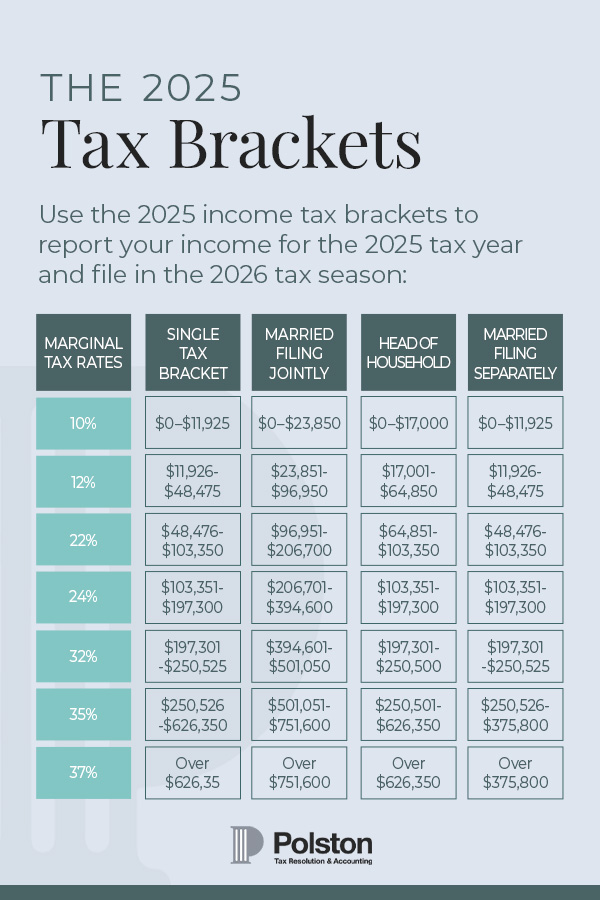
The IRS adjusts tax brackets and standard deductions annually to account for inflation, a process known as “indexing.” For the 2025 filing season (covering the 2024 tax year), these adjustments are significant, potentially moving some taxpayers into lower brackets or increasing the amount of income that remains untaxed.
Adjusted Tax Brackets for the 2024 Tax Year
For the taxes you will file in early 2025, the marginal tax rates remain 10%, 12%, 22%, 24%, 32%, 35%, and 37%. However, the income thresholds for these brackets have shifted upward. For example, the top 37% rate now applies to individuals with income greater than $609,350 ($731,200 for married couples filing jointly).
This upward shift is beneficial for the average earner. If your salary remained stagnant or saw a modest increase that didn’t outpace inflation, you might find that a larger portion of your income falls into a lower percentage bracket than it did the previous year. This “bracket creep” protection is a fundamental component of maintaining purchasing power in a fluctuating economy.
The New Standard Deduction Thresholds
The standard deduction is the portion of income not subject to tax that can be used to reduce your tax bill. For the 2025 filing season, the standard deduction has seen a notable increase:
- Married Filing Jointly: $29,200 (an increase of $1,500 from the previous year).
- Single Taxpayers and Married Filing Separately: $14,600 (an increase of $750).
- Heads of Household: $21,900 (an increase of $1,100).
For the vast majority of taxpayers (approximately 90%), taking the standard deduction is more financially advantageous than itemizing. With these higher thresholds, even fewer people may find it necessary to track individual receipts for medical expenses or charitable donations, simplifying the filing process.
Strategic Tax Planning: Maximizing Credits and Deductions
Starting your tax preparation early in 2025 allows you to take advantage of various credits and deductions that can significantly lower your effective tax rate. Unlike deductions, which lower the amount of income you are taxed on, credits provide a dollar-for-dollar reduction in the actual tax you owe.
Leveraging the Child Tax Credit and EITC
The Child Tax Credit (CTC) remains a cornerstone for family financial planning. For the taxes filed in 2025, the credit is worth up to $2,000 per qualifying child. It is important to note the “refundable” portion of this credit, which allows families to receive a refund even if they owe zero taxes.
Furthermore, the Earned Income Tax Credit (EITC)—designed for low-to-moderate-income working individuals and couples—has also been adjusted for inflation. For the 2025 filing season, the maximum EITC amount is $7,830 for qualifying taxpayers with three or more qualifying children. Eligibility for this credit depends strictly on earned income and investment income limits, making it essential to review your total financial picture before filing.
Education and Student Loan Interest
If you or your dependents pursued higher education in 2024, the American Opportunity Tax Credit (AOTC) and the Lifetime Learning Credit (LLC) are vital tools. The AOTC provides a maximum annual credit of $2,500 per eligible student.
Additionally, personal finance management often involves student loan debt. You can deduct up to $2,500 of the interest paid on qualified student loans. This is an “above-the-line” deduction, meaning you do not need to itemize to claim it, effectively lowering your Adjusted Gross Income (AGI).
Retirement Contributions and Investment Efficiency
One of the most effective ways to manage your tax burden as the 2025 season approaches is through retirement account contributions. These vehicles offer some of the most powerful tax advantages available in the U.S. financial system.
Maximizing 401(k) and IRA Limits
For the 2024 tax year (filed in 2025), the contribution limit for employees who participate in 401(k), 403(b), and most 457 plans is $23,000. If you are aged 50 or older, you can contribute an additional $7,500 “catch-up” contribution. These contributions are typically “pre-tax,” meaning they reduce your taxable income for the year.
For Individual Retirement Accounts (IRAs), the limit has increased to $7,000 ($8,000 if you are 50 or older). One of the unique benefits of the IRA is that you often have until the April 15, 2025, deadline to make contributions that count toward the 2024 tax year. This allows for last-minute financial maneuvers to lower your tax bill after the calendar year has already ended.
Health Savings Accounts (HSAs) as a Tax Tool
For those with high-deductible health plans, the HSA is often referred to as a “triple-tax-advantaged” account. Contributions are tax-deductible, the growth is tax-free, and withdrawals for qualified medical expenses are tax-free. For the 2024 tax year, the contribution limit is $4,150 for individuals and $8,300 for families. Utilizing these accounts is not just a health strategy; it is a sophisticated financial move that reduces your overall taxable exposure.
Streamlining Your 2025 Tax Preparation
When taxes “start” in 2025, the difference between a stressful experience and a seamless one lies in organization and the use of modern financial tools.
Essential Documentation Checklist
To be ready for the January opening, you should create a centralized digital or physical folder to house the following:
- Income Statements: W-2s, 1099-NEC (self-employment), 1099-INT (interest), and 1099-DIV (dividends).
- Adjustment Records: Records of HSA contributions, IRA contributions, and student loan interest.
- Business Expenses: If you are a freelancer or small business owner, ensure your bookkeeping for 2024 is finalized, including home office deductions and mileage logs.
- Digital Asset Records: The IRS continues to focus on cryptocurrency. Ensure you have reports from your exchanges detailing capital gains or losses.

The Role of Financial Technology
In 2025, manual filing is increasingly obsolete. Leveraging financial software that syncs with your bank accounts and investment portals can automate the categorization of deductible expenses. Furthermore, filing electronically is the fastest way to receive a refund. The IRS estimates that 9 out of 10 taxpayers who file electronically and choose direct deposit receive their refund within 21 days.
As the 2025 tax season approaches, remember that “when taxes start” is less a date and more a mindset. By understanding the timeline, keeping abreast of inflation-adjusted brackets, and maximizing your contributions to retirement and savings accounts, you can transform tax season from a period of dread into a strategic opportunity to strengthen your personal financial standing.
aViewFromTheCave is a participant in the Amazon Services LLC Associates Program, an affiliate advertising program designed to provide a means for sites to earn advertising fees by advertising and linking to Amazon.com. Amazon, the Amazon logo, AmazonSupply, and the AmazonSupply logo are trademarks of Amazon.com, Inc. or its affiliates. As an Amazon Associate we earn affiliate commissions from qualifying purchases.