
The term “Wall Street” today evokes images of glass skyscrapers, high-frequency trading algorithms, and the global heartbeat of capitalism. Yet, the origins of this financial juggernaut are rooted in a far more grounded—and literal—history. Understanding when Wall Street started requires a journey back to the mid-17th century, shifting from a physical defensive barrier to an informal gathering of merchants, and finally to the structured institutional powerhouse that dictates global market trends. For the modern investor, this history is not merely academic; it is the blueprint of the financial instruments, regulatory frameworks, and market behaviors we navigate today.
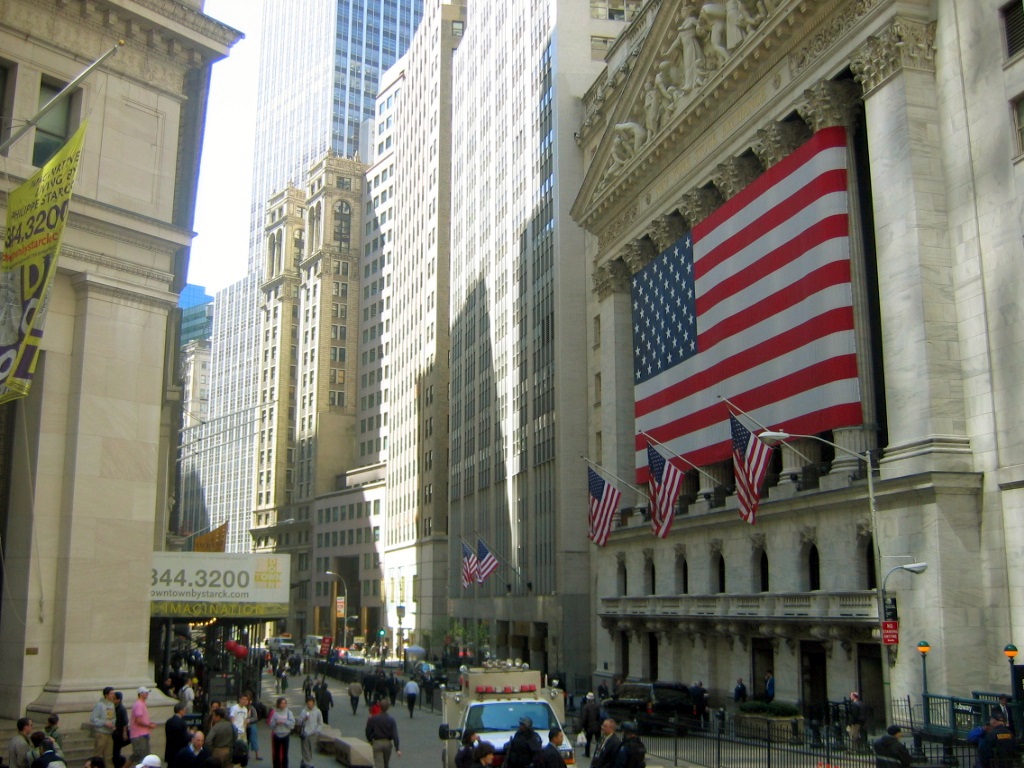
The Physical Origins: A 17th-Century Defensive Barrier
To answer when Wall Street physically started, we must look to 1653 in the Dutch settlement of New Amsterdam. At the time, the colony was under the governorship of Peter Stuyvesant. Fearing an invasion by the English or an attack by Native American tribes, the Dutch West India Company ordered the construction of a formidable wooden palisade.
The Construction of the Wall
This “wall” was a 12-foot-high barrier made of timber and earth, stretching across the northern tip of the settlement from the East River to the Hudson River. While it never truly served its military purpose—the English eventually took the city by sea in 1664 without a shot being fired at the wall—the structure defined the geography of lower Manhattan. The path running alongside the wall became known as “de Waal Straat,” which the English eventually renamed Wall Street.
From Defense to Commerce
By the late 1600s, the wall was dismantled, and the timber was repurposed for local housing. However, the name remained, and the street became a natural gathering point for the city’s residents. Because it was located near the docks of the East River, it became a central hub for traders, auctioneers, and merchants. In these early days, the “market” was not yet one of stocks and bonds, but of physical commodities: flour, tobacco, timber, and, tragically, enslaved people. It was during this period that the seeds of a central marketplace were sown, as the concentration of merchants necessitated a common ground for price discovery and trade.
The Buttonwood Agreement: The Birth of Formal Finance
While the physical street existed in the 1600s, the financial institution of Wall Street truly began in the late 18th century. Following the American Revolutionary War, the fledgling United States government faced a massive debt crisis. To manage this, the First Congress authorized the issue of $80 million in government bonds to fund the war debt. This created a sudden need for a secondary market where people could buy and sell these securities.
The Panic of 1792
Early trading was chaotic and unregulated. Speculators like William Duer often manipulated prices, leading to the Panic of 1792, the first financial crisis in U.S. history. This market volatility highlighted the need for a structured system that favored transparency and mutual trust among brokers. The leading merchants of the time realized that without a formal agreement, the public would lose confidence in the financial system, stifling the growth of the young nation’s economy.
Meeting Under the Tree
On May 17, 1792, twenty-four stockbrokers gathered under a buttonwood tree located at 68 Wall Street. They signed a brief, two-sentence document known as the Buttonwood Agreement. This document is widely considered the official start of the New York Stock Exchange (NYSE).
The agreement established two critical rules that still echo in modern finance:
-
Exclusivity: The brokers would only trade with each other, creating a closed, trusted network.
-
Fixed Commissions: They agreed to a common commission rate of 0.25%, ending the cutthroat price-cutting that had previously destabilized the market.
This formalization moved the market from the sidewalks and coffee houses—most notably the Tontine Coffee House—into a structured professional organization. By providing a reliable way to trade government “stock” (bonds) and shares of the First Bank of the United States, Wall Street became the engine of American capital.
The 19th-Century Expansion: Infrastructure and Innovation
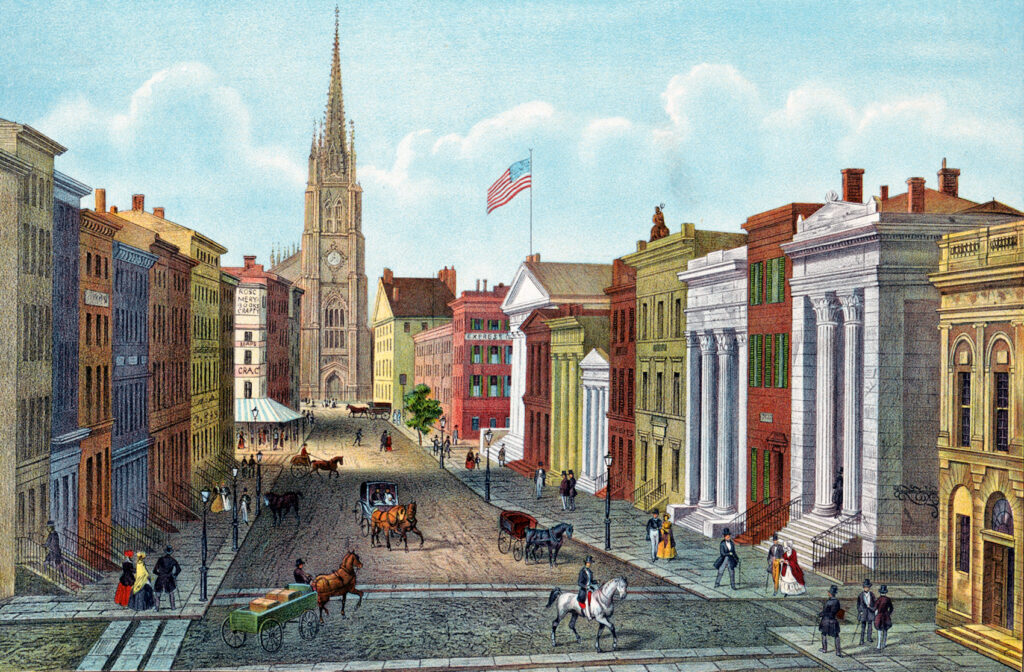
As the 19th century progressed, Wall Street evolved from a local trading post into a national financial center. This era saw the transition from government-focused trading to the financing of the American Industrial Revolution. The “money” niche shifted from simple debt management to complex venture capital for infrastructure.
The Erie Canal and Railroads
The completion of the Erie Canal in 1825 transformed New York City into the premier gateway for American commerce. As goods flowed from the Midwest to the Atlantic, the capital required to build canals, and later railroads, was raised on Wall Street. Railroad stocks became the primary driver of market volume. The complexity of these businesses required new ways of assessing value, leading to the birth of financial analysis and the growth of investment banking.
The Impact of the Telegraph and Ticker Tape
In the mid-1800s, technology began to reshape how Wall Street functioned. Before the telegraph, news of market movements traveled by horse or ship, leading to massive information asymmetries. The invention of the telegraph in 1844, followed by the stock ticker in 1867, democratized financial information. For the first time, an investor in Chicago or Boston could see the prices on Wall Street in near-real-time. This technological leap expanded the reach of the market, allowing it to aggregate capital from across the entire continent, not just Manhattan.
Modernization and the Rise of Global Dominance
The 20th century marked the transformation of Wall Street into the world’s financial capital, surpassing London after the devastation of World War I. This period was characterized by massive growth, followed by the sobering necessity of regulation.
The 1929 Crash and the SEC
The “Roaring Twenties” saw a massive surge in retail investing, fueled by easy credit and “buying on margin.” When the market crashed in October 1929, it wiped out billions in wealth and led to the Great Depression. This catastrophic event proved that Wall Street could no longer operate as a private club.
The start of the modern, regulated era of Wall Street occurred with the Securities Act of 1933 and the Securities Exchange Act of 1934. These laws created the Securities and Exchange Commission (SEC), mandating that companies provide “full and fair disclosure” of their financial health. This was a pivotal moment in the history of money; it shifted the burden of risk from “buyer beware” to a system based on institutionalized transparency.
The Digital Revolution
The late 20th century saw another fundamental shift: the move from paper to bits. In 1971, the NASDAQ was launched as the world’s first electronic stock market. This broke the physical monopoly of the NYSE floor and paved the way for the high-speed, globalized trading environment we see today. Wall Street was no longer just a location; it had become a decentralized, digital network of liquidity.
The Legacy of Wall Street: Why Its Origins Matter Today
When we ask when Wall Street started, we are looking for the point at which capital began to be organized for the collective growth of an economy. From a wooden wall to a buttonwood tree, the evolution of this street mirrors the evolution of the global financial system.
The Democratization of Capital
The journey of Wall Street is essentially the story of the democratization of money. What began as a defensive barrier for a small colony evolved into a platform where any individual with a smartphone can own a piece of the world’s largest companies. The Buttonwood Agreement’s focus on trust and commission structures laid the groundwork for the modern brokerage industry, which now manages trillions of dollars in retirement accounts, college funds, and personal portfolios.

Lessons for the Modern Investor
The history of Wall Street teaches us that markets are cyclical and that innovation is always followed by the need for regulation. Every major milestone—from the first government bonds in 1792 to the tech-heavy NASDAQ of the 1970s—represents a response to the changing needs of how we store and grow wealth.
Wall Street started as a way to protect a small community, but it grew into the mechanism that powers the global economy. By understanding its origins, investors can better appreciate the stability of modern regulations and the importance of transparent, liquid markets in the pursuit of financial independence. The wall may be gone, but the foundation it laid remains the bedrock of American and global finance.
aViewFromTheCave is a participant in the Amazon Services LLC Associates Program, an affiliate advertising program designed to provide a means for sites to earn advertising fees by advertising and linking to Amazon.com. Amazon, the Amazon logo, AmazonSupply, and the AmazonSupply logo are trademarks of Amazon.com, Inc. or its affiliates. As an Amazon Associate we earn affiliate commissions from qualifying purchases.