
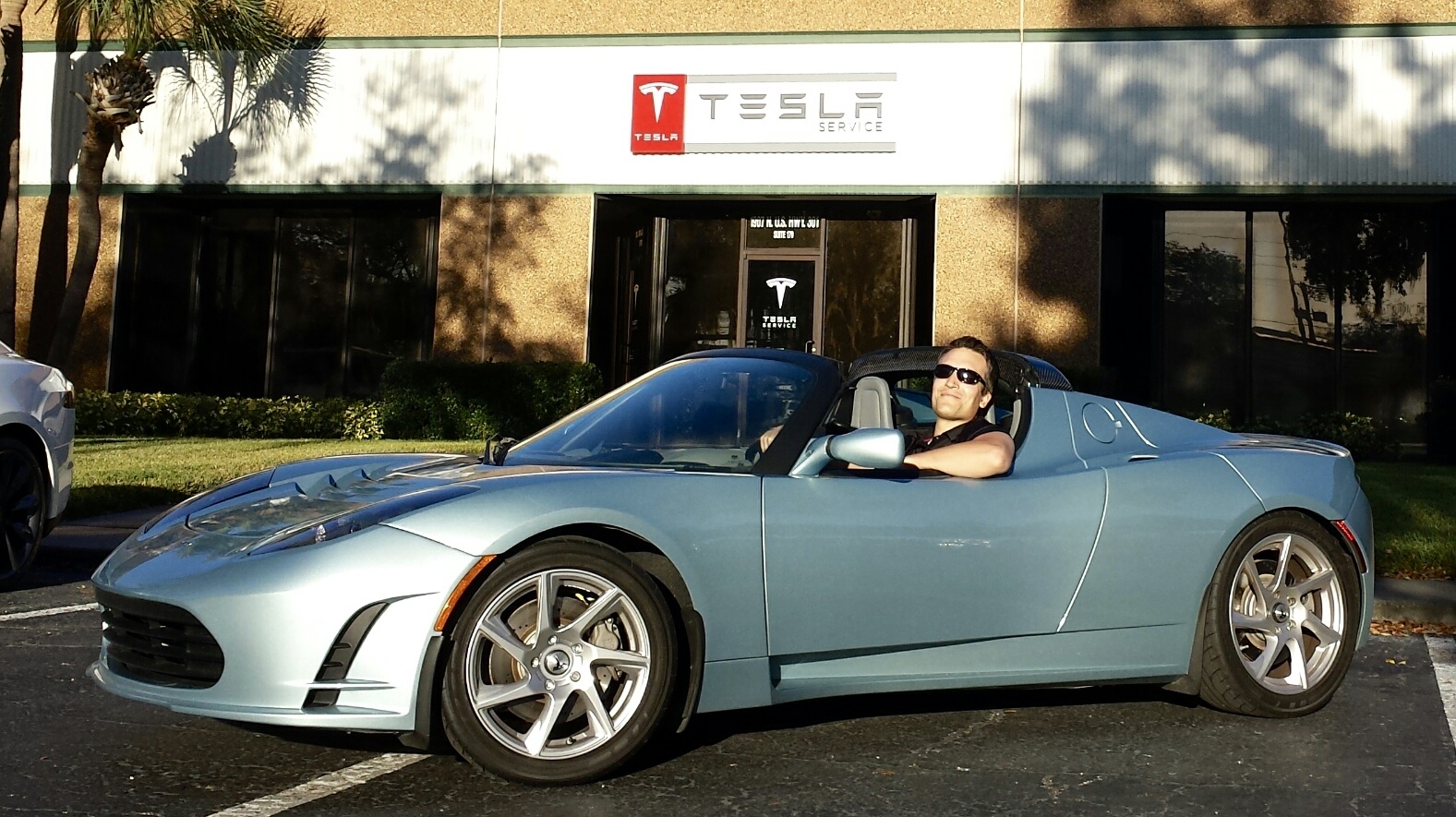
The trajectory of the automotive industry changed forever on March 17, 2008, when Tesla Motors (now Tesla, Inc.) delivered the first production unit of its inaugural vehicle: the Tesla Roadster. While the concept of the electric vehicle (EV) had existed since the 19th century, the arrival of the Roadster marked the first time that modern lithium-ion battery technology was successfully integrated into a high-performance, highway-legal car. To understand the significance of when the first Tesla came out, one must look beyond the calendar date and examine the technological landscape of the mid-2000s—an era when electric cars were largely dismissed as glorified golf carts with limited range and lackluster speed.

The Roadster was not just a new car; it was a proof of concept for a Silicon Valley-style approach to hardware and software integration. By choosing 2008 as its launchpad, Tesla capitalized on a burgeoning revolution in consumer electronics, borrowing the energy density of laptop batteries to power a vehicle that could accelerate from 0 to 60 mph in under four seconds. This intersection of battery chemistry, power electronics, and sophisticated software set the stage for the modern EV era.
The Engineering Genesis: From the Tzero to the Roadster
The technological roots of the first Tesla car go back even further than its 2008 release. The foundation was built on the AC Propulsion Tzero, a hand-built electric sports car that demonstrated the potential of lead-acid, and later, lithium-ion batteries. When Martin Eberhard and Marc Tarpenning incorporated Tesla Motors in 2003, their primary goal was to commercialize the powertrain technology seen in the Tzero but package it in a consumer-ready vehicle.
The Lithium-Ion Breakthrough
The most critical technological decision in the development of the first Tesla was the move to lithium-ion cells. Prior to the Roadster, most experimental EVs utilized nickel-metal hydride (NiMH) or lead-acid batteries. These were heavy, had low energy density, and suffered from memory effects. Tesla’s engineers took a radical approach by using “18650” form-factor cells—the same small, cylindrical cells used in laptop computers.
By wiring thousands of these small cells together in a massive battery pack, Tesla achieved a range of approximately 244 miles per charge, a figure that was unheard of in 2008. This modular battery architecture required a sophisticated Battery Management System (BMS) to monitor voltage and temperature across the entire array, ensuring safety and longevity. This software-hardware synergy became the blueprint for every subsequent Tesla model.
The AC Induction Motor
True to the company’s namesake, the first Tesla utilized an AC induction motor, a design patented by Nikola Tesla in the late 19th century. Unlike the internal combustion engine (ICE), which requires a complex transmission to stay within a power band, the Roadster’s motor delivered 100% of its torque at zero RPM. This resulted in linear, instantaneous acceleration that redefined the driving experience. The engineering challenge was managing the heat generated by such a high-output motor, leading to the development of an advanced liquid cooling system that circulated chilled glycol through the battery pack and power electronics.
From Prototype to Production: Overcoming Technical Hurdles
The journey from the 2006 prototype unveiling to the 2008 market launch was fraught with technical obstacles that nearly derailed the company. These challenges highlight the “Tech” aspect of Tesla’s identity—viewing a car not as a mechanical assembly, but as a complex system of interconnected sensors and computers.
The Transmission Dilemma
One of the most significant engineering hurdles was the transmission. Early Roadster prototypes used a two-speed manual transmission to manage the high torque of the electric motor. However, the sheer force of the motor frequently stripped the gears, leading to reliability issues. In a move that showcased Tesla’s willingness to pivot based on data, the engineering team eventually abandoned the two-speed design in favor of a single-speed fixed gear. This was made possible by optimizing the power electronics to allow the motor to spin at higher RPMs (up to 14,000 RPM), providing both low-end torque and high-end speed without the need for shifting.
Power Electronics and Thermal Management
The Power Electronics Module (PEM) in the first Roadster was a marvel of mid-2000s tech. It acted as the “brain” of the drivetrain, converting DC power from the battery into AC power for the motor, while also handling regenerative braking. Regenerative braking was a key technical feature that allowed the car to recover kinetic energy during deceleration, feeding it back into the battery. This required high-speed processing to manage the transition between power delivery and energy recovery seamlessly.

Furthermore, Tesla had to invent a proprietary thermal management system. Unlike consumer electronics that could rely on passive cooling or small fans, a vehicle battery pack generating hundreds of kilowatts required active liquid cooling. The engineering team developed a system of cooling fins and fluid manifolds that kept the cells within an optimal temperature range, preventing the “thermal runaway” that had plagued earlier battery experiments.
The Technological Legacy of the Original Roadster
When the first Tesla car came out, it did more than just prove that electric cars could be fast; it introduced the concept of the “software-defined vehicle.” This shift in philosophy has since become the standard for the entire global automotive industry.
Over-the-Air (OTA) Foundations
While the original Roadster did not have the robust cellular connectivity of the later Model S, it laid the groundwork for remote diagnostics and data logging. Tesla engineers could plug into the car’s diagnostic port to download detailed performance logs, allowing them to iterate on battery management algorithms. This data-driven approach allowed Tesla to understand how lithium-ion cells degraded over time in real-world conditions, providing the insights needed to develop the 8-year, infinite-mile battery warranties that would later disrupt the market.
Establishing the Supercharging Logic
The Roadster utilized a proprietary charging connector and a high-capacity mobile connector that could plug into 240V outlets. While the global Supercharger network didn’t launch until 2012, the high-voltage architecture of the Roadster proved that “fast charging” was a matter of managing heat and current flow through software. The Roadster served as the testbed for the power electronics that would eventually facilitate 120kW+ charging speeds, effectively solving the “range anxiety” problem for future tech enthusiasts.
How the First Tesla Redefined Modern Tech Gadgetry
In 2008, the iPhone was barely a year old, and the idea of “smart” hardware was in its infancy. The Tesla Roadster arrived at the perfect moment to be categorized as the ultimate gadget. It appealed to the early adopters of Silicon Valley—not because they were necessarily environmentalists, but because the car represented a superior piece of technology.
User Experience and Minimalist Design
The interior of the Roadster, while based on the Lotus Elise chassis, featured a digital VDS (Vehicle Display System). This small screen provided real-time data on energy consumption, ideal range versus estimated range, and battery health. For the first time, a driver could interact with their vehicle’s “operating system” to adjust charging parameters or view performance metrics. This was a radical departure from the analog gauges and mechanical switches of the era.
The Shift to a Sustainable Energy Ecosystem
The launch of the first Tesla was the first step in a broader technological roadmap known as the “Master Plan.” The goal was to use the high-margin, low-volume Roadster to fund the development of more affordable electric vehicles. From a tech perspective, this was an exercise in scaling. The Roadster proved that the “battery-to-motor” efficiency was significantly higher than the “well-to-wheel” efficiency of internal combustion engines. This technological superiority became the catalyst for a shift in the energy sector, encouraging the development of home battery storage (like the Powerwall) and solar integration.
Conclusion: The 2008 Milestone in Retrospect
When the first Tesla Roadster rolled off the line in early 2008, it was a niche product for tech-savvy billionaires. However, its technological DNA is present in every electric vehicle on the road today. It proved that lithium-ion batteries were viable for heavy-duty transportation, that software could optimize mechanical performance, and that the electric motor was the superior propulsion tech for the digital age.
The Roadster’s release was the “iPhone moment” for the automotive world. It forced legacy manufacturers to realize that the future of transport was not in better carburetors or more efficient transmissions, but in better code, better chemistry, and better silicon. As we look back at when the first Tesla car came out, we see the moment the automobile transitioned from a mechanical machine to a mobile computing platform. This evolution continues to drive the innovations we see today in autonomous driving, AI-driven energy management, and the global push toward a fully electrified future.
aViewFromTheCave is a participant in the Amazon Services LLC Associates Program, an affiliate advertising program designed to provide a means for sites to earn advertising fees by advertising and linking to Amazon.com. Amazon, the Amazon logo, AmazonSupply, and the AmazonSupply logo are trademarks of Amazon.com, Inc. or its affiliates. As an Amazon Associate we earn affiliate commissions from qualifying purchases.