
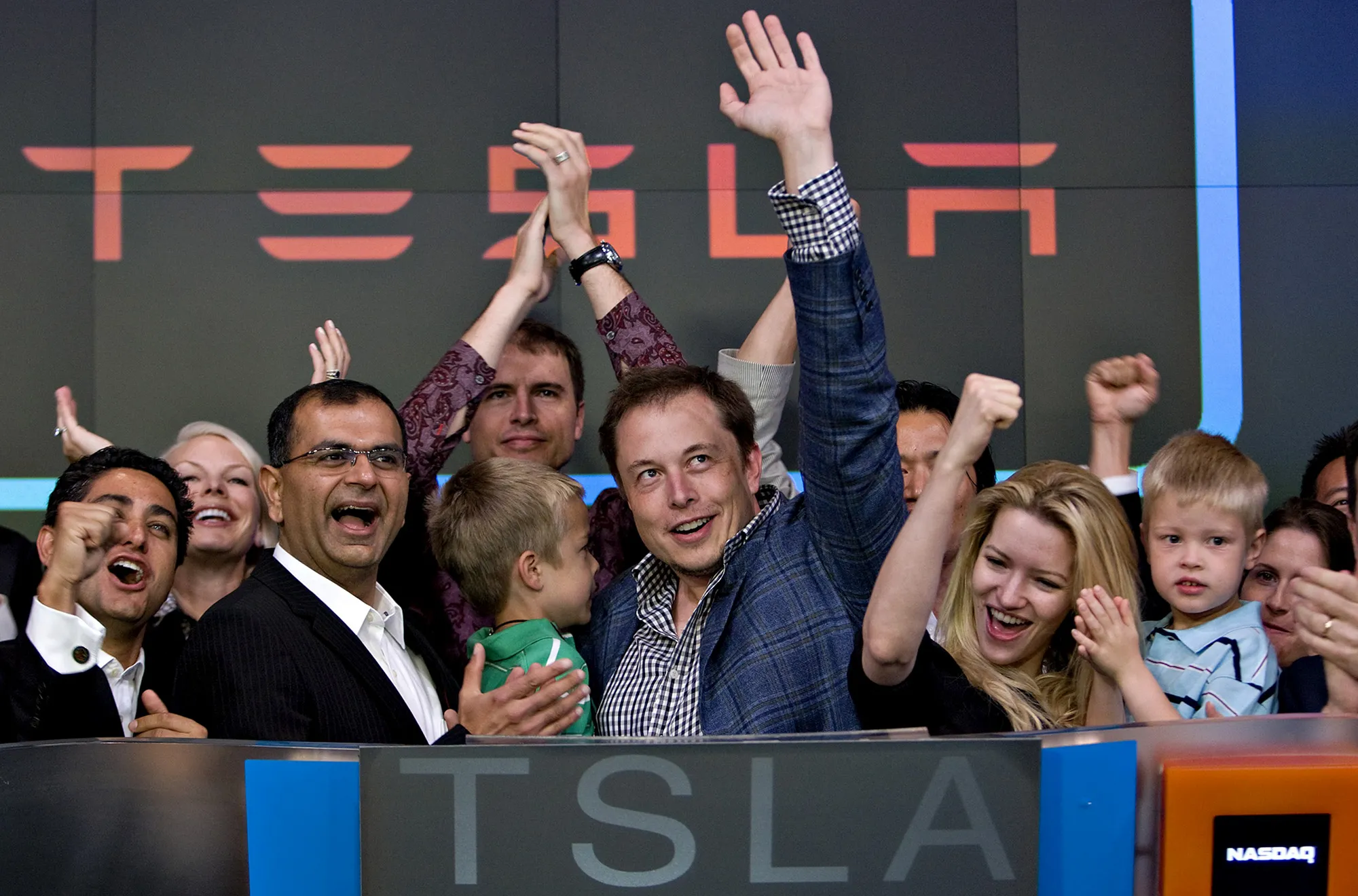
On June 29, 2010, the financial landscape of the automotive industry shifted permanently. Tesla Motors, as it was then known, launched its Initial Public Offering (IPO) on the Nasdaq Global Market under the ticker symbol TSLA. It was a historic moment, not just for the company, but for the American stock market; Tesla was the first American car manufacturer to go public since Ford Motor Company’s IPO in 1956.
At the time, the company was a high-risk venture, led by Elon Musk and a team of engineers determined to prove that electric vehicles (EVs) were not just a niche hobby for environmentalists but a viable, profitable future for global transportation. To understand the significance of this IPO, one must look past the current trillion-dollar valuation and examine the precarious financial state of the firm during that summer of 2010.
The Financial Mechanics of the June 2010 Launch
When Tesla debuted on the Nasdaq, it offered 13.3 million shares to the public at a price of $17.00 per share. This was notably higher than the expected range of $14 to $16, signaling an early, albeit cautious, appetite among institutional investors for the company’s vision. The IPO successfully raised approximately $226 million in gross proceeds.
Initial Pricing and Market Sentiment
The $17.00 price point gave Tesla an initial market capitalization of roughly $1.7 billion. While this seems minuscule by today’s standards, it was considered a bold valuation for a company that had only delivered a few thousand units of its first car, the Roadster. At the time of the IPO, Tesla was not profitable. In fact, its S-1 filing with the Securities and Exchange Commission (SEC) revealed significant losses and a warning that the company might never achieve profitability. Investors who bought in on day one were not buying a stable cash-flow machine; they were buying a stake in a radical technological pivot.
The Role of Institutional Backing
Crucial to the success of the IPO were the underwriters and early strategic partners. Goldman Sachs, Morgan Stanley, J.P. Morgan, and Deutsche Bank Securities led the offering. Furthermore, the IPO was bolstered by a $50 million private placement from Toyota, which occurred concurrently with the public offering. This vote of confidence from a traditional automotive titan provided the necessary social proof to convince skeptical Wall Street analysts that Tesla’s business model had legs.
The Financial Imperative: Why Tesla Chose Wall Street
In 2010, Tesla was in a race against time. The capital-intensive nature of automotive manufacturing meant that the company was burning through cash at an unsustainable rate. The IPO was not just a branding exercise; it was a survival mechanism designed to fund the development of the “Whitestar” project—the vehicle that would eventually become the Model S.
Bridging the Gap to the Model S
The Roadster had proven that an electric car could be desirable and high-performance, but it was too expensive to scale. Tesla needed hundreds of millions of dollars to build out its manufacturing facilities in Fremont, California, and to conduct the rigorous R&D required for a luxury sedan. The funds raised from the IPO, combined with a $465 million loan from the Department of Energy’s Advanced Technology Vehicles Manufacturing program, provided the financial runway necessary to transition from a low-volume boutique manufacturer to a mass-market contender.
Navigating the Post-2008 Credit Crunch
The timing of the IPO was particularly brave given the macroeconomic climate. The world was still reeling from the 2008 financial crisis, and credit markets were tight. Many startups were avoiding the public markets, fearing a lack of liquidity. Tesla’s decision to go public during this period highlighted the urgency of its capital needs. Had the IPO failed, it is unlikely the company would have secured the private funding necessary to survive the “production hell” that would define its middle years.
From Volatility to Valuation: A Decadal Financial Review
The journey from a $1.7 billion valuation to becoming one of the most valuable companies in the world was anything but linear. For the first several years following the IPO, Tesla’s stock was a battleground for “bulls” and “shorts.”

The Era of Short Selling and Liquidity Crunches
Tesla historically became one of the most shorted stocks on the Nasdaq. Financial analysts frequently pointed to the company’s high “cash burn” and its frequent misses on production deadlines. Between 2013 and 2018, the stock experienced massive swings in volatility as the company struggled to scale the Model 3. However, the financial narrative shifted in late 2019 when Tesla reported consecutive quarters of GAAP profitability. This was the turning point where the company transitioned from a “story stock” to a fundamental powerhouse.
S&P 500 Inclusion and the Trillion-Dollar Threshold
A major milestone in Tesla’s financial history occurred in December 2020, when the company was added to the S&P 500. This forced index funds to purchase tens of billions of dollars worth of shares, driving the valuation to unprecedented heights. By 2021, Tesla’s market cap crossed the $1 trillion mark, a feat achieved by very few companies in history, and none in the automotive sector. For those who invested at the $17 IPO price, the return on investment (adjusted for splits) represented a life-changing wealth creation event.
The Mechanics of Growth: Stock Splits and Shareholder Value
To maintain liquidity and make the stock accessible to retail investors as the price skyrocketed, Tesla has utilized stock splits. Understanding these splits is essential for anyone calculating the historical return of an IPO-era investment.
-
The 2020 Five-for-One Split: In August 2020, Tesla executed its first stock split. For every one share held, investors received four additional shares. This brought the share price down from over $2,000 to approximately $400, making it more attractive to individual investors using platforms like Robinhood or E*TRADE.
-
The 2022 Three-for-One Split: In August 2022, the company split its stock again. This time, investors received two additional shares for every one held.
When you account for these splits, the original $17.00 IPO price is equivalent to a split-adjusted price of roughly $1.13 per share. This perspective illustrates the sheer magnitude of Tesla’s capital appreciation over the last fourteen years.
Investing Lessons from the Tesla IPO
The Tesla IPO serves as a masterclass in growth-style investing and the risks associated with disruptive technologies. For modern investors and financial planners, there are several key takeaways from the TSLA trajectory.
High-Risk, High-Reward Growth Investing
Tesla’s IPO prospectus was filled with “Risk Factors,” including the company’s reliance on a single production facility and the unproven market for EVs. Investors who succeeded with Tesla were those who were willing to look past short-term quarterly losses in favor of long-term total addressable market (TAM) expansion. It highlights the importance of “conviction” in a portfolio—the ability to hold a volatile asset through 30% or 50% drawdowns because the underlying thesis remains intact.
The Importance of Liquidity Management
From a business finance perspective, Tesla’s history teaches the importance of timing the markets for capital raises. Elon Musk and his CFOs were adept at raising capital when the stock was high, effectively using the equity markets as a cheap source of funding to pay down debt and build factories. This strategy allowed Tesla to avoid the bankruptcy traps that have snared other EV startups that failed to go public or failed to capitalize on their valuation spikes.

The Financial Impact on the Automotive Industry
The success of the Tesla IPO fundamentally changed how Wall Street values automotive companies. Before Tesla, car manufacturers were valued as cyclical, low-margin hardware companies. After Tesla, the market began to apply “tech multiples” to the sector, valuing companies based on software-as-a-service (SaaS) potential, autonomous driving data, and energy storage ecosystems.
Tesla’s ability to raise $226 million in 2010 paved the way for the current “green” finance boom. It proved that there was a massive appetite for ESG (Environmental, Social, and Governance) investing long before the term became a boardroom staple. Today, when we see companies like Rivian or Lucid go public with multi-billion dollar valuations before delivering significant revenue, they are walking a path cleared by the Tesla IPO in June 2010.
In conclusion, the Tesla IPO was more than just a date on a calendar. It was a high-stakes financial gamble that redirected the flow of global capital toward sustainable energy. For the investors who participated in that $17.00 offering, it was the beginning of one of the greatest wealth-accumulation stories in the history of the modern stock market. For the business world, it was the moment the “incumbent” era of the internal combustion engine began its slow financial decline.
aViewFromTheCave is a participant in the Amazon Services LLC Associates Program, an affiliate advertising program designed to provide a means for sites to earn advertising fees by advertising and linking to Amazon.com. Amazon, the Amazon logo, AmazonSupply, and the AmazonSupply logo are trademarks of Amazon.com, Inc. or its affiliates. As an Amazon Associate we earn affiliate commissions from qualifying purchases.