
The question “When did Tesla first come out?” is more than a simple query about a date; it’s an inquiry into the genesis of a company that would fundamentally reshape not just the automotive industry but also the broader landscape of sustainable energy technology. Founded in 2003, Tesla Motors, Inc. (now Tesla, Inc.) embarked on a mission far grander than merely building electric cars. Its very inception was a declaration of war on fossil fuels and a commitment to accelerate the world’s transition to sustainable energy. From its earliest days, Tesla positioned itself not merely as a car manufacturer but as a technology company, driven by engineering prowess, software innovation, and an unyielding vision for a technologically advanced, electrified future. Understanding “when it came out” is therefore to trace the origins of a technological disruption that continues to unfold.

The Incubation of a Vision: Early Days and Founding Principles
The story of Tesla’s emergence begins not with a car, but with an audacious idea: to prove that electric vehicles could be superior to gasoline-powered cars in every way – faster, more fun to drive, and more environmentally friendly. This foundational technological premise guided the company from its very first steps.
Origins and Initial Goals
Tesla Motors was incorporated on July 1, 2003, by Martin Eberhard and Marc Tarpenning. Their initial goal was clear: to create a high-performance electric sports car that would challenge the prevailing skepticism surrounding EVs. At the time, electric cars were largely seen as glorified golf carts – slow, impractical, and limited in range. Eberhard and Tarpenning, both seasoned tech entrepreneurs from Silicon Valley, envisioned an EV that was cutting-edge, desirable, and packed with advanced technology. Their ambition was to build a profitable electric car company that could eventually produce a full range of electric vehicles, from sports cars to mainstream models, while also developing proprietary battery, motor, and powertrain technologies. This vision was deeply rooted in technological innovation and a desire to engineer a better solution for personal transportation.
The Original Founders and Early Funding
While Elon Musk is often synonymous with Tesla today, he joined the company slightly after its incorporation. Eberhard served as the first CEO, and Tarpenning as CFO. Their initial seed funding came from various sources, including their own capital. However, a pivotal moment came in February 2004 when Elon Musk invested $6.5 million, becoming the largest shareholder and chairman of the board. Musk’s investment was not just financial; it brought a new level of ambition and a clear strategic direction for the company’s technological roadmap. He pushed for more aggressive technological development and a broader long-term vision that extended beyond just electric vehicles to encompass energy generation and storage.
Elon Musk’s Early Influence and Strategic Direction
Musk’s influence immediately shifted Tesla’s trajectory, solidifying its identity as a technology-first company. He articulated a three-step master plan: first, build a low-volume, high-price sports car (the Roadster); second, use the earnings to develop a medium-volume, medium-price sedan (the Model S); and third, use those earnings to create a high-volume, low-price car (the Model 3). This plan was inherently technological, predicated on continuous innovation, economies of scale, and the iterative development of advanced electric powertrain and battery technology. Musk emphasized the importance of proprietary technology, from battery pack design and management systems to electric motors and power electronics, setting Tesla on a path to become an engineering powerhouse rather than just an assembler of components. His relentless pursuit of technological excellence and willingness to challenge conventional automotive engineering paradigms defined Tesla’s early ethos.
The Roadster: Tesla’s Inaugural Technological Statement
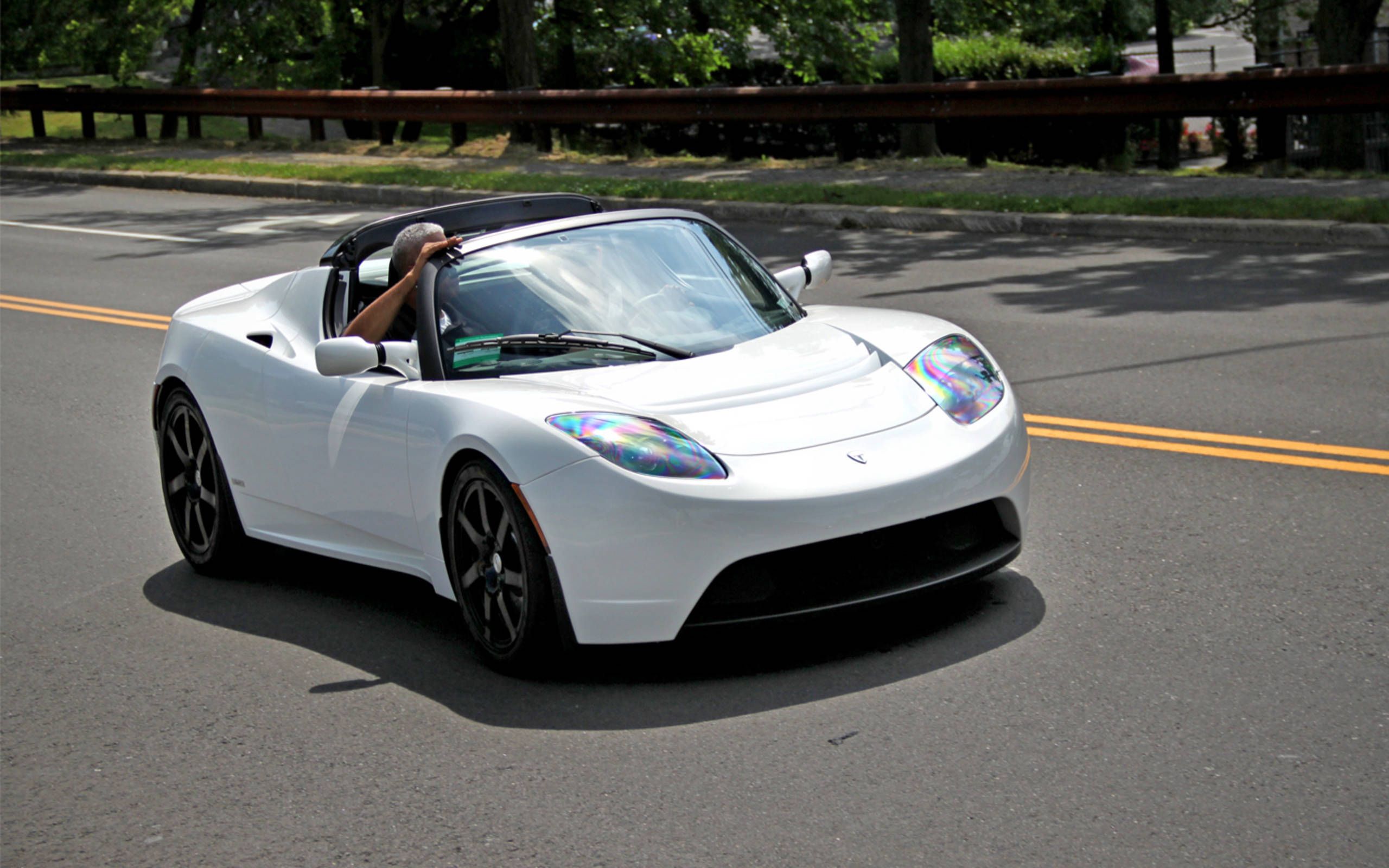
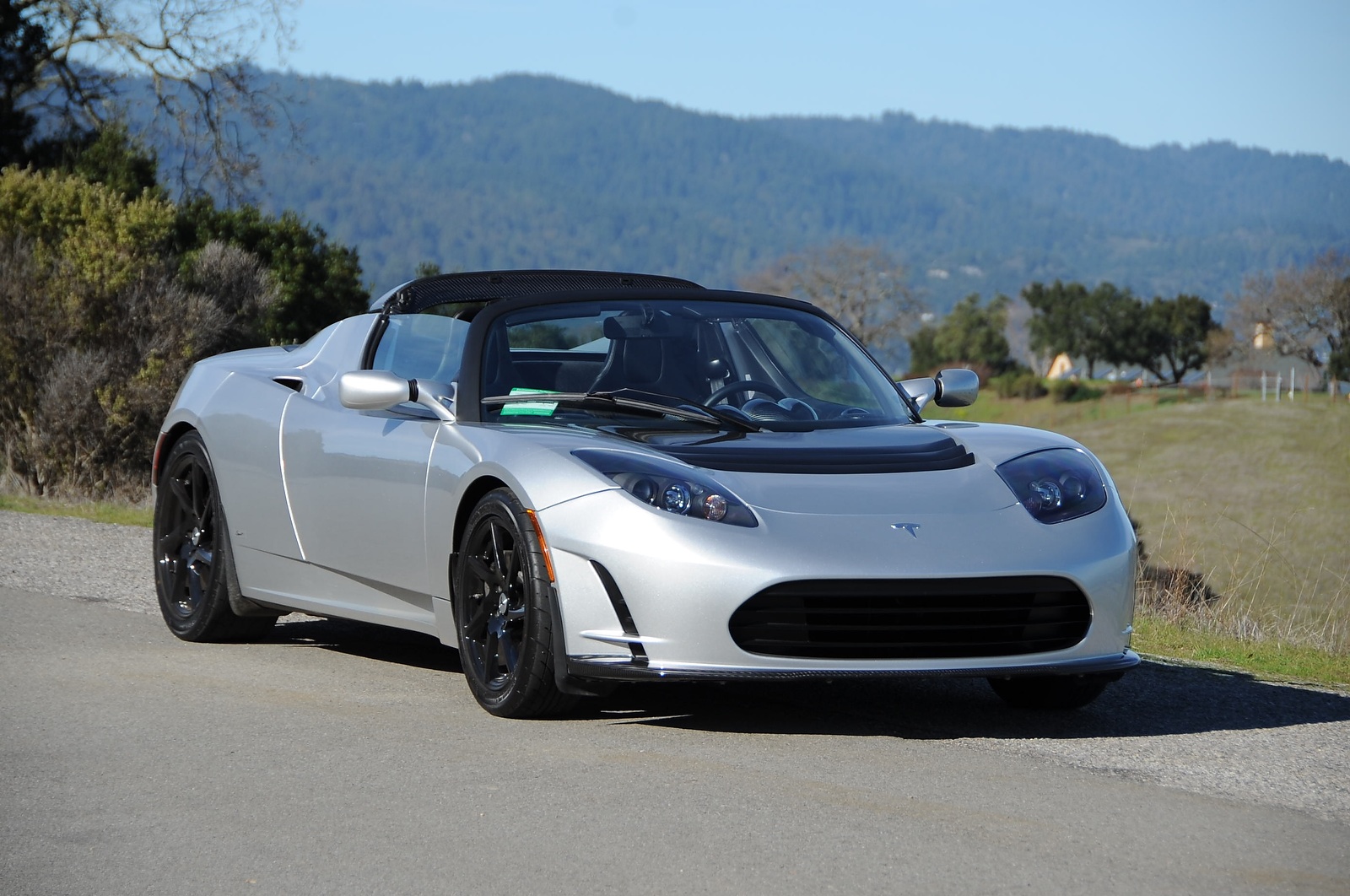
The culmination of Tesla’s early technological efforts was the Roadster, a vehicle designed to shatter preconceptions about electric cars and showcase the potential of EV technology. Its debut was not just a product launch; it was a technological manifesto.
Conception and Engineering Challenges
The Roadster was conceived to be a high-performance vehicle, capable of challenging gasoline-powered sports cars. To achieve this, Tesla licensed AC Propulsion’s tzero electric powertrain technology as a starting point, but quickly began developing its own advancements. A critical engineering challenge was the battery. Instead of developing large, custom battery cells, Tesla ingeniously opted to use thousands of small, commercially available lithium-ion laptop batteries. This required sophisticated battery management system (BMS) technology to control charging, discharging, and thermal management across thousands of cells to ensure safety and longevity – a pioneering feat in the automotive world. The company also developed its own electric motor, power electronics, and software controls, integrating these components into a lightweight chassis derived from the Lotus Elise. This focus on vertical integration and proprietary technology was central to the Roadster’s identity.
Market Reception and Industry Impact
Unveiled in 2006 and delivered to customers starting in 2008, the Tesla Roadster was a revelation. It could accelerate from 0 to 60 mph in under 4 seconds, offer a range of over 200 miles on a single charge, and achieve unprecedented energy efficiency for an EV. The Roadster demonstrated that electric cars could be fast, stylish, and practical, directly countering the “golf cart” stereotype. Its reception was overwhelmingly positive among early adopters, celebrities, and environmental advocates, generating significant buzz and proving that there was a viable market for high-performance EVs. More importantly, it sent shockwaves through the automotive industry, signaling that a new, technologically driven player had arrived with the potential to disrupt the status quo. It was concrete proof that electric vehicles were not just a niche curiosity but a serious contender for the future of personal transportation, driven by superior technology.
Building a Foundation for Future Innovation
The Roadster served as an invaluable technological testbed. The lessons learned from its development and deployment – particularly in battery technology, thermal management, motor design, and power electronics – formed the bedrock for all subsequent Tesla vehicles. The sophisticated software developed for the Roadster’s control systems also laid the groundwork for Tesla’s future emphasis on software-defined vehicles and over-the-air (OTA) updates. This initial product allowed Tesla to refine its engineering processes, build a robust supply chain for advanced components, and accumulate critical data on real-world EV performance and battery degradation. It proved Tesla’s capability to design, engineer, and manufacture complex electric vehicles, establishing the company’s technological credibility and paving the way for its ambitious expansion.
Expanding the Tech Ecosystem: Beyond the Roadster
With the Roadster establishing its technical bona fides, Tesla moved rapidly to scale its technological ambitions, pushing into mainstream markets and broadening its scope beyond just vehicles.
The Model S and Powering the Mainstream
The Model S, introduced in 2012, was a monumental technological leap. It wasn’t just another electric car; it was designed from the ground up as a premium, high-tech sedan. Its defining characteristics were its long range, blistering performance, and a revolutionary interior dominated by a massive 17-inch touchscreen that controlled most vehicle functions. This software-centric approach, combined with regular over-the-air updates, made the Model S the world’s first truly “software-defined vehicle,” allowing for continuous improvement and the addition of new features post-purchase. Tesla’s Supercharger network, also deployed around this time, was another critical technological innovation. It provided rapid, reliable charging infrastructure, addressing range anxiety – a major barrier to EV adoption. This integrated ecosystem of advanced vehicle technology and dedicated charging infrastructure was crucial for Tesla’s expansion into the broader market.
Giga-factories and Scalable Manufacturing
To meet the increasing demand for its vehicles and energy products, Tesla realized it needed to reinvent manufacturing itself. This led to the development of its “Gigafactory” concept, starting with Gigafactory Nevada. These weren’t just assembly plants; they were integrated production hubs designed for unprecedented scale and efficiency, incorporating advanced automation, robotics, and proprietary manufacturing processes. The Gigafactories represented a technological innovation in industrial production, aiming to reduce costs, increase output, and allow for the in-house production of critical components like battery cells (e.g., with Panasonic). This vertical integration of technology, from fundamental cell chemistry to final vehicle assembly, underscored Tesla’s commitment to controlling and innovating every aspect of its products.
Energy Storage and Solar Initiatives
True to its founding mission, Tesla expanded its technological footprint beyond vehicles into sustainable energy generation and storage. The introduction of the Powerwall home battery storage system and the Powerpack for commercial and utility-scale applications marked a significant diversification. These products leveraged Tesla’s core battery technology expertise, applying it to grid-scale challenges and home energy management. Later, the acquisition of SolarCity in 2016 and the introduction of the Solar Roof demonstrated Tesla’s vision for a fully integrated sustainable energy ecosystem – where solar panels generate electricity, Powerwalls store it, and electric vehicles consume it. This holistic approach, powered by advanced battery technology, power electronics, and intelligent software, cemented Tesla’s identity as a comprehensive clean technology company.
The Autonomy and AI Frontier: Redefining Automotive Software
Perhaps no other area showcases Tesla’s tech-first philosophy more profoundly than its relentless pursuit of autonomous driving and its pioneering work in automotive AI.
Full Self-Driving (FSD) Ambitions and Iterations
From early on, Tesla articulated a vision for fully autonomous vehicles. While this remains an ongoing technological challenge, Tesla’s approach has been unique. Instead of relying primarily on LiDAR sensors, Tesla has focused on a vision-first approach, utilizing an array of cameras, ultrasonic sensors, and radar (though radar has since been deemphasized). The development of its custom FSD computer chip further underscored its commitment to in-house technological leadership. The iterative rollout of its “Autopilot” and “Full Self-Driving” (FSD) beta software, delivered via over-the-air updates, is a testament to Tesla’s software engineering capabilities. This continuous development cycle, powered by AI and machine learning, pushes the boundaries of what is possible in real-time perception and decision-making for vehicles.
Over-the-Air Updates: A Software-Defined Vehicle (SDV) Pioneer
Tesla revolutionized the automotive industry by treating its vehicles as platforms for continuous software improvement, akin to a smartphone. Over-the-air (OTA) updates, a standard feature from the Model S onwards, allowed Tesla to deploy new features, performance enhancements, and critical safety fixes without requiring a visit to a service center. This capability transformed the ownership experience and highlighted the profound difference between Tesla’s tech-driven approach and traditional automotive manufacturing. OTA updates are not merely a convenience; they are a fundamental technological enabler for FSD development, allowing Tesla to rapidly iterate, test, and deploy new AI models and software functionalities to its entire fleet, gathering invaluable real-world data in the process.
Data Collection and Neural Network Training
The scale of Tesla’s ambition in autonomous driving relies heavily on massive data collection and advanced artificial intelligence. Every Tesla vehicle equipped with Autopilot hardware acts as a data gathering sensor, continuously feeding real-world driving scenarios back to Tesla’s supercomputers. This colossal dataset, consisting of billions of miles of driving data, is then used to train and refine Tesla’s neural networks for perception, prediction, and planning. Tesla’s in-house AI development, leveraging powerful computing infrastructure and highly specialized engineering talent, is at the core of its FSD efforts. This technological ecosystem – from sensor hardware in the vehicle to the cloud-based AI training pipeline – represents one of the most ambitious and sophisticated applications of AI in a consumer product, further solidifying Tesla’s position as a cutting-edge technology company.
Tesla’s Enduring Tech Legacy and Future Trajectory
Since its initial emergence, Tesla has not only grown into a global automotive powerhouse but has also etched an indelible mark on the broader technological landscape, driving innovation across multiple sectors.
Driving Industry-Wide EV Adoption
Perhaps Tesla’s most significant technological legacy is its role in validating and accelerating the adoption of electric vehicles globally. Before Tesla, major automakers largely viewed EVs as compliance cars or niche projects. The success of the Roadster, Model S, and later the Model 3 and Model Y, forced the entire industry to take electric vehicles seriously. Tesla’s technological innovations in battery range, charging infrastructure, performance, and software user experience set new benchmarks, compelling traditional OEMs to invest billions into their own EV platforms and develop competing technologies. The company didn’t just build electric cars; it demonstrated their viability and desirability, kickstarting a global transition to electrification that is now irreversible.
The Culture of Innovation and Disruption
At its core, Tesla remains an engineering and technology company with a distinct culture of rapid innovation, risk-taking, and vertical integration. It challenges conventional wisdom, whether in vehicle design, manufacturing processes, or software development. Its iterative approach to product development, willingness to experiment with new materials and processes, and relentless pursuit of performance and efficiency are hallmarks of a tech company, not a traditional automaker. This culture has allowed Tesla to disrupt established industries and continuously push the boundaries of what is technologically possible, inspiring a generation of engineers and entrepreneurs.
What’s Next: Robotics, AI, and Sustainable Energy Tech
Looking ahead, Tesla’s technological ambitions show no signs of slowing. Beyond continued advancements in EVs and autonomous driving, the company is actively exploring new frontiers. The development of humanoid robots like “Optimus” signifies a deeper dive into general-purpose AI and robotics, leveraging its expertise in real-world AI perception and motor control. Further innovations in battery technology, energy storage solutions, and large-scale renewable energy infrastructure will continue to define its presence in the sustainable energy sector. Tesla’s journey since “coming out” has been one of relentless technological pursuit, and its future promises further groundbreaking contributions to the intertwined fields of transportation, energy, and artificial intelligence.
In conclusion, when Tesla “came out” in 2003, it wasn’t just another car company; it was a nascent technology firm with a revolutionary vision. Its trajectory from the early Roadster to its current status as a multi-faceted tech giant is a testament to its commitment to engineering excellence, software innovation, and an unwavering belief in a technologically advanced, sustainable future.
aViewFromTheCave is a participant in the Amazon Services LLC Associates Program, an affiliate advertising program designed to provide a means for sites to earn advertising fees by advertising and linking to Amazon.com. Amazon, the Amazon logo, AmazonSupply, and the AmazonSupply logo are trademarks of Amazon.com, Inc. or its affiliates. As an Amazon Associate we earn affiliate commissions from qualifying purchases.