
A Landmark Consolidation in Retail Brokerage
The question of “when did TD Ameritrade become Schwab” points to one of the most significant consolidations in the history of retail brokerage, a move that reshaped the competitive landscape for individual investors. This monumental merger was not a single event but a multi-stage process, beginning with an announcement, moving through regulatory approval, and culminating in a comprehensive, multi-year client and platform integration.
The Initial Announcement and Regulatory Hurdles
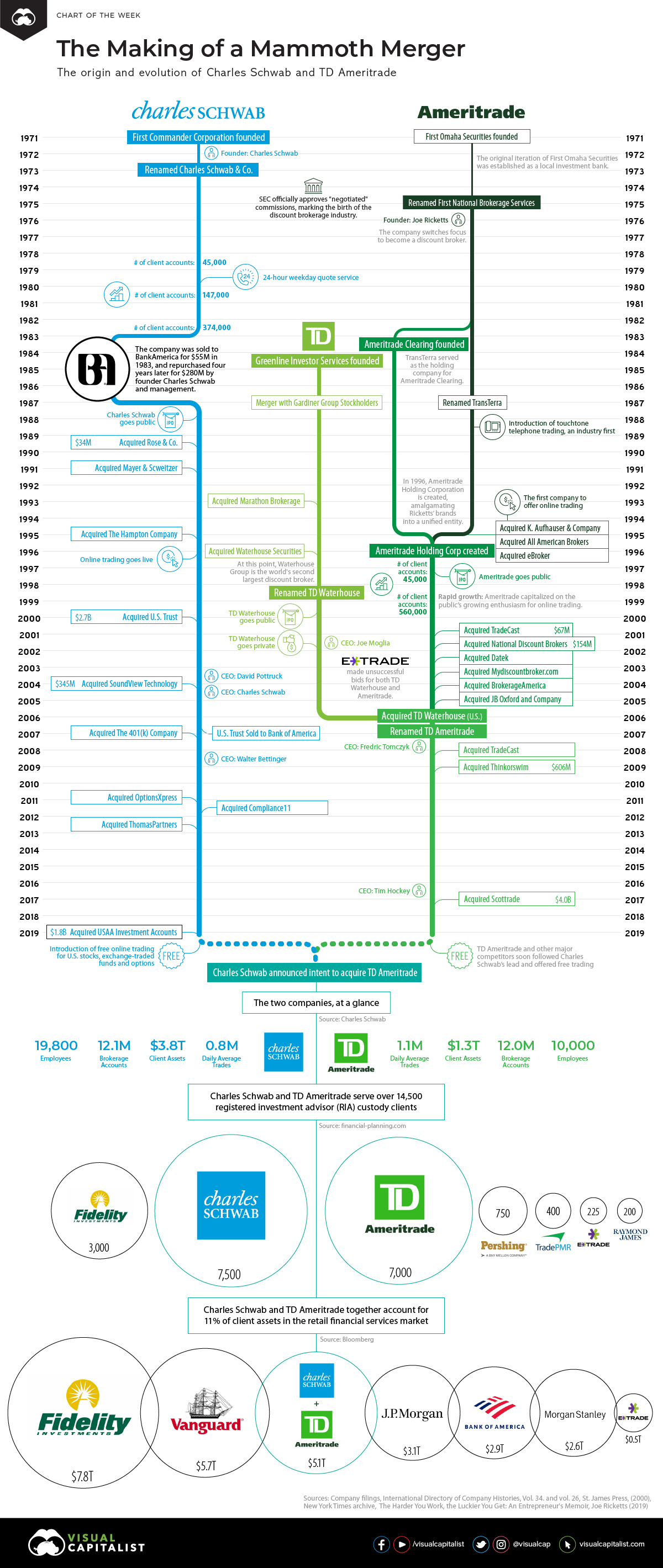
The journey began on November 25, 2019, when Charles Schwab Corporation publicly announced its intent to acquire TD Ameritrade Holding Corporation in an all-stock transaction valued at approximately $26 billion. This revelation sent ripples through the financial industry, signaling a decisive shift towards scale and efficiency in an increasingly competitive environment.
Following the announcement, both companies embarked on a rigorous regulatory approval process. Given the sheer size and market influence of the combined entity, antitrust considerations were paramount. Regulators, including the Department of Justice, meticulously reviewed the proposed merger to ensure it would not unduly harm competition or limit investor choice. This period of scrutiny was critical, as governmental oversight aims to protect consumers and maintain fair market dynamics. The financial implications of such a large merger were immense, necessitating careful valuation, due diligence, and strategic planning for integrating vast amounts of capital, assets, and liabilities.
The Official Closing and Integration Kick-off
After nearly a year of regulatory review and preparatory work, the acquisition officially closed on October 6, 2020. While this date marked the legal consummation of the deal, it was merely the beginning of an even more complex undertaking: the full integration of TD Ameritrade’s operations, technology, and, crucially, its client accounts into Schwab.
This phase was designed as a deliberate, multi-year process to ensure a smooth transition for millions of investors and billions of dollars in client assets. The goal was to minimize disruption, maintain service quality, and gradually migrate all aspects of TD Ameritrade’s infrastructure into Schwab’s ecosystem. For investors, this meant a period of anticipation, as they awaited information regarding how their accounts, trading platforms, and financial tools would evolve under the new ownership. The financial scale involved in this integration was unprecedented, requiring meticulous planning to merge vast IT systems, customer service operations, and compliance frameworks without faltering.
Strategic Imperatives Driving the Merger
The decision to merge two financial giants like Schwab and TD Ameritrade was not merely opportunistic; it was a strategic imperative driven by fundamental shifts in the retail brokerage industry. Several key factors underpinned the rationale for this transformative deal, all rooted in enhancing financial stability and competitive advantage for the combined entity.
Responding to the Zero-Commission Revolution
A major catalyst for the merger was the widespread adoption of commission-free stock, ETF, and options trading. Schwab itself played a pivotal role in this revolution, being one of the first major brokerages to eliminate trading commissions in October 2019, just weeks before announcing the TD Ameritrade acquisition. While beneficial for investors, the move pressured brokerage profitability, as trading commissions had historically been a significant revenue stream.
In this new environment, scale became critical. Larger asset bases allowed firms to generate revenue through other means, such as net interest income on client cash balances, advisory fees, and order flow payments. By combining forces, Schwab and TD Ameritrade aimed to achieve the necessary scale to maintain healthy margins, continue investing in cutting-edge technology, and offer competitive pricing in a zero-commission world. This move solidified Schwab’s proactive stance in adapting to the evolving financial landscape.
Expanding Market Share and Assets Under Management (AUM)
The merger dramatically expanded Schwab’s market share and its total Assets Under Management (AUM). Combining the client accounts and assets of both firms created a truly formidable entity, positioning Schwab as a dominant player in the retail investment space. This expanded AUM brought significant economies of scale, allowing the combined company to negotiate better terms with vendors, reduce per-client operational costs, and allocate more resources to research and development.
This strategic move was also a direct response to the intensifying competitive landscape. Traditional rivals like Fidelity and Vanguard, along with newer fintech entrants, were all vying for investor dollars. By consolidating, Schwab aimed to create a more resilient and powerful financial ecosystem, better equipped to attract and retain clients across various demographics and investment needs.
Enhancing Product and Service Offerings
Both Schwab and TD Ameritrade brought unique strengths to the table. TD Ameritrade was particularly renowned for its active trading platform, thinkorswim, which was highly favored by experienced traders for its advanced tools, research, and educational resources. Schwab, on the other hand, had a strong reputation for its comprehensive wealth management services, independent advisor network, and diverse investment products.
The merger promised to leverage these complementary strengths. Schwab’s strategy was to integrate TD Ameritrade’s best features, like thinkorswim, into its own offerings, thereby creating a more robust and comprehensive suite of financial tools and services. This meant providing investors with access to an expanded array of investment products, advanced trading capabilities, in-depth research, and personalized advisory services, all under one roof. The goal was to build a holistic financial ecosystem that could cater to a broader spectrum of investor needs, from active traders to long-term wealth builders.
The Multi-Year Client Transition and Its Financial Impact
While the acquisition closed in October 2020, the full integration of TD Ameritrade into Schwab was a phased, multi-year process designed to meticulously migrate accounts and platforms. This gradual approach aimed to ensure a smooth transition for millions of investors, minimizing disruption to their financial lives and investment activities.
Phased Account Migration
The core of “when did TD Ameritrade become Schwab” for most individual clients culminated over Labor Day weekend 2023. This was the final and largest wave of client account migrations, moving the remaining TD Ameritrade brokerage accounts to the Schwab platform. Prior to this, smaller, less complex migrations had occurred throughout 2021 and 2022.
Schwab employed a systematic transfer process, meticulously moving client assets, positions, cash balances, and historical data. Clients received extensive communication well in advance, detailing the transition process, potential changes to account numbers or login credentials, and what to expect during and after the move. The focus was on maintaining financial data integrity and security throughout the migration, ensuring investors’ confidence in their transferred portfolios. This phased approach allowed for testing, learning, and refinement, critical for managing such a colossal financial undertaking.
Platform Integration and Investor Experience
A crucial aspect of the integration involved merging the disparate technological platforms. TD Ameritrade’s acclaimed thinkorswim platform, a favorite among active traders, was a key component that Schwab committed to retaining and integrating. This meant not just migrating data but ensuring that the functionality, speed, and reliability of such advanced tools were preserved, and ideally enhanced, within Schwab’s infrastructure.
For investors, this meant a period of familiarization with new interfaces, albeit with familiar tools. Schwab aimed to consolidate various financial tools, research capabilities, and client support systems to provide a unified and improved investor experience. This included access to Schwab’s broader research offerings, advisory services, and branch network, complementing the active trading environment many TD Ameritrade clients were accustomed to. The financial impact here was about ensuring continuity of service and enhancing the value proposition for the investor, making sure their financial journey remained seamless and well-supported.
What It Meant for Investors
For the millions of investors holding accounts at TD Ameritrade, the transition meant navigating several changes. These included:
- New Login Credentials: Most clients received new Schwab account numbers and transitioned to Schwab’s login procedures.
- Unified Statements: Clients began receiving consolidated statements from Schwab.
- Expanded Resources: Access to Schwab’s full suite of products, research, and advisory services, potentially broadening their investment opportunities and financial planning capabilities.
- Platform Adaptations: While thinkorswim was retained, other aspects of the Schwab trading platform might have required some adjustment.
The overriding objective for Schwab was to ensure minimal disruption while providing enhanced features. For investors, it meant understanding how these changes impacted their daily portfolio management, trading activities, and access to financial guidance. The successful execution of this migration underscores the immense logistical and financial capabilities required to merge two colossal financial services entities, ultimately aiming to deliver a more robust and valuable experience to the investor.
The Combined Entity: A Financial Powerhouse
The merger of TD Ameritrade into Schwab has fundamentally reshaped the landscape of retail investing, creating an undeniable financial powerhouse with a dominant position in the market.
Market Leadership and Competitive Edge
The completion of the integration cemented Schwab’s position as one of the largest retail brokerages globally. With trillions in client assets and millions of client accounts, the combined entity possesses an unparalleled scale. This market leadership translates into significant competitive advantages: enhanced brand recognition, greater resources for technology development, and a stronger ability to compete on price and services.
Schwab now serves a broader spectrum of investors, from self-directed active traders leveraging the integrated thinkorswim platform to long-term investors seeking comprehensive wealth management and advisory services. This breadth of offering, coupled with its immense asset base, provides a formidable moat against competitors, allowing Schwab to influence market trends and set industry standards. The financial strength derived from this merger ensures Schwab’s continued ability to invest heavily in its platform, cybersecurity, and customer service, all of which directly benefit its vast client base.
Future Implications for the Investment Landscape
The Schwab-TD Ameritrade merger sets a significant precedent for the financial services industry. It highlights the growing importance of scale in an environment of zero commissions and intense technological competition. We may see further consolidation among smaller players attempting to achieve similar economies of scale, or a renewed focus on niche markets by firms unable to compete directly with giants like Schwab.
The combined entity’s continued focus on low-cost investing, robust technology, and comprehensive financial planning will likely push other industry participants to innovate and improve their own offerings. This benefits the end investor, as firms strive to provide more value, better tools, and lower costs. Furthermore, the integration showcased the intricate complexities of merging large-scale financial operations, offering valuable lessons for future consolidations in any sector. The financial stability and expansive reach of the new Schwab enable it to weather economic downturns more effectively and seize opportunities for growth, further solidifying its long-term viability.
Maximizing Value for the Investor
Ultimately, the goal of this massive undertaking was to maximize value for the investor. Clients of the combined firm now have access to expanded resources, which potentially translate into:
- Enhanced Investment Options: A wider array of investment products, funds, and strategies.
- Superior Technology: Access to industry-leading trading platforms like thinkorswim, integrated within a robust institutional framework.
- More Comprehensive Research and Education: A deeper pool of market insights, analysis, and educational materials.
- Potentially Better Pricing: The scale achieved through the merger can lead to further efficiencies that may translate into competitive pricing for services and products.
- Robust Client Support: A vast network of financial professionals and physical branches.
By creating a more comprehensive and resilient financial services provider, Schwab aims to empower its clients to achieve their financial goals with greater confidence and access to a broader spectrum of tools and expertise. The successful integration means investors can now experience the best of both worlds, truly making Schwab a single, powerful destination for their diverse investment needs.
aViewFromTheCave is a participant in the Amazon Services LLC Associates Program, an affiliate advertising program designed to provide a means for sites to earn advertising fees by advertising and linking to Amazon.com. Amazon, the Amazon logo, AmazonSupply, and the AmazonSupply logo are trademarks of Amazon.com, Inc. or its affiliates. As an Amazon Associate we earn affiliate commissions from qualifying purchases.