
The Standard & Poor’s 500, commonly known as the S&P 500, stands as one of the most recognizable and influential stock market indices in the world. For investors, economists, and the general public alike, it serves as a critical barometer for the health of the U.S. economy and the broader global financial landscape. While its presence feels immutable today, like a foundational pillar of modern finance, the S&P 500, in its current form, has a specific and discernible origin. Understanding its inception is not merely a historical curiosity but crucial for appreciating its evolution, methodology, and enduring significance as an investment tool and economic indicator.

The S&P 500 officially launched on March 4, 1957. However, this date represents the culmination of decades of development in financial indexing by Standard & Poor’s and its predecessor companies. Its creation marked a pivotal moment, providing a more comprehensive and robust representation of the large-cap segment of the U.S. equity market compared to what existed before. To truly answer “when did the S&P 500 start,” one must trace the lineage of its components and the sophisticated methodology that transformed a simple average into a globally referenced benchmark.
The Genesis of a Benchmark
The journey to the S&P 500 began long before its formal 1957 launch, rooted in the nascent days of financial market tracking and the efforts of several key figures and companies to quantify market performance.
Precursors to the Modern Index
Before the S&P 500, there were earlier attempts to capture the market’s pulse. The most famous, of course, is the Dow Jones Industrial Average (DJIA), created by Charles Dow in 1896. While revolutionary for its time, the DJIA tracked a mere 12 companies initially, and even its expanded 30-company format by the mid-20th century, relied on a price-weighted methodology. This meant that stocks with higher share prices had a disproportionately larger impact on the index’s value, regardless of the company’s actual market capitalization. This inherent limitation meant the DJIA was not a truly representative measure of the broader market.
Parallel to Dow’s efforts, the roots of what would become Standard & Poor’s were taking hold. In 1860, Henry Varnum Poor published “History of the Railroads and Canals of the United States,” an effort to compile and analyze financial information for investors. This laid the groundwork for Poor’s Publishing, which later merged with Standard Statistics Bureau in 1941 to form Standard & Poor’s.
Standard Statistics Bureau had already been publishing its own stock market indices. By 1923, it introduced an index tracking 233 companies, and by 1926, it launched a 90-stock composite index. These earlier indices, unlike the Dow, utilized a market-value-weighted (or capitalization-weighted) methodology. This innovation was crucial, as it meant that larger companies, by virtue of their greater market capitalization, would have a more significant impact on the index’s movement, better reflecting the overall wealth shifts in the market. This method is now the industry standard for most broad market indices.
The Birth of the 500
The pivotal moment arrived on March 4, 1957, when Standard & Poor’s officially introduced the S&P 500 Stock Index. This was not a completely new creation out of thin air but rather an expansion and refinement of their existing 90-stock index. The move to 500 companies was a significant leap, designed to provide an even more comprehensive and accurate representation of the large-cap segment of the U.S. stock market.
The inclusion of 500 leading U.S. companies across a wide range of industries meant that the index captured approximately 80% of the total market capitalization of the U.S. equity market at the time. This broad coverage, combined with its market-capitalization-weighted methodology, immediately established the S&P 500 as a superior benchmark for institutional investors, fund managers, and financial analysts seeking a true reflection of market performance. Its launch provided a tool that moved beyond the limitations of price-weighted averages, offering a more nuanced and accurate picture of investor wealth and corporate performance.
Evolution and Methodological Refinements
The S&P 500, while revolutionary in 1957, has not remained static. Its strength lies in its dynamic nature, continually adapting its methodology to maintain relevance and accuracy in an ever-changing economic landscape.
From Manual Calculation to Digital Dominance
In its early days, calculating the S&P 500 was a labor-intensive process. Index values were manually compiled, requiring significant effort to track 500 company stock prices, adjust for corporate actions (like stock splits or dividends), and apply the market-capitalization weighting. The advent of computing technology dramatically transformed this process. Today, the index’s calculation is fully automated and occurs in real-time, minute by minute, throughout the trading day. This technological evolution has enabled rapid dissemination of index values, making it an instantly accessible and constantly updated benchmark for global markets. The shift from manual to digital calculation not only increased efficiency but also significantly enhanced the index’s precision and responsiveness to market fluctuations.
Criteria for Inclusion: A Dynamic Standard
Maintaining the S&P 500’s prestige as a leading indicator requires a rigorous and continually updated set of criteria for company inclusion. The S&P Dow Jones Indices’ Index Committee is responsible for these selections, ensuring the index remains representative of the U.S. economy’s large-cap segment. The criteria are multifaceted and designed to ensure that only the most influential and investable companies make the cut.
Key considerations include:
- Market Capitalization: A primary requirement is a substantial market cap, typically in the multi-billion dollar range, to ensure the company is large-cap.
- Liquidity: The company’s stock must be highly liquid, meaning it trades frequently and in high volumes, allowing for efficient buying and selling without significantly impacting its price.
- Domicile: Companies must primarily be U.S. companies, with their principal assets and operations in the United States.
- Public Float: A significant portion of the company’s shares must be available for public trading (not held by insiders or restricted parties).
- Profitability: Companies are generally required to have positive reported earnings in the most recent quarter and positive aggregate earnings over the past four consecutive quarters. This criterion helps ensure the inclusion of fundamentally sound companies.
- Sector Representation: While not a strict quota, the committee aims for sector balance to ensure the index broadly reflects the sector composition of the U.S. economy.
The committee meets regularly to review and adjust the index, adding companies that meet the criteria and removing those that no longer qualify (e.g., due to mergers, bankruptcies, or a decline in market cap). This dynamic adjustment mechanism is vital for the S&P 500’s ongoing relevance, allowing it to reflect shifts in industry dominance and the emergence of new economic powerhouses.
The S&P 500’s Enduring Significance
Beyond its historical origins and methodological robustness, the S&P 500 holds a unique and enduring position in the financial world, impacting everything from economic analysis to individual investment strategies.
A Bellwether for the U.S. Economy
The S&P 500 is often referred to as the “pulse” or “bellwether” of the U.S. economy. Its broad coverage of 500 leading companies means that its collective performance provides an excellent snapshot of corporate America’s health. When the S&P 500 rises, it often signals investor confidence, robust corporate earnings, and a generally healthy economic environment. Conversely, a decline can indicate economic headwinds, decreased corporate profitability, or broader market uncertainty.
Economists and policymakers closely monitor the S&P 500, along with other key economic indicators, to gauge the direction of the economy. Its performance is seen as a leading indicator for consumer confidence, business investment, and even employment trends, given that the constituent companies employ millions of Americans and represent significant portions of the nation’s output. While not the only indicator, its comprehensiveness and real-time nature make it an indispensable tool for economic analysis.
Impact on Investing and Financial Products
The S&P 500’s influence extends deeply into the world of investing. For many, it serves as the benchmark against which professional money managers’ performance is measured. “Beating the S&P 500” is a common goal for active fund managers, and their success or failure relative to the index is a key metric for investors.
Moreover, the S&P 500 is the foundation for an enormous array of investment products. The rise of passive investing, in particular, has been inextricably linked to the S&P 500. Exchange-Traded Funds (ETFs) and mutual funds that seek to replicate the performance of the S&P 500 are incredibly popular, offering investors a low-cost, diversified way to gain exposure to a broad swath of the U.S. stock market. These index funds allow individual investors to effectively own a piece of the 500 largest publicly traded U.S. companies without having to buy each stock individually. Trillions of dollars are invested in products that track the S&P 500, cementing its role as a cornerstone of modern portfolio management. Its liquidity and robust methodology also make it a popular underlying asset for derivatives markets, including futures and options, allowing institutional investors to hedge risks or speculate on market movements.
Key Milestones and Market Events
Since its inception, the S&P 500 has not only tracked the market but has also been a witness to, and often a reflection of, some of the most dramatic economic and geopolitical events in modern history.
Navigating Economic Crises and Booms
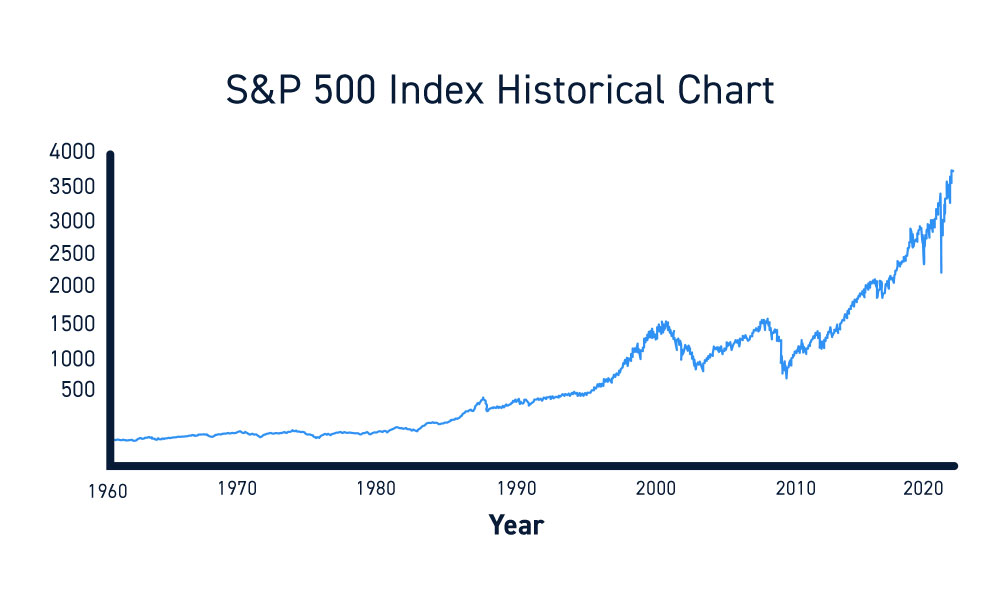
The history of the S&P 500 is a narrative of resilience, growth, and periodic, sometimes severe, corrections. It has weathered numerous storms, including:
- The 1973 Oil Crisis: A period of stagflation and market uncertainty.
- Black Monday (1987): The single largest one-day market crash in history, where the S&P 500 fell over 20%.
- The Dot-com Bubble Burst (2000-2002): A period of significant decline as overvalued tech stocks collapsed.
- The Great Financial Crisis (2008-2009): Triggered by the subprime mortgage crisis, leading to a profound bear market.
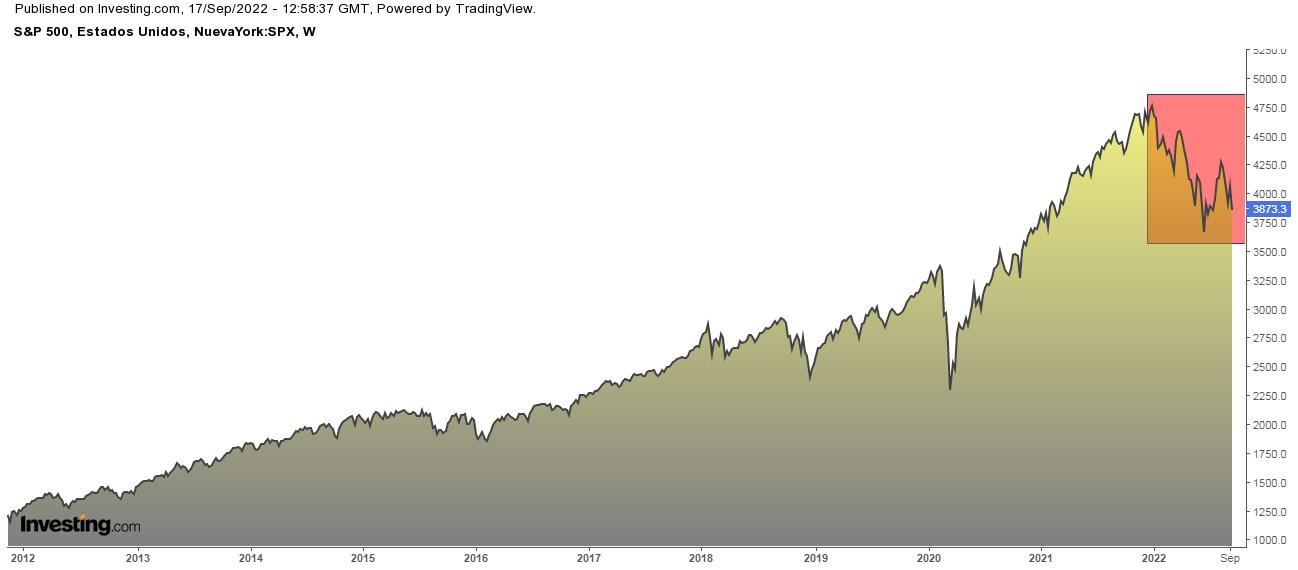
- The COVID-19 Pandemic (2020): A sharp, but relatively brief, bear market followed by a rapid recovery fueled by fiscal and monetary stimulus.
Through each of these downturns, the S&P 500 has demonstrated its capacity for recovery and long-term growth. While periods of decline can be steep and painful, the index’s historical performance showcases an upward trend over extended periods, reflecting the innovative capacity and resilience of American enterprise.
Growth and Expansion Over Decades
Since its launch, the S&P 500 has delivered impressive long-term returns, averaging approximately 10-12% annually, including dividends, over several decades. This makes it a powerful engine for wealth creation for long-term investors. Its growth has not been linear, but the compounding effect of these returns over time has been substantial. For example, an investment made in the S&P 500 in its early years, held for decades, would have grown exponentially, vastly outperforming inflation and offering a compelling argument for patient, diversified investing. The continuous expansion of the U.S. economy, coupled with corporate innovation and global reach, has driven the index to record highs repeatedly, albeit with the inevitable periods of correction and consolidation.
Looking Ahead: The Future of the S&P 500
As the global economy continues to evolve at an unprecedented pace, the S&P 500, though a mature index, is far from static. Its future relevance hinges on its ability to adapt to new economic realities and technological disruptions.
Adapting to New Economic Realities
The S&P 500 has always reflected the dominant economic forces of its time. In its early decades, it was heavily weighted towards industrial companies. Today, technology giants, healthcare innovators, and consumer discretionary leaders often command the largest portions of the index. This shift underscores the committee’s continuous effort to ensure the index accurately reflects the modern economy. Looking ahead, the S&P 500 will likely continue to adapt to emerging trends such as:
- Artificial Intelligence and Automation: Companies leading in these fields will likely gain greater representation.
- Sustainability and ESG Factors: Growing investor demand for environmentally and socially responsible companies may influence inclusion criteria over the long term.
- Globalization: While focused on U.S. companies, their increasing global revenues mean the S&P 500 will continue to offer exposure to worldwide economic trends.
The index’s methodology will need to remain agile, capable of incorporating new forms of economic value and measuring corporate success in an increasingly complex and interconnected world.
Its Continued Role in Global Finance
Despite the proliferation of specialized indices and the rise of international markets, the S&P 500’s fundamental role in global finance is unlikely to diminish. Its depth, liquidity, and long track record make it an irreplaceable benchmark for large-cap U.S. equities. It will continue to serve as:
- A primary benchmark: For active and passive fund managers worldwide.
- A global indicator: For economic health and investor sentiment.
- A foundation for investment products: Enabling accessible diversification for millions of investors.
In conclusion, the S&P 500 officially started on March 4, 1957, building upon decades of financial indexing innovation. From its humble origins as an expansion of a 90-stock index to its current status as a sophisticated, real-time barometer of the U.S. economy, its journey reflects the dynamic nature of capital markets. Its enduring significance lies in its rigorous methodology, its comprehensive coverage, and its unparalleled influence on investment strategies and economic analysis worldwide. As markets continue to evolve, the S&P 500 will undoubtedly continue to adapt, maintaining its vital role as a cornerstone of modern financial understanding.
aViewFromTheCave is a participant in the Amazon Services LLC Associates Program, an affiliate advertising program designed to provide a means for sites to earn advertising fees by advertising and linking to Amazon.com. Amazon, the Amazon logo, AmazonSupply, and the AmazonSupply logo are trademarks of Amazon.com, Inc. or its affiliates. As an Amazon Associate we earn affiliate commissions from qualifying purchases.