
The narrative of Tesla is often framed as a modern technological fairy tale, but at its core, it is one of the most audacious financial gambles in the history of venture capital and corporate finance. A common misconception persists that Elon Musk founded Tesla Motors in a garage, much like the origin stories of Apple or Google. In reality, the “purchase” of Tesla—or more accurately, the lead investment that saved it—occurred in the early months of 2004. This investment did more than just provide capital; it fundamentally altered the trajectory of the automotive industry and the global transition toward sustainable energy.
To understand when and why Musk bought into Tesla, one must look past the engineering and focus on the high-stakes world of early-stage business finance.
Beyond the Myth: The Series A Investment of 2004
In early 2004, Tesla Motors was a fledgling startup with a bold vision but zero tangible assets. Founded in July 2003 by Martin Eberhard and Marc Tarpenning, the company was seeking a primary investor who understood the inherent risks of hardware-intensive startups. While the founders had the vision for an electric sports car, they lacked the massive capital required to move from a digital blueprint to a physical prototype.
The Initial Capital Injection
Elon Musk entered the Tesla story in February 2004. Fresh off the $1.5 billion sale of PayPal to eBay, Musk possessed significant liquidity and a high appetite for risk. He led Tesla’s Series A funding round, contributing $6.5 million of the $7.5 million total raised. While Eberhard and Tarpenning remained the operational leads at the time, this capital injection effectively gave Musk the largest stake in the company and the role of Chairman of the Board.
This was not a traditional “buyout” in the sense of acquiring an established firm; rather, it was a strategic entry into a high-potential, high-risk venture. From a financial perspective, Musk was not buying a car company; he was buying the intellectual property and the opportunity to disrupt a stagnant, capital-intensive industry.
Transitioning from Investor to Active Chairman
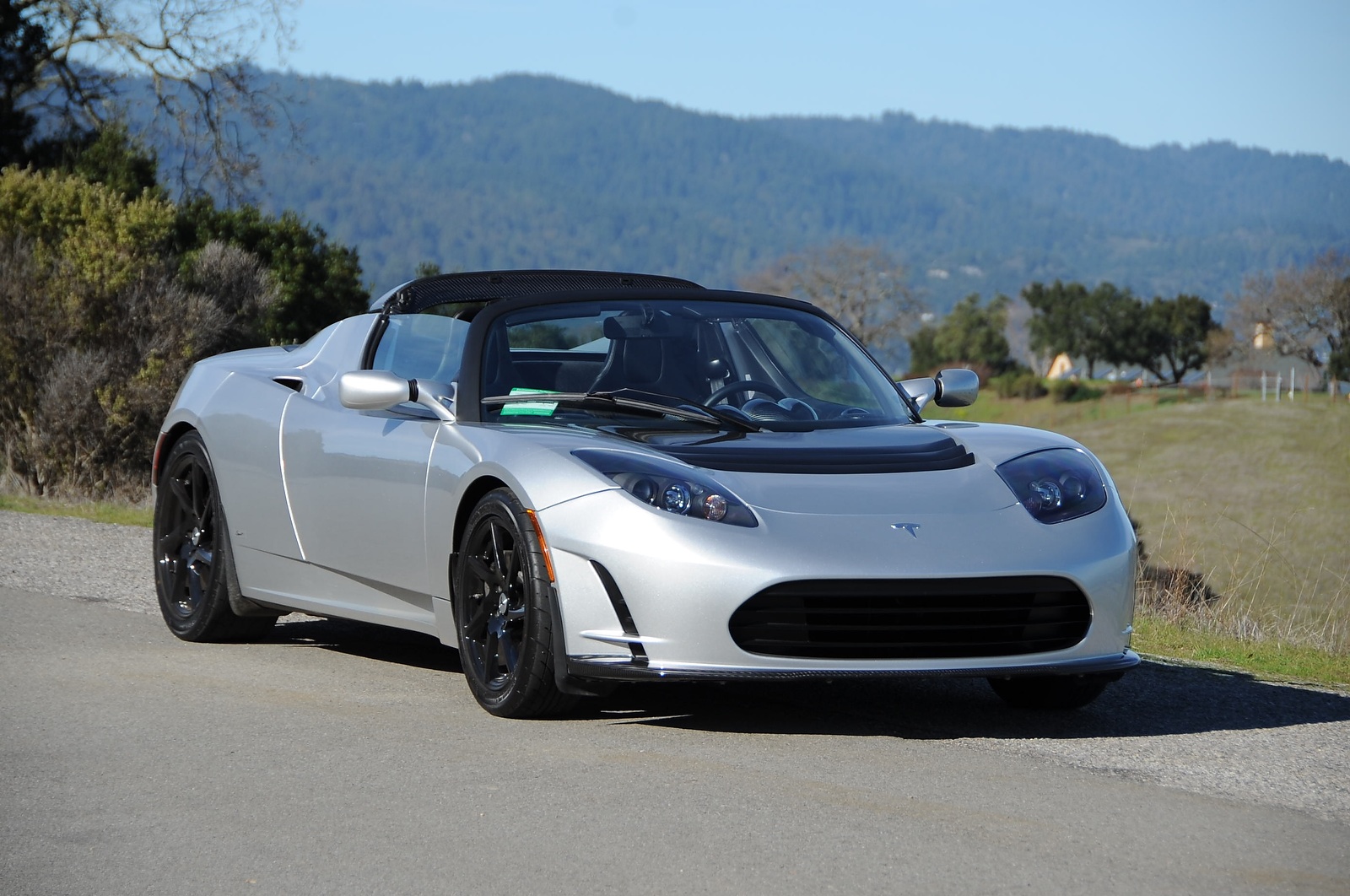
Following the Series A round, Musk’s financial influence grew in tandem with his operational involvement. Between 2004 and 2008, he continued to lead subsequent funding rounds (Series B and C), pouring tens of millions of his personal fortune into the company. By the time the Tesla Roadster was nearing production, Musk was no longer just a passive financier; he was the primary source of the company’s lifeblood. His “purchase” of the company was a cumulative process of equity accumulation that eventually led to his appointment as CEO in October 2008.
Navigating the Financial Abyss: The 2008 Crisis and Survival
If the 2004 investment was the birth of Tesla, the 2008 fiscal year was its near-death experience. The global financial crisis made venture capital scarce, and Tesla was burning through cash at an alarming rate while struggling to bring the Roadster to market. This period represents the most critical moment in Tesla’s financial history, where Musk had to choose between letting his investment fail or doubling down with every cent he had left.
The Near-Bankruptcy and the Series E Round
By December 2008, Tesla was days away from bankruptcy. The company’s financial records showed they were down to their last few hundred thousand dollars—nowhere near enough to meet payroll or fulfill supplier contracts. Musk orchestrated a $40 million Series E funding round that closed on Christmas Eve.
This round was a masterclass in high-pressure financial maneuvering. Musk committed his last $20 million and convinced existing investors to match it, effectively betting his entire personal net worth on a company that many Wall Street analysts deemed a lost cause. This “all-in” strategy is a rarity in professional investing, where diversification is the standard rule for wealth preservation.
Strategic Lifelines: The Daimler and Toyota Deals
While Musk’s personal capital kept the lights on, the long-term solvency of Tesla required institutional validation. In May 2009, Daimler AG (the parent company of Mercedes-Benz) invested $50 million for a roughly 10% stake in Tesla. Shortly after, a partnership with Toyota provided another $50 million and the acquisition of the NUMMI factory in Fremont, California, for a fraction of its replacement value.
From a business finance perspective, these deals were transformative. They provided non-dilutive capital and manufacturing infrastructure that would have otherwise cost billions to build from scratch. These strategic partnerships signaled to the broader market that Tesla was a legitimate player, setting the stage for its eventual public debut.

Scaling Capital: The IPO and Institutional Growth
The most significant evolution of Tesla’s financial structure occurred on June 29, 2010, when the company went public on the NASDAQ. This move was a watershed moment, marking the first time an American car company had an Initial Public Offering (IPO) since Ford in 1956.
Going Public: The 2010 NASDAQ Debut
Tesla (TSLA) offered 13.3 million shares at a price of $17 per share, raising approximately $226 million. For Musk, the IPO was not an exit strategy but a capital-raising mechanism. The funds were earmarked for the development of “Model S,” the sedan that would prove Tesla could manufacture vehicles at scale.
For early investors, the IPO was the beginning of an unprecedented wealth-creation engine. However, at the time, many financial skeptics pointed to Tesla’s lack of profitability and the massive “burn rate” required to compete with incumbents like GM and Ford. The stock was volatile, often shorted by hedge funds who believed the company’s valuation was detached from its balance sheet fundamentals.
Capital Allocation and the Master Plan
Musk’s financial strategy was dictated by his “Secret Master Plan,” which was essentially a three-stage capital allocation model:
- Stage 1: Build a low-volume, high-priced car (Roadster) to fund R&D.
- Stage 2: Use that money to build a mid-volume car at a lower price (Model S/X).
- Stage 3: Use that money to build a high-volume, affordable car (Model 3/Y).
This was a brilliant financial loop. Instead of needing all the capital upfront to build a mass-market car, Tesla used each successive product as a “funding round” for the next. This allowed the company to scale its valuation incrementally, reducing the cost of capital as the brand became more established.
The Valuation Explosion: From Niche Manufacturer to Trillion-Dollar Asset
In the decade following the IPO, Tesla’s valuation moved from the realm of “speculative tech” to “dominant market leader.” This growth was fueled by a combination of retail investor enthusiasm, inclusion in major indices, and a fundamental shift in how the market values automotive companies.
Stock Splits and Retail Investor Influence
One of the most notable financial phenomena associated with Tesla is its relationship with retail investors. Unlike traditional blue-chip stocks, Tesla attracted a massive following of individual investors who viewed the company as a software platform rather than a metal-stamping plant.
To manage this demand and keep the share price accessible, Tesla executed a 5-for-1 stock split in 2020 and a 3-for-1 split in 2022. These moves, while technically neutral to the company’s market cap, increased liquidity and allowed a broader base of investors to participate in the growth. By the time Tesla was added to the S&P 500 in December 2020, it had become one of the most valuable companies in the world, with a market capitalization that at one point exceeded $1 trillion.
The Financial Legacy of the Early Investment
When we look back at when Elon Musk “bought” Tesla in 2004, the financial math is staggering. A $6.5 million investment evolved into a stake worth billions. But more importantly, the capital structure Musk built allowed Tesla to survive where dozens of other EV startups failed.
Tesla’s ability to tap into public markets for secondary offerings—raising billions of dollars in hours—gave it a “war chest” that traditional OEMs could only dream of. By maintaining a high stock valuation, Tesla lowered its cost of equity, allowing it to build “Giga-factories” across three continents without the crushing debt loads that often plague the automotive sector.

Conclusion: The ROI of Visionary Finance
The story of when Elon Musk bought into Tesla is not just a date on a calendar; it is a case study in aggressive capital allocation and risk management. By entering as the lead investor in 2004, doubling down during the 2008 financial crisis, and leveraging the public markets in 2010, Musk navigated a financial path that was arguably as difficult as the engineering challenges the company faced.
Today, Tesla stands as a testament to the power of long-term financial conviction. What began as a $6.5 million Series A check has become a cornerstone of the global economy, proving that with the right capital structure and an uncompromising focus on the “Master Plan,” it is possible to build a trillion-dollar empire from the ruins of a near-bankrupt startup. For investors and business leaders alike, the Tesla saga remains the ultimate example of how timing, liquidity, and a high tolerance for risk can redefine an entire industry’s financial future.
aViewFromTheCave is a participant in the Amazon Services LLC Associates Program, an affiliate advertising program designed to provide a means for sites to earn advertising fees by advertising and linking to Amazon.com. Amazon, the Amazon logo, AmazonSupply, and the AmazonSupply logo are trademarks of Amazon.com, Inc. or its affiliates. As an Amazon Associate we earn affiliate commissions from qualifying purchases.