
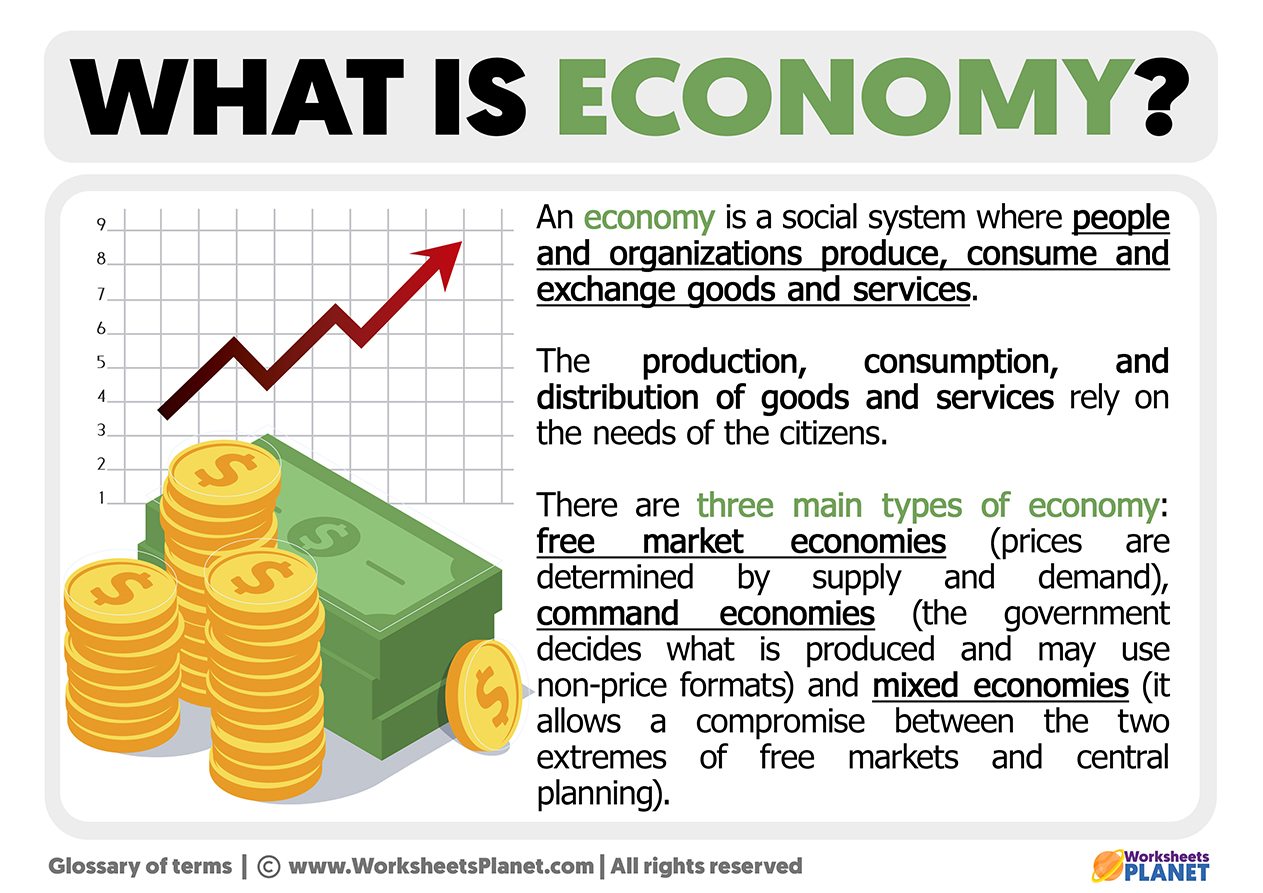
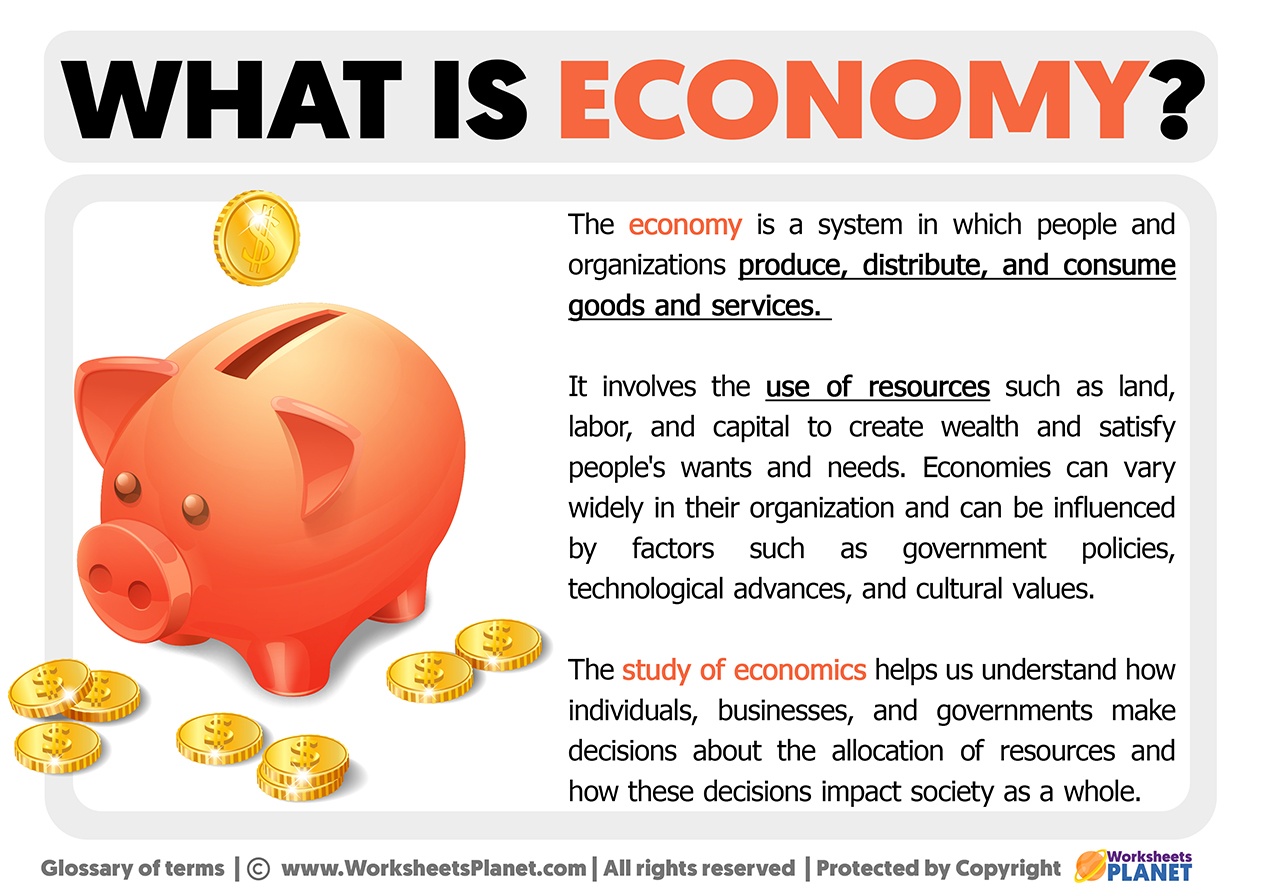
The term “economy” is ubiquitous in our daily lives, appearing in news headlines, political debates, and everyday conversations. Yet, despite its common usage, a precise and universally understood definition can be surprisingly elusive. At its core, an economy is a complex system, a tapestry woven from the threads of production, distribution, and consumption of goods and services within a specific geographic area or by a particular group. It is the engine that drives societies, dictating the flow of resources, the creation of wealth, and the livelihoods of individuals and communities.
The scope of an economy can range from a household budget to a global marketplace, encompassing the intricate interactions between individuals, businesses, governments, and international entities. Understanding what constitutes an economy, and how it functions, is crucial for navigating the modern world, making informed decisions, and appreciating the forces that shape our financial realities. This exploration will delve into the fundamental components of an economy, its various forms, and the critical role it plays in our interconnected world.
The Fundamental Building Blocks of an Economy
Every economy, regardless of its size or complexity, is built upon a foundation of essential elements that facilitate the creation and exchange of value. These building blocks, when interacting, create the dynamic landscape we recognize as economic activity.
Scarcity and Choice
The fundamental economic problem that underpins all economic systems is scarcity. This refers to the fundamental reality that human wants and desires are virtually unlimited, while the resources available to satisfy them are finite. This scarcity applies to everything from natural resources like land and minerals to human resources like labor and time, and even manufactured goods and capital. The inherent tension between unlimited wants and limited resources forces individuals, businesses, and societies to make choices. Every economic decision, from an individual choosing to save money instead of spending it, to a government deciding to invest in infrastructure over defense, is a consequence of scarcity and the need to allocate resources efficiently. The concept of opportunity cost is intimately linked to choice; it represents the value of the next-best alternative that must be forgone when a choice is made. Understanding scarcity and the necessity of choice is the bedrock of economic thinking.
Resources and Factors of Production
The resources available to produce goods and services are known as the factors of production. These are typically categorized into four broad types:
- Land: This encompasses all natural resources used in production, including not only the physical land itself but also raw materials like water, minerals, forests, and the air. The remuneration for the use of land is rent.
- Labor: This refers to the human effort, both physical and mental, that is contributed to the production process. It includes the skills, knowledge, and time of workers. The payment for labor is wages or salaries.
- Capital: This consists of manufactured goods that are used to produce other goods and services. It includes machinery, tools, buildings, and infrastructure. It’s important to distinguish between physical capital and financial capital (money), although financial capital is used to acquire physical capital. The return on capital investment is typically interest or profits.
- Entrepreneurship: This is the human resource that organizes the other factors of production, takes risks, and innovates. Entrepreneurs identify opportunities, combine resources, and bring new products and services to market. The reward for entrepreneurship is profit, which can also be seen as the residual after all other costs are covered.
The efficient utilization and combination of these factors of production are crucial for an economy’s productivity and growth.
Goods and Services
The ultimate output of an economy’s productive efforts are goods and services.
- Goods are tangible items that satisfy human wants and needs. They can be further classified as:
- Consumer Goods: These are produced for direct consumption by individuals, such as food, clothing, and electronics.
- Capital Goods: As mentioned earlier, these are goods used to produce other goods and services, like machinery or factories.
- Services are intangible activities or benefits that one party provides to another. Examples include healthcare, education, transportation, and entertainment.
The interplay between the production of goods and services and their consumption by individuals and businesses forms the core of economic activity.
The Pillars of Economic Systems
While the fundamental building blocks remain consistent, how societies organize the production, distribution, and consumption of goods and services can vary dramatically. These variations give rise to different economic systems, each with its own set of principles and mechanisms for addressing the fundamental economic problem of scarcity.
Market Economies
In a market economy, also known as capitalism or a free market, economic decisions are primarily driven by the forces of supply and demand.
- Private Ownership: Individuals and private firms own and control the majority of the factors of production.
- Consumer Sovereignty: Consumers, through their purchasing decisions, signal to producers what goods and services are desired.
- Profit Motive: Businesses are motivated by the pursuit of profit, which incentivizes efficiency and innovation.
- Competition: The presence of multiple producers competing for customers drives down prices and improves quality.
- Limited Government Intervention: The role of government is generally restricted to enforcing contracts, protecting property rights, and providing public goods.
The invisible hand of the market, as described by Adam Smith, guides resources to their most valued uses without central planning. However, market economies can sometimes lead to income inequality, market failures (like externalities and monopolies), and economic instability.
Command Economies
In a command economy, also known as a centrally planned economy or socialism/communism in its purest form, the government or a central authority makes most of the key economic decisions.
- State Ownership: The government typically owns and controls most of the means of production.
- Central Planning: A planning agency determines what to produce, how much to produce, and how to distribute it.
- Collective Goals: Production is often geared towards meeting societal needs as defined by the state, rather than individual consumer demand.
- Limited Consumer Choice: Consumers often have a limited selection of goods and services.
Command economies aim to achieve greater equality and stability but often suffer from inefficiency, a lack of innovation due to suppressed competition, and shortages or surpluses of goods due to difficulties in accurately forecasting demand.
Mixed Economies
In reality, most economies today are mixed economies, incorporating elements of both market and command systems.
- Balance of Private and Public Ownership: While private enterprise dominates, governments often own and operate key industries (e.g., utilities, transportation) or provide essential public services.
- Regulation and Intervention: Governments regulate markets to address market failures, protect consumers and the environment, and ensure fair competition. They also use fiscal and monetary policies to manage economic growth and stability.
- Social Welfare Programs: Many mixed economies provide social safety nets, such as unemployment benefits, healthcare, and pensions, to address income inequality and provide basic security.
Mixed economies attempt to harness the efficiency and dynamism of markets while mitigating their potential downsides through government intervention and social programs. The specific blend of market and command elements varies significantly from country to country.
The Dynamics of Economic Activity
An economy is not a static entity; it is a dynamic system characterized by constant change and evolution. Understanding these dynamics is crucial for comprehending how economies grow, adapt, and respond to various internal and external forces.
Economic Growth and Development
Economic growth refers to an increase in the production of goods and services in an economy over a period of time, typically measured by the increase in Gross Domestic Product (GDP). This growth is often fueled by increases in productivity, technological advancements, capital accumulation, and improvements in human capital (education and skills).
Economic development is a broader concept that encompasses not only economic growth but also improvements in the overall quality of life for citizens. This includes factors like increased life expectancy, better education, reduced poverty, improved healthcare, and greater environmental sustainability. While growth is a necessary condition for development, it is not always sufficient. An economy can experience growth without a corresponding improvement in the well-being of its population.
Inflation and Deflation
Inflation is the rate at which the general level of prices for goods and services is rising, and subsequently, purchasing power is falling. Mild inflation can be a sign of a healthy, growing economy, but high inflation can erode savings, distort economic decisions, and create uncertainty.
Deflation is the opposite of inflation, where the general level of prices for goods and services is falling. While lower prices might seem beneficial, deflation can be detrimental as it discourages spending and investment, leading to economic stagnation and potentially a deflationary spiral.
Business Cycles
Economies are not characterized by linear progression but rather by cyclical fluctuations known as business cycles. These cycles consist of periods of expansion (growth), peak, contraction (recession), and trough.
- Expansion: During this phase, economic activity increases, unemployment falls, and consumer confidence rises.
- Peak: The highest point of economic activity before a downturn.
- Contraction (Recession): A significant decline in economic activity, characterized by rising unemployment, falling consumer spending, and declining business investment. A prolonged and severe recession is termed a depression.
- Trough: The lowest point of economic activity before a recovery begins.
Understanding business cycles helps policymakers implement counter-cyclical measures to stabilize the economy.
The Global Economic Landscape
In today’s interconnected world, no economy operates in isolation. The concept of a global economy recognizes the increasing interdependence of national economies through trade, investment, and the flow of information and capital.
International Trade
International trade involves the exchange of goods and services between countries. It allows countries to specialize in producing what they do best (comparative advantage) and trade for other goods and services, leading to greater efficiency and a wider variety of products for consumers. Trade policies, tariffs, and trade agreements play a significant role in shaping the global economic landscape.

Globalization and Interdependence
Globalization refers to the increasing integration of national economies into a worldwide economy. This process is facilitated by technological advancements in communication and transportation, the liberalization of trade policies, and the rise of multinational corporations. While globalization can lead to increased efficiency, economic growth, and greater access to goods and services, it also raises concerns about income inequality, labor exploitation, and the impact on national sovereignty. The interdependence fostered by globalization means that economic shocks in one part of the world can quickly ripple through the entire global system.
In conclusion, the definition of economy, while seemingly simple, encompasses a multifaceted system of production, distribution, and consumption driven by fundamental principles of scarcity and choice, supported by various factors of production, and organized through diverse economic systems. Its dynamic nature, characterized by growth, inflation, and cyclical fluctuations, all within an increasingly interconnected global framework, underscores its profound impact on every aspect of human society. Understanding these elements is not merely an academic exercise but a vital tool for navigating the complexities of our modern financial world.
aViewFromTheCave is a participant in the Amazon Services LLC Associates Program, an affiliate advertising program designed to provide a means for sites to earn advertising fees by advertising and linking to Amazon.com. Amazon, the Amazon logo, AmazonSupply, and the AmazonSupply logo are trademarks of Amazon.com, Inc. or its affiliates. As an Amazon Associate we earn affiliate commissions from qualifying purchases.