
When we look at the current valuation of Amazon, it is difficult to imagine a time when the company was a precarious startup operating out of a garage. However, for those focused on the mechanics of the stock market and wealth creation, the defining moment of the company’s history isn’t just the invention of the Kindle or the launch of Prime—it is May 15, 1997. This was the day Amazon.com, Inc. went public, forever changing the trajectory of e-commerce and retail investing.
The Amazon IPO is more than just a date in a history book; it is a masterclass in long-term capital appreciation, market volatility, and the evolution of corporate finance. For investors, understanding when and how Amazon went public provides critical insights into how “growth at all costs” can eventually translate into one of the most robust balance sheets in financial history.
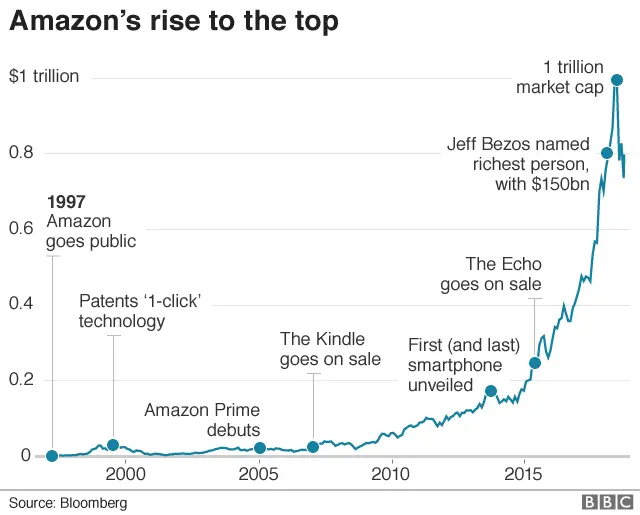
May 15, 1997: The Day the E-commerce Giant Entered the Public Markets
In the mid-1990s, the internet was a frontier, and the concept of buying goods online was met with significant skepticism from Wall Street traditionalists. Despite the “dot-com” fervor beginning to bubble, many financial analysts questioned whether a digital bookstore could survive the overhead costs of shipping and the competitive pressure from brick-and-mortar giants like Barnes & Noble.
Setting the Scene: The 1990s IPO Boom
By 1997, the tech-heavy Nasdaq was becoming a hotbed for initial public offerings. Amazon, led by former hedge fund executive Jeff Bezos, sought to capitalize on this appetite for digital innovation. The goal was simple but ambitious: raise enough capital to achieve “scale” before the competition could pivot. On May 15, Amazon debuted on the Nasdaq Global Select Market under the ticker symbol AMZN.
The Initial Valuation and Share Price
Amazon’s IPO was priced at $18.00 per share. At the time of its debut, the company’s valuation was roughly $438 million—a figure that seems quaint today but was considered aggressive for a company that was consistently reporting net losses. The offering was managed by underwriters including Deutsche Morgan Grenfell and Alex. Brown & Sons. The IPO raised about $54 million for the company, providing the “war chest” Bezos needed to expand beyond books and into music, movies, and electronics.
Navigating the Financial Growth: From “Get Big Fast” to Profitability
The financial journey of Amazon following its public debut was anything but a straight line upward. For investors, the late 90s and early 2000s were a period of extreme volatility that tested the “diamond hands” of even the most seasoned fund managers.
Surviving the Dot-Com Bubble
To understand Amazon’s financial history, one must look at the year 2000. When the dot-com bubble burst, many of Amazon’s contemporaries vanished overnight. Amazon’s stock price, which had soared to over $100 (pre-split), plummeted to below $10. Critics labeled the company “Amazon.toast,” predicting a total collapse due to its high burn rate. However, because the company had secured long-term debt and focused on cash flow efficiency, it survived the liquidity crisis that destroyed its peers.
Capital Reinvestment and Cash Flow Management
A hallmark of Amazon’s financial strategy has been its refusal to pay dividends. Instead, the company has famously reinvested almost every dollar of profit back into its infrastructure—warehouses, logistics, and eventually, data centers for Amazon Web Services (AWS). From a business finance perspective, this strategy prioritized “Free Cash Flow” over “Net Income,” a distinction that Bezos championed in his 1997 Letter to Shareholders. This approach allowed the company to build a “moat” that competitors with more traditional dividend-payout models simply could not match.
The Power of Stock Splits: Understanding the Evolution of Share Value

One of the most confusing aspects for new investors looking at Amazon’s historical price is the impact of stock splits. If you look at a chart from 1997, the price appears to be pennies. This is because the original $18.00 IPO price has been “split-adjusted” multiple times over the decades.
Tracking the Historic Splits (1998, 1999, 2022)
Amazon has undergone several stock splits to keep its share price accessible to retail investors and to manage the liquidity of its shares.
- June 1998: A 2-for-1 split.
- January 1999: A 3-for-1 split.
- September 1999: A 2-for-1 split.
- June 2022: A massive 20-for-1 split.
These splits do not change the total market value of the company or an individual’s total investment value, but they do increase the number of shares outstanding. If you had purchased one share at the IPO for $18.00, after all the splits mentioned above, you would today own 240 shares.
The Impact of Splits on Retail Investors
From a marketing and psychological perspective, stock splits are vital. By bringing the price of a single share down from thousands of dollars to a few hundred (as they did in 2022), Amazon made it easier for individual investors to buy “round lots” and participate in the company’s growth. It also allowed the company to be more flexible with employee stock-based compensation, a key tool in attracting top-tier talent in the competitive Seattle and Silicon Valley markets.
Analyzing the Return on Investment (ROI) for Early Shareholders
The story of Amazon’s IPO is often told through the lens of “life-changing wealth.” When we analyze the ROI from a purely mathematical standpoint, the numbers are staggering, outperforming almost every other asset class over the same period.
The “What If” Scenario: $1,000 at the IPO
If an investor had the foresight to invest $1,000 in Amazon at its $18.00 IPO price in 1997, they would have purchased approximately 55 shares. Following the various stock splits (multiplying those shares by 240), that investor would now hold over 13,000 shares. At current market valuations, that initial $1,000 investment would be worth millions of dollars. This represents a compounded annual growth rate (CAGR) that dwarfs the S&P 500 index.
Comparing Amazon to Traditional Blue-Chip Stocks
While companies like General Electric or Walmart were the “safe bets” of 1997, Amazon represented the “high-risk, high-reward” frontier of the new economy. Over the 25 years following its IPO, Amazon’s stock performance demonstrated the power of the “power law” in investing—where a single massive winner in a portfolio can compensate for dozens of losses. It shifted the philosophy of many institutional investors, encouraging them to look for “platform” companies that could dominate multiple sectors rather than just a single niche.
Strategic Financial Lessons for Modern Investors
Looking back at the timeline of when Amazon went public provides several evergreen lessons for personal finance and business investing. These lessons remain relevant for anyone looking to identify the “next Amazon” in the world of AI, green energy, or fintech.
Long-term Thinking vs. Quarterly Earnings
The primary lesson from the Amazon IPO is the value of the long-term horizon. For years, Amazon was punished by the markets for not showing a profit. However, those who looked at the company’s growing market share and reinvestment strategy understood that the “intrinsic value” was growing even if the “accounting profit” was not. Successful investing often requires ignoring the “noise” of quarterly reports to focus on the underlying business engine.

Recognizing “Moats” in High-Growth Companies
Amazon’s ability to transition from a public bookstore to a cloud computing giant (AWS) and an advertising powerhouse is a testament to its capital allocation strategy. Investors should look for companies that use their public status to raise capital not just for survival, but for aggressive diversification. The 1997 IPO wasn’t just about selling books; it was about securing the capital necessary to own the infrastructure of the modern economy.
In conclusion, when we ask “when did Amazon go public,” the answer—May 15, 1997—serves as the starting gun for one of the greatest wealth-creation events in human history. It reminds us that while the stock market is often volatile and unpredictable in the short term, it remains a powerful engine for growth for those who identify transformative business models and hold them through the cycles of the economy. Amazon’s journey from an $18 IPO to a multi-trillion-dollar titan is the ultimate proof of the potential of the public markets.
aViewFromTheCave is a participant in the Amazon Services LLC Associates Program, an affiliate advertising program designed to provide a means for sites to earn advertising fees by advertising and linking to Amazon.com. Amazon, the Amazon logo, AmazonSupply, and the AmazonSupply logo are trademarks of Amazon.com, Inc. or its affiliates. As an Amazon Associate we earn affiliate commissions from qualifying purchases.