
The ubiquitous calculator, whether a physical device in our school bags, a dedicated application on our smartphones, or an embedded function within complex software, is so fundamental to modern life that its origins often go unexamined. Yet, behind its unassuming facade lies a rich history of human ingenuity, a relentless pursuit of efficiency in computation that spans millennia and forms a cornerstone of the technological age. The invention of the calculator wasn’t a singular event but rather a protracted evolution, a testament to humanity’s continuous effort to offload mental burdens onto mechanical and, later, electronic aids. Tracing this lineage reveals a fascinating story of how complex mathematical operations, once confined to the minds of a select few, became accessible to all, paving the way for advancements in science, engineering, and daily commerce.
The Dawn of Mechanical Computation: Precursors to the Modern Calculator
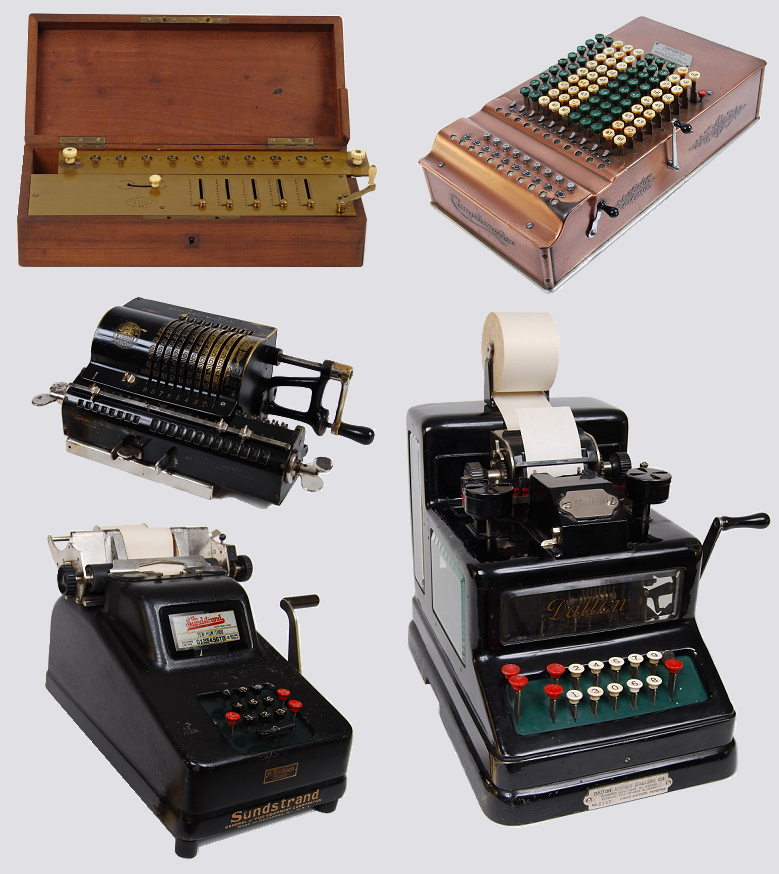
Long before the advent of integrated circuits or even electricity, the human need for systematic calculation spurred the creation of various ingenious tools. These early devices, while primitive by today’s standards, laid the conceptual groundwork for what would eventually become the modern calculator. They embody the fundamental principle of externalizing computational tasks from the human mind.
Ancient Reckoning: Abacus and Napier’s Bones
The earliest known tools for calculation were often manual aids, designed to simplify arithmetic operations through physical manipulation. The abacus, with roots tracing back over 2,500 years to Mesopotamia, is perhaps the most enduring example. Comprising beads or counters moved along rods or grooves, it allowed for rapid addition, subtraction, multiplication, and division, enabling complex calculations in trade, engineering, and astronomy across diverse cultures, from ancient Greece and Rome to China and Japan. It wasn’t an automatic calculator but a sophisticated visual and tactile aid that standardized and accelerated manual computation.
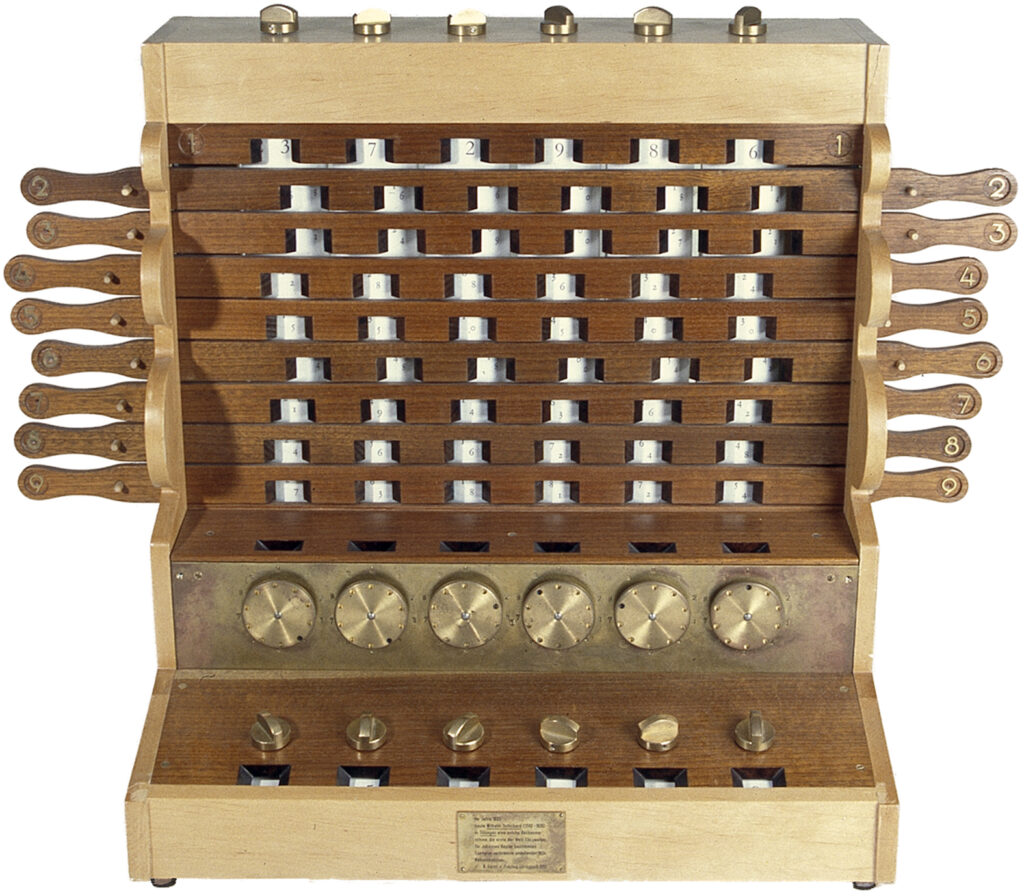
Centuries later, in the early 17th century, Scottish mathematician John Napier introduced Napier’s Bones. This set of numbered rods, based on the principle of lattice multiplication, provided a mechanical method for multiplying and dividing numbers. By arranging the rods appropriately, users could read off products and quotients, significantly speeding up complex multiplication, particularly for larger numbers. While still requiring manual interpretation, Napier’s Bones demonstrated a move towards semi-automated calculation and influenced later mechanical designs, including the slide rule. These early innovations highlighted a growing desire to not just perform calculations, but to perform them more easily and more quickly.
Pascal’s Pascaline: The First Mechanical Calculator
The true genesis of the mechanical calculator is often attributed to Blaise Pascal in the mid-17th century. Witnessing his father, a tax commissioner, laboriously performing sums, the young French polymath designed and built the Pascaline (also known as the Arithmétique) in 1642. This revolutionary device was a brass rectangular box, driven by a series of geared wheels, each representing a decimal place. Numbers were entered by rotating dials, and the machine could automatically carry tens to the next digit, mimicking the process of human addition.
The Pascaline was groundbreaking because it was the first machine capable of automatic addition and subtraction. Its innovative gearing mechanism allowed for the propagation of carries, a crucial step towards automating arithmetic. While it faced limitations in its robustness, cost, and the complexity of its operation (subtraction was performed by adding the complement, and multiplication/division were repetitive additions/subtractions), the Pascaline was a monumental achievement. It proved that complex arithmetic could be mechanized, inspiring future inventors to refine and expand upon its foundational principles.
Leibniz’s Stepped Reckoner: Expanding Capabilities
Building upon Pascal’s work, German polymath Gottfried Wilhelm Leibniz introduced his Stepped Reckoner (or Staffelwalze) in 1672. Leibniz’s design was a significant advancement, as it could not only add and subtract, but also perform direct multiplication and division through a series of internal mechanisms, including his famous “stepped drum” or “Leibniz wheel.” Unlike Pascal’s device, which essentially performed repeated additions for multiplication, Leibniz’s machine integrated a more efficient mechanism for these operations.
Leibniz’s vision was to create a machine that could “calculate without human intervention,” and his Stepped Reckoner was a major step towards that goal. Although plagued by mechanical unreliability due to the precision required for its construction at the time, its conceptual superiority was undeniable. It demonstrated the feasibility of a true four-function mechanical calculator and further solidified the idea that machines could undertake increasingly complex intellectual tasks, laying theoretical groundwork that would be revisited and perfected in later centuries.
The Industrial Revolution and Electromechanical Advancements
The technological fervor of the Industrial Revolution provided both the means and the motivation to improve upon these early mechanical calculators. Precision engineering and mass production techniques allowed for more reliable and affordable machines, pushing calculation from a niche academic pursuit to a widely adopted commercial tool.
Arithmometers and Commercialization
The 19th century saw the emergence of more practical and commercially successful mechanical calculators, most notably the Arithmometer. Invented by Charles Xavier Thomas de Colmar in 1820, the Arithmometer was the first commercially successful mechanical calculator, produced for over 90 years. Based on Leibniz’s stepped drum, it was robust, reliable, and capable of performing the four basic arithmetic operations directly. Its success marked a turning point, transforming the calculator from an inventor’s curiosity into a practical business machine. Offices, banks, and scientific institutions readily adopted Arithmometers, significantly boosting efficiency in a world increasingly reliant on accurate and rapid calculations. This period saw a proliferation of different mechanical calculator designs, from adding machines to more complex devices, all vying for commercial dominance and driving further innovation in mechanical computation.
Enter Electricity: The First Electronic Calculators
The mid-20th century marked a paradigm shift with the introduction of electronics. While early computers like ENIAC (1946) were massive machines, the concept of using vacuum tubes to perform calculations at unprecedented speeds quickly began to filter down. The first truly electronic calculators, distinct from computers, emerged in the late 1950s and early 1960s. These devices, still large by today’s standards, replaced mechanical gears and levers with vacuum tubes, then later transistors, dramatically increasing speed and reliability while reducing noise and wear.
Key early examples include the Casio 14-A (1957), one of the first relay-based electronic desktop calculators, and the Anita C/K series by Sumlock Comptometer (1961), the first all-electronic desktop calculator to use vacuum tubes (and later transistors). These machines were expensive and primarily used in scientific and engineering contexts, but they demonstrated the immense potential of electronic computation. The transition from mechanical to electronic components was a crucial evolutionary step, setting the stage for the miniaturization and widespread adoption that would follow.
The Digital Revolution: From Desktop Giants to Pocket Powerhouses
The invention of the transistor in 1947 and the integrated circuit in 1958 were the true catalysts for the digital revolution, transforming calculators from room-sized behemoths to handheld devices. This period represents the most dramatic shift in calculator technology and accessibility.
Transistors and Integrated Circuits: Miniaturization Begins

The replacement of bulky, heat-generating vacuum tubes with compact, energy-efficient transistors allowed for significantly smaller and more reliable electronic devices. Further innovation came with the integrated circuit (IC), which allowed thousands of transistors and other components to be fabricated onto a single silicon chip. This enabled unprecedented levels of miniaturization and cost reduction. Suddenly, complex electronic circuits that once filled cabinets could fit onto a single board, then a single chip.
This technological leap directly impacted calculator design. Early desktop electronic calculators using transistors and ICs, such as the Wang LOCI-2 (1965) and the Mathatronics Mathatron (1964), were still large but far more powerful and reliable than their tube-based predecessors. The stage was set for the leap from desktop to portable.
The HP-35 and Texas Instruments SR-10: Bringing Calculators to the Masses
The early 1970s witnessed a watershed moment in calculator history: the advent of affordable, handheld electronic calculators. Two devices stand out as pioneers:
The Hewlett-Packard HP-35, released in 1972, was the world’s first handheld scientific calculator. It could perform trigonometric, exponential, and logarithmic functions with a single key press, tasks previously requiring slide rules or lookup tables. Its advanced capabilities and compact size (dubbed an “electronic slide rule”) made it an instant hit among engineers, scientists, and students, despite its initial price tag of $395 (equivalent to over $2,800 today). The HP-35 demonstrated that complex calculation power could be literally held in the palm of one’s hand.
Hot on its heels, Texas Instruments introduced the SR-10 “slide rule” calculator in 1973, followed by the more iconic TI-2500 Datamath in 1972, which was even simpler and more affordable (around $120). While the Datamath was a basic four-function calculator, its low cost and widespread availability truly democratized the electronic calculator, making it accessible to general consumers. This competition between HP and TI, along with other Japanese manufacturers, drove down prices and rapidly expanded the market for handheld calculators, pushing slide rules into obsolescence within a few short years.
Scientific and Programmable Calculators: Expanding Functionality
As the technology matured, calculators evolved beyond basic arithmetic. Scientific calculators became standard tools in education and professional fields, featuring dedicated keys for advanced mathematical functions, statistics, and unit conversions. For students, engineers, and scientists, these devices were indispensable.
The late 1970s and 1980s also saw the rise of programmable calculators. Devices like the HP-41C (1979) and the TI-58/59 allowed users to write and store programs, transforming the calculator into a miniature, specialized computer. This functionality was crucial for repetitive calculations, complex formulas, and even basic data analysis, providing an essential computational tool before personal computers became widely affordable and portable. These advanced calculators often blurred the lines between a traditional calculator and a rudimentary computer, showcasing the potential for specialized, portable computational power.
The Modern Era: Calculators in Every Device
Today, the dedicated physical calculator, while still prevalent in specific niches like education or finance, has largely been absorbed into the broader digital ecosystem. Its functionality is now a core component of almost every smart device and computing platform.
Graphic Calculators and Educational Impact
The 1980s and 90s introduced graphic calculators, exemplified by models from Texas Instruments (e.g., TI-81, TI-83, TI-89) and Casio. These devices allowed users to plot graphs of mathematical functions, visualize data, and perform symbolic manipulation. Graphic calculators revolutionized mathematics education, particularly in algebra, calculus, and statistics, by providing visual representations of abstract concepts and enabling students to explore mathematical relationships dynamically. They became standard equipment for high school and college students, fundamentally changing how mathematics was taught and learned.
Software Calculators and the Ubiquitous App
With the rise of personal computers, the calculator found a new home as a software application. Operating systems like Windows and macOS have always included built-in calculator utilities, offering basic to scientific functionality. The true ubiquity arrived with smartphones and tablets. Every mobile operating system, be it iOS or Android, comes with a sophisticated calculator app, often featuring basic, scientific, and even unit conversion modes. Third-party app stores offer thousands of specialized calculator apps for everything from financial planning to fitness tracking to engineering calculations. The calculator, once a distinct hardware entity, is now a foundational software component, seamlessly integrated into our digital lives, accessible with a tap or click.
Beyond Basic Arithmetic: Specialized Calculators and AI
The concept of a “calculator” has expanded far beyond simple arithmetic. Today, we have sophisticated financial calculators for mortgages and investments, statistical calculators for data analysis, engineering calculators for structural loads, and medical calculators for dosage determination. These are often specialized software tools embedded in larger applications or cloud services.
Looking ahead, artificial intelligence (AI) and machine learning are beginning to influence computational tools. While not “calculators” in the traditional sense, AI-powered tools can perform incredibly complex calculations, predictive analytics, and data synthesis that far exceed the capabilities of even advanced graphic calculators. Tools like Wolfram Alpha can interpret natural language queries and provide computational answers, blending the calculator’s function with a knowledge engine. The future of calculation might involve AI assistants that not only compute but also understand context, explain reasoning, and even make recommendations, continuing the centuries-long journey of offloading mental effort onto sophisticated machines.
The Enduring Legacy of the Calculator
The journey from the abacus to AI-powered computation is a testament to humanity’s drive for efficiency and accuracy. The invention and continuous evolution of the calculator have had a profound and lasting impact on our world.
Democratizing Data and Empowering Innovation
The calculator democratized computation. What was once the domain of highly skilled “calculators” (human beings employed for the task) became accessible to everyone. This accessibility fueled innovation across all fields. Engineers could design more complex structures, scientists could analyze larger datasets, businesses could manage finances with greater precision, and students could engage with mathematics on a deeper level. The ability to perform rapid, accurate calculations freed up mental capacity, allowing individuals to focus on problem-solving, creativity, and strategic thinking rather than the arduous mechanics of arithmetic.
A Foundation for Digital Computing
Perhaps the most significant legacy of the calculator is its role as a direct ancestor to the modern computer. The principles of mechanical gears and levers found in Pascaline and Leibniz’s machines, and later the electronic logic gates in early electronic calculators, laid the conceptual and technological groundwork for stored-program computers. The demand for faster and more complex calculations pushed the boundaries of hardware and software development, ultimately leading to the powerful processors and algorithms that underpin all digital technology today. The calculator, in essence, was the proving ground for many of the core ideas that define our digital age, cementing its place not just as a tool, but as a foundational element of technological progress.
aViewFromTheCave is a participant in the Amazon Services LLC Associates Program, an affiliate advertising program designed to provide a means for sites to earn advertising fees by advertising and linking to Amazon.com. Amazon, the Amazon logo, AmazonSupply, and the AmazonSupply logo are trademarks of Amazon.com, Inc. or its affiliates. As an Amazon Associate we earn affiliate commissions from qualifying purchases.