
For active traders, long-term investors, and anyone with a vested interest in the financial world, understanding the operating schedule of stock markets is more than just a matter of curiosity; it’s a fundamental aspect of strategic planning and risk management. While the image of bustling trading floors and digital screens flashing real-time data is ever-present, these crucial engines of capital allocation do not run ceaselessly. They pause for holidays, observed national days, and occasionally for unforeseen circumstances. Knowing precisely when these markets are closed is critical for setting trading strategies, managing portfolio liquidity, and understanding settlement cycles. This guide delves into the predictable closures, the rationale behind them, and what investors need to consider when the markets take a break.
Understanding Regular Market Operating Hours and Key Exchanges
Before dissecting the closure schedule, it’s essential to grasp the standard operational framework of major stock markets. The rhythm of the market dictates when buying and selling can occur, forming the bedrock of daily financial activity.
The Standard Trading Day: NYSE and NASDAQ
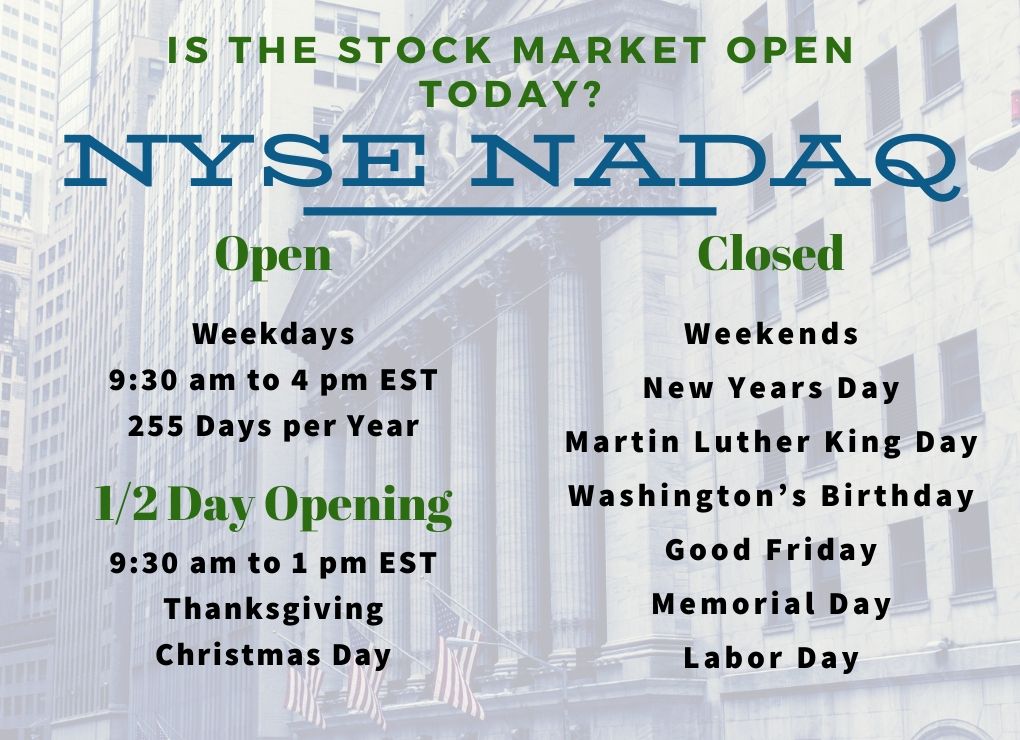
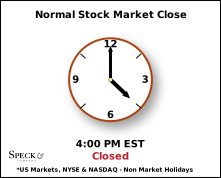
In the United States, the two primary stock exchanges, the New York Stock Exchange (NYSE) and the NASDAQ, operate on a well-defined schedule. The official trading hours for both are typically from 9:30 AM to 4:00 PM Eastern Time (ET), Monday through Friday. During this window, known as the “regular trading session,” the vast majority of transactions take place, and market indices like the S&P 500 and Dow Jones Industrial Average are actively updated. This period is characterized by the highest liquidity and typically the tightest bid-ask spreads, making it the preferred time for most traders.
The consistent timing of the regular trading session allows for global synchronization, though the different time zones mean investors across the world experience it at varying local times. For instance, when the New York markets open, it’s already mid-afternoon in London and late evening in Tokyo. This structured day is designed to provide sufficient time for order execution while also allowing market participants and infrastructure to rest and prepare for the next session.
Pre-Market and After-Hours Trading
While the 9:30 AM to 4:00 PM ET window defines the core trading day, stock markets offer extended trading sessions that operate outside these hours. Pre-market trading typically runs from 4:00 AM to 9:30 AM ET, and after-hours trading from 4:00 PM to 8:00 PM ET. These extended sessions allow institutional investors and sophisticated individual traders to react to news released outside regular hours, such as earnings reports or major economic announcements.
However, it’s crucial to understand that trading in these extended sessions differs significantly from the regular session. Liquidity is generally much lower, meaning there are fewer buyers and sellers, which can lead to wider bid-ask spreads and increased price volatility. Orders may not be filled as easily or at the desired price points. While useful for certain strategies, most retail investors find the regular trading session more suitable for executing their trades due to its depth and efficiency.
Global Markets and Time Zone Considerations
The stock market isn’t a singular entity; it’s a global network of exchanges, each with its own operating hours and holiday calendar. Major markets like the London Stock Exchange (LSE), Euronext (Europe), Tokyo Stock Exchange (TSE), Shanghai Stock Exchange (SSE), and Hong Kong Stock Exchange (HKEX) all have their unique schedules. When we talk about “when the stock markets are closed,” it’s predominantly referring to the US markets unless specified otherwise, but an internationally diversified investor must consider the closures of all relevant exchanges. The interplay of different time zones means that while the NYSE might be closed for a US holiday, markets in Asia or Europe might be fully operational, continuing to react to global economic and geopolitical events. This continuous global trading environment means that even when a local market is closed, the underlying factors influencing stock prices continue to evolve.
Official US Stock Market Holidays and Their Rationale
The most common reason for stock market closures is the observance of federal holidays. These scheduled breaks are essential for giving market participants, employees, and the underlying financial infrastructure a reprieve.
Federal Holidays Observed by US Markets
The NYSE and NASDAQ typically follow the US federal holiday schedule, with some key distinctions. Here’s a list of the standard holidays when US stock markets are closed:
- New Year’s Day (January 1st): A universal holiday marking the start of a new calendar year.
- Martin Luther King, Jr. Day (Third Monday in January): Honoring the civil rights leader.
- Washington’s Birthday / Presidents’ Day (Third Monday in February): Commemorating the birth of George Washington and often celebrating all US presidents.
- Good Friday (Friday before Easter Sunday): A religious holiday observed by many financial institutions globally, impacting markets across various countries.
- Memorial Day (Last Monday in May): Honoring military personnel who died in service.
- Juneteenth National Independence Day (June 19th): Commemorating the emancipation of enslaved African Americans in the US. This was added as a federal holiday in 2021, and markets began observing it in 2022.
- Independence Day (July 4th): Celebrating the signing of the Declaration of Independence.
- Labor Day (First Monday in September): Celebrating the contributions of workers.
- Thanksgiving Day (Fourth Thursday in November): A national day of thanks.
- Christmas Day (December 25th): Celebrating Christmas.
It’s important to note that if a holiday falls on a Saturday or Sunday, the observance typically shifts to the closest weekday. For example, if New Year’s Day falls on a Saturday, the market will close on the preceding Friday. If it falls on a Sunday, the market will close on the following Monday.
Early Closures and Special Circumstances
In addition to full-day closures, markets occasionally have early closures. The most notable example is Thanksgiving Eve, where the market might close early, often at 1:00 PM ET, on the day after Thanksgiving (Black Friday). These partial closures provide a bridge to the weekend while still allowing some trading activity.
Historically, markets have also closed for significant national events, such as national days of mourning following a presidential death, though these are rare and typically declared ad-hoc. The rationale behind these special closures is often to show respect, allow for national reflection, or prevent market disruption during periods of high emotional or operational sensitivity.
The Rationale Behind Market Closures
The decision to close stock markets for holidays is multi-faceted:
- Employee Welfare: Like any other demanding industry, financial markets employ thousands of people, from traders and analysts to IT support and regulatory staff. Holiday closures provide a necessary break for these individuals.
- Synchronization with Banking and Settlements: Stock market trades involve the transfer of funds and securities, a process known as settlement. This heavily relies on the banking system. Since banks also observe federal holidays, closing the stock market ensures that the underlying financial infrastructure for clearing and settlement can operate in sync, preventing backlogs and complications.
- Reduced Volatility During Low Liquidity: Holidays typically mean fewer participants in the market. With reduced trading volume (liquidity), prices can become more volatile, as even small orders can have a disproportionate impact. Closing the market during these periods prevents potentially erratic price swings that don’t reflect genuine market sentiment.
- National Observance and Respect: Many closures align with national holidays, allowing citizens to participate in commemorations or celebrations without conflicting with market operations.
International Markets: A Global Perspective on Closures
While the US market schedule is crucial for American investors, a truly global investor must contend with a tapestry of international market closures.
Diverse Holiday Calendars
Every country has its unique set of national holidays, religious festivals, and cultural observances. What might be a standard trading day in New York could be a national holiday in Japan, China, or Germany.
- Europe: Markets like the London Stock Exchange and Euronext (serving multiple European countries) observe holidays such as Boxing Day, Easter Monday, and various national bank holidays specific to each country (e.g., German Unity Day).
- Asia: Asian markets have a rich array of holidays. The Tokyo Stock Exchange observes holidays like New Year’s Day, Coming of Age Day, and Respect for the Aged Day. Chinese markets are closed for Chinese New Year (a multi-day event), Qingming Festival, and National Day Golden Week, which can last for several days to a week. Indian markets observe Diwali, Holi, and Independence Day.
- Other Regions: Similarly, markets in Australia, Canada, Brazil, and other nations have their unique closure calendars.
The sheer diversity means that there is rarely a day when all global stock markets are simultaneously closed, except perhaps for a universal holiday like New Year’s Day if it falls on a weekday.
Impact of Global Closures on US Investors
For US-based investors holding international stocks, ETFs, or mutual funds, or those with exposure to global indices, foreign market closures have direct implications:
- No Trading for Foreign Securities: If a foreign exchange is closed, you cannot trade stocks listed exclusively on that exchange, even if the US markets are open.
- Indirect Impact on US-Listed Securities: Global news and economic data can still influence US-listed securities, particularly those with significant international operations or ADRs (American Depositary Receipts) of foreign companies. Even if US markets are open, a major closure in a key foreign market can lead to reduced liquidity or delayed reactions to news affecting those foreign economies.
- Weekend Gaps: If a major foreign market is closed for an extended period, significant news or events could accumulate, leading to a “gap” in prices when that market reopens, or impacting related US-listed securities when US markets open after a foreign holiday.
Staying informed about the holiday schedules of all relevant international exchanges is therefore a vital component of managing a diversified global portfolio.
Beyond Scheduled Holidays: Unforeseen Market Interruptions
While holiday closures are predictable, markets can also close or experience severe disruptions due to unforeseen events, though these are far less common.
Force Majeure Events
Extraordinary circumstances, often termed “force majeure,” can necessitate market closures. These include:
- Natural Disasters: Major hurricanes, earthquakes, or blizzards that disrupt infrastructure or pose a threat to market personnel can lead to closures. For example, the NYSE closed for two consecutive days due to Hurricane Sandy in 2012.
- Pandemics or Health Crises: While less likely to cause a full closure in the age of remote work, severe public health emergencies could disrupt physical trading floors or market operations. During the initial phases of the COVID-19 pandemic, markets remained open, but many employees transitioned to remote work.
- Terrorist Attacks or Geopolitical Crises: In extreme national emergencies or security threats, markets might be closed to prevent panic selling, assess damage, or ensure the safety of personnel. The NYSE famously closed for four days after the September 11, 2001, terrorist attacks.
These closures are emergency measures, prioritizing safety and stability over continuous trading, and are usually announced with little to no prior notice.
Technical Glitches and System Failures
Though rare, technological malfunctions within an exchange’s systems can lead to trading halts or even full-day closures. Modern stock exchanges rely on highly complex and interconnected electronic systems. A significant software bug, hardware failure, or cybersecurity breach could potentially disrupt trading operations. While typically resolved quickly, severe or widespread issues could force a temporary shutdown to prevent unfair trading or system instability. These incidents underscore the vulnerability of even the most sophisticated financial infrastructure.
Regulatory Interventions and Circuit Breakers
In situations of extreme market volatility, exchanges and regulators have mechanisms to temporarily halt trading. Circuit breakers are automated systems designed to pause trading across the entire market for a specified duration (e.g., 15 minutes) if a major index, like the S&P 500, falls by a certain percentage within a single day. These halts are intended to give investors a chance to process information, cool off emotional reactions, and prevent freefalls or panic selling. While not a full closure, a series of circuit breaker halts can significantly shorten or disrupt a trading day. In rare, extreme circumstances, regulators could mandate a longer closure if they deem it necessary to maintain financial stability.
Practical Implications for Investors and Traders
Knowing when markets are closed has direct and significant implications for managing your investments and trades.
Planning Your Trades and Managing Orders
Active traders must always check the market holiday calendar. Placing a limit order or stop-loss order on the day before a long holiday weekend can be risky. Gaps in prices can occur overnight or over a weekend due to news, rendering stop-loss orders ineffective if the price “jumps” past your stop-loss level before the market reopens, leading to execution at a much worse price. Investors should assess their positions and potentially adjust or close out speculative trades before extended closures.
Managing Portfolio Risk and Volatility
Market closures, particularly for long weekends, can increase volatility immediately before and after the break. Investors might “de-risk” their portfolios by selling off some positions before a closure, leading to downward pressure. Conversely, positive news over the break could lead to a surge when markets reopen. Understanding these dynamics helps in managing exposure and expectations around holiday periods. For long-term investors, the impact might be less immediate, but understanding how holidays affect the availability of funds and settlement processes is still important.
Understanding Settlement Cycles
The settlement cycle for most stock trades in the US is T+2, meaning a trade executed today (T) will settle two business days later (+2). Market holidays do not count as business days. If you sell shares on a Wednesday before a Good Friday closure, the funds won’t settle until the following Tuesday (assuming Monday is a business day), extending the typical two-day wait. This is crucial for investors who might need access to funds by a specific date, such as for another investment or a personal expense.
Utilizing Available Information and Resources
Staying informed is paramount. Most major stock exchanges publish their holiday calendars well in advance. Financial news outlets, brokerage platforms, and investment apps also provide these schedules. Regularly checking these resources, especially at the beginning of a new year or before major holiday seasons, ensures you are never caught off guard. Setting up alerts or reminders for upcoming closures can also be a proactive strategy.
Conclusion
The periods when stock markets are closed are not merely idle times; they are integral parts of the financial ecosystem, designed to ensure market stability, allow for operational resets, and accommodate national observances. From the predictable rhythm of federal holidays in the US to the diverse calendars of international exchanges and the rare, unforeseen interruptions of global events, knowing when the markets rest is a cornerstone of informed investing.
For investors, understanding these closures is not just about avoiding missed trading opportunities; it’s about making deliberate choices about risk management, liquidity planning, and strategic positioning. By staying informed about both scheduled breaks and the potential for unexpected interruptions, participants in the financial markets can navigate the trading landscape with greater confidence and foresight, ensuring their financial strategies remain robust, even when the tickers go dark.
aViewFromTheCave is a participant in the Amazon Services LLC Associates Program, an affiliate advertising program designed to provide a means for sites to earn advertising fees by advertising and linking to Amazon.com. Amazon, the Amazon logo, AmazonSupply, and the AmazonSupply logo are trademarks of Amazon.com, Inc. or its affiliates. As an Amazon Associate we earn affiliate commissions from qualifying purchases.