
Understanding when estimated federal taxes are due is a critical component of sound personal and business financial management, particularly for individuals and entities with income not subject to standard payroll withholding. Unlike W-2 employees whose tax obligations are largely handled through regular deductions from their paychecks, self-employed individuals, independent contractors, business owners, and those with significant investment or other unearned income are typically required to pay their taxes throughout the year in quarterly installments. Missing these deadlines or underpaying can lead to penalties and interest charges, making a clear grasp of the schedule and requirements essential for financial health.
Understanding Estimated Taxes: Who Pays and Why?
Estimated taxes are the method used to pay income tax, self-employment tax, and alternative minimum tax by taxpayers who do not have enough tax withheld from their wages or other income. The “pay-as-you-go” system is a cornerstone of the U.S. tax structure, ensuring a steady flow of government revenue and preventing taxpayers from accumulating a massive tax bill at year-end. For many, this means a consistent, predictable withholding from an employer. For others, it necessitates proactive financial planning and adherence to a strict payment schedule.
The Self-Employment Nexus
The most common group subject to estimated tax payments comprises self-employed individuals, including freelancers, sole proprietors, partners in a partnership, and S-corporation shareholders who work for their own company. When you are self-employed, you are responsible for paying both the employer and employee portions of Social Security and Medicare taxes, known collectively as self-employment tax. This amounts to 15.3% on net earnings up to a certain threshold (12.4% for Social Security and 2.9% for Medicare) plus an additional 2.9% for Medicare on all net earnings beyond that threshold, with an additional Medicare tax applied to higher incomes. Since no employer is withholding these amounts, you must estimate your annual income and pay these taxes yourself through the quarterly system. This responsibility extends not only to self-employment tax but also to federal income tax liability on these earnings.
Investment and Other Unwithheld Income
Beyond self-employment, several other income sources can trigger the need for estimated tax payments. These include substantial income from interest, dividends, capital gains from the sale of investments or property, rental income, and even prize winnings or alimony. If you anticipate owing at least $1,000 in tax for the year (or $500 for corporations) and your withholding and credits are less than the smaller of 90% of your current year’s tax liability or 100% of your prior year’s tax liability (110% for high-income taxpayers), then you are generally required to make estimated tax payments. This requirement emphasizes the need for individuals with diverse income streams to regularly assess their tax situation and adjust their payment strategy accordingly.
The Quarterly Payment Schedule
The IRS divides the tax year into four payment periods, each with a specific due date. It is crucial to remember that these are not calendar quarters but rather specific periods established for tax purposes. Missing these deadlines can result in underpayment penalties, even if you eventually pay all the tax you owe.
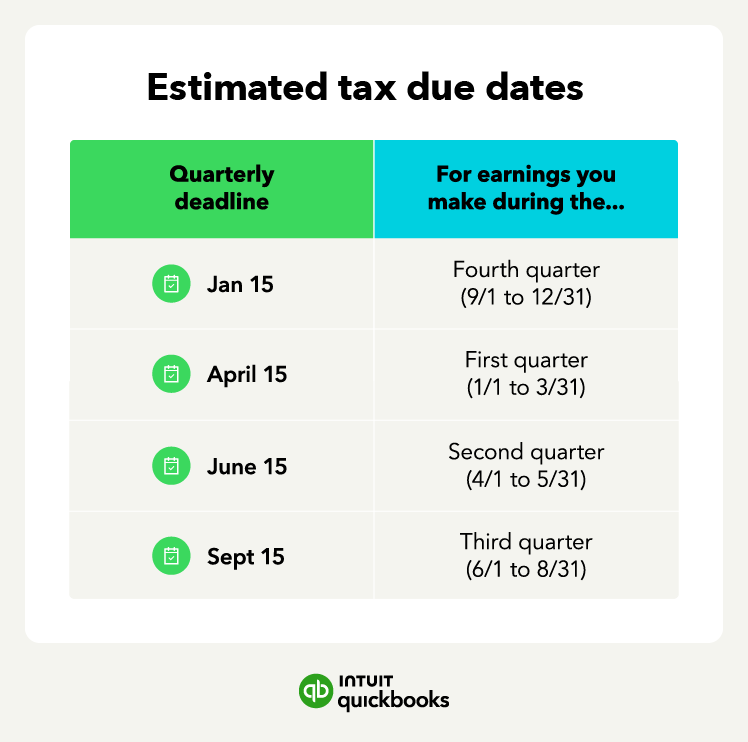
First Quarter Deadline: April 15
This payment covers income earned from January 1 to March 31. For most taxpayers, April 15 is synonymous with the annual tax filing deadline for the previous year’s taxes. However, it also marks the due date for the first estimated tax payment of the current tax year. This means many individuals are making a payment for the first quarter of the current year while simultaneously filing and potentially paying any remaining balance for the previous year.
Second Quarter Deadline: June 15
The second payment covers income earned from April 1 to May 31. There’s a slight overlap here, as the second period is shorter than the first, yet it follows a logical progression from the previous deadline. Taxpayers must account for income generated during these two months and ensure their payment accurately reflects their liability.
Third Quarter Deadline: September 15
This installment covers income earned from June 1 to August 31. By this point in the year, many taxpayers have a clearer picture of their annual income and expenses, allowing for more precise estimations. If your income has fluctuated significantly throughout the year, this is a good opportunity to re-evaluate your total estimated tax liability and adjust your payment accordingly to avoid future penalties.
Fourth Quarter Deadline: January 15 of Next Year
The final estimated tax payment covers income earned from September 1 to December 31. Although this payment is due in the following calendar year, it pertains to the previous tax year’s income. This deadline effectively closes out the estimated tax obligations for the year just ended, paving the way for the preparation of the annual tax return (Form 1040) a few months later.
Special Considerations for Weekends and Holidays
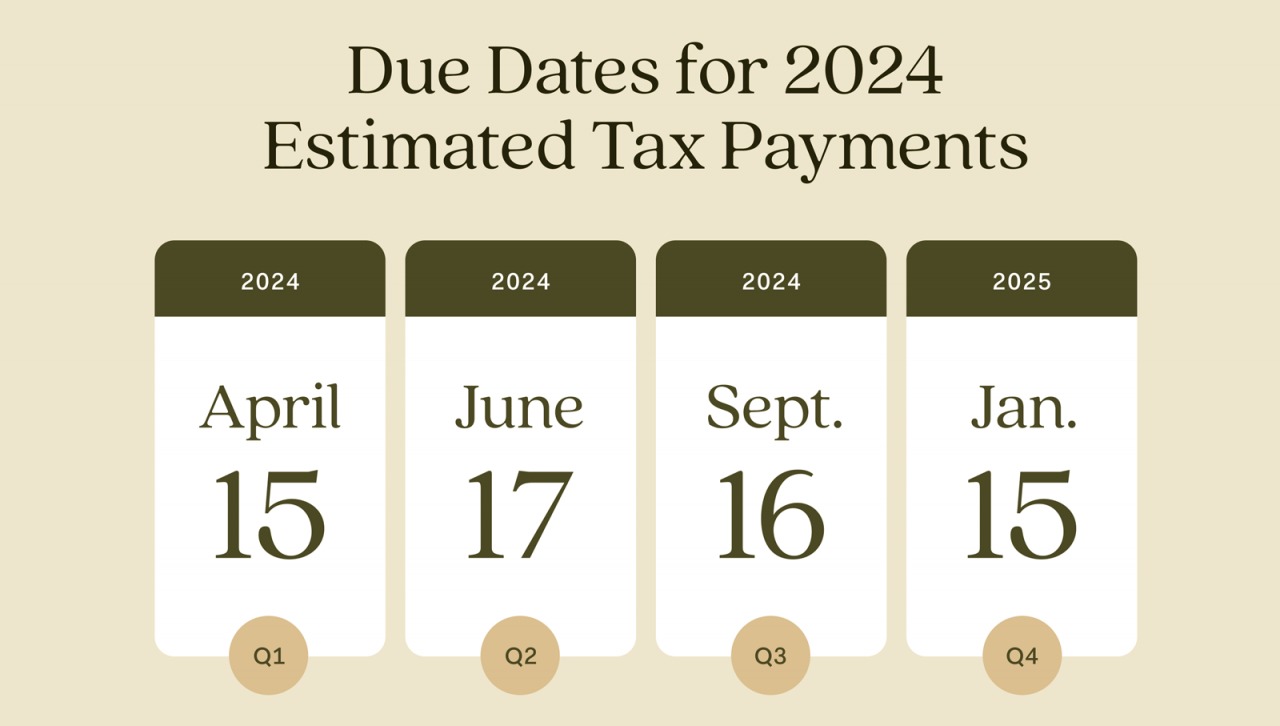
It is important to note that if any of these due dates fall on a weekend or a legal holiday, the deadline is shifted to the next business day. This is a common IRS practice that applies to most tax deadlines. For instance, if April 15 falls on a Saturday, the deadline moves to the following Monday, April 17. While this provides a minor reprieve, it should not be relied upon for procrastination; proactive planning remains the best strategy.
Calculating Your Estimated Tax Liability
Accurately calculating your estimated tax liability is paramount to avoiding penalties. The goal is to pay enough throughout the year to cover your tax obligations without overpaying significantly and tying up your capital unnecessarily.
The 90% Rule and Safe Harbors
The IRS generally requires taxpayers to pay at least 90% of their current year’s tax liability through withholding, estimated payments, or a combination thereof, by the end of the tax year. Alternatively, you can avoid penalties if you pay 100% of your prior year’s tax liability (this is known as a “safe harbor”). For high-income taxpayers (those with an adjusted gross income of more than $150,000 in the prior year, or $75,000 if married filing separately), the prior year safe harbor increases to 110%. Choosing which safe harbor to use depends on your financial situation and expectations for the current year. If you expect your income to be significantly higher than the previous year, using the 100% (or 110%) rule based on prior year income might be a safer bet to avoid penalties. Conversely, if your income is expected to decrease, aiming for 90% of the current year’s liability could be more efficient.
Utilizing Form 1040-ES
The IRS provides Form 1040-ES, Estimated Tax for Individuals, to help taxpayers calculate their estimated tax. This form includes a worksheet that guides you through estimating your adjusted gross income, deductions, tax credits, and ultimately, your total tax liability for the year. It’s a comprehensive tool that allows for a systematic approach to projections. While not required to be filed with your payments, keeping a completed 1040-ES for your records is highly recommended. For those who use tax software or work with a tax professional, these tools often automate or simplify the 1040-ES calculation process.
Adjusting Payments Throughout the Year
Life and business are rarely static, and your income and deductions may change during the year. It’s crucial to adjust your estimated tax payments accordingly. If your income increases unexpectedly, you may need to increase your subsequent quarterly payments to meet the 90% threshold. Conversely, if your income drops or you incur significant deductible expenses, you might be able to reduce your payments. Reviewing your financial situation before each quarterly deadline can prevent both underpayment penalties and unnecessary overpayments. An “annualized income” method can be used if your income varies significantly throughout the year, allowing you to pay estimated tax based on income earned during each payment period rather than a flat annual projection. This is particularly useful for seasonal businesses or those with sporadic income streams.
Penalties for Underpayment and Late Payments
Failing to pay enough estimated tax, or failing to pay by the due dates, can result in penalties. The IRS views estimated tax payments as an ongoing obligation, not merely a suggestion.
Interest and Penalty Charges
The penalty for underpayment of estimated tax is calculated based on the amount of the underpayment, the period for which the underpayment was not paid, and the applicable interest rate. The interest rate on underpayments is determined quarterly and can fluctuate. The penalty itself is not a flat fee but rather a calculation that adds interest to the unpaid amount for the duration it was underpaid. This means the longer you underpay or the more you underpay, the higher the penalty will be. Furthermore, if you completely miss a payment deadline, that payment is considered late, incurring additional penalties.
Avoiding Penalties: Strategies and Exceptions
The primary strategy for avoiding penalties is diligent planning and timely payment. However, there are also specific exceptions and strategies to consider:
- Increased Withholding: If you are employed and also have other income requiring estimated payments, you may be able to increase your W-2 withholding to cover the additional tax liability. This can be simpler than making quarterly payments, as your employer handles the deductions.
- Form 2210: If you do face an underpayment penalty, you might be able to reduce or eliminate it using IRS Form 2210, Underpayment of Estimated Tax by Individuals, Estates, and Trusts. This form helps calculate the penalty but also outlines exceptions, such as those related to casualty, disaster, or other unusual circumstances, or if you became disabled or retired during the tax year.
- Annualized Income Method: As mentioned, if your income varies greatly throughout the year (e.g., a large portion of your income is earned in the last quarter), you can use the annualized income method to calculate estimated tax. This can often reduce or eliminate penalties for earlier quarters.
- Waiver: In certain rare circumstances, the IRS may waive the penalty if the underpayment was due to a casualty, disaster, or other unusual circumstances, or if you retired or became disabled during the tax year and had reasonable cause for not making the payment.
Methods for Paying Estimated Taxes
The IRS offers several convenient ways to make your estimated tax payments, encouraging timely and accurate contributions.
Online Payment Options
The most popular and often recommended method for paying estimated taxes is online. The IRS provides several secure electronic payment options:
- IRS Direct Pay: This service allows you to make payments directly from your checking or savings account without any fees. You can schedule payments up to 365 days in advance.
- Electronic Federal Tax Payment System (EFTPS): This free service from the U.S. Department of the Treasury allows individuals and businesses to make all federal tax payments electronically. It requires enrollment but offers the flexibility to schedule payments up to 365 days in advance and review payment history.
- Debit or Credit Card: While convenient, paying by debit or credit card typically involves a processing fee charged by third-party payment processors. The fee percentage can vary, so it’s wise to compare options if you choose this method.
- Tax Software: Many tax software programs allow you to submit estimated tax payments directly through their platform, often integrating with IRS systems.

Mail-In Payments
For those who prefer traditional methods, estimated tax payments can still be made by mail using a check or money order. You must include an estimated tax payment voucher (Form 1040-ES) with your payment. The voucher ensures your payment is correctly credited to your account. It’s crucial to send your payment to the correct IRS address, which varies depending on your state of residence. Always check the official IRS instructions for the most current mailing addresses. When mailing, ensure your payment is postmarked by the due date to avoid late payment penalties.
Ultimately, managing estimated federal taxes effectively requires proactive engagement with your financial situation throughout the year. By understanding the due dates, accurately calculating your liability, and utilizing available payment methods, you can ensure compliance, avoid penalties, and maintain a robust financial standing.
aViewFromTheCave is a participant in the Amazon Services LLC Associates Program, an affiliate advertising program designed to provide a means for sites to earn advertising fees by advertising and linking to Amazon.com. Amazon, the Amazon logo, AmazonSupply, and the AmazonSupply logo are trademarks of Amazon.com, Inc. or its affiliates. As an Amazon Associate we earn affiliate commissions from qualifying purchases.