
In the rapidly evolving landscape of digital finance, few assets have sparked as much debate, legal scrutiny, and institutional interest as XRP. Often referred to interchangeably with the company Ripple, XRP is a distinct digital asset designed to solve a specific, multi-trillion-dollar problem: the inefficiency of cross-border payments. For investors and financial enthusiasts, understanding XRP requires looking beyond the typical “cryptocurrency” label and examining its role as a bridge currency in a globalized economy.
Understanding the Fundamentals: What is XRP?
XRP is the native digital asset of the XRP Ledger (XRPL), an open-source, permissionless, and decentralized blockchain technology. Launched in 2012 by David Schwartz, Jed McCaleb, and Arthur Britto, XRP was engineered with a primary focus on speed, scalability, and cost-effectiveness. Unlike Bitcoin, which was designed as a decentralized alternative to traditional currency, XRP was built to complement the existing financial system by facilitating the near-instant transfer of value.

The XRP Ledger (XRPL) and Consensus
One of the most significant technical distinctions of XRP is its consensus mechanism. Most popular cryptocurrencies rely on Proof of Work (mining) or Proof of Stake (validating based on holdings). The XRP Ledger uses the XRP Ledger Consensus Protocol. In this system, designated servers known as validators agree on the order and outcome of transactions every three to five seconds.
From a financial perspective, this eliminates the high energy costs and slow transaction times associated with mining. For a global payment system, this efficiency is vital. While Bitcoin can handle roughly five transactions per second and Ethereum approximately fifteen, the XRP Ledger can process 1,500 transactions per second, scalable to levels that rival major credit card processors like Visa.
How XRP Differs from Bitcoin and Ethereum
To understand the “Money” niche application of XRP, one must recognize its structural differences from its peers. Bitcoin is frequently viewed as “digital gold”—a store of value that is scarce and resistant to censorship. Ethereum is a “world computer” designed for smart contracts and decentralized applications.
XRP, however, is a “utility token” optimized for liquidity. It is pre-mined, meaning all 100 billion tokens were created at the ledger’s inception. This lack of mining prevents the inflationary pressure of new supply entering the market via computational work, though it does place the management of the circulating supply into a unique escrow system, which we will explore later.
The Role of Ripple: Distinguishing the Company from the Asset
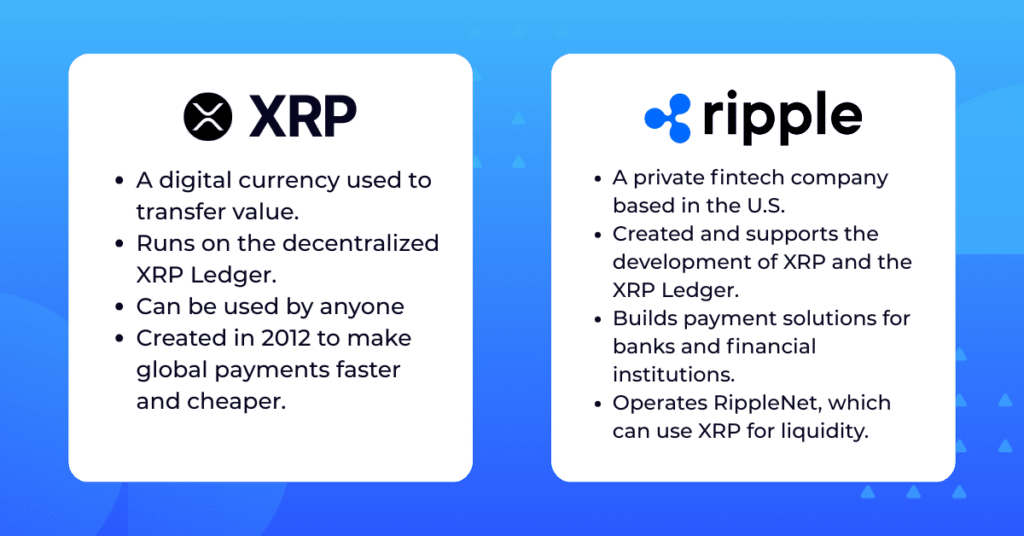
A common point of confusion for new investors is the relationship between XRP and Ripple. Ripple is a private, US-based technology company that builds software for the financial industry. XRP is the independent digital asset that Ripple uses in its product suite. While Ripple is a major stakeholder in XRP and contributes to the development of the XRP Ledger, the ledger itself is decentralized; if Ripple were to cease operations, XRP would continue to exist and trade on the open market.
RippleNet and On-Demand Liquidity (ODL)
Ripple’s primary contribution to the financial world is RippleNet, a global network of banks and financial institutions that use Ripple’s software to send and receive payments. The flagship feature of this network is On-Demand Liquidity (ODL), which utilizes XRP as a bridge currency.
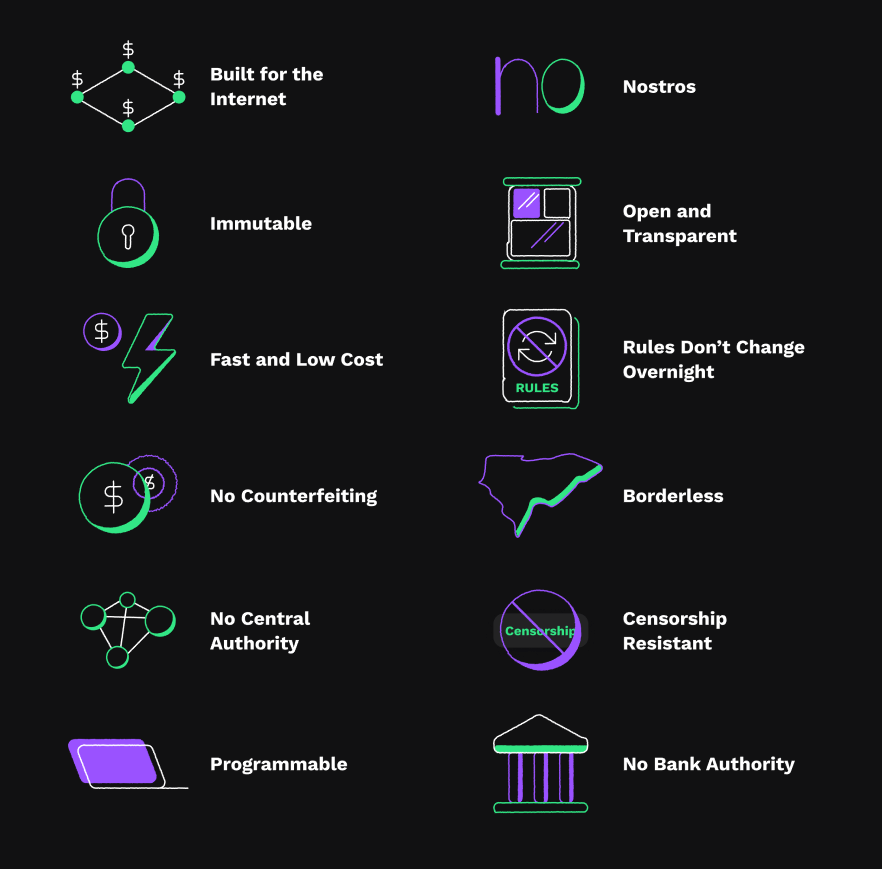
In traditional cross-border banking, financial institutions must maintain “nostro” and “vostro” accounts. These are pre-funded accounts in foreign currencies held in banks abroad. For example, a bank in the US wanting to send money to Mexico must keep a large amount of Pesos in a Mexican bank account. This traps trillions of dollars in stagnant capital globally.
XRP solves this by acting as a bridge. A bank can convert USD to XRP, send the XRP across the ledger in seconds, and have it converted to Pesos on the other end. This eliminates the need for pre-funded accounts, freeing up capital for more productive uses.
Institutional Adoption and Banking Partnerships
The value proposition of XRP is tied heavily to its adoption by traditional financial players. Over the years, Ripple has partnered with hundreds of institutions, including Santander, American Express, and SBI Holdings. These partnerships aim to streamline the “pipes” of global finance. For the investor, this represents a shift from retail speculation to institutional utility. When a bank uses XRP for liquidity, it creates a real-world demand for the asset that is independent of market sentiment or retail hype.
Investing in XRP: Market Dynamics and Tokenomics
From a personal finance and investing standpoint, XRP presents a unique profile. Because it is designed for institutional use, its price movements are often influenced by different catalysts than those of “meme coins” or even large-cap assets like Bitcoin.
Tokenomics and the Escrow System
The total supply of XRP is capped at 100 billion tokens. To provide predictability to the market, Ripple placed 55 billion of its XRP holdings into a series of escrows in 2017. Each month, 1 billion XRP are released from escrow to be used for Ripple’s operations and sales to institutional partners. Any unused portion is returned to the back of the escrow line.
For investors, this escrow system is a double-edged sword. On one hand, it prevents Ripple from “dumping” its holdings and crashing the price. On the other hand, the steady release of supply can act as a psychological barrier to rapid price appreciation compared to assets with a declining issuance rate.
Market Volatility and Historical Performance
XRP has historically been one of the most volatile assets in the top ten by market capitalization. It reached an all-time high of approximately $3.84 in early 2018 but has since experienced significant fluctuations. Its price is sensitive to three main factors:
-
General Crypto Market Trends: Like all digital assets, XRP often follows the price action of Bitcoin.
-
Partnership Announcements: News of a major bank adopting ODL typically triggers bullish sentiment.
-
Regulatory Developments: Perhaps more than any other asset, XRP’s price is tied to its legal status in the United States.
The Regulatory Landscape: Ripple vs. the SEC
One cannot discuss XRP without addressing the legal battle that has defined its market presence since late 2020. The U.S. Securities and Exchange Commission (SEC) filed a lawsuit against Ripple Labs, alleging that the sale of XRP constituted an unregistered securities offering.
The Legal Battle and Its Implications
The core of the argument rested on whether XRP is a “security” (like a stock in Ripple) or a “commodity/currency” (like Bitcoin or gold). For years, this litigation created a cloud of uncertainty, leading many US-based exchanges like Coinbase and Kraken to delist the asset.
In July 2023, a landmark ruling by Judge Analisa Torres provided a degree of clarity. The court ruled that XRP, in and of itself, is not a security. Specifically, it found that programmatic sales of XRP on public exchanges did not meet the criteria of an investment contract. This was a significant victory for the XRP community and the broader crypto industry, as it established a legal precedent for how digital assets are categorized.
Global Regulatory Clarity
While the US has struggled with a “regulation by enforcement” approach, other regions have been more proactive. The UK, Switzerland, Japan, and the UAE have already categorized XRP as a non-security digital asset. For international investors, this global clarity has allowed Ripple to continue expanding its footprint outside the US, particularly in the Asia-Pacific and Middle Eastern markets, which are the most active corridors for cross-border remittances.
The Future of XRP in the Global Financial Ecosystem
As we look toward the future of money, the role of XRP appears increasingly intertwined with the concept of the “Internet of Value.” This vision suggests that value should move as easily and instantly as information moves today.
CBDCs and Interoperability
Central Bank Digital Currencies (CBDCs) are the next frontier for national economies. Dozens of countries are currently researching or piloting digital versions of their sovereign currencies. Ripple has positioned the XRP Ledger as a platform for CBDC issuance. Because the XRPL is neutral and highly efficient, it can serve as the “interoperability layer” that allows a digital Dollar to be exchanged for a digital Euro or a digital Yen without friction.
Long-term Outlook for Investors
For those looking at XRP through an investment lens, the thesis is built on the “Utility Scan.” If XRP becomes the standard liquidity tool for the world’s banks, the sheer volume of transactions would necessitate a higher price floor to move billions of dollars in value efficiently. However, risks remain. Competition from other protocols (like Stellar or JP Morgan’s Onyx), shifts in the regulatory environment, and the slow pace of institutional change are all factors that a prudent investor must consider.
In conclusion, XRP is more than just a digital currency; it is a specialized financial tool designed for a specific purpose. Its ability to settle transactions in seconds for fractions of a cent makes it a formidable contender in the race to modernize global finance. Whether it achieves its goal of becoming the world’s bridge currency remains to be seen, but its technical resilience and regulatory milestones have firmly established it as a cornerstone of the digital asset economy. For anyone interested in the intersection of technology and money, XRP is a case study in how innovation attempts to disrupt the world’s most established financial structures.
aViewFromTheCave is a participant in the Amazon Services LLC Associates Program, an affiliate advertising program designed to provide a means for sites to earn advertising fees by advertising and linking to Amazon.com. Amazon, the Amazon logo, AmazonSupply, and the AmazonSupply logo are trademarks of Amazon.com, Inc. or its affiliates. As an Amazon Associate we earn affiliate commissions from qualifying purchases.