
Since its inception in 2006, the PlayStation Network (PSN) has evolved from a basic matchmaking service into a massive digital ecosystem supporting over 100 million active monthly users. It is the central nervous system for Sony’s gaming division, facilitating everything from digital downloads and cloud saves to social networking and competitive multiplayer. However, despite its critical importance, PSN has been plagued by a reputation for instability, slow speeds, and periodic security concerns. To understand what is “wrong” with PSN, one must look past the surface-level outages and examine the underlying technical architecture, infrastructure legacy, and the evolving demands of modern digital distribution.
Infrastructure and Scalability: The Burden of Legacy Systems
The core of PSN’s technical struggle often traces back to the sheer speed at which the service had to scale. When PSN was first developed for the PlayStation 3, it was a reactive measure to Microsoft’s Xbox Live. This hurried foundation meant that much of the early architecture was not designed with the future of 100GB game files and 4K streaming in mind.
Server Reliability and Periodic Downtime
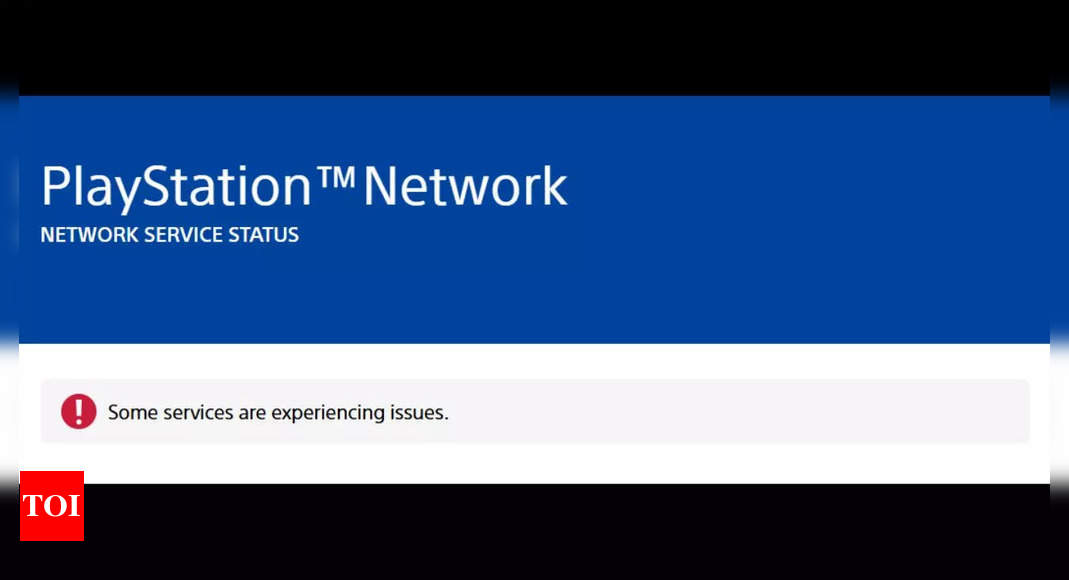
One of the most persistent complaints regarding PSN is the frequency of “Scheduled Maintenance” and unexpected outages. From a technical standpoint, this often suggests a lack of robust redundancy in certain nodes of the network. While modern cloud services like AWS or Google Cloud boast “five nines” of availability (99.999%), PSN has historically struggled with synchronization issues between regional databases. When one region’s authentication server fails, it can cause a “handshake” error that prevents users globally from signing in, even if the local servers are functional.
Furthermore, Sony’s backend often undergoes heavy maintenance to patch vulnerabilities or update database schemas. Unlike more modern, containerized microservices that allow for hot-swapping code without taking the system offline, older segments of the PSN architecture appear to require traditional downtime to implement significant changes.
Global Traffic and Content Delivery Networks (CDNs)
Download speeds on PSN have long been a point of contention. Users frequently report that their 1Gbps fiber connection results in download speeds that are a fraction of their theoretical maximum. This is rarely a problem with the user’s ISP; rather, it is an issue with how PSN interacts with Content Delivery Networks (CDNs).
Sony utilizes various third-party CDNs (such as Akamai and Limelight) to cache game data closer to the user. However, the PSN “Storefront” and the “Download Manager” often use aggressive throttling to ensure server stability during peak hours. Additionally, the way PlayStation consoles handle TCP window scaling—a method for managing data flow over a network—has historically been less optimized than that of Windows-based PCs or Xbox consoles. This results in “packet bottlenecks” where the console acknowledges data slower than the server can send it, leading to the dreaded “99+ hours remaining” notification.
Security Vulnerabilities and Data Integrity
For many long-term users, the defining moment in PSN history was the 2011 outage, which lasted 23 days and exposed the personal data of 77 million accounts. While Sony has made massive strides in security since then, the network still faces modern threats that expose the fragile balance between user convenience and digital safety.
The Legacy of the 2011 Breach
The 2011 breach was a wake-up call that revealed Sony’s database was largely unencrypted and lacked basic firewall protections at the application layer. In the decade since, Sony has implemented mandatory multi-factor authentication (MFA) and improved encryption standards (AES-128 and higher) for stored data. However, the “shadow” of that breach remains in the way Sony handles account recovery and ID changes. For years, users could not change their PSN Online IDs because the database was built using the Online ID as a unique primary key—a fundamental database design flaw. Fixing this required a massive overhaul of the database architecture to map IDs to a hidden, static unique identifier, a process that still occasionally causes data loss in older PSN titles.
DDoS Attacks and Social Engineering
Modern disruptions are less about data theft and more about Distributed Denial of Service (DDoS) attacks. Because PSN is a high-profile target, it is frequently hit by massive botnets intended to overwhelm its authentication gateways. While Sony has implemented better scrubbers to filter out malicious traffic, the sheer volume of a coordinated attack can still cause “latency spikes” or login failures.
Beyond technical attacks, the PSN ecosystem is also vulnerable to social engineering. The “account recovery” process has been criticized for being a weak link. Hackers often use leaked information from other site breaches to trick support staff into resetting passwords. While this is a human-element problem, it highlights a need for more robust, biometrically-linked or hardware-key-based security protocols within the PSN framework.
The Software User Experience: UI Latency and Ecosystem Fragmentation
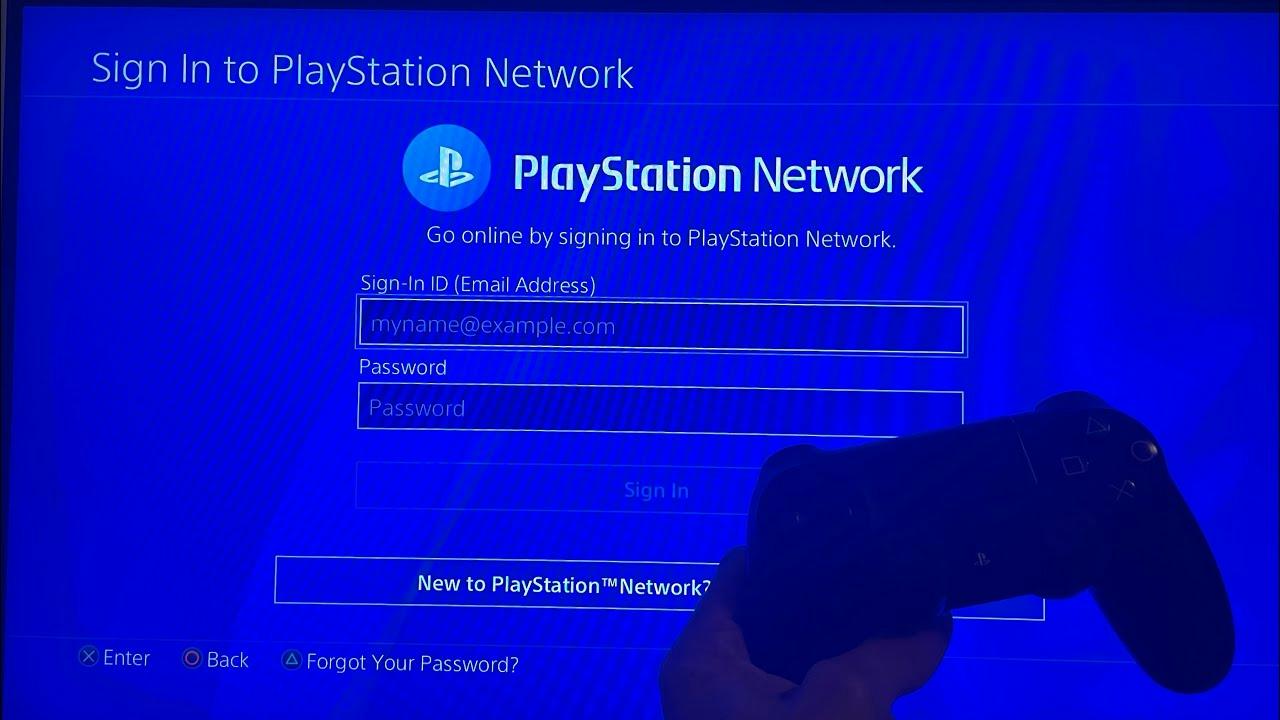
A network is only as good as the interface used to access it. On the PlayStation 4 and even the PlayStation 5, the PSN storefront is often criticized for being sluggish, prone to crashing, and difficult to navigate. This is largely a software optimization issue rooted in how the console hardware communicates with the network API.
Storefront Optimization and API Lag
The PlayStation Store is essentially a web-based application wrapped in a console-native shell. When a user scrolls through the store, the console makes hundreds of API calls to fetch icons, prices, videos, and metadata. If the PSN API response time is slow—due to high server load or inefficient query handling—the entire UI hitches.
On the PS5, Sony attempted to solve this by integrating the store directly into the operating system’s firmware rather than running it as a separate app. While this improved speed, it introduced a new problem: fragmentation. Changes made to the store on the web or mobile app sometimes take hours to propagate to the console UI, leading to “content mismatch” errors where a user buys a game on their phone but cannot see it in their console library immediately.
Cross-Platform Integration and Multiplayer Sync
As gaming moves toward a cross-platform future, PSN’s closed-wall architecture has faced challenges. Implementing cross-save and cross-play features requires PSN to communicate seamlessly with third-party networks like Epic Online Services or Activision’s Battle.net. Technical friction occurs when PSN’s “Party Chat” or “Trophy” synchronization protocols interfere with a game’s internal networking code. This often manifests as “NAT Type” errors, where the PSN’s security layers block the peer-to-peer (P2P) connections required for certain multiplayer games, requiring users to manually mess with router port forwarding—a hurdle that should be obsolete in the modern era.
Digital Rights Management (DRM) and Content Access
Perhaps the most significant “wrong” with PSN from a consumer-rights perspective is how the network handles Digital Rights Management. As more players shift to digital-only libraries, their access to hundreds of dollars worth of content is entirely dependent on the health of the PSN servers.
License Verification and Offline Play
PSN uses a system of “Primary” and “Secondary” consoles to manage licenses. To play digital games, the console must periodically “ping” the PSN servers to verify the license. If the PSN authentication servers are down, even for “Scheduled Maintenance,” users on secondary consoles—or those who haven’t set their console to Primary—find themselves locked out of their own library. This “always-online” check is a significant point of failure. If a user’s local internet is fine but the PSN handshake server is experiencing a 1% packet loss, the license verification can fail, resulting in a locked game icon.
The Challenge of Legacy Content and PS Now
Sony’s transition to the new PlayStation Plus tiers (incorporating the old PS Now) highlighted the technical difficulties of streaming and backward compatibility over a network. Streaming a PS3 game requires a custom-built server farm of actual Cell Processor hardware, as the architecture is notoriously difficult to emulate. This creates a “latency ceiling” where the physical distance between the user and the PSN data center determines the playability of the game. Unlike Xbox’s approach, which emphasizes local emulation and “Smart Delivery,” Sony’s reliance on the PSN cloud for legacy content makes the service vulnerable to jitters and bandwidth fluctuations that are outside the user’s control.
Future-Proofing PSN: The Path to a Robust Digital Infrastructure
To fix what is wrong with PSN, Sony has begun shifting away from proprietary server solutions in favor of strategic partnerships. In 2019, Sony announced a landmark deal to use Microsoft’s Azure cloud semi-conductors and infrastructure for its streaming and network services. This move is a tacit admission that building a global-scale network from scratch is no longer viable for a hardware-focused company.
The future of PSN depends on three technical evolutions:
- Transition to Microservices: De-coupling the various components of PSN (Store, Trophies, Multiplayer, Social) so that a failure in one does not cause a total system blackout.
- Edge Computing: Utilizing Azure’s global footprint to place “Edge” servers closer to users, virtually eliminating the latency involved in license checks and UI rendering.
- Unified Identity Management: Streamlining the database to handle cross-generational data more fluidly, ensuring that a user’s digital history from 2006 is as accessible as their newest PS5 capture.
While PSN has come a long way from its clunky beginnings, it remains a system in transition. The “wrongs” of the network are the growing pains of a legacy platform trying to support the cutting-edge demands of the 9th generation of gaming. Only through continued infrastructure modernization and a shift toward more open, resilient network protocols can PSN truly meet the expectations of its global user base.
aViewFromTheCave is a participant in the Amazon Services LLC Associates Program, an affiliate advertising program designed to provide a means for sites to earn advertising fees by advertising and linking to Amazon.com. Amazon, the Amazon logo, AmazonSupply, and the AmazonSupply logo are trademarks of Amazon.com, Inc. or its affiliates. As an Amazon Associate we earn affiliate commissions from qualifying purchases.