
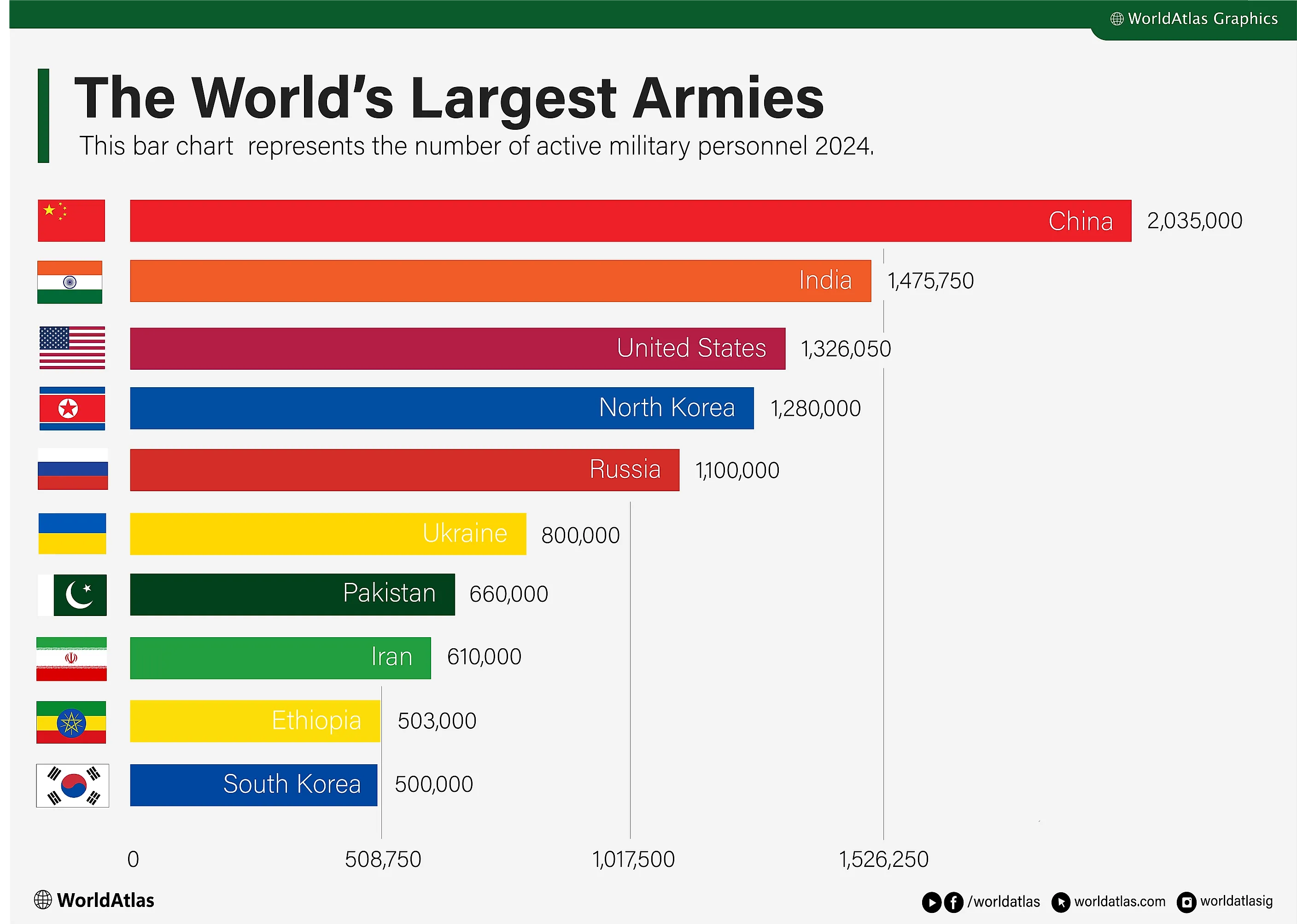
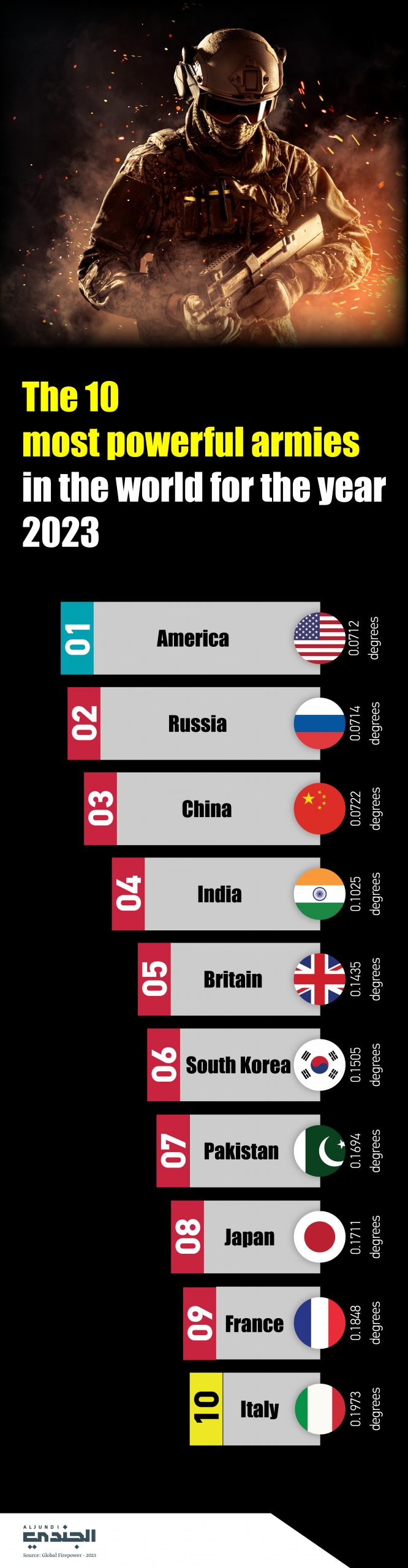
The perennial question of which nation commands the world’s strongest military is complex, often leading to debates dominated by troop numbers, sheer volume of hardware, and historical dominance. However, in the 21st century, a more accurate and insightful metric for military power lies not just in quantity, but in the sophisticated integration and application of advanced technology. The true strength of a modern military is increasingly defined by its technological edge, its ability to leverage cutting-edge innovations across the spectrum of warfare, from cyber defense and artificial intelligence to hypersonic weaponry and advanced reconnaissance. This article delves into the technological drivers of military might, exploring how innovation shapes defense capabilities and distinguishes leading global powers.
The Technological Pillars of Modern Military Dominance
A nation’s military strength in the contemporary era is not a static measure but a dynamic interplay of technological advancements and their strategic deployment. The concept of military superiority has evolved from traditional metrics like troop size and artillery count to encompass a far more intricate and technologically driven landscape. The ability to innovate, adapt, and integrate new technologies is paramount, allowing nations to project power, defend their interests, and deter adversaries with unparalleled effectiveness. This section explores the fundamental technological pillars that underpin a nation’s defense capabilities.
Advanced Weaponry and Platforms
The foundation of any military’s offensive and defensive capabilities rests on its weaponry and the platforms that deliver them. In the technological race, this translates to a constant pursuit of more precise, potent, and survivable systems.
Next-Generation Air Power
Air superiority remains a critical component of modern warfare. Nations vie for dominance through advanced fighter jets, stealth technology, unmanned aerial vehicles (UAVs), and sophisticated air-to-air and air-to-ground munitions. The development of fifth-generation and soon-to-be sixth-generation fighter aircraft, characterized by their stealth capabilities, networked data fusion, and advanced sensor suites, represents a significant leap in air power. UAVs, ranging from small reconnaissance drones to large combat platforms, are transforming aerial warfare, offering persistent surveillance, precision strikes, and reduced risk to human pilots. The integration of artificial intelligence into drone operations, enabling autonomous target recognition and engagement, further amplifies their effectiveness.
Naval Superiority in the Digital Age
Naval strength is no longer solely about the number of ships. Modern navies are defined by their technological sophistication, including advanced submarines, aircraft carriers equipped with electromagnetic catapults, precision-guided missiles, and robust anti-submarine warfare (ASW) capabilities. The development of unmanned surface and underwater vehicles (USVs and UUVs) is revolutionizing naval operations, offering enhanced reconnaissance, mine countermeasures, and the potential for swarm tactics. Furthermore, the integration of cyber and electronic warfare capabilities into naval platforms ensures the secure communication and operational integrity of these complex systems in contested environments.
Ground Forces: Robotics and Lethality
While often perceived as less technologically advanced than air or naval forces, ground forces are undergoing a significant transformation driven by technology. The integration of advanced robotics, including autonomous ground vehicles for logistics and reconnaissance, and potentially for combat roles, is becoming a reality. Precision artillery, advanced networked communication systems, and sophisticated sensor technologies enhance situational awareness and lethality. The development of directed-energy weapons, such as lasers and high-powered microwaves, also holds the potential to revolutionize ground defense and anti-missile capabilities.
The Ubiquitous Influence of Artificial Intelligence (AI) and Machine Learning (ML)
Artificial intelligence and machine learning are not merely buzzwords; they are fundamental forces reshaping every aspect of military operations, from strategic planning and intelligence analysis to battlefield execution and logistics. Their integration promises to enhance decision-making speed, improve target identification, and automate complex tasks.
AI-Powered Intelligence, Surveillance, and Reconnaissance (ISR)
The sheer volume of data generated by modern ISR platforms—satellites, drones, ground sensors—is overwhelming for human analysts. AI and ML algorithms are crucial for sifting through this data, identifying patterns, detecting anomalies, and providing actionable intelligence in near real-time. This allows for proactive threat assessment, improved battlefield awareness, and more effective targeting. AI can automate the identification and tracking of enemy assets, predict enemy movements, and generate comprehensive threat assessments, significantly reducing the cognitive load on human commanders.
Autonomous Systems and Decision Support
AI is the driving force behind the increasing autonomy of military systems. This ranges from autonomous navigation and operation of drones and vehicles to sophisticated decision support systems for commanders. ML algorithms can analyze vast datasets of combat scenarios to suggest optimal courses of action, predict outcomes, and identify potential risks. The ethical implications of autonomous weapons systems (AWS) are a subject of ongoing debate, but their potential to react faster than humans in high-speed engagements is undeniable, pushing the boundaries of what is technologically feasible in warfare.
Cyber Warfare and AI
In the domain of cyber warfare, AI plays a dual role. It is instrumental in developing more sophisticated cyberattack tools, capable of identifying vulnerabilities and launching adaptive attacks. Simultaneously, AI is essential for cyber defense, enabling the rapid detection and mitigation of cyber threats, the identification of malicious code, and the proactive hardening of critical infrastructure. The constant evolution of AI in cyber warfare creates an ongoing arms race, where defensive and offensive capabilities are perpetually being refined.
Dominance in the Cyber and Information Warfare Domains
The battlefield is no longer confined to physical spaces; it extends into the digital realm. Cyber warfare and information operations are critical components of modern military strength, capable of disrupting enemy command and control, degrading infrastructure, and influencing public opinion.
Offensive and Defensive Cyber Capabilities
A nation’s ability to conduct offensive cyber operations—disrupting critical infrastructure, compromising enemy networks, and stealing sensitive information—is a significant deterrent and a potent weapon. Conversely, robust defensive cyber capabilities are essential to protect one’s own networks, military systems, and critical national infrastructure from cyberattacks. This involves sophisticated intrusion detection systems, network segmentation, encryption, and rapid incident response. The development of specialized cyber units and advanced tools is a hallmark of technologically advanced militaries.
Information Operations and Cognitive Warfare
Beyond traditional cyberattacks, militaries are increasingly engaging in information operations, which aim to influence perceptions, shape narratives, and sow discord among adversaries and their populations. This can involve spreading disinformation, manipulating social media, and employing sophisticated propaganda techniques. Cognitive warfare, a more advanced form of information operations, seeks to influence the decision-making processes and even the very thought patterns of targeted individuals and groups. The ability to control the information space is as crucial as controlling the physical battlespace.
The Synergy of Integrated Systems and Network-Centric Warfare
The true measure of a modern military’s strength lies not just in individual technological advancements but in how seamlessly these technologies are integrated into a cohesive, networked system. Network-centric warfare emphasizes the creation of a ubiquitous information environment where all assets—from individual soldiers to strategic command centers—are connected, sharing real-time data and enhancing situational awareness and coordinated action.
Data Fusion and Enhanced Situational Awareness
The ability to fuse data from diverse sources—sensors, intelligence feeds, battlefield reports—into a single, coherent operational picture is paramount. AI and advanced data analytics play a crucial role in this data fusion process, allowing commanders to have an unparalleled understanding of the battlefield. This enhanced situational awareness enables faster and more informed decision-making, better coordination of forces, and the identification of opportunities and threats that might otherwise be missed.
Command and Control (C2) Systems in the Digital Age
Modern C2 systems are highly sophisticated, leveraging secure communication networks, advanced software, and AI to enable commanders to direct forces effectively across vast distances and complex environments. The resilience and security of these C2 systems are critical. Adversaries will undoubtedly target C2 nodes, making robust redundancy, encryption, and cyber defenses paramount. The ability to maintain command and control even under duress is a hallmark of a technologically superior military.
Logistics and Sustainment Through Technology
While often overlooked, the technological advancements in military logistics and sustainment are critical to maintaining operational readiness. This includes the use of predictive analytics for maintenance, autonomous resupply vehicles, advanced inventory management systems, and innovations in military medicine, such as remote surgery and advanced prosthetics. The ability to supply and support forces efficiently and effectively, even in austere environments, is directly linked to technological prowess.

Conclusion: The Enduring Technological Imperative
The question of “what’s the strongest military in the world” is increasingly answered not by the sheer number of soldiers or tanks, but by the technological sophistication and the ability to integrate these advancements into a formidable, adaptable, and resilient fighting force. Nations that lead in research and development, that embrace artificial intelligence, cyber capabilities, and advanced platforms, and that can seamlessly network these components into a cohesive fighting doctrine, are those that will define the future of military strength. The technological imperative is undeniable; it is the engine of modern military power, continuously redefining the landscape of global security and projecting a nation’s influence on the world stage. The ongoing pursuit of technological superiority is not merely an arms race; it is a fundamental evolution of what it means to be strong in the 21st century.
aViewFromTheCave is a participant in the Amazon Services LLC Associates Program, an affiliate advertising program designed to provide a means for sites to earn advertising fees by advertising and linking to Amazon.com. Amazon, the Amazon logo, AmazonSupply, and the AmazonSupply logo are trademarks of Amazon.com, Inc. or its affiliates. As an Amazon Associate we earn affiliate commissions from qualifying purchases.