
For both seasoned investors and curious newcomers, the question “What’s the stock market open today?” is more than a simple inquiry; it’s a fundamental checkpoint in the fast-paced world of finance. The seemingly straightforward answer often opens the door to a deeper understanding of market mechanics, global interconnections, and the strategic decisions that underpin successful investing. In an era where information travels at the speed of light, knowing when and how markets operate is crucial for navigating investment opportunities, managing risk, and staying abreast of financial trends. This article delves into the intricacies of stock market operating hours, why they matter, and how modern investors can effectively track and leverage this information.
Understanding Stock Market Operating Hours
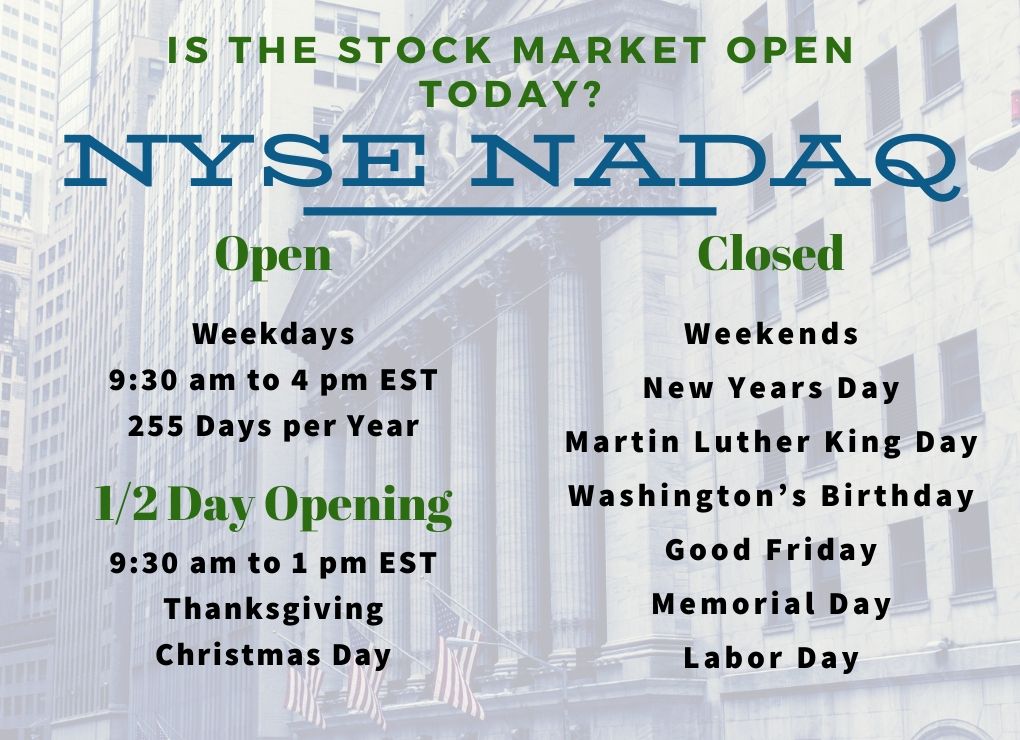
The stock market, particularly major exchanges like the New York Stock Exchange (NYSE) and NASDAQ, adheres to specific operating hours that dictate when investors can buy and sell securities. These hours are not arbitrary but are designed to ensure orderly trading, provide a window for information dissemination, and facilitate market liquidity.
Standard Trading Sessions
In the United States, the core trading hours for both the NYSE and NASDAQ are from 9:30 AM to 4:00 PM Eastern Time (ET), Monday through Friday. This seven-and-a-half-hour window is considered the “regular” or “standard” trading session, during which the vast majority of transactions occur. During these hours, market participants, from individual retail investors to large institutional traders, execute orders, and stock prices fluctuate based on supply and demand, news, and economic data. These hours are critical because they represent the peak period of liquidity, meaning there are many buyers and sellers, making it easier to execute trades at desired prices.
Pre-Market and After-Hours Trading
Beyond the standard session, stock markets offer extended trading opportunities. Pre-market trading typically runs from 4:00 AM to 9:30 AM ET, while after-hours trading usually extends from 4:00 PM to 8:00 PM ET. These sessions allow investors to react to news released outside standard hours, such as earnings reports or major economic announcements. However, trading during these extended hours comes with caveats. Liquidity is generally lower, meaning fewer buyers and sellers are present. This can lead to wider bid-ask spreads and increased price volatility, making it more challenging to execute trades at favorable prices and potentially exposing investors to greater risk. Sophisticated trading algorithms and institutional players often dominate these periods, requiring individual investors to exercise extra caution.
Global Market Overview: Time Zones and Trading Windows
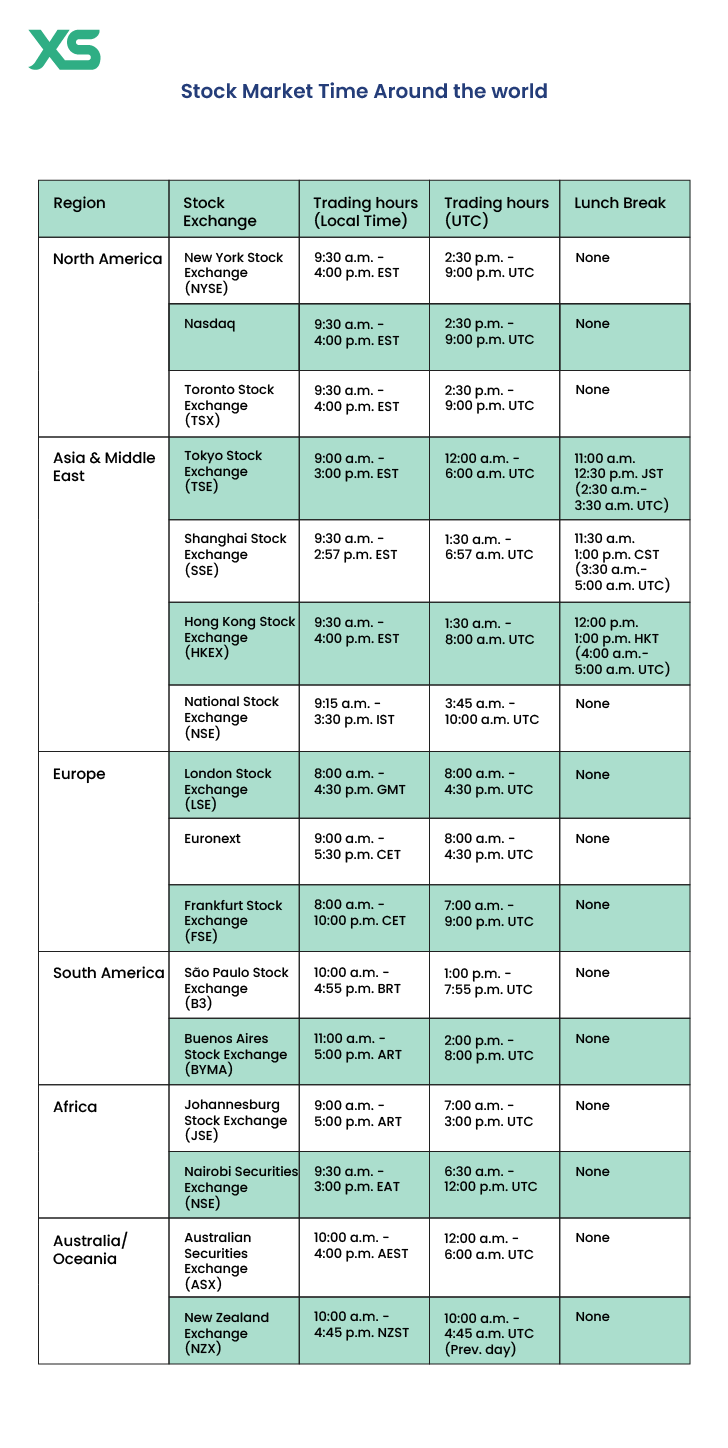
The financial world doesn’t sleep, even if individual markets do. When one major exchange closes, another is often just opening or already in full swing elsewhere around the globe. Understanding this global interconnectedness is vital for investors with international portfolios or those tracking global economic trends. For instance:
- Asian Markets: Tokyo (Nikkei), Hong Kong (Hang Seng), and Shanghai (SSE Composite) typically open when Western markets are closing or still asleep. Their trading activities can significantly influence the opening sentiment of European and American markets.
- European Markets: London (FTSE 100), Frankfurt (DAX), and Paris (CAC 40) generally operate between morning and late afternoon local time, bridging the gap between Asian and American trading hours.
- Other Major Exchanges: Beyond these, exchanges in Canada, Australia, India, and various emerging markets each have their own operating schedules, creating a continuous, 24-hour financial news cycle.
Navigating these different time zones and trading windows requires a global perspective and access to up-to-date information, particularly for those engaged in international equities or currency trading.
Holiday Schedules and Market Closures
Stock markets observe several national holidays throughout the year, during which they remain closed. In the U.S., these typically include New Year’s Day, Martin Luther King, Jr. Day, Presidents’ Day, Good Friday, Memorial Day, Juneteenth National Independence Day, Independence Day, Labor Day, Thanksgiving Day, and Christmas Day. Sometimes, if a holiday falls on a weekend, the market might observe it on the preceding Friday or following Monday. Additionally, the market may close early on specific days, such as the day before Independence Day or Thanksgiving Eve. It is imperative for investors to consult official exchange calendars to avoid missing critical trading windows or attempting to place trades on a closed market. These closures are not just about a day off; they mean no liquidity and no price movement, which can impact urgent trading decisions or portfolio rebalancing.
Why Market Hours Matter to Investors
The precise timing of market operations isn’t merely a logistical detail; it profoundly influences investment strategies, risk management, and overall portfolio performance. Understanding when to engage with the market is as critical as knowing what to buy or sell.
Liquidity and Price Volatility
During standard trading hours, the market enjoys maximum liquidity. This means there’s a high volume of buyers and sellers, allowing for efficient execution of trades with minimal impact on prices. High liquidity translates to tighter bid-ask spreads (the difference between the highest price a buyer is willing to pay and the lowest price a seller is willing to accept). Outside these hours, particularly in pre-market and after-hours sessions, liquidity drops significantly. With fewer participants, even small orders can move prices substantially, leading to increased volatility and wider bid-ask spreads. This can result in less favorable execution prices for investors, especially those trading illiquid stocks.
Impact of News Releases
Corporate earnings reports, economic data releases (e.g., inflation figures, employment numbers), and geopolitical news often drop outside standard trading hours. Companies strategically time these announcements to allow investors and analysts time to process the information before the next trading session. While pre-market and after-hours trading sessions allow immediate reactions, the full impact of the news is typically seen during the subsequent regular trading session, when higher liquidity and broader market participation provide a more robust price discovery mechanism. Investors must be aware of upcoming news releases and consider their potential impact on their holdings, choosing whether to react in less liquid extended hours or wait for the standard session.
Trading Strategies for Different Market Sessions
Different market sessions lend themselves to distinct trading strategies:
- Standard Hours: Ideal for most investors, offering the best liquidity, tighter spreads, and a more stable environment for both short-term trades and long-term position building. Day traders thrive on the consistent volume and predictable patterns within these hours.
- Pre-Market/After-Hours: Primarily for experienced traders willing to take on higher risk. Strategies here often revolve around reacting quickly to specific news events, arbitrage opportunities, or executing urgent trades. Due to lower liquidity, limit orders (which specify the maximum price you’re willing to pay or the minimum price you’re willing to accept) are often preferred over market orders (which execute at the best available price immediately).
- Overnight/Weekend: While direct trading is closed, these periods are crucial for research, planning, and adjusting strategies based on global market movements, breaking news, or personal financial updates.
Managing Risk Outside Standard Hours
Trading outside standard hours inherently carries higher risk due to lower liquidity and increased volatility. Prices can gap up or down significantly on opening if major news breaks overnight, potentially leading to substantial gains or losses. Investors must be extra cautious. Using stop-loss orders (to limit potential losses) or taking smaller positions can mitigate some of this risk. More fundamentally, understanding that market sentiment and prices can shift dramatically during closed periods requires a disciplined approach and realistic expectations about potential outcomes.
How to Easily Check Market Status in Real-Time
In today’s interconnected world, determining whether the stock market is open is easier than ever. A plethora of digital tools and platforms provide real-time updates, ensuring investors are never caught off guard.
Financial News Websites and Apps
Reputable financial news outlets are an excellent first stop. Websites like Bloomberg, Reuters, The Wall Street Journal, CNBC, Yahoo Finance, and MarketWatch consistently display the current status of major global exchanges, often with a simple “Market Open” or “Market Closed” indicator right on their homepages. Many also offer dedicated mobile apps that provide instant access to market data, news feeds, and personalized watchlists, making it convenient to check market status on the go. These platforms often feature live market indexes, showing if they are currently moving.
Brokerage Platforms
Your chosen online brokerage platform (e.g., Fidelity, Charles Schwab, E*TRADE, Interactive Brokers, Robinhood) is perhaps the most direct and reliable source. When you log in, the platform will clearly indicate whether the market is open or closed. If it’s closed, it will often display a message stating when trading will resume. Brokerage platforms also provide real-time quotes, allow you to place orders, and manage your portfolio, making them an indispensable tool for active investors. They will also typically publish holiday schedules and any early closures well in advance.
Dedicated Market Data Services
For more advanced investors or professionals, dedicated market data services like TradingView, FactSet, or Refinitiv Eikon offer comprehensive real-time market status, advanced charting tools, and in-depth analytics across a vast array of global markets. While some of these services come with a subscription fee, they provide unparalleled depth and breadth of information, including pre-market/after-hours data, global index performance, and economic calendars that highlight upcoming events.
Setting Up Alerts and Notifications
To stay proactive, many financial apps and brokerage platforms allow you to set up customized alerts. You can configure notifications for market open/close times, specific stock price movements, news events, or even when a particular index hits a certain threshold. This ensures you receive timely information directly to your phone or email, eliminating the need to constantly check status manually and allowing you to focus on other aspects of your financial planning.
Beyond Open Hours: Continuous Market Engagement
While direct trading is limited to specific hours, an investor’s engagement with the market is a continuous process that extends well beyond the ringing of the opening and closing bells. Smart investing requires constant learning, analysis, and strategic planning, much of which occurs when markets are officially closed.
Research and Analysis Off-Hours
The periods when markets are closed are invaluable for conducting thorough research and analysis. This time can be used to:
- Review Company Fundamentals: Dive into quarterly earnings reports, annual filings (10-K, 10-Q), and investor presentations.
- Analyze Market Trends: Study sector performance, macroeconomic indicators, and geopolitical developments that could influence future market direction.
- Evaluate Portfolio Performance: Assess current holdings, identify underperforming assets, and re-evaluate investment theses.
- Read Expert Commentary: Catch up on financial news, analyst reports, and expert opinions without the distraction of live price movements.
This dedicated research time helps investors make informed decisions, rather than impulsive reactions during active trading hours.
Portfolio Management and Rebalancing
Effective portfolio management isn’t a “set it and forget it” task. Off-hours provide an excellent opportunity to:
- Rebalance Your Portfolio: Adjust asset allocations to maintain your desired risk profile and investment strategy. If one asset class has significantly outperformed, you might trim it to reinvest in underperforming assets, bringing your portfolio back into alignment.
- Assess Risk Exposure: Review your portfolio’s diversification, identify any concentrated risks, and consider hedges or adjustments.
- Update Financial Goals: Re-evaluate if your investment strategy still aligns with your evolving financial goals, life changes, or risk tolerance.
This periodic review ensures your investments are always working optimally towards your long-term objectives.
Understanding Market Futures and Options
Even when the underlying stock market is closed, related financial instruments like stock index futures and options contracts continue to trade or have their values influenced by global events. Futures markets, such as those for the S&P 500 (E-mini S&P 500 futures), often trade nearly 24 hours a day, providing a barometer for overnight sentiment and a potential indicator of how the stock market might open. Options prices, while not actively traded overnight for individual stocks, are dynamically priced based on volatility and the underlying asset’s expected movement, providing another layer of continuous market intelligence. Understanding these derivative markets can offer insights into professional investor sentiment and potential short-term market direction.
The Rise of 24/7 Crypto Markets
In stark contrast to traditional stock markets, the cryptocurrency market operates 24 hours a day, seven days a week, 365 days a year. There are no opening or closing bells, and no holiday breaks. This continuous trading environment presents both opportunities and challenges. While it allows for constant liquidity and immediate reaction to global news, it also means that price volatility can be relentless, and investors must be prepared for round-the-clock monitoring if actively trading. The growth of crypto markets highlights a potential future direction for financial assets, but for now, traditional equities maintain their structured trading hours for critical reasons.
Strategic Considerations for the Modern Investor
The simple question of “what’s the stock market open today?” leads to a complex web of strategic considerations for modern investors navigating an increasingly interconnected and technology-driven financial landscape.
Adapting to a Globalized Market
Today’s investor must look beyond domestic borders. Economic data from China, monetary policy decisions from the European Central Bank, or political instability in developing nations can all send ripples across global stock markets. Understanding the operating hours of major international exchanges and being aware of global economic calendars allows investors to anticipate market reactions and make more informed decisions, especially for those with diversified international portfolios. The “sleep cycle” of one market often sets the tone for the next, making a global perspective indispensable.
The Role of Automation and Algorithmic Trading
Much of today’s market activity, particularly during extended hours, is driven by automated trading systems and sophisticated algorithms. These systems can execute trades at speeds impossible for humans, reacting to news and market data instantaneously. While this enhances market efficiency and liquidity, it also means that rapid price movements can occur without easily identifiable human intervention. Individual investors using discretionary trading strategies need to be aware of this automated landscape and understand its potential impact on volatility and price discovery, particularly in less liquid sessions.
Long-Term Investing vs. Day Trading
The significance of market hours varies greatly depending on an investor’s strategy.
- Long-term investors (those holding investments for years or decades) may find the specific market hours less critical. Their focus is on fundamental value and long-term growth, and day-to-day fluctuations or after-hours movements are generally less impactful on their overall strategy. Their primary concern might be major news affecting their core holdings.
- Day traders and short-term speculators, however, live and breathe by market hours. Every minute of the trading day is a potential opportunity or risk. They rely on market liquidity, volatility patterns, and immediate reactions to news, making precise knowledge of opening and closing times, as well as extended hours, absolutely essential for their strategy.
The Importance of Financial Literacy
Ultimately, answering “what’s the stock market open today?” is a gateway to continuous financial education. Beyond just knowing the hours, true financial literacy involves understanding why those hours exist, how different sessions impact trading, and what tools are available to stay informed. It encompasses comprehending market dynamics, risk management, the influence of global events, and the strategic application of different trading approaches. In a world of constant information flow, the ability to discern relevant data, analyze market conditions, and make rational decisions based on a solid foundation of knowledge is the most valuable asset an investor can possess.
Knowing when the stock market is open is more than a trivial piece of information; it’s the starting point for active participation in the global financial system. By understanding the nuances of trading hours, leveraging modern tools for real-time updates, and engaging in continuous learning, investors can position themselves for greater success and confidence in their financial journey.
aViewFromTheCave is a participant in the Amazon Services LLC Associates Program, an affiliate advertising program designed to provide a means for sites to earn advertising fees by advertising and linking to Amazon.com. Amazon, the Amazon logo, AmazonSupply, and the AmazonSupply logo are trademarks of Amazon.com, Inc. or its affiliates. As an Amazon Associate we earn affiliate commissions from qualifying purchases.