
Venmo has revolutionized the way millions manage their casual financial transactions, making it effortless to split a dinner bill, pay back a friend for concert tickets, or send money to family. Its ubiquity, however, often leads users to overlook a fundamental aspect of any financial tool: transaction limits. Understanding “how much you can Venmo someone” isn’t just a technical detail; it’s a critical component of responsible personal finance, impacting everything from your daily spending habits to your ability to manage larger, unexpected expenses.
In the realm of personal finance, payment apps like Venmo serve as indispensable digital wallets, offering unparalleled convenience. Yet, this convenience comes with parameters designed to ensure security, comply with financial regulations, and mitigate fraud. For both casual users and those who rely on Venmo for more significant exchanges, a clear grasp of these limits, how they’re determined, and how they can be adjusted, is essential. This article delves deep into Venmo’s transaction limits, offering insights into optimizing your use of the platform within a broader framework of sound financial management.

Understanding the “Why” Behind Venmo’s Limits
The concept of transaction limits isn’t unique to Venmo; it’s a standard feature across virtually all financial services, from traditional banks to other peer-to-peer payment apps. These limitations are not arbitrary hurdles but serve crucial purposes that benefit both the platform and its users. For anyone using Venmo as a financial tool, understanding these underlying reasons enhances appreciation for the safeguards in place.
The Dual Mandate: Convenience and Security
At its core, Venmo strives for a delicate balance between unparalleled user convenience and robust security. Lower transaction limits, especially for unverified accounts, are a primary line of defense. By capping the amount of money that can be moved quickly, Venmo reduces the potential impact of unauthorized access or fraudulent transactions. If an account is compromised, the damage is contained to a predefined maximum, offering a layer of protection that direct bank transfers might not always provide in such an immediate, user-friendly context.
For the everyday user, this means peace of mind. While the limits might occasionally seem restrictive, they are an invisible guardian, working in the background to protect your funds and personal information. The convenience of instant transfers and easy bill splitting is only truly valuable when underpinned by strong security protocols.
Regulatory Compliance and Fraud Prevention
Beyond protecting individual users, Venmo, as a financial service provider, operates within a complex web of national and international financial regulations. These regulations, often stemming from anti-money laundering (AML) and know-your-customer (KYC) laws, mandate that financial institutions monitor and report suspicious activities. Transaction limits are a fundamental tool in fulfilling these obligations.
By limiting the volume and frequency of transactions, Venmo can better identify unusual patterns that might indicate illicit activities like money laundering or terrorist financing. This isn’t just about large, complex schemes; it can also involve common scams where fraudsters attempt to move stolen funds through multiple accounts. The verification process, which often increases limits, is directly linked to these regulatory requirements. When Venmo asks for personal identifying information (like your Social Security Number or date of birth), it’s not just to give you more flexibility; it’s to comply with federal mandates designed to keep the financial system safe and legitimate for everyone. For personal finance practitioners, this means recognizing Venmo not just as an app, but as a regulated entity contributing to broader financial integrity.
Deconstructing Venmo’s Transaction Limits
Navigating Venmo’s financial landscape requires a clear understanding of its various limits. These aren’t one-size-fits-all figures; they vary based on your account status, the type of transaction, and even how you choose to move your money. Comprehending these nuances is key to effectively integrating Venmo into your personal finance strategy.
The Critical Role of Account Verification
Perhaps the most significant factor determining your Venmo limits is whether your account is “verified” or “unverified.” An unverified account, typically one where you’ve only linked a phone number or email, has substantially lower limits. This is due to the regulatory and security reasons discussed earlier – Venmo has less information about your identity, so it restricts the financial exposure.
To become verified, Venmo requires you to confirm your identity, usually by providing your date of birth, the last four digits of your Social Security Number (SSN), and a valid mailing address. In some cases, it might ask for your full SSN or even photo identification. Once verified, your limits increase dramatically, reflecting a higher level of trust and compliance. For anyone intending to use Venmo for more than very small, infrequent transactions, verification is a non-negotiable step.
Sending Money: Peer-to-Peer vs. Business Payments
Venmo distinguishes between different types of outgoing transactions, and these often have separate limits.
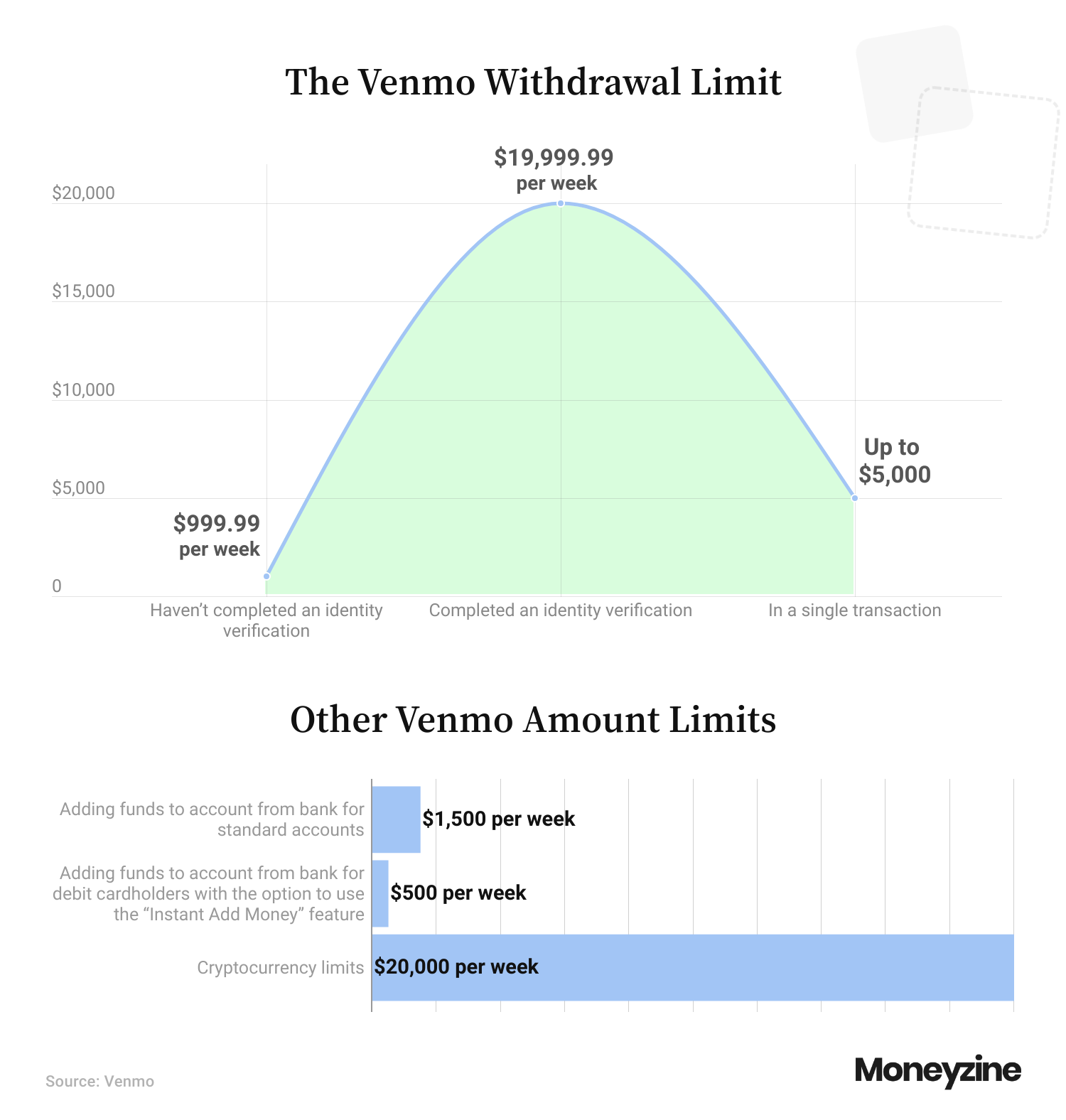
- Peer-to-Peer (P2P) Payments: These are transactions between friends and family, typically for splitting bills, repaying debts, or sending gifts. For verified accounts, Venmo usually has a weekly rolling limit (e.g., $4,999.99 or higher) for sending money to other Venmo users. Unverified accounts have a much lower weekly limit, often in the hundreds of dollars. This limit resets on a rolling 7-day basis, not a fixed calendar week.
- Authorized Merchant Payments: Venmo also allows users to pay businesses that accept Venmo as a payment method. These transactions are often treated separately from P2P payments and may have a higher combined weekly limit (e.g., $6,999.99 for verified accounts, which includes P2P sending). When you pay a business, you’re usually covered by Venmo’s Purchase Protection Program, offering an additional layer of financial security.
It’s crucial to regularly check Venmo’s official help center for the most current limits, as they can be updated periodically.
Cashing Out: Instant vs. Standard Bank Transfers
Receiving money into your Venmo balance is one thing; moving it to your traditional bank account is another. Venmo offers two primary methods for transferring funds out:
- Standard Transfers: These are free and typically take 1-3 business days to reach your linked bank account. There’s usually a high weekly limit for standard transfers (e.g., $9,999.99 for verified accounts), allowing users to move significant sums without incurring fees.
- Instant Transfers: For a small fee (usually 1.75% of the transfer amount, with a minimum and maximum fee), you can transfer funds to a linked debit card or eligible bank account within minutes. Instant transfers come with their own set of limits, which are generally lower than standard transfers (e.g., $5,000 per transaction, with a weekly limit of $25,000 for verified accounts). The fee for instant transfers is a small but important consideration for personal budgeting, especially for frequent users or those dealing with time-sensitive payments.
Understanding these transfer options and their associated costs is vital for managing your cash flow efficiently. If you need immediate access to funds, the instant transfer fee is the price of convenience; otherwise, planning ahead for a standard transfer saves you money.
Expanding Your Capabilities: The Venmo Debit Card
For users who want to integrate Venmo even more deeply into their daily spending, the Venmo Debit Card (issued by a partner bank) offers additional functionality and distinct transaction limits:
- Daily Spending Limits: The Venmo Debit Card typically has a daily spending limit (e.g., $3,000) for purchases at merchants, which draws directly from your Venmo balance. This acts much like a traditional debit card, allowing you to use your Venmo funds without first transferring them to your bank.
- ATM Withdrawal Limits: The card also comes with a daily ATM withdrawal limit (e.g., $400), often with associated fees from the ATM operator and potentially from Venmo if you don’t use a fee-free network. This feature provides direct access to cash from your Venmo balance, expanding its utility as a financial tool.
These limits are separate from your peer-to-peer sending or bank transfer limits and provide flexibility for those who want to use their Venmo balance more like a checking account.
Strategies for Maximizing Your Venmo Experience
To truly leverage Venmo as an effective financial tool, it’s not enough to simply know the limits; you need to employ strategies that optimize its use within your broader personal finance framework. This involves active management, security consciousness, and knowing when Venmo is the right (or wrong) tool for the job.
Verifying Your Identity for Increased Flexibility
As highlighted, verification is the cornerstone of higher limits and greater flexibility on Venmo. If you anticipate needing to send or receive more than a few hundred dollars weekly, initiating the verification process early is crucial. This involves:
- Providing Required Information: Typically your full legal name, date of birth, and the last four digits of your SSN.
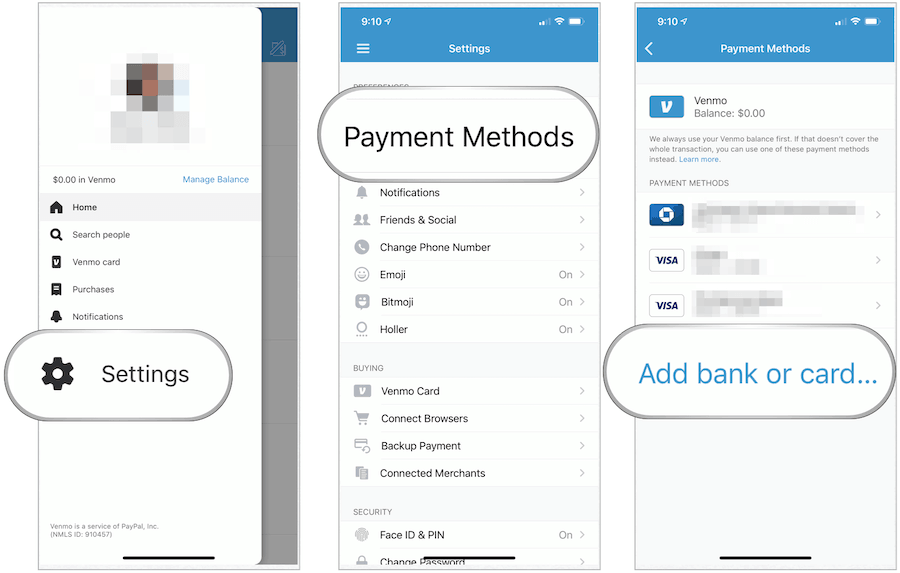
- Linking a Bank Account: This not only helps with verification but also facilitates easy transfers between Venmo and your traditional banking.
- Ensuring Accuracy: Any discrepancies in the information provided can delay or prevent verification.
Once verified, you unlock significantly higher weekly sending limits, increased instant transfer thresholds, and access to products like the Venmo Debit Card. This proactive step removes potential roadblocks, allowing for smoother financial transactions when they arise.
Best Practices for Secure and Efficient Transactions
Beyond understanding limits, operating securely and efficiently is paramount:
- Strong Passwords and Two-Factor Authentication (2FA): Treat your Venmo account with the same security rigor as your bank account. Use a unique, complex password and enable 2FA (via SMS or an authenticator app) to prevent unauthorized access.
- Verify Recipients: Always double-check usernames, phone numbers, or email addresses before sending money. A mistyped character can send your funds to the wrong person, and Venmo payments are often difficult to reverse.
- Use for Trusted Transactions: Venmo is ideal for transactions with friends, family, and trusted small businesses. While it offers some purchase protection for authorized merchants, it’s generally not recommended for transactions with strangers or for very high-value goods/services, where more formal payment methods with stronger buyer/seller protections (like credit cards or escrow services) might be more appropriate.
- Keep Your App Updated: Regularly updating the Venmo app ensures you have the latest security features and bug fixes.
- Monitor Activity: Periodically review your transaction history to spot any unusual or unauthorized activity promptly.
When to Consider Alternative Financial Tools
While incredibly convenient, Venmo isn’t always the best or most cost-effective financial tool for every situation. Smart personal finance dictates choosing the right tool for the task:
- Large Transactions: For sums exceeding Venmo’s limits, or for purchases that require robust consumer protection (e.g., buying a car, making a down payment on property), traditional bank wires, certified checks, or secure online escrow services are more suitable.
- Business Payments with Tax Implications: While Venmo can be used for business payments, especially for freelancers or small businesses, it’s important to understand the tax implications. Transactions marked as “goods and services” may incur fees and are reported to the IRS once certain thresholds are met. For larger or more complex business finance, dedicated business banking accounts, invoicing software, or other payment processors like PayPal Business or Stripe might be more appropriate.
- International Transfers: Venmo is primarily designed for domestic (U.S.) transactions. For sending money internationally, specialized services like Wise (formerly TransferWise) or Xoom (a PayPal service) offer better exchange rates and lower fees.
- Recurring Payments: For automated, recurring bills or subscriptions, setting up direct debits or using your bank’s bill pay service is often more reliable and easier to manage than relying on Venmo.
The Broader Context: Venmo in Your Personal Finance Ecosystem
Integrating Venmo into your personal finance ecosystem means looking beyond individual transactions to understand its overall impact on your financial wellness. This involves considering fees, tax implications, and fostering responsible habits.
Understanding Fees and Their Impact
While Venmo prides itself on being “free” for many common transactions, there are specific scenarios where fees apply, and these can accumulate if not managed thoughtfully:
- Instant Transfer Fees: The 1.75% fee (min $0.25, max $25) for instant transfers is the most common fee. For frequent users who consistently need immediate access to funds, this can add up. Budgeting for these fees, or planning transfers to utilize the free standard option, is a wise financial practice.
- Credit Card Sending Fees: When sending money to friends and family using a linked credit card, Venmo charges a 3% fee. This is a significant cost and generally advises against using credit cards for P2P payments unless absolutely necessary (e.g., for rewards points that outweigh the fee). Using a linked bank account or debit card for P2P payments avoids this fee.
- Cryptocurrency Purchase/Sale Fees: If you use Venmo’s cryptocurrency features, there are transaction fees associated with buying and selling.
- Merchant Fees: While not directly paid by the consumer, businesses accepting Venmo for goods and services often pay a processing fee, which might indirectly influence pricing.
Being aware of these fees allows you to make informed decisions and minimize unnecessary costs, thereby optimizing your personal finance management.
Tax Implications and Record Keeping
For most casual P2P transactions between friends and family, there are generally no direct tax implications. However, the landscape changes when Venmo is used for business purposes or for receiving payments for goods and services.
- IRS Reporting: As of 2023, payment apps like Venmo are required to report payments for goods and services totaling over $600 in a calendar year to the IRS using Form 1099-K. This threshold was previously $20,000 and 200 transactions. This means that if you use Venmo for your side hustle, freelance work, or selling items, you’ll likely receive a 1099-K and will need to report this income on your tax returns.
- Record Keeping: Regardless of whether you receive a 1099-K, it’s crucial for anyone using Venmo for income-generating activities to maintain accurate records. Categorize transactions clearly within the app and export statements regularly. This will simplify tax preparation and ensure compliance.
- Personal vs. Business Accounts: While Venmo currently doesn’t offer a specific “business” profile in the same way PayPal does, it’s important to delineate personal payments from business income. Financial planners often recommend keeping personal and business finances separate, even on platforms like Venmo, to avoid confusion during tax season.
Responsible Use and Financial Wellness
Ultimately, “how much you can Venmo someone” is just one piece of the puzzle. The larger picture involves responsible use within a holistic approach to financial wellness. Venmo, like any financial tool, should serve your financial goals, not complicate them.
- Budgeting: Consider Venmo a part of your spending and income streams. Include Venmo balances and transactions in your overall budget tracking.
- Emergency Funds: Avoid keeping large sums of money in your Venmo balance, as it’s not a bank account and typically doesn’t offer FDIC insurance for funds not linked to specific bank products. Your primary emergency fund should reside in a high-yield savings account.
- Financial Literacy: Continuously educate yourself on the terms of service, security updates, and best practices for all your financial apps.
By understanding Venmo’s limits, its operational logic, and its place in the broader financial ecosystem, users can move beyond simple transactions and truly master this powerful tool for enhanced personal finance management.
aViewFromTheCave is a participant in the Amazon Services LLC Associates Program, an affiliate advertising program designed to provide a means for sites to earn advertising fees by advertising and linking to Amazon.com. Amazon, the Amazon logo, AmazonSupply, and the AmazonSupply logo are trademarks of Amazon.com, Inc. or its affiliates. As an Amazon Associate we earn affiliate commissions from qualifying purchases.