
For many investors, checking the price of Microsoft (MSFT) stock is a daily ritual. As one of the world’s most valuable companies, Microsoft serves as a bellwether for the broader equity market and a cornerstone of countless retirement portfolios. However, understanding the “price” of a stock goes far beyond the flickering numbers on a ticker tape. To truly grasp what Microsoft is worth, an investor must look at its market capitalization, its historical growth trajectory, and the financial engines that drive its valuation.
In the modern financial landscape, Microsoft represents a rare blend of “Growth” and “Value.” It is a legacy firm that has successfully pivoted to the cloud and artificial intelligence, maintaining high margins while returning significant capital to shareholders. This article explores the multifaceted world of Microsoft’s stock price, the metrics that define its value, and the strategic drivers that influence its position on Wall Street.
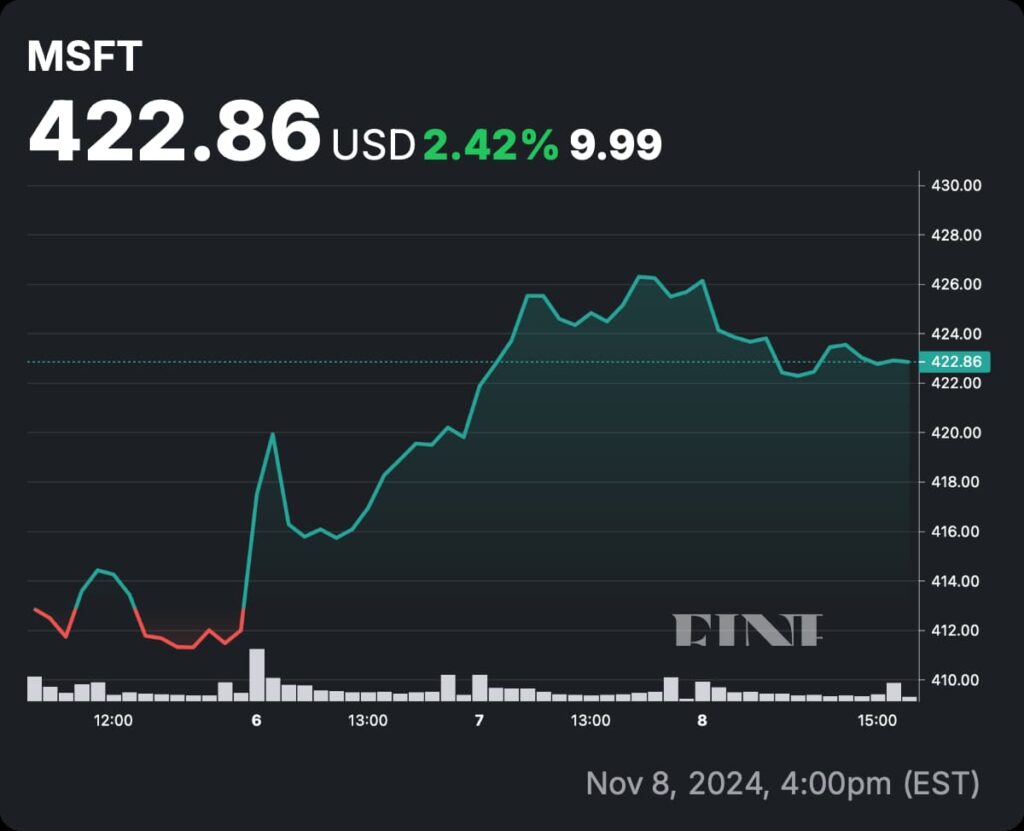
Understanding Microsoft’s Market Valuation and Historical Performance
When an investor asks about the price of Microsoft stock, they are often looking at the current trading price per share. While that number is important for executing a trade, the more significant figure is the market capitalization—the total dollar market value of the company’s outstanding shares. Microsoft consistently fluctuates at the top of the global rankings, often vying for the title of the world’s most valuable company.
The Significance of Market Cap in Tech Investing
Market capitalization is calculated by multiplying the current share price by the total number of outstanding shares. For Microsoft, this figure has surpassed the $3 trillion mark, a milestone that reflects deep investor confidence. A high market cap provides the company with “dry powder”—the ability to acquire smaller competitors, invest heavily in Research and Development (R&D), and weather economic downturns more effectively than mid-cap firms. For the individual investor, Microsoft’s massive valuation suggests lower volatility compared to speculative tech stocks, though it also means the company requires massive capital inflows to move the needle on its price.
Historical Trajectory: From Software to the Cloud
To understand today’s price, one must look at the historical pivot that saved Microsoft from stagnation. During the early 2010s, Microsoft was often viewed as a “dead” stock, stuck in a range as the world moved toward mobile and cloud computing. The transition from Steve Ballmer to Satya Nadella marked a fundamental shift in the company’s financial health. By moving from a one-time software license model (selling Windows in a box) to a recurring revenue model (Office 365 and Azure subscriptions), Microsoft built a “toll booth” business. This shift significantly increased the stock’s Price-to-Earnings (P/E) multiple, as investors are always willing to pay a premium for predictable, recurring cash flows.
Key Financial Metrics Driving Microsoft’s Stock Price
The price of a stock is essentially the market’s collective opinion on a company’s future earnings, discounted back to the present. To determine if MSFT is “expensive” or “cheap” at its current price, investors rely on several key financial indicators.
Earnings Per Share (EPS) and Revenue Growth
Earnings Per Share (EPS) is the portion of a company’s profit allocated to each outstanding share of common stock. It is a direct indicator of profitability. Microsoft has a long history of beating analyst expectations for EPS, which often leads to “gap-ups” in the stock price following quarterly earnings reports. Alongside EPS, revenue growth in key segments like Intelligent Cloud and Productivity and Business Processes is scrutinized. If revenue grows at 15% but the stock price grows at 30%, the stock is experiencing “multiple expansion,” meaning investors are becoming more optimistic about the future.
Dividend Yield and Share Buyback Programs
Unlike many of its high-growth peers in the Silicon Valley ecosystem, Microsoft is a reliable dividend payer. While the dividend yield might appear modest (often hovering around 1%), the consistent annual increases make it an attractive pick for “dividend growth” investors. Furthermore, Microsoft engages in aggressive share buybacks. By reducing the total number of shares outstanding, the company increases the value of each remaining share, effectively boosting the stock price without requiring an increase in net income. This return of capital is a hallmark of a mature, financially disciplined corporation.
Strategic Growth Drivers: AI, Cloud, and Beyond
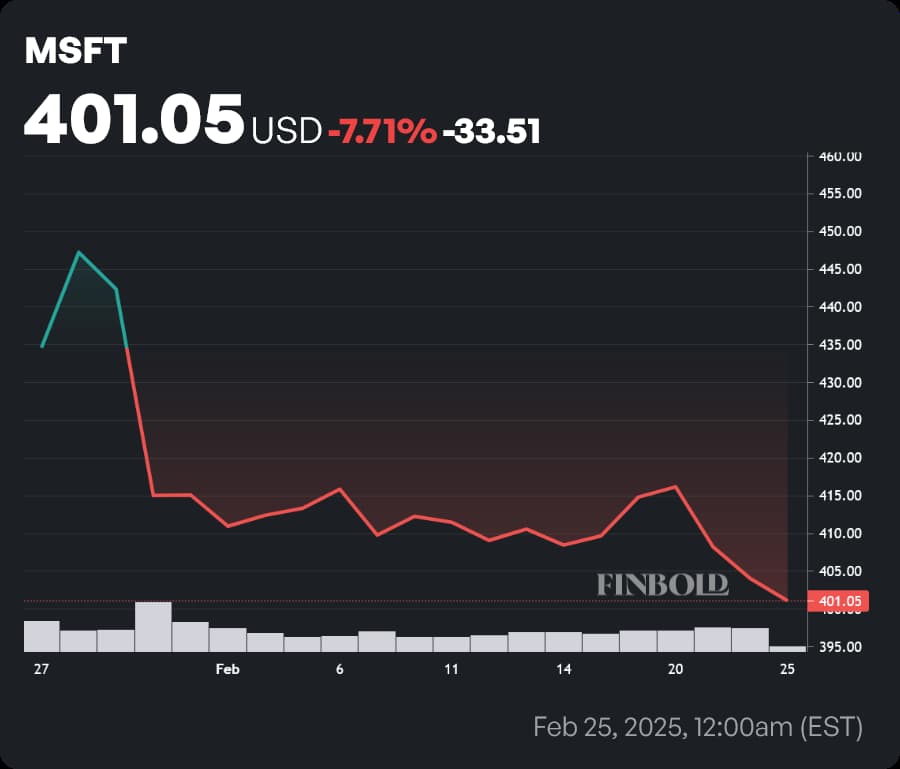
In the investing world, the current stock price is backward-looking; the future price is determined by growth catalysts. Currently, Microsoft’s valuation is heavily influenced by its leadership in two specific areas: Cloud computing and Generative Artificial Intelligence (AI).
Azure’s Dominance in Enterprise Cloud
Microsoft Azure is the engine behind the company’s recent stock performance. As businesses migrate their infrastructure to the cloud, Azure provides the backbone for their operations. From a financial perspective, Azure is high-margin and highly scalable. As more enterprises adopt Azure, Microsoft’s profit margins expand, allowing for higher reinvestment. Investors monitor “Azure growth” figures more closely than almost any other metric, as it represents the company’s most significant competitive advantage against rivals like Amazon (AWS) and Google Cloud.
The Monetization of Generative AI (Copilot)
The integration of OpenAI’s technology into the Microsoft ecosystem has created a new “AI premium” in the stock price. By embedding AI “Copilots” into Windows, Office, and GitHub, Microsoft has found a way to monetize AI immediately. Unlike other tech firms that are still searching for a business model for AI, Microsoft is simply adding a monthly subscription fee to its existing products. This ability to cross-sell to a massive installed base of enterprise users is a primary reason why the stock continues to reach new all-time highs even in a high-interest-rate environment.
Risk Factors and Market Volatility
No investment is without risk. While Microsoft is a titan of industry, its stock price is susceptible to various external and internal pressures that investors must account for when calculating their entry points.
Regulatory Hurdles and Antitrust Concerns
As Microsoft grows, it inevitably attracts the attention of regulators in the United States and the European Union. Concerns over monopolistic behavior, particularly regarding its acquisitions (such as the Activision Blizzard deal) and its bundling of software services (like Teams), can lead to hefty fines or forced structural changes. Any news regarding a major antitrust investigation can lead to immediate, sharp declines in the stock price as investors price in the cost of legal battles and potential limits on future growth.
Macroeconomic Sensitivity and Interest Rates
Microsoft is a “Long-Duration” asset. This means that its valuation is sensitive to interest rates. When the Federal Reserve raises interest rates, the “discount rate” applied to future earnings increases, which can lower the current value of the stock. Additionally, a significant portion of Microsoft’s revenue is generated internationally. A strong U.S. dollar can create “currency headwinds,” where profits made in Euros or Yen are worth less when converted back to dollars, potentially causing the company to miss its quarterly revenue targets.
Investment Strategy: Is Microsoft a Buy, Hold, or Sell?
Deciding whether to buy Microsoft at its current price depends largely on an investor’s time horizon and risk tolerance. Because it is a “Blue Chip” stock, it rarely trades at a deep discount, meaning investors often have to pay a premium for quality.
Long-term Wealth Accumulation vs. Short-term Trading
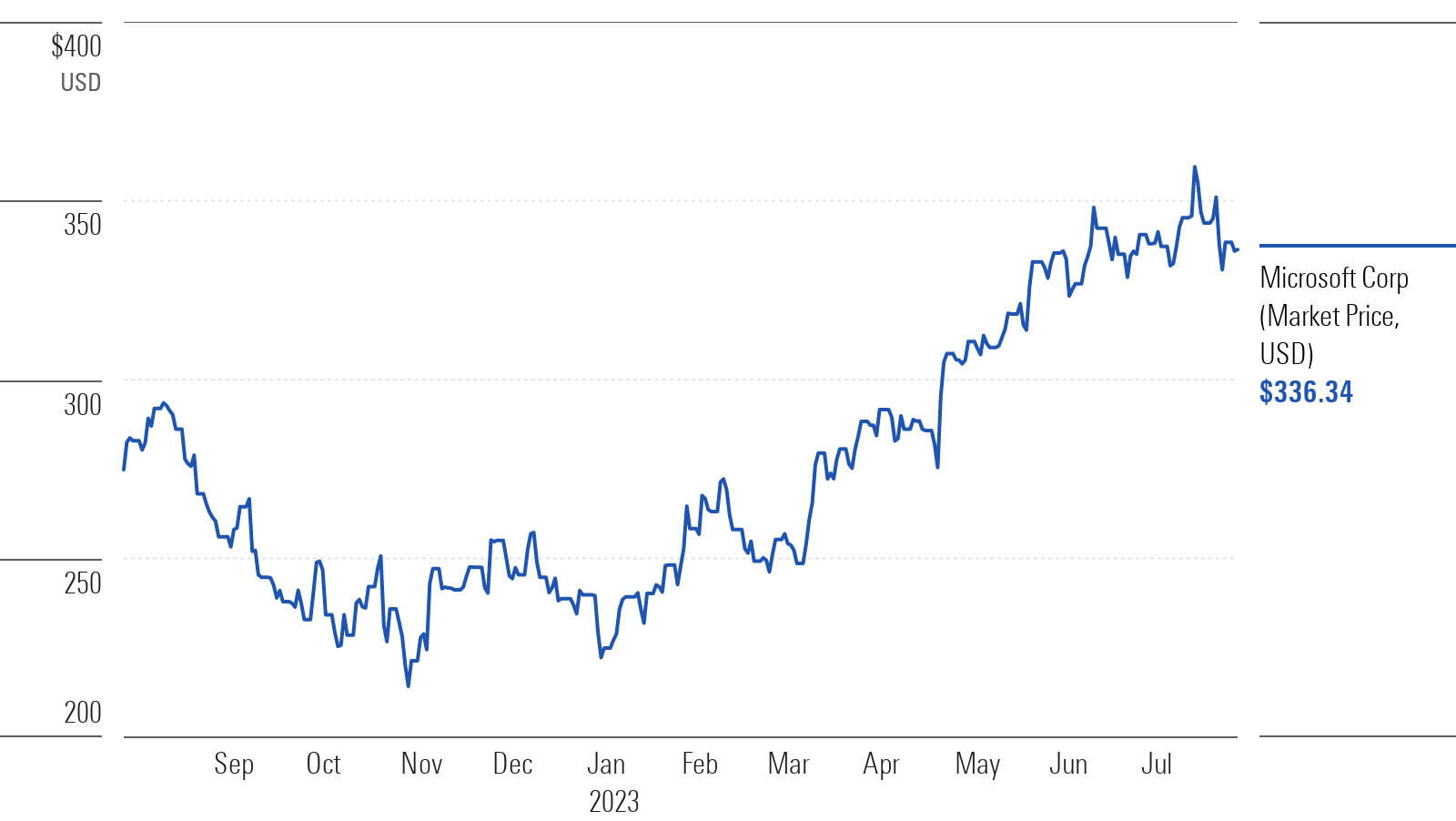
For the long-term investor, the “daily price” of Microsoft is less important than the company’s “intrinsic value.” Historically, buying MSFT and holding it through market cycles has been a winning strategy. The company’s fortress balance sheet—with tens of billions of dollars in cash—provides a safety net that most companies lack. Conversely, short-term traders look for technical indicators like Moving Averages or Relative Strength Index (RSI) levels to time their entries, often looking for “pullbacks” to the 50-day or 200-day moving average to add to their positions.
Diversification within a Tech-Heavy Portfolio
One risk for modern investors is “concentration risk.” Because Microsoft has such a large weight in the S&P 500 and the Nasdaq-100, many investors own a significant amount of MSFT through index funds without even realizing it. When evaluating the price of Microsoft for a personal portfolio, it is essential to look at your total exposure across all accounts. While Microsoft is a high-quality asset, maintaining a diversified portfolio means balancing these tech-heavy weights with other sectors like healthcare, energy, or consumer staples to mitigate the impact of a potential “tech wreck” or sector-wide sell-off.
In conclusion, the price of Microsoft stock is a reflection of the company’s past successes and its future potential. It is a stock that has redefined itself multiple times, moving from the desktop to the server room, and now to the cloud and the AI-driven edge. For the disciplined investor, MSFT is more than just a ticker symbol; it is a study in financial resilience, strategic pivoting, and the power of compounding returns in the digital age. Whether the price is at a record high or a temporary low, the underlying fundamentals of revenue growth, margin expansion, and capital return remain the most critical factors for any financial analysis.
aViewFromTheCave is a participant in the Amazon Services LLC Associates Program, an affiliate advertising program designed to provide a means for sites to earn advertising fees by advertising and linking to Amazon.com. Amazon, the Amazon logo, AmazonSupply, and the AmazonSupply logo are trademarks of Amazon.com, Inc. or its affiliates. As an Amazon Associate we earn affiliate commissions from qualifying purchases.