
The question of what the price of Amazon stock (AMZN) is today represents more than a simple inquiry into a ticker symbol’s current value. For the modern investor, checking Amazon’s price is a pulse check on the broader health of the global consumer economy, the robustness of cloud computing, and the shifting tides of the tech-heavy Nasdaq. Amazon has transitioned from a pioneering online bookstore to a sprawling conglomerate that dominates multiple sectors, and its stock price reflects the complex interplay between retail margins, technological innovation, and macroeconomic stability.
To understand the price of Amazon today, one must look beyond the daily fluctuation of dollars and cents. It is necessary to dissect the underlying fundamentals, the catalysts that drive market sentiment, and the structural shifts within the company that dictate its long-term valuation. In the current financial landscape, Amazon remains one of the “Magnificent Seven,” a group of high-growth tech stocks that disproportionately influence market indices and investor portfolios.

Understanding Amazon’s Current Market Position and Valuation
Amazon’s valuation is notoriously difficult to pin down using traditional metrics. For decades, the company prioritized reinvestment over net income, leading to a sky-high Price-to-Earnings (P/E) ratio that would have scared off more conservative value investors. However, as the company has matured, the market’s perspective on its stock price has evolved.
The Shift from Revenue Growth to Profitability
Historically, Amazon investors were satisfied with relentless revenue growth, trusting that founder Jeff Bezos’s “Day 1” philosophy would eventually lead to dominance. Today, the market demands more. Under the leadership of Andy Jassy, Amazon has shifted its focus toward “operational excellence” and cost-cutting. This shift is a primary driver of the stock price in the current era. Investors are no longer just looking at the top-line growth; they are scrutinizing operating margins. When Amazon shows it can lean out its fulfillment network and increase the efficiency of its delivery services, the stock price reacts positively, reflecting a newfound maturity in its business model.
Analyzing the Price-to-Earnings Ratio and Cash Flow
While the P/E ratio remains higher than that of a traditional retail company like Walmart, it is often more useful to look at Amazon through the lens of Price-to-Free Cash Flow. Amazon’s massive capital expenditures—investments in data centers for AWS and a global logistics footprint—depreciate over time, often masking the true cash-generating power of the business. When assessing the stock price today, institutional investors are looking at the “inflection point” where capital expenditure slows down and free cash flow begins to surge. A rising stock price is often an indication that the market believes Amazon is entering a harvest period for its massive historical investments.
The Primary Catalysts Driving AMZN Performance
Amazon is not a monolith; it is a collection of high-performing businesses under a single corporate umbrella. The price of the stock on any given day is a weighted average of how the market perceives these individual units.
AWS: The Engine of Operating Income
Amazon Web Services (AWS) is arguably the most important factor in the stock’s valuation. While e-commerce brings in the most revenue, AWS generates the lion’s share of the operating profit. The growth of cloud computing is no longer just about storage; it is about the infrastructure required for Artificial Intelligence (AI). Whenever Amazon announces new AI chips or partnerships, or when AWS growth re-accelerates, the stock price typically moves higher. The market views AWS as a high-margin “toll booth” for the digital economy, and any fluctuation in cloud spending by enterprises is immediately reflected in the AMZN ticker.
The Surge in High-Margin Advertising Services
A relatively new but powerful driver of Amazon’s stock price is its advertising division. Amazon has become the third-largest digital advertising platform in the world, trailing only Google and Meta. Unlike social media advertising, Amazon’s ads are “closed-loop,” meaning they are shown to customers who are already at the point of purchase. These are incredibly high-margin revenues. As this segment grows, it diversifies Amazon’s income away from the thin margins of retail, providing a cushion that supports a higher stock valuation even during periods of economic uncertainty.
Logistics and E-commerce Efficiency
The “Retail” side of Amazon has undergone a transformation from a centralized model to a regionalized one. By placing inventory closer to the end consumer, Amazon has reduced “miles per package,” significantly lowering shipping costs. For investors, these logistical improvements are key to the stock’s performance. Every cent saved in the fulfillment process translates directly to the bottom line, allowing Amazon to maintain its competitive “moat” while finally delivering the profits that shareholders have long anticipated.
Macroeconomic Influences on Amazon’s Share Price
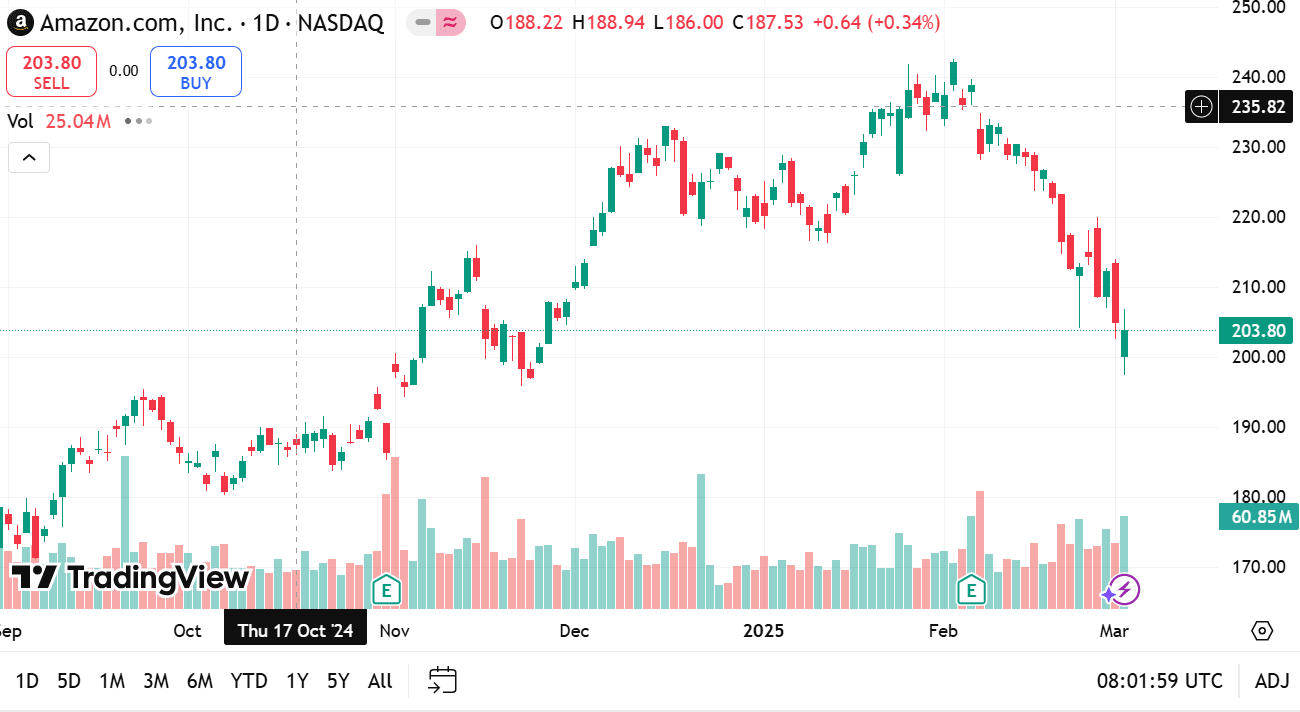
No stock exists in a vacuum, and as a mega-cap company, Amazon is highly sensitive to the broader economic environment. When the price of Amazon fluctuates, it is often responding to signals from the Federal Reserve or shifts in consumer behavior.
Interest Rates and the Tech Sector
As a growth-oriented stock, Amazon is sensitive to interest rate cycles. High interest rates increase the discount rate used by analysts to value future cash flows. Simply put, when rates are high, the “future” profits of Amazon are worth less in today’s dollars, which can put downward pressure on the stock price. Conversely, in a falling-rate environment, growth stocks like AMZN tend to lead the market. Investors often use the price of Amazon as a proxy for their appetite for risk; when the outlook for interest rates stabilizes, capital tends to flow back into high-quality tech names.
Inflation and Consumer Discretionary Spending
While Amazon provides many essentials, a significant portion of its revenue comes from discretionary spending. Inflation hits the stock price in two ways: it increases the company’s operating costs (fuel for delivery vans, wages for warehouse workers) and it reduces the purchasing power of its customers. When the Consumer Price Index (CPI) shows cooling inflation, Amazon’s stock often rallies on the expectation that consumers will have more “wallet share” for non-essential purchases and that the company’s internal costs will stabilize.
Risk Factors and Regulatory Headwinds
Investing in Amazon is not without its risks, and these “known unknowns” are often baked into the current stock price. Potential investors must weigh the company’s growth prospects against the looming threat of regulatory intervention and intensifying competition.
Antitrust Litigation and Market Dominance
One of the most persistent weights on Amazon’s stock price is the threat of antitrust action. Regulatory bodies in the United States and Europe have frequently scrutinized Amazon’s dual role as both a marketplace operator and a seller of its own private-label goods. The fear of a potential “breakup” of the company—separating AWS from the retail business—is a recurring theme in financial media. While some analysts argue that the sum of the parts might actually be more valuable than the whole, the uncertainty surrounding legal battles often leads to volatility in the share price.
Competitive Pressures in Cloud and Retail
Amazon is no longer the undisputed disruptor; it is now the incumbent being challenged. In the cloud space, Microsoft Azure and Google Cloud are formidable competitors, particularly in the race for AI dominance. In retail, traditional players like Walmart and Target have significantly upgraded their e-commerce and delivery capabilities. Furthermore, the rise of international platforms like Temu and Shein has introduced new price-based competition in the retail sector. The market constantly adjusts Amazon’s stock price based on how effectively it maintains its market share against these diverse rivals.
Strategic Approaches for Investors
When looking at the price of Amazon stock today, the “correct” action depends entirely on an investor’s timeframe and financial goals. Amazon has evolved from a speculative bet into a core holding for many institutional and retail portfolios.
Long-term Fundamental Investing vs. Short-term Trading
For the long-term investor, the daily price movement is often “noise.” The bull case for Amazon rests on the continued digitization of the global economy—more people shopping online, more businesses moving to the cloud, and more brands using data-driven advertising. From this perspective, dips in the stock price are often viewed as buying opportunities. For short-term traders, however, the price of Amazon is a tool for capturing volatility around earnings reports or economic data releases. Because of its high liquidity, AMZN is a favorite for those using technical analysis to play support and resistance levels.
The Role of AMZN in a Diversified Portfolio
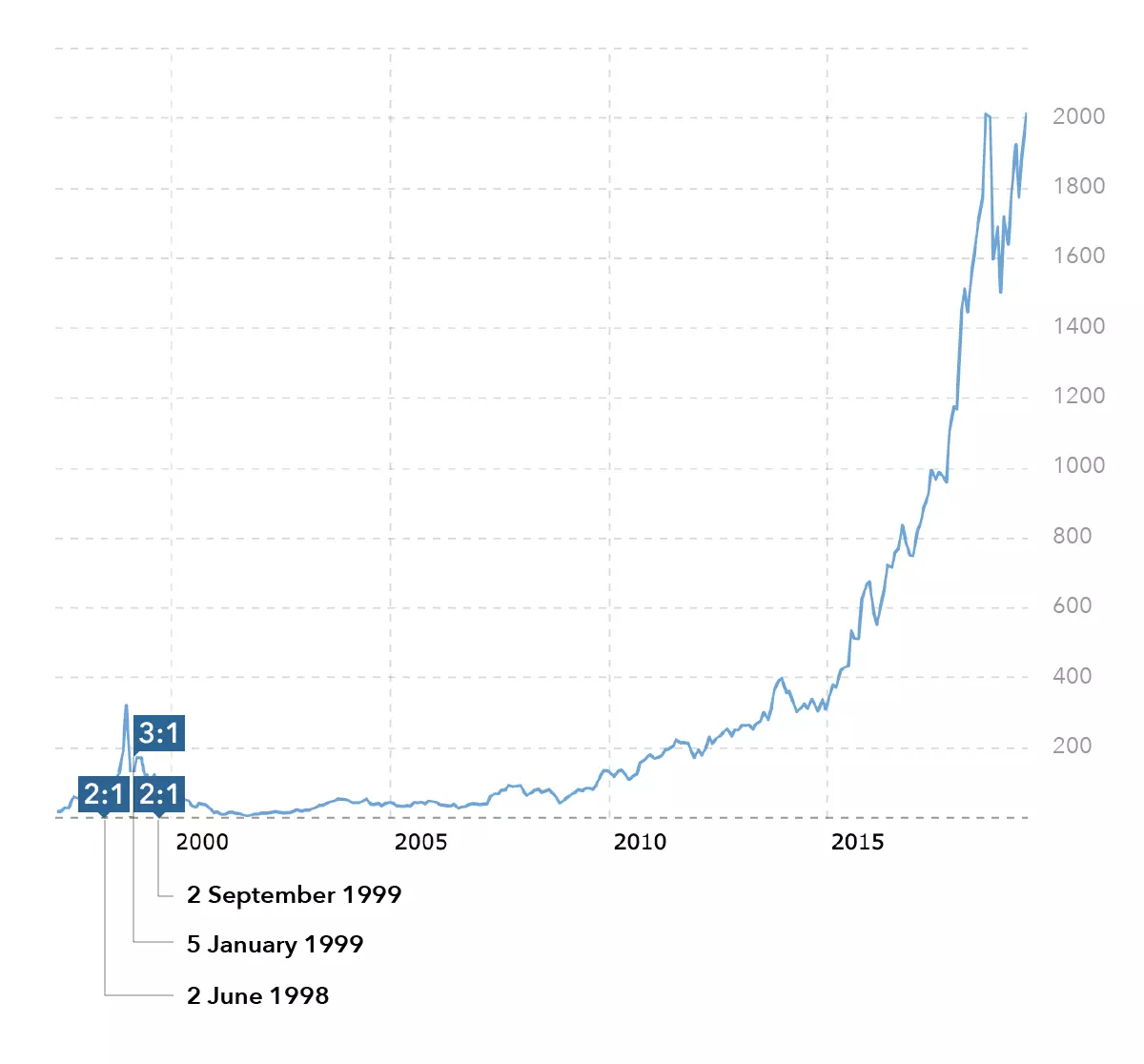
Amazon often serves as a “growth at a reasonable price” (GARP) play in a diversified portfolio. It offers exposure to multiple sectors—tech, retail, media, and healthcare—making it a unique asset. While it may not see the 1,000% returns of its early years, its massive scale and diversified revenue streams provide a level of stability that smaller tech companies lack. Monitoring the price of Amazon today is not just about one company; it is about staying informed on the trends that are shaping the future of commerce and technology.
In conclusion, the price of Amazon stock today is a reflection of the company’s ability to balance its legacy as an innovator with its new responsibility as a profit-generating powerhouse. Whether influenced by the latest AI developments at AWS, the efficiency of its “Last Mile” delivery, or the maneuvers of the Federal Reserve, Amazon remains a central pillar of the modern financial world. For the savvy investor, the price is not just a number—it is a narrative of a company that continues to redefine the boundaries of global business.
aViewFromTheCave is a participant in the Amazon Services LLC Associates Program, an affiliate advertising program designed to provide a means for sites to earn advertising fees by advertising and linking to Amazon.com. Amazon, the Amazon logo, AmazonSupply, and the AmazonSupply logo are trademarks of Amazon.com, Inc. or its affiliates. As an Amazon Associate we earn affiliate commissions from qualifying purchases.